


 Slovenčina
  English (UK)
  Русский
  العربية
  日本語
日本語  한국어
한국어  Magyar
  Türkçe
  Español
  Čeština
  Svenska
  Português
  Ελληνικά
  Suomi
Suomi  Nederlands
  Română
  Italiano
  Français
  Polski
  Українська
  Deutsch
  简体中文
简体中文 
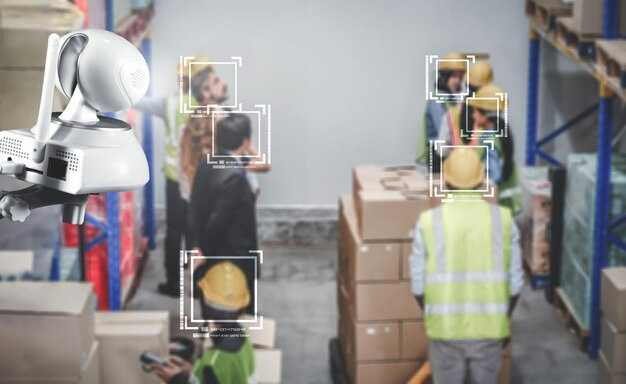
Answer: Automation reshapes labor, not kills it; the best move is to invest in upskilling and task redesign now. In warehouses, robots tackle mundane, high-volume tasks while workers shift toward planning, maintenance, and quality checks. While this shift reduces the need for repetitive motions, it creates opportunities that bring teams closer to higher-value work.
Evidence from several investigations shows that automation paired with training raises throughput and safety. Across year-long pilots in diverse facilities, throughput improved and error rates fell, with gains typically in the 15–30% range and safety incidents down 20–25%, when staffing was repurposed rather than cut, avoiding aggressive cost-cutting. The program is based on data-driven decisions, with transparent metrics and ongoing feedback from frontline teams. A close investigation confirms these patterns.
Many people worry that automation poses a threat to jobs; however, data from pilots found that workers transition rather than vanish. Replacements occur for mundane tasks, while new roles in monitoring, repair, and process optimization emerge. A thoughtful investigation of a facility’s workflow shows that automation can reduce cycle times and free staff to add value rather than relegate them to the back of the queue.
For companys aiming to roll out automation, at the beginning map tasks and define a clear personnel path. A wise, data-driven approach is based on cross-training, mentorship, and a measured timeline to bring workers into roles such as maintenance, software support, and process design. This plan builds confidence, preserves morale, and aligns incentives with productivity. The best outcomes start with pilots in a single site and then scale to more facilities, using feedback to refine the roadmap and celebrate small wins.
Over the year ahead, warehouses can become havens for skilled, adaptable teams when leaders treat automation as a support tool, not a replacement; it reduces the toll of mundane tasks and frees people to focus on problem-solving. The story changes when companys share data, celebrate upskilling, and maintain open channels for feedback. By staying close to frontline realities, managers keep the workplace humane while building resilience and value for customers.
Is Warehouse Automation Really Killing Jobs?
Recommendation: implement a 60-day retraining sprint to reassign 20-30% of floor staff to automation-support roles, and track results with a record of output per shift.
Automation does not kill jobs. It shifts task variety and creates new chances to contribute. In warehouses that design clear workflows, automation reduces heavy lifting and injury risk, while workers keep doing meaningful tasks here: operating, maintaining, and improving the tech that moves goods.
Found data shows repetitive tasks are ripe for automation, and the right mix of tools keeps people engaged and productive.
Automation can always contribute to safer, faster operations.
- Task mapping: identify repetitive, dangerous, or high-latency tasks. Based on data, prepare a plan to replace those tasks with systems like wheeled carriers, pods, and conveyors. This scale approach lets you handle zipped goods more efficiently.
- Skill uplift: launch a 60-day retraining sprint to upskill operators and technicians to monitor and fix automation assets. Use credits for certifications and hands-on practice to keep motivation high.
- Safety and load: track injury rates and stress indicators after automation goes live. If injury or stress stays high, tune the layout and introduce ergonomic assist devices that support floor teams.
- Resource balance: avoid insufficient automation in critical zones. Pair robots with human supervisors to ensure quality and speed, and keep workers engaged doing the tasks that require judgment.
- Design for scale: the floor layout is based on data, with modules that can be expanded. Robotic pods and wheeled platforms should be easy to add, reconfigure, and maintain; that reduces downtime and keeps output steady.
- Measurement and credits: establish a simple KPI set (throughput per shift, error rate, uptime) and share the record with teams. Transparent metrics encourage teams to contribute ideas and find efficiency gains.
Thats why investing in upskilling and a clear task design matters for stability and growth.
Bottom line: automation is a force multiplier, not a replacement. When paired with targeted training and careful task design, it keeps people employed and adds capacity to meet growing demand for goods, supporting huge throughput while reducing fatigue and injury.
Debunking Myths and Exploring Its Real Labor Impact

upping training budgets and retraining now is the fastest path to preserve jobs while boosting productivity. The plan combines on-the-job coaching, short courses, and cross-training in robot operation, maintenance, and data interpretation to accelerate the learning curve and protect morale. This approach mirrors how giants in logistics deploy human plus machine teams at scale, not as a replacement but as a way to become faster, more reliable, and better at serving customers.
Myth: automation will erase jobs outright. Reality: automation takes over repetitive, hazardous, and precise tasks, while people handle planning, exceptions, and quality checks. As industry analysts said, automation reduces repetitive chores but creates new roles. In many warehouses, up to 30-40% of routine tasks can be automated with current tech, reducing fatigue and speeding goods movement. A journalistic investigation of several retailers shows net job losses stay modest over multiple years, and job quality and pay rise for technicians and shift supervisors, who gain new responsibilities. Times watched by managers show fewer interruptions and faster response to exceptions. However, rollout often slows if training lags. Goods zipped through zones on wheeled conveyors, and from earlier pilots you can see the value grows when teams are paired with stable automation and a clear záznam of performance improvements. The same pattern appears across grocers, apparel, and distribution giants who adopt the same approach.
Earlier pilots showed that fully autonomous systems still rely on human oversight and collaboration. Giants in the field often run a hybrid model where a wheeled fleet, fixed stations, and umelá inteligencia guidance back the core flow while humans handle exception management, maintenance scheduling, and tuning. The idea that machines replace people overnight ignores integration time, cost, and the need for a clear talent strategy. With ongoing training, automation boosts throughput and accuracy, and workers move into maintenance, software tuning, data analysis, and process design, as a technologist-led adjustment demonstrates.
To realize real gains, use a staged, metrics-driven method. Start with an auditable task map and a 3- to 6-month pilot that pairs robots with human roles. Choose gear that offers intuitive operator interfaces and a robust maintenance plan. Track KPIs such as throughput, unit cost, error rate, uptime, and worker hours per shipment. If the tests show improvements, scale gradually and prispôsobiť staffing to align with demand rather than drift. In practice, goods zipped through zones on wheeled carts while humans monitor systems and fix issues in real time, and the experiment yields a záznam of lessons to guide future investments. This path helps the organization become more resilient and capable when demand spikes.
In sum, the real labor impact is a shift, not a wipeout: tasks move toward higher-skill problem solving and system optimization. Firms that invest in reskilling, maintain clear career paths, and align automation with demand will see a modest decline in low-skilled hours but higher throughput and better job quality. The optimistický outlook is supported by data showing faster goods movements, fewer errors, and longer equipment life when tech is treated as an enabler. The investigation approach–watching performance across times of peak demand, tracking a living záznam of outcomes, and consulting technologists–helps leaders adjust scale without premature downsizing. From this perspective, automation becomes a lever for growth, with workers and robots forming a capable, humane, and resilient workings of modern warehouses.
What counts as job loss versus role transformation in warehouse work?
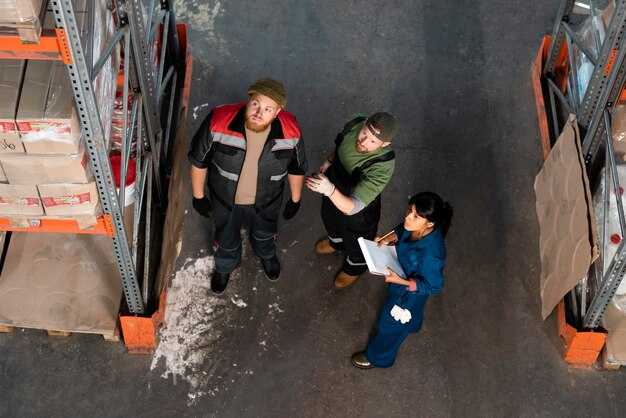
Direct answer: classify outcomes into two clear categories–direct job loss and role transformation. Track headcount reductions where tasks disappear and count how many workers move to new duties via training and on‑the‑job learning. In seven percent of facilities, direct loss shows up within 12–18 months after deploying palletizer lines and rolling conveyors, while teams together shift to higher‑value work on goods handling, inventory accuracy, and problem solving.
Role transformation means workers do different tasks rather than exit the company. Here, employees may supervise automation, calibrate sensors, perform maintenance, or analyze data to optimize picking routes. Where training is provided, workers stay with the same employer and reuse their domain knowledge as automation handles repetitive steps. If support is absent, a role could drift toward direct loss for that individual.
From a modeling view, use a two‑path framework: automation augments labor rather than replaces it, so the canvas of tasks expands. Here, people move into oversight, troubleshooting, and system‑level planning while machines handle routine routines. Where the fleet includes wheeled, rolling, and static assets, the shift often centers on coordination and quality checks rather than pure execution. The Taillon approach helps map duties to equipment, so what was manual becomes a guided, higher‑skill activity that relies on data and vision from tech teams.
Implementation requires clear metrics and a practical timeline. Create a two‑column log: one side for direct loss events (falls in headcount, role elimination) and one for transformation (new duties adopted, training days completed). Track time‑to‑proficiency for the new tasks, cost per task before and after automation, and quality indicators tied to goods flow. Close observation of seven key tasks–picking, packing, palletizing, labeling, sorting, inspection, and route planning–helps you see where utility shifts and where workers remain indispensable.
Operational steps to act now: 1) inventory tasks by function and document which ones automation supports versus replaces. 2) anchor a reskilling plan that lifts workers into higher‑skill duties; ensure they’re able to handle controls on palletizers, modular conveyors, and sensor checks. 3) set thresholds for when a role is considered transformed rather than eliminated, tying decisions to training completion and performance gains. 4) monitor the same team across changes, so you can decide where to deploy tech calls, expand the fleet, or adjust shift coverage along the line. 5) communicate tides to the workforce with a transparent path from today’s duties to tomorrow’s using real data rather than assumptions.
Roles at risk, and new roles emerge
Act now: fund targeted retraining to move labor from repetitive picking to automation-supported roles that boost customers’ value and support their growth, preventing friction in fulfillment. Build a clear path from on-the-floor tasks to maintenance, systems monitoring, and data-driven planning, with micro-credentials that staff can earn in weeks rather than months.
Roles with the highest exposure are picking, packing, and shipping associates, forklift operators, and inventory clerks. Automated sorting, robotic handling, and smarter conveyors reduce manual steps, while near-term gains come from integrating these tasks with predictive maintenance and real-time visibility dashboards.
New roles emerge around building robust systems: automation technicians, system integrators, data analysts, safety engineers, and process designers who interpret sensor data and optimize workflows. A closer alignment between building teams and IT accelerates outcomes and reduces downtime.
Earlier pilots show that combining automation with training lowers injuries and speeds fruition of the solution. In illinois, taillon-led programs show accelerated acquisition of new skills and optimistic ROI for clients adopting delivery-fulfillment models.
To build this outcome, firms should schedule earlier cross-training, deploy pilot programs in a controlled area, and measure safety, throughput, and labor utilization. The advice: start with a small, aggressive test in a single facility, then scale to multiple sites while keeping their acquisition of new skills front and center. Could these steps pay off faster? Yes, if leadership stays proactive and hands-on.
In practice, roles evolve: technicians who maintain cooperative robots, analysts who forecast demand across customers, and solution architects who design end-to-end workflows that merge automation with human labor. This builds resilience in labor and closer alignment to customers’ needs. Organizations that adjust quickly sustain gains.
How quickly do robots influence hiring needs and vacancy cycles?
Align hiring with automation milestones and reallocate roles as robot-powered lines scale to operate fully. If your company started pilot programs, use those data to forecast the next wave of recruitment across fulfillment, maintenance, and control tasks, designed to keep operations resilient.
In micro-fulfillment hubs, tech deployments with stacking robots and half-ton pallet handling reshape demand. This shift could reduce entry-level hiring in mundane tasks while increasing demand for operators and technicians who keep the chain running.
Most effects appear within 4-12 weeks after a go-live event, and the speed depends on the scale of deployment and how quickly tasks are re-mapped to robot work and human supervision.
Countered myths: robot-powered automation doesn’t vanish jobs; it reallocates them to maintenance, programming, safety, and supervisory roles, and said analysts forecast several higher-value positions as adoption broadens.
To act, design a hiring plan tied to a clear automation roadmap, track vacancy duration, offer-accept rates, and time-to-onboard–adjust targets as you see real shifts in cycle length, keeping teams aligned with the design vision.
Keep a haven for workers to upskill toward robot maintenance or control roles; tame the mundane tasks and reveal safer, more engaging lives on the shop floor. Most programs started with a focused upskilling path, and the data reveal faster hiring cycles where automation aligns with business goals. In giant warehouses, packaged workflows help managers forecast needs where robot-powered lines operate most of the routine lifting.
Can distributed automation reduce downtime and keep operations resilient?
Implement distributed automation with edge controllers and a robust human-machine loop to cut downtime by 25–40% and keep operations resilient across sites. Edge monitoring minimizes disruptions that could abruptly halt lines, by local fault detection. Monitor sensors, actuators, and items on the line with a unified data canvas so crisscrossing information stays timely and decisions stay local. That approach is designed to scale: each station runs autonomously yet shares a lightweight state with a central view that spans across the plant. In practice, the latest implementations show faster recovery after faults and fewer unexpected stops, especially in high-demand periods.
To operationalize distributed automation, map dependencies across lines and critical paths for all items and stow operations; deploy modular edge units that run designed workflows, with a shared data model and a canvas view that provides real-time visibility across stations. For retailers handling Shopify orders, one challenge that comes with growth is demand variability; distributed automation can reallocate resources in real time to prevent bottlenecks and maintain high service levels.
Guard against insufficient data by logging a robust record of sensor events, alarms, and operator interventions; use this data to calibrate models and validate that reported faults trigger safe fallbacks. This reduces the threat of cascading failures and lowers injury risk. On average, organizations that maintain such logs see noticeable improvements in MTTR and uptime, even when equipment ages or line configurations change.
Recommended steps include deploying distributed controllers at critical stations, establishing cross-site data sharing, and training operators for safe human-machine collaboration. Start with a pilot in whitton and taillon facilities to verify gains, track sales impact, and refine onboarding. Use proximity sensors and safety interlocks to prevent injuries, and maintain a closer collaboration between automation and operations teams to sustain resilience. The solution comes with a built-in monitoring cadence that measures the average impact on items, with regular reviews and updates based on recorded results.