


 Slovenčina
  English (UK)
  Русский
  العربية
  日本語
日本語  한국어
한국어  Magyar
  Türkçe
  Español
  Čeština
  Svenska
  Português
  Ελληνικά
  Suomi
Suomi  Nederlands
  Română
  Italiano
  Français
  Polski
  Українська
  Deutsch
  简体中文
简体中文 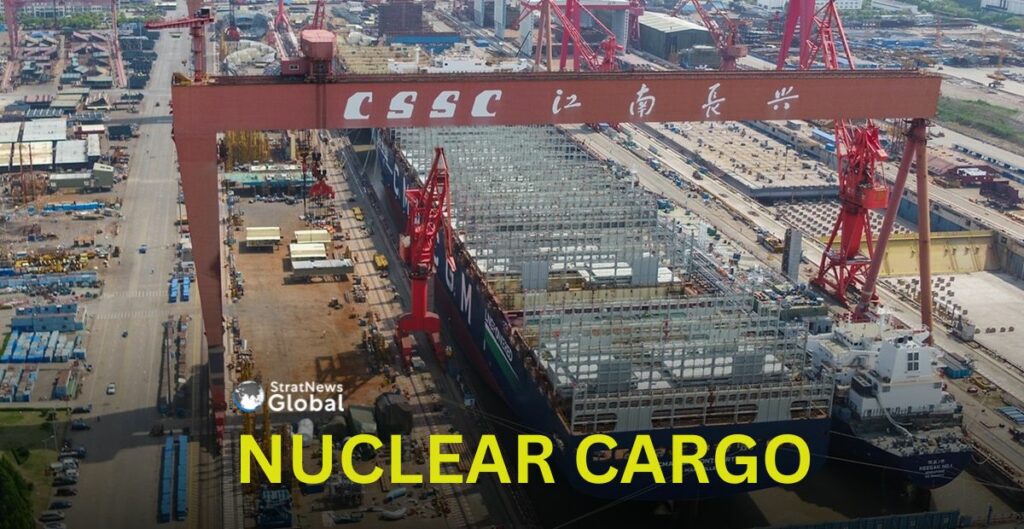 Čína sa posúva vpred k spusteniu prvej kontajnerovej lode na svete s jadrovým pohonom">

China’s Bold Move into Nuclear-Powered Cargo Vessels
China is gearing up to construct what would be the first-ever nuclear-powered container ship, marking a significant milestone in maritime technology. This initiative, spearheaded by the state-owned Jiangnan Shipyard, promises to reshape vessel propulsion and global shipbuilding dynamics.
The Project in Detail: A Powered Revolution on the Horizon
At the heart of this project is a 25,000-container ship designed to operate on a thorium-based molten salt reactor. This reactor type, noted for its high efficiency and safer profile compared to conventional uranium reactors, is expected to power the vessel for an estimated lifespan of 40 years.
Plans indicate that construction could commence within the next decade, supported by the establishment of a dedicated shipyard for nuclear-powered ships, an investment that Jiangnan Shipyard is enthusiastic about, though financial specifics remain under wraps for now.
Strategic Moves and Industry Ambitions
The undertaking fits into a broader ambition by the China State Shipbuilding Corporation (CSSC), Jiangnan’s parent company, to push boundaries with high-tech vessels. These include cruise liners, deep-sea drilling ships, and of course, nuclear-powered cargo ships—a move aimed at climbing the value ladder within global shipbuilding markets.
Why Nuclear Power for Cargo Ships?
Nuclear propulsion offers some juicy perks that could turn the shipping industry on its head:
- Zero emissions, which is a breath of fresh air considering the shipping industry’s environmental footprint.
- Extended range without frequent refueling stops, dramatically increasing operational efficiency.
- Reduced fuel costs, since nuclear fuel is far more energy-dense than fossil fuels.
- Higher speeds that could potentially reduce delivery times—something logistics companies always crave.
However, it’s not all smooth sailing just yet. Regulatory hurdles remain a stubborn challenge, as there’s currently no designated authority ready to green-light nuclear-powered commercial ships, leaving a cloud of uncertainty hanging over the project.
China’s Shipbuilding Dominance and Emerging Competition
China already commands a hefty slice of the shipbuilding pie, handling 65% of global orders by deadweight tonnage as recently as 2025. Yet, new orders have seen a dip amid shifting global relations, signaling a more competitive and cautious future in shipbuilding.
In response to China’s growing dominance, other industry players, including some in the US, have ramped up investments to challenge this position, focusing on innovation and technological advancement within their fleets.
Complementary Maritime Technologies in Development
Beyond nuclear power, other cutting-edge technologies are bubbling away. For instance, battery giant CATL is looking at launching a fully battery-powered ocean vessel within a few years, aiming to complement the push toward greener maritime transport.
CSSC is not trailing far behind, integrating AI and alternative energy sources into its vessel portfolio while continuing to expand its output of advanced ships such as cruise liners and deep-ocean drilling vessels.
Jiangnan’s Rich Legacy and Innovative Spirit
With roots dating back to 1865, Jiangnan Shipyard is no stranger to history-making projects—it was responsible for China’s first domestically developed aircraft carrier. Their exhibition at Marintec China in Shanghai showcased some of these futuristic ambitions, underscoring a commitment to innovation in naval architecture.
Implications for Logistics and Global Freight Movement
This leap toward nuclear-powered cargo ships could fundamentally alter logistics—especially freight shipping—by unlocking unprecedented endurance and reliability. Imagine fewer interruptions for refueling, faster deliveries over vast distances, and a massive dip in carbon emissions from ocean freight. This could translate into smoother, greener strands of the global supply chain.
| Aspekt | Potenciálny vplyv na logistiku |
|---|---|
| Úspora paliva | Lower operational costs, reducing shipping costs overall. |
| Range & Speed | Faster, long-haul deliveries without stops; increased trade route flexibility. |
| Vplyv na životné prostredie | Reduced carbon footprint supports sustainability goals often demanded by customers and regulators. |
| Regulation & Safety | Possible delays in adoption due to complex international rules governing nuclear-powered commercial vessels. |
The Road Ahead: Technology Meets Reality
While the tech looks dazzling on paper, the real-world sailing of nuclear-powered cargo vessels hinges on clearing regulatory seas and convincing stakeholders that this path is economically sound and safe. Despite these challenges, the potential rewards—both environmental and operational—make this a voyage worth watching closely.
Why Personal Experience Beats Reviews, Still Offering Choices
There’s no denying that a boatload of reviews and analyses is helpful, but let’s face it: nothing beats the firsthand experience of booking and receiving a shipment for knowing what really works. Luckily, platforms like GetTransport.com provide an interface where you can book your cargo transportation with ease, choosing from a vast global network at competitive prices. This transparency and convenience empower shippers to make informed decisions without breaking the bank or suffering surprises.
The platform’s versatility extends beyond commercial shipping to cater to relocation and bulky item transportation, aligning seamlessly with this new wave of shipping technology and logistics expectations. Rezervujte si jazdu na GetTransport.com for a reliable, affordable shipping experience.
Looking Forward: The Future of Nuclear-Powered Shipping in Logistics
On the global logistics stage, the arrival of nuclear-powered cargo ships may not cause a seismic shift overnight, especially considering regulatory and practical constraints. Still, it carries immense significance for innovation-driven players focused on sustainability and long-distance efficiency.
GetTransport.com stays tuned to such developments, committed to integrating top-tier, sustainable solutions into its offerings and keeping pace with industry changes. Start planning your next delivery and secure your cargo with GetTransport.com, the dependable partner navigating the complex currents of global shipping.
Summary: A Leap Toward Cleaner, Smarter Shipping
China’s plan to construct the world’s first thorium-powered nuclear container ship signals a remarkable shift toward sustainable, efficient maritime transport. Such vessels promise zero emissions, extended range, and cost savings that could revolutionize shipping logistics worldwide. Despite regulatory hurdles, the potential benefits in reducing freight costs and environmental impact are enormous.
Coupled with innovations like battery-powered vessels and AI integration in shipbuilding, the industry is charting a course toward advanced, low-carbon maritime freight movement. GetTransport.com perfectly fits in this evolving landscape by offering affordable, reliable, and versatile cargo transportation solutions globally—from office moves to bulky freight transport—simplifying the complex world of logistics for businesses and individuals alike.