


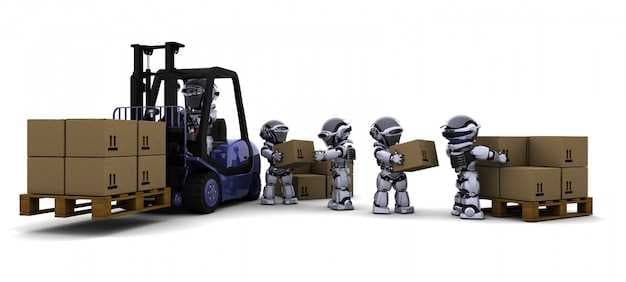

Recommendation: adopt a modular automation model that is proving that ROI can be achieved in 12 weeks by systematically tracking time-to-pick, accuracy, and downtime, then scale from shelves to arms to boxes as needs change.
Balance between throughput and accuracy requires clear conditions and real-time alerts. Frequently review the process and adjust the role allocations for the robot and human workers to minimize handoffs. Ensure the system uses suited configurations for different payloads.
Following this approach, equip machine vision, gripping arms, and conveyor modules with standard interfaces. Ensure the beverage or other items are detected and sorted by weight, size, and fragility; create zones for shelving and packaging.
To find bottlenecks, collect telemetry on cycle times, pick rates, and dwell times; structure the warehouse into logical blocks so robots can move onto high-demand lanes without collisions. Use alerts that trigger maintenance or re-routing.
Design for people and machines to collaborate; define the role of operators who supervise the system and respond to alerts; ensure the arms and gripper are suited to the typical payloads, from beverage cases to boxes. Following these guidelines, regularly review the balance of throughput and quality through the metrics frequently.
Practical roadmap for deploying and integrating warehouse robotics
Start with a focused pilot in a single zone using autostore, a limited set of items, and clear metrics to prove ROI just within 6–12 weeks.
Define objectives for improved throughput, accuracy, and worker safety. Tag items into categories (fast movers, bulk pallets, fragile materials) and map tasks to robot-led or hybrid workflows. Compared to current cycle times and error rates, set optimal target values to establish a credible baseline.
Following this plan, design the implementation in modular steps: hardware, software, and process changes. Lets configure a minimal viable setup: autostore racks, a small fleet of autonomous shuttles, and safety interlocks; ensure the system is equipped with sensors, control interfaces, and intuitive HMI. This work benefits from defined roles.
Provide a data plan that covers improving cycle time by items, packing accuracy, travel distance saved, and labor hours shifted between humans and robots.
Following the pilot, expand in phases: move from two categories to multiple zones; tune routing, queues, and packing stations; use cube storage blocks to maximize density and make the array of moves efficient.
Skills development matters: run short workshops on robot controls, preventive maintenance, and safety rules. Equip workers with mobile devices and simple dashboards to monitor performance; this improves engagement and helps workers adapt quickly.
Operational readiness: establish maintenance windows, spare parts, and supplier SLAs; align with life-cycle plans and autostore refresh cycles; ensure the equipment remains robust and scalable. For large-scale expansion, define integration points with ERP, WMS, and the data streams from automated picks and pallets. This extends equipment life.
Scaling plan highlights the potential gains: some tasks shift from humans to automated workflows, a pallet moves with fewer touches, large items are handled with confidence, packing speeds rise, and inventory accuracy improves. The option to add more robots grows as volumes rise, and skills across the team improve alongside the system.
Assessing automation readiness and mapping current workflows
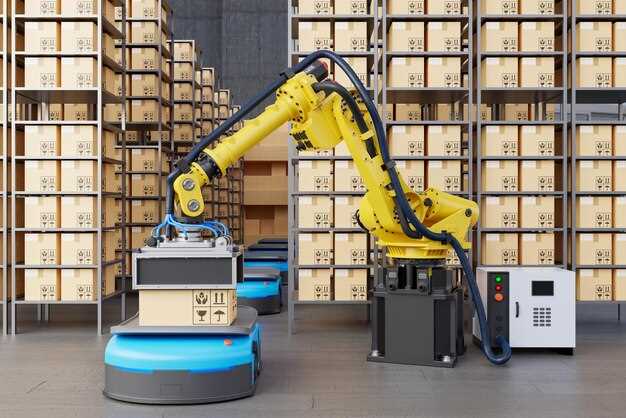
Begin with a practical action: map current workflows across facilities, including receiving, put-away, replenishment, routing, lifting, picking, packing, and shipping, and quantify time, distance, and error rates for each step. Create источник to centralize data from ERP, WMS, and labor systems and consolidate it into a single view to guide decisions.
Define workflow categories clearly: receiving, put-away, replenishment, routing, lifting, transportation, picking, packing, and shipping. For each category, document steps, required equipment, and human touchpoints, then track key metrics such as cycle time, dwell time, and error rate. Use this map to locate bottlenecks and handoffs among facilities and teams.
Establish a readiness framework with three pillars: processes, data, and capital. Score each area 1–5, identify gaps, and choose which workstreams take piloting with robotics in a controlled zone. A practical rule: start with high-throughput categories where onboard automation can lift performance efficiently and reduce conflicts in the workforce. Align with a working strategy that prioritizes quick wins and scalable design.
Focus on optimization opportunities: routing improvements to cut travel time, transportation optimization across facilities, and replenishment strategies that keep shelves stocked without overstock. Articulate a point-by-point plan to implement robotic elements in phases, including pallet lifting, picking assistance, and automated shipping labeling. Define success metrics: performance uplift, labor utilization, and capital payback.
Governance and measurement require clear ownership for each category, a rolling progress dashboard, and weekly reviews to keep the program tight. Use the data to take informed decisions, iterate on the strategy, and adjust the design based on results. The goal is a practical, repeatable path toward scalable automation.
| Category | Cycle Time (min) | Throughput (units/hr) | Data Quality (1-5) | Readiness (1-5) | Recommended Automation |
|---|---|---|---|---|---|
| Receiving | 24 | 140 | 4 | 3 | RFID-based inbound sorting, automated dock checks |
| Put-away | 16 | 210 | 3 | 4 | Automated slotting, guided picking with assistance |
| Replenishment | 12 | 300 | 5 | 4 | Automated replenishment triggers, robotic movers |
| Routing | 9 | 500 | 4 | 3 | Dynamic lane assignments, routing software |
| Lifting | 6 | 240 | 4 | 4 | Robotic arms, lifting stations |
| Transportation | 15 | 180 | 4 | 3 | Autonomous vehicles, dock scheduling |
| Picking | 8 | 420 | 5 | 5 | Robotic pickers, voice-assisted picking |
| Packing | 10 | 380 | 4 | 4 | Automated packing stations, scale checks |
| Shipping | 12 | 360 | 4 | 3 | Automated sort and label systems, yard management integration |
Choosing between AGVs, AMRs, and robotic arms for specific tasks
Go with AMRs for most internal transport tasks, pair robotic arms with pick stations, and reserve AGVs for fixed, scheduled pallet moves.
Stage 1: Task type. If you need to move pallets between docks and shelves on a predictable route, AGVs offer steady performance with minimal risk. For dynamic paths with obstacles and frequent route changes, AMRs deliver guided navigation and real-time re-planning. For item handling such as picking from shelves, packing, or palletizing, the robotic arm provides the core capability.
Stage 2: Navigation and environment. AGVs typically follow fixed lanes, beacons, or magnetic strips; their details stay stable but flexibility is limited. AMRs rely on SLAM, 360-degree sensors, and an array of mapping details to navigate in real time. Robotic arms do not navigate; they rely on feeders, conveyors, and docking stations to place items.
Stage 3: Payload and capability. AGVs handle heavy pallets and bulky crates; payload ranges vary from 500 kg to 5,000 kg, depending on model. AMRs commonly carry smaller loads or totes up to 200–300 kg, with robotic arms enabling pick-and-place from shelves or pallets up to about 60 kg, with reach around 0.8–1.5 m.
Stage 4: Workflow and integration. Align with warehouse management systems and transport management systems to assign scheduled tasks. Use automation to minimize travel and idle time; the added value comes from following real-time instructions and responding to demand fluctuations across an array of tasks.
Stage 5: Risk, waste, and performance. Risk reduction stems from remote monitoring and reliable repeatability. Waste reduction occurs through precise picking and packing, while performance improves via optimized routing, minimized backtracking, and shorter cycle times. Each option contributes to a leaner production line and lower labor intensity.
Stage 6: Examples and configurations. In practice, a common setup pairs AMRs with a robotic arm at a packing station to handle cube‑shaped totes, while an AGV delivers pallets to a dock during scheduled intervals. This combination supports a warehouse workflow that follows strict timing while maintaining flexibility for exceptions and peak periods.
Follow these guidelines to maximize production throughput, minimize waste, and sustain safe, reliable operation: map task details, define stage responsibilities, enable guided navigation, and monitor performance with clear metrics across pallets, totes, and cubes.
Building a scalable integration stack: WMS, MES, ERP, and data interfaces
Implement a centralized data fabric that interconnects WMS, MES, ERP, and data interfaces. Provide a single source of truth across systems, that events from the store floor trigger downstream workflows in real time. Use an event-driven design to keep data dynamic, minimize latency, and reduce the risks of misalignment between modules.
Define standardized mapping and data contracts: field names, units, time stamps, master data attributes, and business rules. Use canonical schemas and designs for each integration point, and store core data once while propagating only the delta to consuming systems. Build lightweight analysis at the edge and core layers to keep interfaces lean and fast.
Adopt a modular services approach: separate WMS, MES, ERP into bounded contexts with clear interfaces; orchestrate via an API gateway and a message bus. Place a side queue for resilience and eventual consistency, so failures take a contained path rather than halting the entire stack. When interconnected, this pattern provides maximizing throughput and enabling parallel workflow execution throughout the platform.
Quality controls and proving data lineage: implement validation, deduping, and semantic checks at entry points; attach provenance tags to changes; monitor data quality using predefined metrics; take corrective actions before data moves downstream. This reduces risks of bad data cascading into finance, planning, or production.
Performance and storage planning: design for scale with asynchronous writes, batching, and in-memory caches; measure metrics such as cycle time, order accuracy, and inventory visibility. Use cages as bounded contexts to confine logic and minimize ripple effects; maximizing storage efficiency by tiering, compression, and selective replication. The result is a system that can handle peak demand without impacting day-to-day operations.
Implementation roadmap: run a phased rollout starting with one facility; perform mapping of data flows across WMS, MES, ERP; align contracts; then extend to additional sites; continuously validate performance against the defined metrics. This approach keeps teams focused on concrete outcomes and reduces risk taken by large upfront changes.
Governance and continuous improvement: establish clear ownership, SLAs, and versioning for interfaces; document service contracts; implement regular analysis of inter-system dependencies; provide a full view of the risk and dependencies; feed back into designs and data interface evolution.
Ensuring safety, compliance, and risk management in robotics operations
Begin with a formal risk assessment within 30 days that addresses handling material in racks and the interaction zones around fully automated lines. If risk is deemed high, halt nonessential tasks until mitigations are documented. This provides a concrete path to safety, supports regulatory compliance, and drives a level of early success.
Define clear responsibilities and a safety governance cadence to achieve a high level of compliance with applicable standards (for example ISO 10218 and ISO/TS 15066). Addressing regulatory and customer requirements helps businesses stay audit-ready and reduces liability as warehouses are becoming more agile and connected, with automation affecting working patterns and data flows.
Perform hazard analyses on each use case: pallet handling, case picking, and automated replenishment. Build a risk matrix that scores severity, likelihood, and detectability, and set tolerances that keep high-risk tasks under continuous control. Consider material types, packaging, and surrounding hazards such as floor conditions and lighting, and review similar facilities to spot common hazards.
Put in place practical safeguards: physical fencing and perimeter sensors, safety-rated stops, interlocks on access doors, emergency halts, and clearly marked safe zones around racks. Calibrate speed settings to the minimum required for task performance and test as part of commissioning and quarterly reviews. Use guarding that remains visible and functional in varying surroundings and lighting levels.
Train operators with hands-on sessions that cover start-up, shutdown, and abnormal conditions. Create bite-sized drills that simulate sensor faults, communication loss, or a halted line, and verify that staff can respond within 5–10 seconds. Continually update SOPs based on incident learnings and cross-functional feedback; maintain agile teams that react to changes in layout, such as adding new racks or altering workflow.
Build a connectivity backbone that ensures real-time status, alarms, and material tracking across devices. Ensure data integrity between warehouse management systems and robotics controllers to support traceability and returns processing. When planning the purchase of safety devices, prioritize reliable sensors and durable grippers suitable for your material handling demands. The lessons brought by past incidents guide upgrades to prevent recurrence and strengthen defenses.
Keep a metrics dashboard that tracks near-misses, actual incidents, downtime, and equipment life cycles. Use the data to address recurring issues, refine risk controls, and guide purchases of replacement parts. Regular reviews with operators and managers confirm alignment across aspects such as environment, equipment, and people, driving continual improvement and safer, higher-performing operations.
Training, change management, and maintenance strategies for teams
Launch a structured 8-week training cycle focused on hands-on robot arms maintenance, safety, and change management to maintain uptime and performance. Each instance follows predetermined objectives, clear roles, and practical labs tied to shop-floor needs.
Essence of the approach: empower employees to diagnose faults, retrieve parts from bins quickly, and coordinate with the automation network across different shipping environments. The program aligns learning with industry needs and aims to raise capability across teams.
- Training framework and cadence
- Define roles: operators, technicians, supervisors, and data analysts who work with robot arms; mix classroom, labs, and on-floor practice; include leading vendor experts in select modules.
- Cadence and content: 8 weeks; modules cover safety, mechanical maintenance, sensor calibration, fault diagnosis, control software, and system integration. Predetermined objectives are tested with hands-on tasks and short written checks.
- Assessment and practice: hands-on labs, simulated faults, and live tasks in shipping zones; almost all labs require a live performance test before completion, and technicians retrieve evidence of skill via a digital checklist.
- Change management and engagement
- Leadership sponsorship and cross-functional governance; map stakeholders by role and create a transparent communication plan that updates on progress, risks, and needs.
- Pilot and feedback: start in a single instance on a defined work cell; collect feedback from employees, refine the training modules, and adjust maintenance windows; feed insights back into the network.
- Maintenance strategy and resource management
- Preventive maintenance by subsystem: arms, conveyors, vision systems, grippers, and safety interlocks; set predetermined intervals based on usage, vendor guidance, and pattern analysis; log PM tasks in the CMMS and connect to the network for visibility.
- Parts and tools: keep bins stocked with spare arms components, sensors, belts, cables; label items clearly and arrange for fast retrieval from a central location.
- Inventory and supply: plan for increasing demand during peak shipping periods; build redundancy for critical items and coordinate with leading suppliers to reduce lead times; use aerial inspections for overhead checks where applicable and feed results into maintenance planning.
- Measurement, analysis, and continuous improvement
- Metrics and dashboards: uptime, MTTR, MTBF, training completion, and cost-benefit outcomes; track by environment and by cell to compare results.
- Analysis cadence: weekly data pulls and monthly reviews; apply root-cause analysis to failures, update needs-based training content, and adjust the maintenance plan to increase capability over time.