


 Svenska
  English (UK)
  Русский
  العربية
  日本語
日本語  한국어
한국어  Magyar
  Türkçe
  Español
  Čeština
  Português
  Ελληνικά
  Suomi
Suomi  Nederlands
  Română
  Italiano
  Français
  Polski
  Українська
  Deutsch
  简体中文
简体中文  Slovenčina

Start by linking ERP, inventory, and transportation data in a live analytics loop to cut stockouts by as much as 25% within 90 days. This move increases speed and decision quality, and creates a reliable base for the rest of your data program.
Användning analyserande across suppliers and carrier systems to spot recalls, quality deviations, and demand shifts early. By standardizing data quality and unifying diverse data streams, teams gain faster insights and reduce wasteful cycles.
Automate exception handling to shorten response times. When alerts trigger, workflows adjust inventory buffers and reallocate capacity in minutes, not hours, preserving service levels during demand spikes. The result is analys traction across teams.
Establish a simple governance model that designates data owners and standard metrics. Analytics teams can provide guidance to buyers, planners, and warehouse operations, enabling a faster cycle of learning and adjustment.
Big Data for Supply Chain: Practical Guide
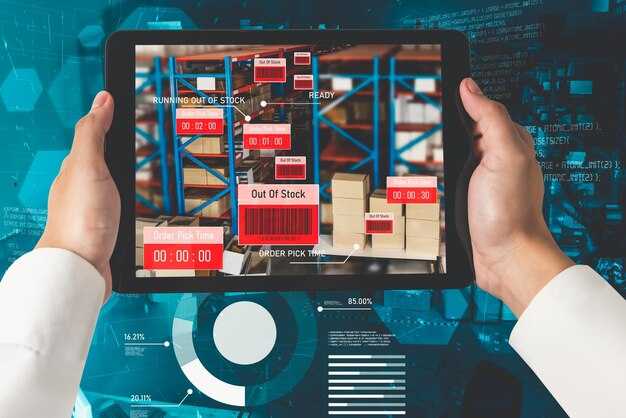
Adopt a centralized data platform that integrates ERP, WMS, TMS, and external feeds within 60 days to stabilize operational performance and reduce cycle times by 12-18%. This approach creates a single source of truth and helps teams make reliable decisions across planning, sourcing, and logistics, which becomes the standard for performance management.
Todays supply chains demand visibility. This is an important step for resilience. Build real-time dashboards that track priser of on-time delivery, inventory coverage, and order cycle times. Use alert thresholds to trigger proactive replenishment, which reduces stockouts and boosts satisfaction for customers and partners.
Leverage patterns in historical data to forecast demand and shipments, then align production with vendor capacity. Standardize data formats across vendors to improve data quality and enable scalable analytics that support decisions in near real-time.
Leveraging a scalable data pipeline that ingests orders, invoices, telematics, and supplier feeds, you enable faster decisions and closer collaboration across teams. Use an operational analytics approach to deliver insights in minutes rather than hours, enabling teams to adjust routes and carriers in near real time.
Model transport networks to minimize miles and idle time. Use route optimization that considers carrier capacity, service levels, and real-time conditions; this leads to reduced miles traveled and lower transport costs, while maintaining satisfaction with customers and vendors.
Manage risks in a complex network with scenario planning, what-if analyses, and contingency routes. Maintain a risk dashboard that highlights exposure by region, supplier, and product, helping teams act before disruptions escalate.
Present key metrics in concise formats that stakeholders can digest quickly. Use both numeric and narrative formats to convey risk and opportunities, enabling fast managing of exceptions across the chain.
Start with a 90-day pilot focusing on one product family, one vendor group, and one region; then scale to the full chain in six months. Measure impact on service levels, costs, and customer satisfaction, and refine models regularly to keep pace with todays dynamics and changing rates across suppliers.
Identify high-impact data sources for real-time visibility across the supply chain
Implement a real-time data fabric that ingests events from core internal systems, external partners, and digital sensors to surface actionable insights within minutes.
Key data sources to prioritize for real-time visibility include:
- Core internal systems: ERP (orders, inventory, financials), WMS (on-hand stock, locations, putaway and picks), TMS (shipments, carrier events, ETAs), and MES (production status). Capture fields such as item_id, their stock levels, location, status, batch/lot, expiry where applicable, and lead times, using standardized identifiers (GTIN, GLN, SSCC). This foundation delivers speed and accuracy across levels of planning and execution.
- External and supplier data: supplier portals, EDI feeds, carrier networks, retailer POS data, customs and port feeds, and weather or disruption alerts. Include источник signals to denote source provenance and validate with lead times, capacity, pricing, and risk indicators to improve forecasting and replenishment.
- IoT and on-site sensors: temperature and humidity sensors in transit and storage, equipment uptime/downtime, trailer and dock door sensors, and asset tracking tags. These signals preserve item quality and enable rapid anomaly detection, reducing delays and spoilage.
- Digital service data: maintenance logs, device status streams, warranty events, and API-based telemetry from logistics service providers. This lets you anticipate failures and schedule preventive actions, improving reliability.
- Transit and logistics events: GPS traces, telematics, dock receipts, delivery confirmations, and customs clearances. Track ETAs in near real time to reallocate capacity before customer-facing delays occur.
- Quality and traceability data: serial/lot numbers, expiry dates, QA results, defect and recall signals. Link to inventory items to support recalls, compliance, and rapid response.
- Market and external signals: port congestion indices, weather alerts, fuel price shifts, supplier risk scores. Use these to adjust sourcing strategies and transport routes, minimizing disruption impact on service levels and expenses.
Governance, architecture and practical gains:
- Core data model and levels: define items, locations, statuses, and batch/serial attributes, map to master data records, and support drill-down or roll-up views. This scalable foundation aligns decisions from item to facility levels.
- Streaming and latency: adopt event-driven ingestions with near real-time processing to achieve speed and reliability across internal and external sources, enabling complex reconciling across data streams.
- Data provenance and quality: validate formats (GS1/EAN, EDI), deduplicate records, and tag sources with источник provenance to improve reliability for operations and reporting, reducing losses.
- External data contracts: formalize data sharing with suppliers and carriers through clear SLAs and validation checks to prevent mismatches and avoid false signals that could trigger overstocking.
- Set target latency to minutes, not hours, and equip dashboards with alerting that triggers corrective actions when thresholds breach.
- Aim for item-level visibility across facilities to cut overstocking by 10–30% and reduce carrying expenses by 5–15% through proactive replenishment.
- Improve service levels by 5–15 percentage points with early-warning signals guiding re-planning before delays cascade to customers.
- Maintain retention policies aligned with compliance, ensuring core insights remain accessible for audits and continuous improvement.
Lets your team turn diverse data streams into a reliable, actionable backbone for your service offering and their operations, reducing retention of outdated signals and driving better decisions across the supply chain.
Cleanse and harmonize data across ERP, WMS, and TMS for consistent analytics

Start with a centralized master data management (MDM) program to cleanse and harmonize data across ERP, WMS, and TMS to achieve consistent analytics. Define an authoritative source of truth for core entities: product, inventory, customer, supplier, location, and order, and ensure teams have a single reference across systems. This foundation supports faster, coordinated decisions and establishes a processing framework that flags anomalies in real time and documents data lineage, so the data foundation will become reliable across the enterprise.
Automate cleansing rules to standardize attributes: unit of measure, SKUs, vendor names, and addresses; deduplicate records; validate formats; enforce consistent hierarchies. Use advanced matching to link related records across ERP, WMS, and TMS, so delays are minimized and analytics do not suffer from fragmented insights. At times, integrate feedback from frontline operators to fine-tune rules, ensuring the processing keeps pace with daily processing needs.
Harmonize data models by mapping fields and establishing a common schema; create cross-system master records; align currency, time stamps, and status codes. Implement versioned schemas to adapt to evolving infrastructure and to support efficient, scalable programs that empower teams to act quickly across channels. This approach enhances data integrity and accelerates cross-functional decisions.
Governance and operations: appoint data stewards, define SLAs, secure data access, and implement data lineage dashboards. Use APIs and event-driven pipelines to propagate changes efficiently across programs and systems, enabling continuous improvement in processing cycles and reducing manual handoffs.
With clean data, analytics capabilities expand: forecast accuracy increases, scenario planning improves, and inventory optimization becomes more reliable. Leverage processing time reductions and advanced algorithms to turn data into actionable decisions, leveraging blockchain for traceability where appropriate to increase satisfaction and reduce disputes in the supply chain.
Operational benefits include reduced manual corrections, fewer delays, higher satisfaction, and faster responses to market opportunities in traditional and emerging markets. The strengthened infrastructure will become a differentiator as programs scale and leverage data across functions, delivering consistent analytics across ERP, WMS, and TMS.
Develop predictive models for demand forecasting and optimized replenishment
Implement a machine learning saas solution that refers to demand signals from POS, e-commerce, promotions, and external factors to forecast demand at the item level and drive optimized replenishment.
Ingest clean data: purchase history; items; cost of goods; supplier lead times; store-level inventory; promotions; recall events; fuel; and route calendars. Normalize seasonality and holidays, align forecast horizons with replenishment cycles, and tag items by family and route to improve grouping in the model.
Adopt hierarchical and item-level forecasting, with seasonality adjustments and promotions lift. Use external signals such as weather and macro trends to bolster predictions. Ensemble models deliver higher accuracy than any single method, and they adapt quickly as data streams update.
Set dynamic reorder points and safety stock targets based on service level goals. Tie replenishment to routes and delivery windows, so shipments arrive just in time without excess. This approach reduces stockouts and minimizes inflated expenses caused by mid-cycle rush shipments.
Track metrics like forecast accuracy, service level, sales, and losses. A well-calibrated model cuts expenses by lowering safety stock and reduces losses from obsolescence. In practice, inventory turns improve by 15–25% in the first six months and stockouts drop by 20–40% depending on category.
Personalized replenishment plans across stores and routes boost agility and customer satisfaction. Leveraging real-time signals and recall events, adjust shipments quickly to prevent overstock and minimize waste. Fuel costs decline when shipments are consolidated and routing is optimized, delivering a measurable uplift in gross margins.
As a platform-driven solution, saas platforms enable rapid iteration, clearer accountability, and scalable data pipelines. These capabilities make forecast-driven replenishment outperform traditional safety-stock rules in both sales and expenses. The model will continuously improve through feedback loops from actual shipments and recall events, achieving higher ROI over six to twelve months.
Design dashboards and alerting that drive rapid operational decisions
Architect dashboards that surface forecast and opportunities at the most critical levels across suppliers and distribution nodes, with alerting rules that auto-trigger corrective actions within minutes.
Connect datasets from ERP, WMS, TMS, and supplier portals through a lightweight integration, creating a single источник of truth that management can trust across regions.
Transforms turn raw data into concise signals: demand drift, on-time delivery risk, and expenses volatility. The description describes how datasets map to each KPI and what actions follow.
Build dynamic dashboards that update in near real-time and forecast outcomes across the supply network, surfacing opportunities to consolidate orders, shorten lead times, or renegotiate terms.
Set alert tiers and escalation paths: warn when a supplier misses a service level; escalate to management if a forecast deviates beyond threshold; finally, provide remediation steps.
Track impact with concrete metrics: reduction in expenses, improved on-time performance, and faster resolution times. Dashboards provide drill-downs across regions and suppliers so teams resolve issues efficiently.
Implement a disciplined data workflow: validate data quality at the источник, refresh cadence aligns with operations, and reuse components to accelerate deployment across sites. This approach provides governance around data sources and an integration plan that scales across supply networks.
Establish data governance and adoption practices to sustain improvements
Appoint a data governance owner and publish a lightweight charter that ties data quality to delivery outcomes. Define data domain owners, access rules, and change-tracking processes. Build a concise data dictionary and a catalog of data from diverse markets so reporting across regions stays consistent and auditable. Ensure the data used by frontline teams supports quick wins.
Standardize key data definitions and establish a single source of truth for supply data. This improves managing, analyzing, and comparing performance across planners and warehouses. Align data with schedules, forecasts, and delivery processes to reduce rework and inefficiencies.
Launch a 90-day adoption plan with role-based training, quick wins, and a cross-functional data council. Tie incentives to data-driven decisions to accelerate cultural change and agility. Develop personalized dashboards for buyers, planners, and executives to surface the metrics that matter in each market.
Run a medium-sized pilot in one supply network and extend after validating improvements in inefficiencies and delivery reliability. Use an advanced analytics solution to analyze root causes, test what-if scenarios, and quantify potential gains. This approach makes governance practical and popular across teams.
Embed governance in daily workflows: automate data quality checks, assign owners, and set weekly schedules and monthly reviews. The reporting cadence must deliver quick actions and deeper analyses for leadership. Track data accuracy, forecast bias, on-time delivery, and cycle times to show valuable improvements.
Maintain ongoing education and storytelling to sustain adoption. Share valuable case studies across markets and encourage teams to experiment with personalized dashboards and data-driven processes. As governance matures, delivery predictability grows and the solution delivers ongoing value.