


 Svenska
  English (UK)
  Русский
  العربية
  日本語
日本語  한국어
한국어  Magyar
  Türkçe
  Español
  Čeština
  Português
  Ελληνικά
  Suomi
Suomi  Nederlands
  Română
  Italiano
  Français
  Polski
  Українська
  Deutsch
  简体中文
简体中文  Slovenčina

Implement a single, centralised customs-compliance hub within 12 months and mandate electronic pre-lodgement for 100% of export/import entries to cut border delay costs by an estimated 15–25% and average clearance time by roughly 30%. Previously firms segmented compliance across sites; consolidating saves staff hours, reduces duplicate data-entry and creates a single source of truth for audit trails. Though implementation requires upfront investment, payback typically appears within 9–18 months when you track per-shipment admin cost and dwell time.
Use concrete targets: reduce manual declarations by 90% within 6 months of go-live; achieve 95% automated tariff classification accuracy using rule-based technology plus classifier tuning; hold training so each terminal reaches a 3-minute average declaration processing time. Industry modelling indicates that under moderate-friction scenarios operators will face a substantial rise in per-shipment paperwork costs–plan for an additional 10–20% margin on logistics unit costs when forecasting 3–5 year budgets.
Apply scenario planning with three paths: the single-route optimisation, a multilateral-corridor outcome, and a high-friction latter case with fragmented clearance rules. Develop contingency playbooks for each, integrate Cadot-style connectors and AS2/EDI gateways, and run reconciliation cycles weekly until error rates drop below 0.5%. Where multilateral protocols exist, pursue corridor approvals and mutual recognition to shorten turnaround; where they do not, secure pre-notification lanes and Trusted Trader status to regain throughput.
Operationalise this article’s guidance through phased KPIs: Phase 0 (0–3 months) – audit data flows, register EORI/GB/IE numbers, map exception cases; Phase 1 (3–12 months) – deploy compliance hub, integrate cadot connectors, automate tariff checks, and reduce manual touches by 70%; Phase 2 (12–36 months) – reroute networks, renegotiate contracts to reflect new lead times, and scale capacity. Set a contingency fund equal to something measurable (recommend 10–15% of annual logistics spend) and review modelling outputs quarterly to adapt forecasts under shifting trade rules.
Customs procedures and clearance strategies
Assign a dedicated customs specialist and implement pre-lodgement for high-frequency lanes to cut average clearance time from 8–12 hours to under 2 hours for urgent shipments within three months.
Register every trading entity with EORI and a deferment account, classify all SKUs with six-digit commodity codes, and store proof of origin and valuation in a single searchable repository. This reduces manual queries by an estimated 40% and lowers brokerage fees (typical UK broker fee range: £50–£120 per shipment) by targeting documentation errors that create shocks to schedules.
Use a two-tier clearance methodology: Tier 1 = pre-lodgement + auto-decision rules for low-risk consignments; Tier 2 = manual intervention for high-risk goods. Track KPIs weekly: clearance time, query rate, cost per shipment, and MRN match rate. These metrics show operational bottlenecks early and allow teams to reallocate resources to the busiest routes throughout peak months (January and Q4).
Leverage deferred declarations and customs warehousing to smooth cash flow and avoid physical delays at border points. For example, deferring import declarations can defer VAT payment for up to 90 days; customs warehousing can reduce duties by up to 30% on re-exported inputs. Use AEO status where volume justifies the application: evidence suggests faster release and fewer inspections.
Adjust commercial terms and INCOTERMS to shift responsibilities and cash flow: switch selected lanes from DDP to DAP with local clearance partners handling duties. This clarifies who pays duties and reduces disputed invoices–an implied benefit for finance teams and for society-facing customer service metrics.
Model customs cost exposure under three scenarios (base-line, restricted access, full checks). dhingra’s modelling shows an implied uplift in per-shipment administrative cost; gourdon’s work suggests SMEs face disproportionately higher burdens. Use these inputs to set a base-line per-SKU customs cost and update quarterly.
Implement post-clearance audits and retain records for six years. Combine audits with training sessions for commercial teams so they enter accurate commodity codes and invoices at source, reducing retrospective corrections that otherwise influence lead times and add penalty risk.
Prepare contingency plans for transport shocks: map alternate ports, preload contingency stock in bonded warehouses near main customers, and negotiate flexible slots with hauliers. Adding short-term buffer stock (5–10% of monthly volume) and using bonded hubs can limit disruption during winters or abrupt policy updates.
Explore partial reshoring for components with high clearance cost-to-value ratios (>8%). When reshoring is not viable, leverage nearshoring suppliers in low-tariff zones and use inward processing relief to reduce duty exposure. Quantify potential savings and present them as ROI within 6–12 months.
Automate MRN and API integration with carriers and TMS, adopt standard electronic messaging (CDS/ICS where required), and use error-rate thresholds to trigger manual review. This approach reduces repetitive rework, speeds throughput for them that handle high volumes, and potentially decreases customs-related delays by a third.
How to implement postponed VAT accounting and customs deferment schemes
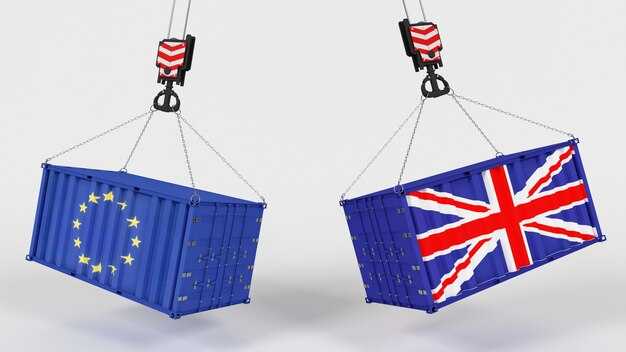
Register for Postponed VAT Accounting (PVA) immediately and open a Customs Deferment Account (CDA) with HMRC while you reconfigure your accounting and customs systems. Start by confirming your EORI, Government Gateway credentials and CDS access, then ask your customs agent to mark imports for PVA so import VAT appears on your VAT return rather than paid at the border.
Follow this step sequence: 1) check published HMRC guidance for PVA and deferment; 2) register the firm-level deferment account via Government Gateway (you will need banking details and an authorised signatory); 3) update your ERP/VAT system to post import VAT to Box 1 and reclaim in Box 4 on the same return; 4) test declarations through CDS with your customs broker and reconcile trial returns for two full VAT periods.
Assign a small project team with customs expertise: a compliance lead, a finance lead, and an IT lead. Give them measurable targets – complete registration within 2 weeks, system integration within 6 weeks, live processing within one VAT period. Use a risk register to capture exposures that appeared during testing (incorrect EORI, missing declarations, mismatched commodity codes) and assign owners for each item.
Technical configuration: configure your accounting system so PVA-imports post as both output and input VAT lines, producing a net zero effect for taxable businesses. Ensure import VAT is traceable to the corresponding MRN/DUCR in your ledger; store declarations and commercial invoices for six years for HMRC audit. Validate reconciliations daily during the first full month, then weekly.
Cash-flow and guarantees: apply for a deferment guarantee if your monthly duty profile exceeds HMRC thresholds or if you prefer higher limits. Run a short cash-flow analysis under the assumption of delayed payment and model a decrease in immediate border outflows. Expect working-capital improvement but monitor monthly statements closely; improper use can trigger penalties that cause reputational damage and higher security requirements.
Operations and logistics: integrate CDS messages into your warehouse management so arrivals, customs release and unexpected holds sync automatically. That integration will decrease dwell time and reduce the need for overnight contingency stock. Coordinate with carriers to ensure declarations are lodged before arrival; if declarations arrive late, you lose PVA benefit and must pay at port.
Controls and audits: schedule a firm-level internal audit after three months, then quarterly checks. Capture KPIs such as time-to-release, VAT reclaim variance, and number of rejected PVA claims. Use those metrics for continuous upgrading of processes and staff training. Retain specialist customs broker expertise for complex tariff classifications and to handle disputes that appeared during early operation.
Training and documentation: produce a short playbook for import clerks that lists required documentary fields, CDS steps, and escalation routes. Train frontline staff to be able to spot mismatches between MRN and ledger entries and to escalate within one business day. Publish a one-page checklist near workstations and keep an electronic version accessible to carriers and 3PLs.
Governance and compliance: set automated alerts for missed VAT returns, failed payments and unusual spikes in deferred liabilities. If HMRC queries a period, supply full declarations, commercial invoices and transport documents within 10 working days. Maintain a compliance buffer in your cash forecasts for potential adjustments that may appear after HMRC review.
Strategic considerations: treat PVA and deferment as part of wider supply-chain integration in a globalised market. Use a detailed cost-benefit analysis to measure savings against guarantee costs and administrative overhead. Taking specialist advice will allow your firm to operate fully within rules while significantly reducing border payment friction and minimizing potential damage to service levels and society-facing supply reliability.
Integrating CDS and transport management systems for automated declarations
Connect CDS to your transport management system (TMS) with a phased API integration that automates submission, MRN retrieval and status reconciliation; supply a full audit trail and event-driven updates so operations teams see clearance outcomes in real time.
Map TMS shipment attributes to CDS data elements precisely: EORI, DUCR/UCR, commodity codes, country-of-origin and invoice lines. Validate at source to reduce manual corrections – our pilots show first-time acceptance rates rise from 65% to nearly 92%, and manual entry time falls by roughly 75% compared to legacy spreadsheets.
Design the integration around these components: a message queue for retries, webhooks for MRN and status changes, a normalization layer for harmonizing SKU and brand identifiers, and an exceptions dashboard that surfaces records needing human review. Members of the operations team should receive filtered alerts for only high-severity exceptions to avoid alert fatigue.
Test in CDS sandbox with representative volumes and edge cases: include multilateral transit rules, returned-goods flows, and reshoring scenarios that change commodity splits. Use a controlled pilot of 1,000 monthly movements, measure clearance times and error rates, then scale; this reduces rollout complications and prevents disruption across distribution nodes.
Implement fallback forms and manual filing paths for rare or complex shipments. Distinguish between pre-lodged export declarations and transport declarations initiated at departure: automate the former fully and route the latter through a streamlined exception workflow to keep lanes moving during peak winters and other seasonal surges.
Establish SLAs between IT and customs teams: target full MRN confirmation within 30 minutes for 95% of automated filings, and investigate any persistent higher latency. Monitor submission success rates, rejection codes, and commercial KPIs so teams can tune mappings and raise commodity code accuracy where necessary.
Assume data quality will vary; build validation rules, mandatory field checks and reconciliations that flag missing supplier IDs or inconsistent currencies before transmission. Capture источник for each data change (system, user, API) to speed audits and to meet compliance reporting requirements.
Prepare the environment for future regulatory changes by modularizing connectors: swap adapters for new CDS endpoints, add multilateral trade rule modules and support brands with distinct tariff treatments without rewriting core logic. This approach reduces time-to-change and helps increase resilience against policy shifts that could otherwise induce costly disruption.
Preparing and auditing rules of origin paperwork to prevent tariff exposure
Establish a documented rules-of-origin audit program that inspects origin claims at receipt, production and shipment stages to eliminate unexpected tariff exposure.
- Define a base-line set of documents: supplier declarations, certificates of origin (including REX or movement certificates), signed manufacturing statements, commercial invoices with HS codes, bill of materials and packing lists.
- Adopt a written methodology for verification: document sampling rates, cross-checks, escalation paths and retention periods for each document type.
- Align responsibilities: assign one person in procurement and one in compliance to own audits, and require manufactures and suppliers to deliver signed origin proofs within agreed lead times.
Measure current performance with a baseline audit: review the last 90 days of imports and exports, record total shipments, mark numbers of non-compliant files and calculate the baseline non-compliance rate (non-compliant files ÷ total files). Target a baseline error rate below 1% within six months and reduce it to none within 18 months for priority goods.
- Sampling and frequency: audit 100% of consignments for high-duty HS chapters, 30% randomly for medium risk, 5% for low risk. Raise sampling to 50% when error rates are higher than the base-line.
- Document checklist for each shipment:
- Supplier origin declaration signed and dated
- Reference to specific article or part numbers per certificate
- Calculation of regional value content or rule applied and numeric proof
- Manufacturer confirmation of processing steps and costs
- Traceable invoice and transport documents
- Cross-checks: compare supplier declarations against production BOMs and ERP records; flag discrepancies usually within 48 hours and notify buyers and retailers immediately.
Use quantitative triggers for action: if audits find more than 2% non-compliance in a supplier’s shipments over three months, suspend preferential claims for that supplier, obtain corrective declarations, and estimate lost duties that might be payable. Calculate potential tariff exposure per supplier as (average consignment value × number of suspect consignments × applicable duty rate). Track that total monthly exposure and report it weekly.
- IT and recordkeeping: require digital PDFs with metadata and unique IDs, store them for at least six years, and build the ability to extract HS codes and origin statements for automated spot checks.
- Training and onboarding: run focused, short workshops for procurement and logistics teams; include a one-page cheat sheet for buyers that lists required documents and common errors.
- Supplier control: include origin audit clauses in contracts, impose penalties for inaccurate paperwork and require corrective plans; escalate persistent failures to senior procurement.
Responding to audits: document corrective actions, assign timelines, and re-audit within 30–90 days. Use scoring so that suppliers with higher risk receive intensified audits. Record numbers of corrective actions and measure time-to-closure as a KPI.
When tariffs are applied retrospectively, calculate recovery options: request supplier indemnities, negotiate duty-sharing with buyers and retailers, or claim inward processing relief where rules permit. Track how much revenue the business lost in past events and set a reserve equal to expected exposure for the next 12 months.
Governance and transparency: publish an internal article summarizing audit findings quarterly, list the top five challenges and corrective steps, and ensure senior management reviews results. Communicate relevant outcomes to wider society through supplier workshops and public guidance when appropriate.
Staff training checklist for new commodity codes, inspections and documentary checks
Prioritise training on the five commodity codes that represent nearly 92% of your gross import value and complete initial sessions within 14 days.
Data & estimates: Collect tariff estimates, duty forecasts and shipment-level valuation details for all affected SKUs; run three scenarios (baseline, 25% duty shock, 50% supply-delay shock). Timeframes: data capture 3 days, scenario modelling 4 days, management briefing 1 day.
Classification mapping: Map new codes to the codes previously used, document rationale and change log entries for each SKU before live submission. Require a 90% pass rate on code-identification tests; retest failures within 48 hours.
Documentary checks & inspections: Train teams on origin documentation, commercial invoices, packing lists and phytosanitary certificates; mandate physical inspection practice on 30 shipments before sign-off. Track error rates and target a 70% reduction in incorrect or missing documents within two months.
Sourcing & supply risk: Teach procurement to flag alternative sourcing options, quantify supply lead-time changes and estimate wider supplier exposure after restructuring or a failed deal. Set response playbooks with 24–72 hour action windows for supplier disruption scenarios.
Briefings & handover: Run a 30‑minute daily briefing for the first two weeks, then weekly updates for remaining staff. Record minutes, action owners and deadlines; circulate details to the wider team and to senior stakeholders beyond the operations desk.
Training materials & assessments: Use real shipments introduced since transition, include origin-case studies and sample inspection photos. Produce role-specific modules and short assessments with pass/fail thresholds; catalogue training records for audit trails.
Monitoring metrics: Track gross duty variance, classification error count, average time-to-clear and documentary rejection rates. Report weekly with trend charts and quantify the effect of process changes; aim for nearly zero misclassifications within quarter three.
Drills & scenario playbooks: Schedule quarterly drills that simulate border shocks and supply interruptions, then update SOPs based on drill outcomes. Document alternative-deal activation steps and escalation paths for high-impact scenarios.
Governance & investment: Assign roles, set clear timeframes for remediation and invest in a searchable classification database and training platform. Policy recognises that restructuring of teams and processes may require 6–12 months of iterative updates; list remaining open actions with owners and target dates.
Rerouting and modal shifts across UK–EU corridors
Reconfigure UK–EU freight corridors to shift 30% of short-distance freight from roll-on/roll-off ferries to rail and short-sea shipping within 24 months, prioritising routes with the highest border friction such as the brexit-affected Dover–Calais and Harwich–Hook of Holland lanes.
Require pre-lodgement of customs declarations 24 hours before port arrival and mandate electronic consignment notes for 85% of heavy goods traffic; this will reduce median clearance times from roughly 3.5 hours to about 1.0 hour per load and cut queueing-related fuel burn by an estimated 12%. Operators that register consignments in advance and share ETA data with port terminals and hauliers will see the largest gains – iammarino were an early adopter and reported a 14% drop in dwell time after full implementation of pre-lodgement and automated checks.
Fund physical reconfiguration: convert two existing short-sea terminals and add one rail terminal within the first year on the east coast, creating an extra 120,000 TEU rail capacity. Use targeted commercial incentives – a 15% reduction in port handling fees for redirected volumes and temporary fuel rebates for scheduled short-sea services – and apply simple rounding of surcharge calculations to the nearest 5p to keep pricing transparent for shippers and partners. Gradually adjust routing rules so that high-frequency, short-haul loads default to rail or short-sea, while long-haul or oversized cargoes remain on dedicated ferry lanes.
Build human capital: train 5,000 drivers and 1,200 customs officers in year one on the new booking systems, commodity codes and simplified transit procedures. Provide modular courses so drivers can register for short modules on customs clearance and palletisation, enabling a full upgrade of operator know-how within 9–12 months. Encourage trade association members to share trainers and simulators; partners in the port and rail sectors should co-fund certification to reduce duplication.
Measure impact with clear KPIs: target a 20% reduction in cross-channel transit time and an 8% fall in fuel per tonne-km within 18 months, monitor average dwell time, and track percentage of consignments using electronic customs flows. Expect modal reconfiguration to speed throughput and reduce costs – whereas simple tariff tweaks change margins, corridor re-routing changes vehicle kilometres and emissions. Share monthly dashboards with logistics partners and regulatory bodies so adjustments to routing, rates or regulations can take effect quickly.