


 Svenska
  English (UK)
  Русский
  العربية
  日本語
日本語  한국어
한국어  Magyar
  Türkçe
  Español
  Čeština
  Português
  Ελληνικά
  Suomi
Suomi  Nederlands
  Română
  Italiano
  Français
  Polski
  Українська
  Deutsch
  简体中文
简体中文  Slovenčina
 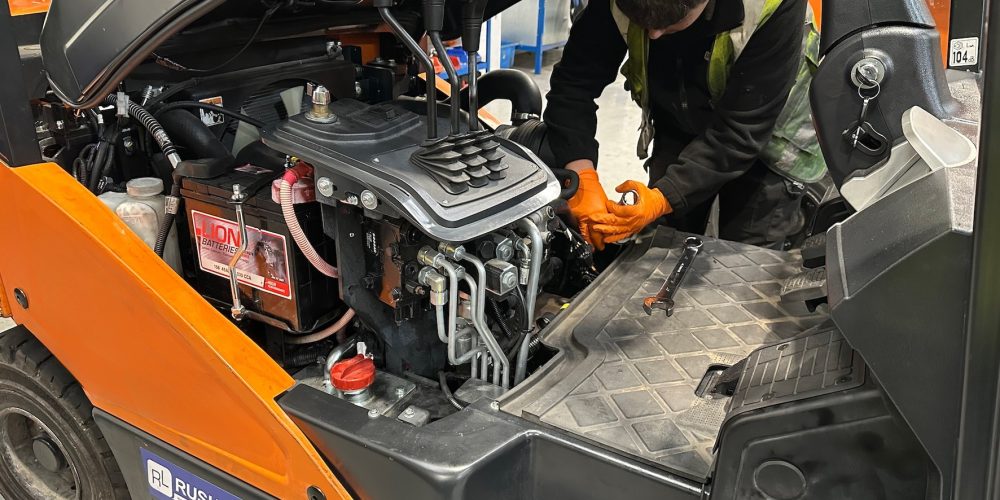 Emerging Material Handling Innovations Reshaping 2026 Warehousing and Logistics">

Seven Material Handling Trends Poised to Transform 2026
The warehousing, transport hubs, and fulfillment centers of 2026 face the challenge of delivering peak performance amid evolving demands. Several critical trends are influencing how material handling operations will evolve, which are shaping not only warehouse efficiency but also global logistics strategies.
1. Prioritizing Safety Beyond the Basics
Safety remains the cornerstone of material handling in 2026. With thousands of forklift-related incidents reported annually, many with serious consequences, organizations are learning that meeting only minimum safety standards just won’t cut it anymore. Instead, going the extra mile with advanced safety implementations is becoming non-negotiable.
Features like sealed disc brakes, speed limiters, anti-collision sensors, flashing beacons, and pedestrian awareness blue light projections are already industry standards, and their adoption is expected to become even more refined. Businesses are increasingly opting for a mixed fleet approach to access the best-in-class safety features across multiple brands, tailoring equipment choice to the specific requirements of each task.
Comprehensive operator training combined with rigorous maintenance programs form a double-barreled strategy to mitigate risk. The goal is to foster a safety-centric culture that transcends mere regulatory compliance, safeguarding personnel, goods, and equipment alike.
2. Sustainability as a Winning Business Advantage
Green initiatives have moved from being optional acts of good citizenship to becoming powerful competitive differentiators. Expect warehouses to embrace sustainability with investments in rooftop solar panels, energy-efficient HVAC systems, and a stronger pivot towards electric forklifts.
Pressure from consumers, regulators, and supply chain protocols demanding lower carbon footprints is driving these changes—making eco-friendly operations a selling point to gain new contracts and retain customers in an increasingly conscious market.
3. Electric Forklifts Accelerate Their Market Share
The electric versus internal combustion (IC) truck debate is decisively leaning toward electric in 2026. While diesel-powered trucks once led the pack, technological leaps in lithium-ion and lead-acid battery technologies have made electric models capable of handling heavy loads—even lifting up to 8,000kg or more—in demanding outdoor environments like construction yards.
These electric forklifts are not only quieter and cleaner but also cost less over time in maintenance. However, fleet managers must carefully weigh battery options and charging logistics, especially in multi-shift contexts. Moreover, emerging hydrogen fuel cell forklifts present an exciting future alternative as industries seek to ditch fossil fuels altogether.
4. Mixed Fleets Improve Flexibility and Responsiveness
As business demands grow more unpredictable with fluctuating sales peaks, expanded product lines, and spontaneous marketing pushes, logistics managers crave adaptability above all. Rigid ownership models for handling equipment are on the way out. Instead, flexible hire and lease arrangements allow companies to dial fleets up or down swiftly.
This agility enables rapid response to operational changes without the drag of sunk capital in underutilized assets. Suppliers able to support such fluid, “best fit” mixed fleets will be invaluable partners in 2026’s dynamic logistics environment.
5. Investing in People Power
Despite technological advances, people remain the heart and soul of successful warehousing and logistics. Well-trained, motivated operators not only drive productivity but also uphold safety and reduce turnover.
Accordingly, 2026 will see businesses ramp up investment in operator education, focusing on skills refinement, safety awareness, and well-being. Specialized forklift training programs will gain prominence as firms pursue safer and more efficient workplaces.
6. Automation and Connected Fleets Drive Digital Transformation
2026 warehouses will feature higher levels of automation peppered throughout — from autonomous mobile robots (AMRs) and automated guided vehicles (AGVs) to advanced conveyor systems. Yet, the crucial factor will be integrating these technologies with skilled human oversight ensuring solid returns on investment.
Forklift fleets will morph into “connected fleets” with embedded telematics and performance software enabling real-time data analysis. This digital insight helps optimize fleet size, vehicle utilization, and maintenance scheduling, boosting uptime and operational resilience.
Remote diagnostics and service interventions via smart technologies further minimize downtime, allowing swift interventions without the wait for onsite engineers.
7. Mastering Complexity for Enhanced Productivity
With operational costs climbing, 2026’s warehouses face growing pressure to squeeze every ounce of productivity from their assets. Such sophistication requires expert collaboration to manage the increasingly complex interplay between equipment, workforce, and workflows.
Specialist material handling support providers will be crucial, helping businesses tailor fleet compositions, optimize servicing routines, and offer insightful reviews based on fleet performance metrics. This proactive partnership helps cut expenses, elevate reliability, and ensure assets deliver maximum value over their service life.
Summary Table of Trends and Their Logistic Implications
| Trend | Beskrivning | Påverkan på logistiken |
|---|---|---|
| Safety Enhancement | Advanced safety tech and comprehensive training | Reduced accident risk lowers shipment delays and cargo damage |
| Hållbarhet | Green energy and electric equipment adoption | Carbon footprint reduction and compliance with green regulations |
| Electric Forklifts Growth | Shift to electric trucks including heavy-duty models | Cleaner, quieter operations; cost-effective for multi-shift logistics |
| Flexible Mixed Fleets | Hiring and leasing for fleet agility | Rapid scalability to meet demand fluctuations |
| People Investment | Enhanced operator training and wellbeing | Improved productivity and safer handling of cargo |
| Automation & Connectivity | Integration of AMRs, connected telematics | Optimized fleet management, increased uptime, actionable insights |
| Complexity Management | Expert support to fine-tune fleet and operations | Cost savings, enhanced fleet reliability, maximal asset utilization |
Taking the Wheel: Why the Human Factor Still Matters
No matter how shiny or high-tech the equipment gets, the human element remains the differentiator. Investing in operator skills pays dividends in safety and throughput, proving that technology and people aren’t at odds but are teammates. Technology can boost precision, but people provide the judgment and adaptability that automated systems can miss. This balanced approach is the secret sauce for warehouses and logistics operations to thrive in the face of increasing complexity.
A Final Word on Navigating 2026’s Material Handling Landscape
While digital trends and sustainability targets dominate discussions, it’s clear that the future of material handling depends on harmonizing advanced tech with human expertise, maintaining fleet flexibility, and embracing eco-conscious practices. This convergence paves the way for more agile, safe, and sustainable warehouse and logistics operations.
Even the clearest insights and most glowing reviews can’t replace the value of firsthand experience. On GetTransport.com, customers can explore a vast range of cargo transportation options worldwide at competitive prices, equipping them to make choices that truly fit their needs—without the guesswork or wasted expenditure. The platform’s transparent pricing, ease of use, and broad selection empower businesses to address diverse shipping, moving, and bulky freight challenges efficiently. Book your ride now on GetTransport.com and experience firsthand the benefits of streamlined logistics solutions.
From these evolving trends, the logistics sector can expect smarter, safer, and greener cargo movement with more flexibility to meet shifting demand patterns. Though these developments may not revolutionize global logistics overnight, they set a solid foundation for the operational excellence that companies, big and small, will strive for in 2026.
Start planning your next delivery and secure your cargo with GetTransport.com. As logistics keeps pace with these material handling advancements, GetTransport.com stands ready to offer affordable, reliable transport solutions globally, making distribution, freight forwarding, and bulky shipments simpler than ever.
In conclusion, the material handling innovations shaping 2026 spotlight critical areas: enhanced safety protocols, sustainability commitments, rapid electrification, operational flexibility through mixed fleets, investment in people, automation integration, and expert-driven complexity management. Together, they point toward a future where warehousing and logistics are more efficient, resilient, and environmentally responsible. By embracing these trends and partnering with smart logistics platforms like GetTransport.com, businesses can confidently navigate the roadmap to success.