


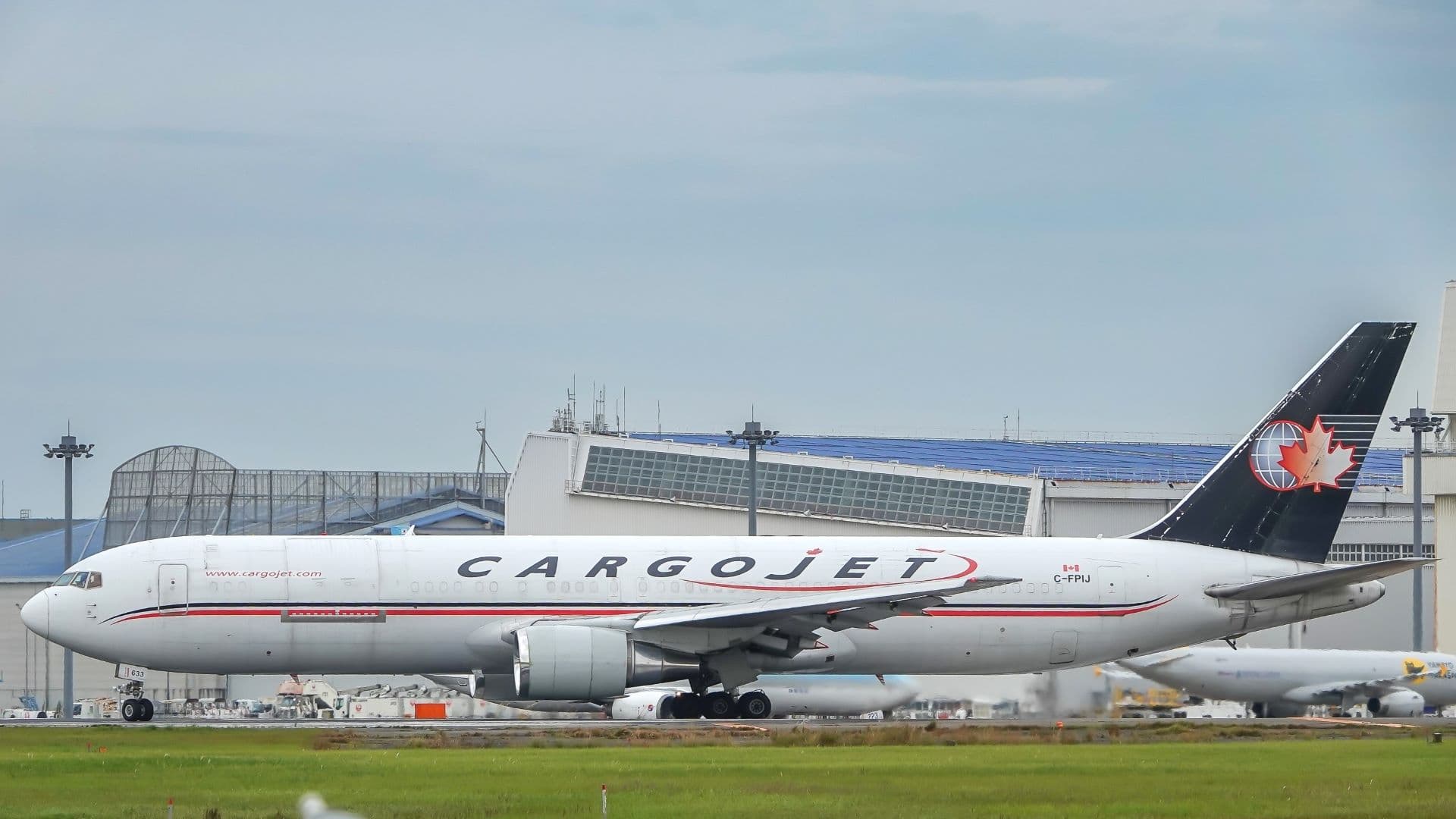

Cargojet has operated as many as 14 Boeing 757-200 rotations between the Toronto area and Louisville and flown seven Boeing 767-300 legs primarily between Vancouver and Louisville in the past three months to meet UPS demand after the MD-11 groundings. The carrier is sustaining multiple daily narrowbody shuttles and scheduled medium‑widebody services that have materially offset the decline in its China‑U.S. e‑commerce charters.
How the UPS work changed fleet deployment
After the MD‑11 grounding following the Louisville accident, UPS and, to a lesser extent, FedEx contracted third‑party carriers to plug capacity gaps. Cargojet became one of the principal partners, supplying a mix of crewed charters and scheduled operations using its 757 and 767 freighters. The UPS arrangement appears to be renewed quarterly but is expected to continue through Q3 and perhaps into Q4 due to ongoing certification uncertainty for the MD‑11 fleet.
Aircraft flows and route patterns
| Aircraft | Typical Routes | Observed Peak Count | Role |
|---|---|---|---|
| Boeing 757‑200 | Hamilton (Toronto) – Louisville | 14 | Narrowbody feeder for UPS hub rotations |
| Boeing 767‑300 | Vancouver – Louisville; Toronto/Vancouver – Memphis (FedEx) | 7 | Medium widebody long‑haul support |
The practical upshot: Cargojet can quickly stage aircraft in North America for easier maintenance planning and crew scheduling, while generating higher margins on some third‑party flights than on the contracted transpacific work it lost.
Financial effects: numbers that matter
For the quarter, total revenue came in at $208.1 million, down 2.9% year‑over‑year. The company reported a 17% increase in revenue from its domestic express network, yet charter revenue fell 32% and per‑flight aircraft rentals dropped 9.6%. Despite that, operating profit rose 3.6% to $69.4 million, with the adjusted operating margin up roughly 2.1 percentage points.
Capital discipline was evident: quarterly capital expenditures for maintenance and capacity were cut by 73% to $27.4 million, and management flagged new capacity investments only if long‑term lease commitments materialize. One cost wildcard remains the pilot contract, which is up for renewal in June and could raise labor expenses.
Where China e‑commerce fits in
Cargojet’s long‑haul transpacific business suffered when small‑parcel flows from China to the U.S. shrank following tariff and de‑minimis policy changes. E‑commerce shipments from Chinese sellers including Shein, Temu, Alibaba and TikTok to the U.S. plunged—reports showed a ~50% year‑over‑year drop in December and roughly 30% for the full year—reducing demand for dedicated freighter blocks. As a consequence, Cargojet and Great Vision HK Express agreed to suspend a major contract that had generated nearly $160 million to date.
New markets and tactical responses
Rather than sit on idle frames, Cargojet redeployed capacity to the Americas and Europe. Actions included:
- Launching scheduled charters five times weekly into Central/South America and the Caribbean for a new customer.
- Introducing a weekend Hamilton–Liège service to capture seasonal premium seafood and Canadian exports to Europe.
- Shifting short‑haul rotations to improve aircraft utilization and simplify maintenance and crew logistics.
Risks and opportunities
| Risk/Opportunity | Impact | Mitigation or Leverage |
|---|---|---|
| Geopolitical tariffs and de‑minimis changes | Reduced transpacific D2C volumes | Redirect fleets to Americas/Europe lanes; diversify customers |
| MD‑11 retirement by UPS | Longer‑term demand for 767/757 third‑party lift | Quarterly renewals with UPS; position for multi‑quarter support |
| Pilot labor negotiations | Cost pressure on margins | Plan staffing and negotiate for phased increases |
Strategic levers Cargojet is using
- Asset redeployment: move aircraft where demand is strongest rather than returning to the same lanes.
- Schedule flexibility: use weekend slots and weekday gaps to sell capacity both as blocks and ad hoc loads.
- Cost control: sharply reduced capex and prioritized maintenance spending.
- Market diversification: target South America, Europe and specialized commodities like seafood.
What this means for shippers and logistics networks
Shippers should note that regional capacity can tighten or loosen quickly depending on how carriers like Cargojet allocate aircraft. Shorter stage lengths in the Americas and Europe generally reduce billable flight hours for charters, which can lower per‑leg revenue for airlines but improve schedule resilience for freight forwarders and distributors. For importers and exporters, the lesson is clear: diversify routing options and maintain flexible freight contracts so sudden policy shocks don’t leave your supply chain stranded.
Put plainly, this is a tactical reshuffle rather than an industry rewrite. The global air cargo market adapts fast; carriers will chase revenue where margins and utilization make sense.
On GetTransport.com, you can order your cargo transportation at the best prices globally at reasonable prices. This empowers shippers to compare options, avoid overpaying for last‑minute capacity, and make the most informed decision without unnecessary expenses or disappointments. The platform’s transparency and convenience—covering office and home moves, parcel and pallet deliveries, vehicle transport and bulky goods—align well with the dynamic routing and short‑notice needs discussed here. Start planning your next delivery and secure your cargo with GetTransport.com. Book your Ride GetTransport.com.com
To wrap up: Cargojet replaced lost transpacific revenue by stepping into UPS and FedEx network gaps, redeploying 757 and 767 capacity to North American, Latin American and European lanes, trimming capex and leaning on a strong domestic express network to keep margins positive. The carrier’s approach demonstrates how flexible asset management, route diversification and disciplined spending can stabilize airlines when geopolitical shifts compress one market. For logistics managers, the takeaways are to monitor capacity flows, keep contingency routes ready, and work with transparent partners that offer competitive freight, shipment and delivery options.
In short, Cargojet’s move shows practical freight adaptability: when one corridor slows, redirect the ship. For those arranging cargo, freight forwarding, moving or relocation—whether parcel, pallet, container or bulky loads—platforms such as GetTransport.com make it easier to secure reliable, international and cost‑effective transport solutions that match rapidly changing market conditions. By combining route flexibility with transparent pricing, GetTransport.com helps simplify shipping, dispatch and haulage decisions for shippers worldwide, making logistics less of a headache and more of a solved problem.