


 Svenska
  English (UK)
  Русский
  العربية
  日本語
日本語  한국어
한국어  Magyar
  Türkçe
  Español
  Čeština
  Português
  Ελληνικά
  Suomi
Suomi  Nederlands
  Română
  Italiano
  Français
  Polski
  Українська
  Deutsch
  简体中文
简体中文  Slovenčina
 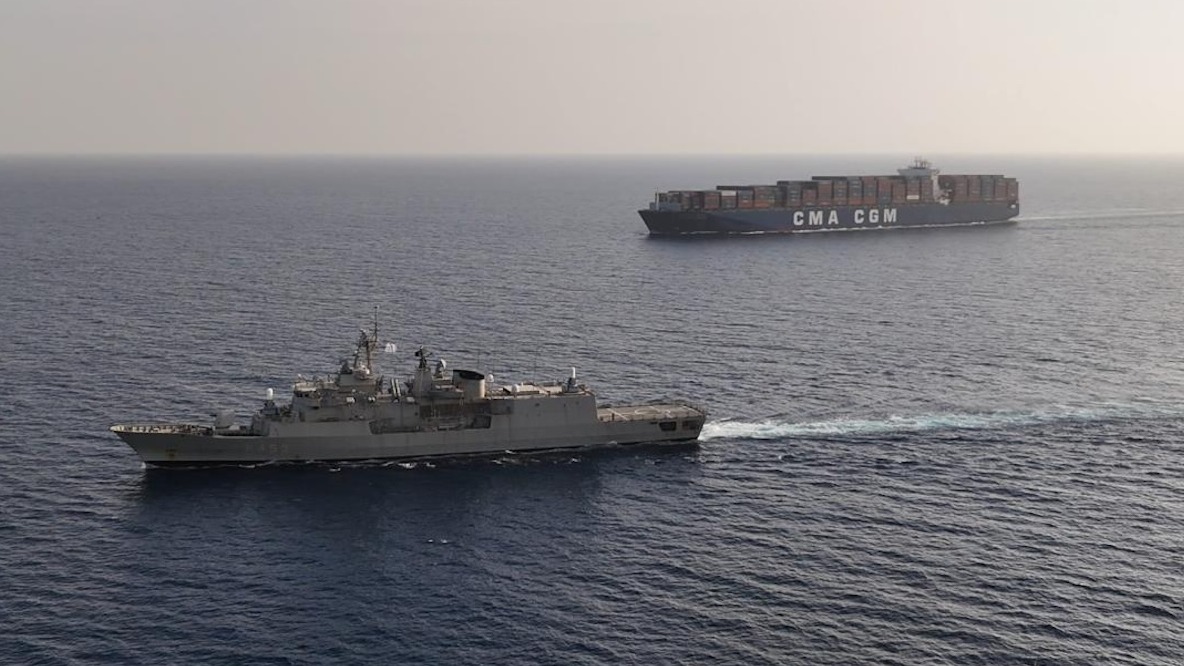 CMA CGM pulls ships off the Red Sea and reroutes major Asia-Europe loops">

What happened — the change announced
The topic revealed here: CMA CGM has once again redirected several Asia–Europe services from the Red Sea to the Cape of Good Hope, adding significant transit time to some loops.
Immediate operational shift
French carrier CMA CGM announced it will reroute the FAL 1, FAL 3 och MEX services via the southern tip of Africa. This move follows earlier efforts by the company to reintroduce scheduled transits through the Suez/Red Sea corridor, but the return has been short-lived. The company cited the “complex and uncertain international context” as the reason for the change and said it will continue to monitor conditions before deciding on future sailings.
Which services are affected
| Service | Typical route (before) | New route (now) | Estimated impact on transit time |
|---|---|---|---|
| FAL 1 (French Asia Line) | Asia → Suez → Europe | Asia → Cape of Good Hope → Europe | Up to +10–14 days |
| FAL 3 | Asia → Suez → Northern Europe | Asia → Cape of Good Hope → Northern Europe | Up to +10–14 days |
| MEX (China → France/Spain) | Direct via Suez | Via Cape of Good Hope | Up to +10–14 days |
Why carriers choose to reroute
The decision to move vessels around Africa is multi-factorial. A short list explains the thinking behind such shifts:
- Security risk management: Persistent attacks in the Red Sea region increase exposure to potential incidents and insurance claims.
- Insurer and war-risk premiums: Higher insurance costs make the Suez route less attractive when volatility rises.
- Operational predictability: Carriers prefer to avoid sudden disruptions even if the alternative adds time; better safe than sorry.
- Commercial signalling: Maintaining schedule integrity and protecting assets can outweigh faster transit times.
What analysts and market watchers note
Industry voices warn that flip-flopping on route choices—returning to a corridor and then backing away—can erode shippers’ trust. As one market analyst put it, shippers crave predictability in supply chains; seeing a major carrier reverse course risks undermining confidence in schedule reliability and partnerships.
Practical impacts on logistics and shippers
For freight managers, importers, and 3PLs, the consequences are concrete. Expect ripple effects across planning, cost, and equipment availability.
Key logistics consequences
- Longer lead times: Round-Africa routing can add up to two weeks, affecting inventory cycles and production timelines.
- Rate pressure: Longer voyages and extra bunker consumption can push up freight and surcharges.
- Schedule volatility: Frequent course changes make forward planning—and KPIs—harder to meet.
- Equipment imbalances: Empty boxes may pile up in some regions while shortages persist in others, driving repositioning costs.
- Port and berth congestion: Different transshipment patterns can overload alternative hubs and change port call plans.
Operational checklist for shippers
- Review current bookings on affected services and confirm ETA updates with carriers or brokers.
- Assess inventory buffers and safety stock—two weeks of extra transit might be a rude awakening for lean supply chains.
- Consider multi-modal options or alternative origin sourcing for time-sensitive cargo.
- Monitor shipping insurance and war-risk notices; understand any additional premium exposure.
- Communicate proactively with downstream partners—warehouses, retailers, and customers—to manage expectations.
Cost and time trade-offs: a quick comparison
| Faktor | Suez route | Cape of Good Hope |
|---|---|---|
| Transit time | Shorter (baseline) | Longer (adds up to ~2 weeks) |
| Security risk | Higher (current Red Sea threats) | Lägre |
| Fuel consumption / cost | Lägre | Högre |
| Schedule predictability | Potentially volatile | More stable in the short term |
How logistics providers and platforms help
When routes change, a nimble logistics partner can bridge the gap between uncertainty and delivery. Digital platforms that aggregate offers and provide quick quotes for door-to-door or port-to-port moves can be particularly useful for last-minute re-planning. For example, services that support office and home moves, vehicle shipments, bulky cargo, and standard palletized freight make it easier to pivot without breaking the bank.
I’ll confess: I’ve been on the phone at midnight juggling a delayed container and a confused warehouse team—these moments remind you that shipping is half art, half triage. Still, having options and transparent rates makes life a whole lot easier—no one wants surprises when a shipment is already late.
Summary of important takeaways
The reversal by CMA CGM to route major Asia–Europe services via the Cape of Good Hope underscores the tension between hastighet och safety. Carriers must balance cost, time, and risk, and shippers must adapt their planning accordingly. Expect longer transit times, potential rate adjustments, and temporary shifts in container flows and port calls. Even the best forecasts and data can’t replace firsthand experience, so keep contingencies in place and communicate often.
On GetTransport.com, you can order your cargo transportation at the best prices globally at reasonable prices. This empowers you to make the most informed decision without unnecessary expenses or disappointments. The platform’s transparency, convenience, and wide selection of options—from parcel and pallet moves to bulky and vehicle transport—help shippers navigate sudden route changes and keep goods moving. Book now GetTransport.com.com
Global impact-wise, this reroute is not likely to upend world trade single-handedly, but it is a meaningful signal for supply chain managers who depend on the Suez corridor; smaller carriers and services may follow suit if instability persists. GetTransport.com aims to stay abreast of such developments and help customers adjust to a changing world. For your next cargo transportation, consider the convenience and reliability of GetTransport.com. Book now GetTransport.com.com
In short: CMA CGM’s move to avoid the Red Sea trades off time for risk mitigation, and that trade-off flows downstream into last planning, frakt costs, shipment scheduling, and supplier coordination. Whether you manage sjöfart, vidarebefordran, transport or warehouse distribution, this development is a reminder to review contingency plans for international container loops. Efficient, reliable transport options—covering parcel, pallet, container, bulky or vehicle moves—will be essential to maintain delivery performance and keep the logistics chain moving.