


 Svenska
  English (UK)
  Русский
  العربية
  日本語
日本語  한국어
한국어  Magyar
  Türkçe
  Español
  Čeština
  Português
  Ελληνικά
  Suomi
Suomi  Nederlands
  Română
  Italiano
  Français
  Polski
  Українська
  Deutsch
  简体中文
简体中文  Slovenčina
 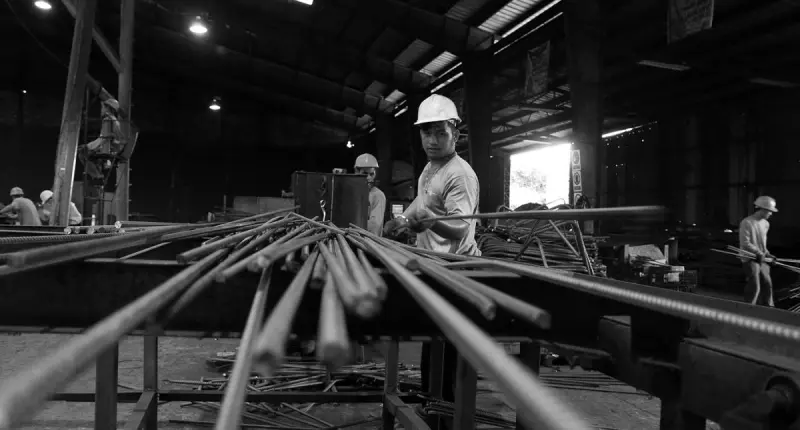 Philippine Manufacturing Sector Remains Stable in October 2025 with Positive Producer Outlook">

Stable But Subtle Shifts in Philippine Manufacturing This October
The manufacturing sector in the Philippines showed a steady pulse in October 2025, hovering just above the neutral mark despite certain subdued indicators. The latest figures reveal a somewhat stable environment with a pinch of caution as new orders and production levels slightly declined.
Understanding the October Purchasing Managers’ Index (PMI)
The headline PMI score for the month came in at 50.1, a marginal rise from the previous month’s 49.9. This minute uptick signals that operating conditions remained broadly stable. However, digging a bit deeper unveils a mixed bag: although the PMI suggests stability, the sector experienced a dip in both output and new orders for the second month running—something that hasn’t occurred in over four years.
New Orders and Output: A Mixed Picture
Manufacturers are reporting a slight contraction in new factory orders and output volume. The falloff is partially linked to a softening demand, which companies partly chalk up to unfavorable weather and the phasing out of certain products. Additionally, export orders have declined for the first time in a year’s span, reflecting some challenges in the international market.
| Indikator | Change in October 2025 | Kommentar |
|---|---|---|
| Purchasing Managers’ Index (PMI) | Up slightly to 50.1 | Signals broadly stable conditions |
| Output | Small contraction | Second consecutive month of decline |
| New Orders | Further decline | Linked to weaker demand and weather issues |
| New Export Orders | Fell for first time since May | Reflects weaker international demand |
Supply Chain Snags and Purchasing Behavior
One interesting twist is that even though manufacturers trimmed their purchasing activities—effectively ending nearly two years of steady growth in buying—delivery times for inputs actually stretched to their longest in three months. This suggests ongoing bottlenecks within supply chains, a notable challenge for industries reliant on timely shipments.
Price Dynamics and Cost Pressures
Input cost inflation cooled to its weakest point in three months, though some producers still faced rising prices from suppliers. This, paired with falling demand, prompted manufacturers to slash their own selling prices, marking the first decrease in charges for locally made goods in 19 months. The rate of discounting, while modest, was the steepest since early 2020.
Employment and Inventory Trends
Despite the headwinds in new orders, the workforce in manufacturing showed an encouraging uptick, registering the strongest job creation pace in three months. This recruitment effort helped reduce backlogs of work for the second month in a row—a silver lining in a generally cautious atmosphere.
Inventories Saw a Slight Bump
Interestingly, both pre-production and post-production inventories nudged upwards. Such an increase was attributed to last-minute order cancellations, nudging manufacturers to hold slightly more inventory than usual.
Outlook: Positive Sentiment Despite Hurdles
Looking ahead, there’s a notably optimistic vibe among producers. The expectation is for output levels to rise in the coming 12 months, buoyed by hopes of demand picking up. This positivity sits near its recent peak seen earlier this year, indicating manufacturers’ confidence that the sector may soon turn the corner.
Implications for Logistics and Freight Management
From a logistics perspective, these insights hint at a cautiously evolving landscape. Though output and orders are currently subdued, the prospect of growth and ongoing workforce expansions suggest that freight and shipment volumes could pick up. Delivery delays in inputs also shine a light on logistical challenges that companies must navigate. Efficient freight forwarding, reliable haulage, and well-coordinated distribution will be essential to capitalize on the sector’s anticipated rebound.
- Lagerhantering will be critical amid fluctuating production and order flows.
- Flexible shipping solutions can help counteract irregular delivery times for raw materials.
- Forward planning around workforce and resource allocation supports smoother housemove and bulk cargo transitions.
How GetTransport.com Supports Philippine Manufacturing and Logistics
Plattformar som GetTransport.com play a pivotal role by offering globally accessible cargo transportation options tailored to a variety of needs — whether it’s office and home relocations, delivering bulky items, or moving vehicles and palletized cargo. Its cost-effective and versatile services can help manufacturers and logistics managers streamline their supply chains, ensuring raw materials and finished goods reach their destinations efficiently.
Capturing Real Value Beyond Reports
While figures like PMI numbers and industry reports provide useful signposts, nothing quite beats hands-on experience to get the full picture. With GetTransport.com, customers can tap into a transparent, reliable, and affordable global network to organize shipments — enabling first-hand evaluation of service quality without breaking the bank. From large freight to delicate parcels, the platform empowers users with broad choices and peace of mind.
Boka din resa hos GetTransport.com and discover seamless logistics solutions that match the evolving demands of the manufacturing sector.
Slutsats
In a nutshell, the Philippine manufacturing sector demonstrated steady operating conditions in October 2025, marked by small contractions in output and new orders but buoyed by positive sentiment and workforce growth. The extension of delivery times and shifting pricing structures underscore the complex landscape manufacturers are navigating. For logistics, this means anticipating fluctuating shipment volumes and supply chain challenges that demand responsive transport and forwarding strategies.
Med plattformar som GetTransport.com, businesses can bridge these gaps — benefiting from affordable, global haulage and distribution services that cover everything from bulky cargo to relocation needs. Whether managing freight, dispatch, or moving schedules, its convenience and reliability make it easier to keep supply chains humming smoothly in a changing economic environment.