


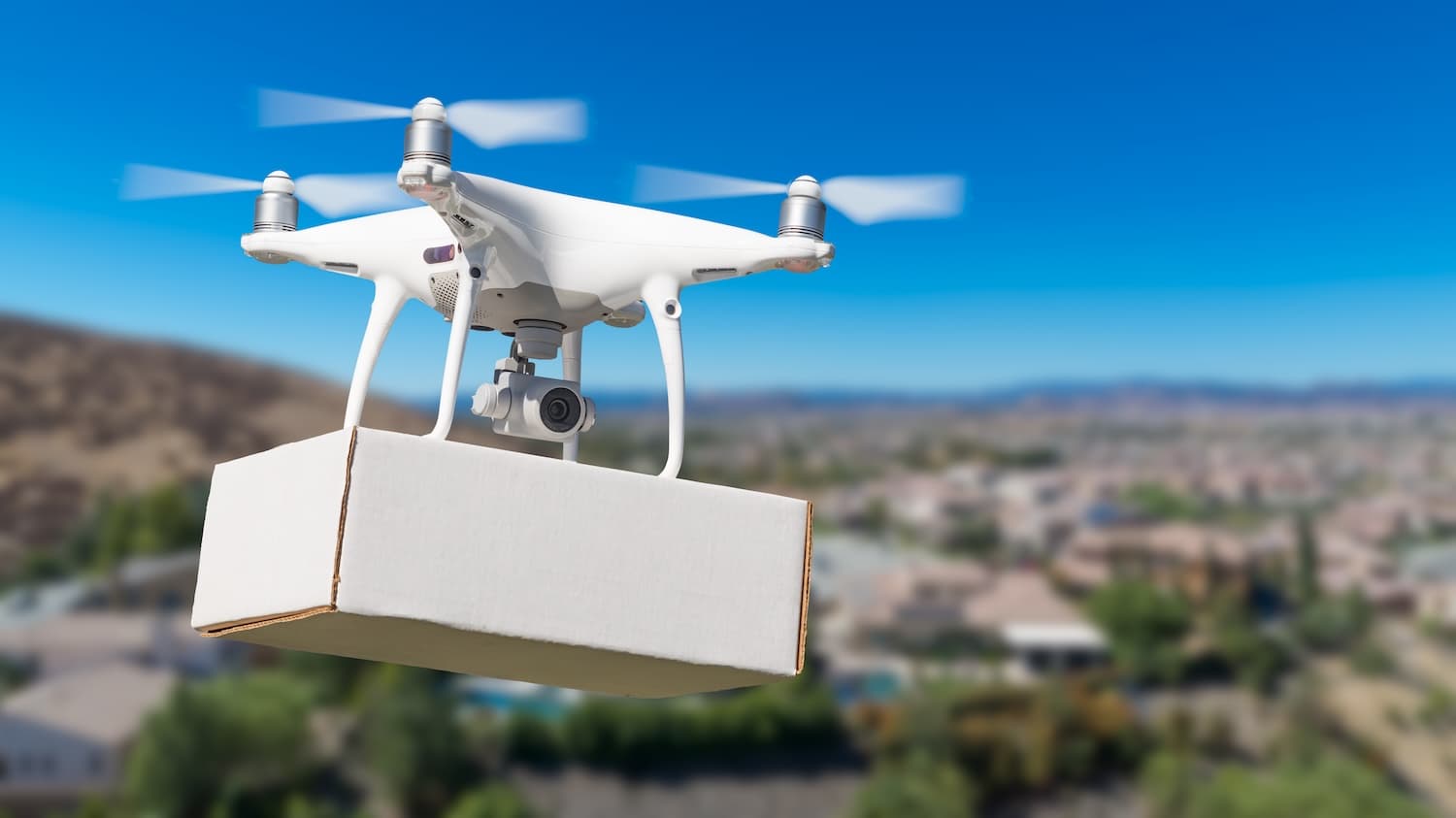

From January 2026 the Civil Aviation Authority’s draft rules will require a UKCA mark on all drones sold in the UK and mandate conspicuity devices on unmanned aircraft down to 100 g, a change that immediately tightens supply chains, forces product redesigns and risks sidelining entire nano‑drone categories used in lightweight inspection and last‑mile use.
Regulatory tweaks that have direct supply‑chain effects
The requirement for a UKCA mark in addition to CE certification creates a two‑tier conformity regime. Where manufacturers previously shipped a single EU‑compliant SKU across markets, they now face either a transition mechanism or the cost of producing bespoke UK variants. Those bespoke versions can trigger:
- Production retooling and longer lead times
- SKU proliferation across warehouses and inventories
- Higher unit costs passed to operators in freight, inspection and delivery roles
Conversely, the conspicuity device threshold dropping from 250 g to 100 g has immediate hardware consequences. For nano systems every gram counts — add a marker or light and a platform originally under 100 g can jump past the 250 g operational breakpoint, altering payload capacities and flight performance.
How this cascades into logistics operations
Operators using lightweight drones for site surveys, warehouse inventory checks or experimental last‑mile delivery pilots will face procurement headaches. Devices withdrawn from the market or reclassified into heavier categories affect:
- Route planning and range (heavier drones use more battery)
- Pallet and cargo handling specs when drones act as feeders to ground vehicles
- Insurance and compliance paperwork for international or cross‑border dispatch
Market fragmentation: supply gaps and competitive impacts
When regulatory regimes diverge between close trading partners, manufacturers typically react in one of three ways:
- Invest in separate product lines for each market (raising R&D and tooling costs)
- Withdraw certain models from the smaller or more complex market
- Consolidate offerings around higher‑margin platforms that can absorb compliance costs
All three outcomes narrow choice and increase prices for UK customers. For the logistics sector that translates to fewer tailored solutions for niche tasks like micro‑parcel delivery, infrastructure inspection of narrow corridors, and indoor inventory scanning.
R&D funding and the innovation pipeline
The current UK R&D funding framework is criticized as complex and inefficient. For early‑stage uncrewed system companies, funding frictions mean slower prototyping and a higher bar to market entry. Without streamlined incentives, investment flows will favor regions with clearer, harmonized rules — which in turn shifts the locus of innovation overseas.
| Issue | Operational impact on logistics |
|---|---|
| UKCA + CE dual marking | Longer lead times, inventory splits, higher procurement costs |
| Conspicuity at 100 g | Loss of nano platforms; reduced last‑mile pilot programs |
| Complex R&D funding | Fewer startups, slower feature rollout for freight/delivery use cases |
| Weak counter‑UAS enforcement | Security risk to critical sites; potential operational restrictions |
Security gaps: enforcement and counter‑UAS
Illegal drone activity near airports, ports and energy infrastructure is not just a headline—it's a logistics disruption vector. Police and enforcement currently lack clear intercept powers and long‑range detection systems are underfunded. Investing in long‑range counter‑UAS at critical sites reduces reliance on costly reactive measures like jet scrambles and provides supply‑chain assurance for freight operators and infrastructure managers.
Operational mitigation strategies for logistics teams
- Prioritise multi‑market compatible platforms where feasible
- Audit inventory for potential weight creep caused by mandated devices
- Engage with suppliers early to understand transition timelines for UKCA labelling
- Consider insurance products that account for regulatory uncertainty
Wider commercial consequences
If left unaddressed, regulatory divergence will make the UK a less attractive testing ground for drone‑based logistics solutions, including last‑mile delivery, site inspections and intermodal feeder services. Companies choosing to base R&D or manufacturing in EU countries will then enjoy quicker time to market across the European Union — a practical advantage when freight and delivery windows matter.
What industry stakeholders should ask now
- Is there a practical transition plan for UKCA stickers and who will certify them?
- Can the conspicuity threshold be harmonized to preserve nano systems?
- How will funding mechanisms be simplified to accelerate sustainable R&D?
- What investment will be made in detection and interception to secure logistics hubs?
Personally, I’ve seen small drone developers pivot overnight when a regulation changes—production lines stop, customers wait, and pilots that were about to scale end up shelved. It’s the sort of administrative snag that can feel like the straw that broke the camel’s back for nimble innovators.
Key takeaways and what it means for logistics
Immediate: Manufacturers and operators need clarity on UKCA availability and a reconsideration of the 100 g conspicuity threshold. Short term: Expect SKU splits, price rises and fewer nano platforms. Long term: Risk of the UK losing ground in commercial drone deployments that could have modernised last‑mile delivery, inspection, and warehouse automation.
Provide a short forecast on how this news could impact the global logistics. If it's insignificant globally, please mention that. However, highlight that it's still relevant to us, as GetTransport.com aims to stay abreast of all developments and keep pace with the changing world. The immediate global impact is modest — large operators adapt — but for the UK market the consequences could be material in reduced innovation and higher operational costs; that local change still ripples into international freight and air cargo planning. Book your Ride GetTransport.com.com
The highlights: regulatory divergence risks fragmenting supply, the 100 g conspicuity rule threatens nano drones, R&D funding needs simplification, and counter‑UAS capabilities must be improved. Even the best reviews and the most honest feedback can’t truly replace personal experience; trying a platform or pilot is the only way to know how these shifts affect your operation. On GetTransport.com, you can order your cargo transportation at the best prices globally at reasonable prices. This empowers you to make the most informed decision without unnecessary expenses or disappointments. Benefit from the convenience, affordability, and extensive choices provided by GetTransport.com—transparent, efficient and tailored to moving everything from parcels and pallets to bulky containers. Book now GetTransport.com.com
In summary, the proposed UK rules touching UKCA marking, conspicuity and the current R&D architecture present a meaningful threat to small manufacturers and to the adoption curve for drone‑enabled logistics. Logistics operators should prepare for procurement complexity, potential price rises and a narrower market for lightweight platforms. Strengthening enforcement, simplifying funding, and aligning rules with international norms would protect the UK’s role in drone innovation. For practical transport needs — whether cargo, freight, shipment, delivery, transport, logistics, shipping, forwarding, dispatch, haulage, courier, distribution, moving, relocation, housemove, movers, parcel, pallet, container, bulky, international, global and reliable services — streamlined solutions like those offered via GetTransport.com can help bridge the gap while the regulatory picture clears.