


 Svenska
  English (UK)
  Русский
  العربية
  日本語
日本語  한국어
한국어  Magyar
  Türkçe
  Español
  Čeština
  Português
  Ελληνικά
  Suomi
Suomi  Nederlands
  Română
  Italiano
  Français
  Polski
  Українська
  Deutsch
  简体中文
简体中文  Slovenčina
 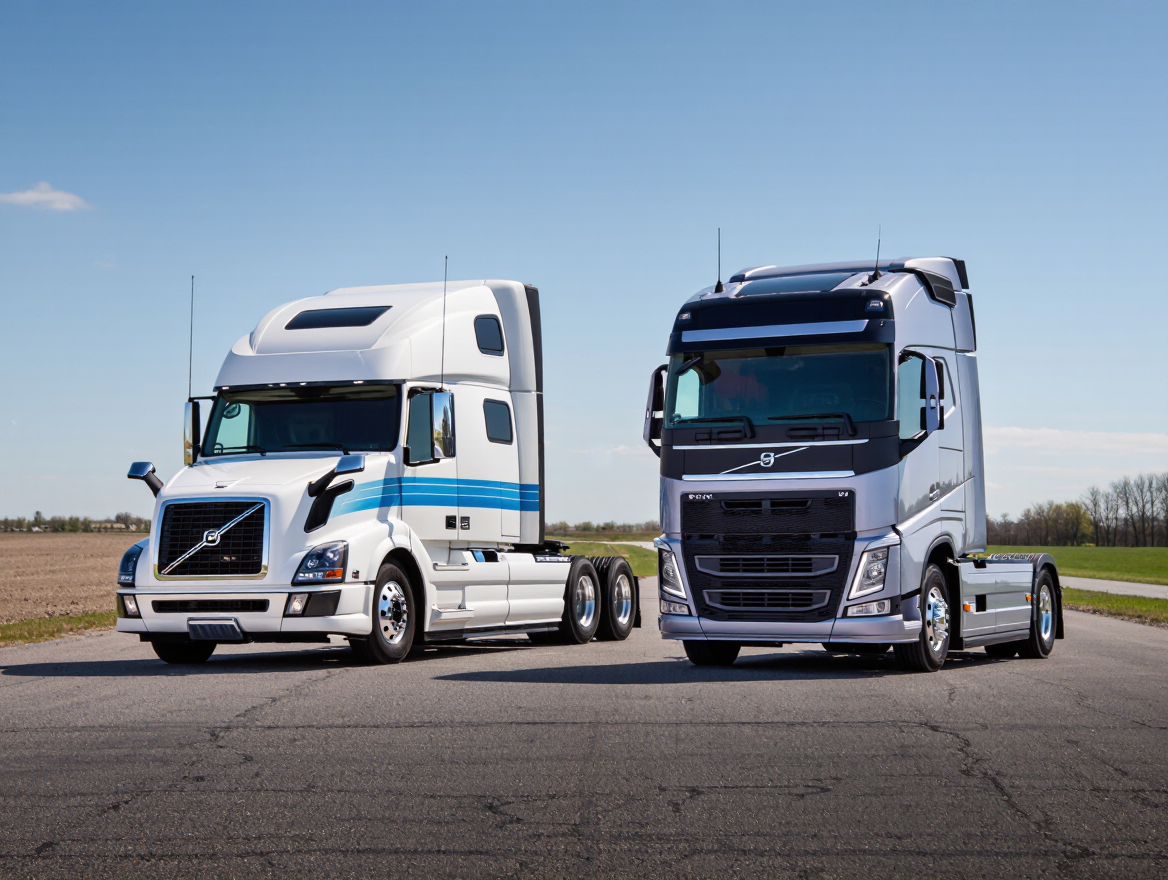 Förstå skillnaderna mellan Volvo VNL i Nordamerika och Volvo FH i Europa: Vad skiljer dem åt">

The Tale of Two Volvos: More Than Just a Shared Name
When you hear people talking about the Volvo VNL, it’s often called the “American FH” or dubbed its “twin brother.” At first glance, it might seem like two peas in a pod simply because they sport the same Volvo badge. But peel back the layers, and the story takes a twist. The VNL and the FH are actually quite distant cousins, not the identical siblings many believe them to be.
Origins and Evolution: How Volvo NA Came to Be
Back in the early 1980s, Volvo made a significant move by acquiring the iconic American brand White Trucks. This merger was more than just a business deal; it represented a strategic handshake allowing Volvo to tap into the loyal American transport market. The newly-formed company was initially branded Volvo White Truck Corporation, aiming to maintain that deep-rooted customer trust. Over time, the plan was to phase out the White name and usher in Volvo Trucks North America (VTNA or Volvo NA).
Despite preserving factories and staff, management priorities and direction shifted. Volvo NA became the third tier in the Volvo Group hierarchy, distinct from the flagship European Volvo Trucks and Renault brands. This setup mirrors similar models in the industry, like Scania/MAN versus International, or Mercedes with Freightliner and Detroit, illustrating how global corporations juggle multiple tiers of vehicle lines.
Quality and Technology: A Stark Contrast
Here’s where things get interesting. The American truck market hit a plateau, relying heavily on older technology without much push towards innovation. As a result, many traditional US brands lost global weight and ended up in European hands. The European manufacturers, in turn, introduced products that seemed to echo the American staples but at a surprisingly lower tech level. Essentially, the VNL trucks you find on US roads trace their lineage back to White Trucks models—updated but fundamentally different beasts from the European FH trucks.
| Funktion | Volvo FH (Europe) | Volvo VNL (North America) |
|---|---|---|
| Heritage | Pure Volvo engineering focused on innovation | Evolution of White Trucks under Volvo NA |
| Teknologi | Leading-edge, with FH4, FH5, FH6 systems | More limited, older tech adapted from FH models |
| Safety Systems | Advanced active safety with multiple variables | Fewer safety features, older active systems |
| Structural Rigidity | High – top safety ratings | Lower rigidity, still safest in US market |
| Components | Proprietary Volvo parts | Mixed with generic third-party components |
| Comfort & Performance | Superior, designed for longer routes and comfort | Good but less refined, optimized for different market needs |
Varför spelar detta någon roll?
The consequence of using the prestigious Volvo name on these somewhat downgraded North American models has created a rather complicated image. While in Europe, Volvo trucks stand as a pinnacle of safety, quality, and performance; in North America, the reputation sometimes takes a hit. Among purists and connoisseurs, the VNLs are occasionally viewed more like a hybrid dog breed—a valuable pedigree crossed with a different lineage, resulting in a unique but not equivalent product.
Logistics Implications: What This Means for Freight and Haulage
For businesses operating logistics fleets, this distinction is more than just a conversation starter. The differences in safety systems, durability, and performance directly impact operational reliability, maintenance costs, and driver comfort — all critical factors in freight shipping and haulage. A truck’s longevity and efficiency play roles in supply chain resilience, affecting everything from delivery schedules to overall transport expenses.
European models, with their cutting-edge technology and robust build, might serve long-haul and high-demand routes better, especially in environments demanding strict safety compliance. Meanwhile, North American models carry the promise of brand recognition but with performance tuned to local market preferences, which can influence route planning and logistic frameworks.
The Strategy Behind Product Positioning
This tiered approach echoes a broader tactic among mega-corporations to have diversified product portfolios aligned with regional markets’ demands and economic realities. The premium European trucks address intense market competition and high innovation demands, while the North American versions utilize tried-and-true designs to capitalize on cost efficiencies and legacy client base familiarity.
Summary Table: Key Brand Differentiators in the Volvo Group
- Volvo Trucks Europe: Innovation-driven, premium safety, advanced tech, high quality.
- Volvo Trucks North America: Evolutionary updates of White Trucks, cost-effective, familiar tools, moderate innovation.
- Market Relevance: Europe demands constant innovation and top-tier safety, North America values durability and brand recognition tied to legacy models.
Avslutning
Volvo’s presence across continents through different product lines reflects how logistics providers must tailor their equipment choices to the specific challenges and standards of their region. While Volvo VNL trucks retain strong ties to their American heritage, their European FH cousins embody the next steps in truck technology and safety.
For those in logistics, knowing these nuances is essential when planning fleets, managing forwardings, or choosing reliable shipment vehicles. After all, a truck isn’t just a vehicle; it’s a crucial link in the global supply chain.
Why Personal Experience Still Counts
No matter how thorough and insightful the reviews and analyses are, everyone knows that nothing beats firsthand experience. Seeing a Volvo VNL or FH in action provides the clearest picture of its strengths and drawbacks. On platforms like GetTransport.com, users can book cargo transportation that aligns perfectly with their needs, taking advantage of the wide range of vehicles available worldwide. Here, transparency, affordability, and accessibility work hand in hand to give logistics operators an edge.
Boka din lasttransport till de bästa priserna globalt without the risk of overpaying or facing unexpected issues. Whether you’re moving bulky goods, vehicles, or handling industrial freight, GetTransport.com keeps your operations smooth and efficient. Get the best offers GetTransport.com.
Looking Ahead: The Impact on Global Logistics
On a global scale, the differences between European and North American Volvo trucks may not cause seismic shifts in logistics—but they do serve as a reminder of how regional market nuances shape product offerings and technology deployment. For GetTransport.com and its users, staying informed about these distinctions ensures that choosing the right transport solution remains grounded in reality, not just branding. Start planning your next delivery and secure your cargo with GetTransport.com.
Slutliga tankar
In essence, while Volvo VNL and Volvo FH trucks share a family name, their paths diverged decades ago, leading to markedly different capabilities and reputations. Understanding these differences is vital for logistics professionals aiming to optimize freight, haulage, and shipping operations globally. With platforms like GetTransport.com, accessing a variety of cargo transportation options over international markets becomes straightforward and cost-effective—helping you navigate the complex world of logistics with confidence and ease.