


 Svenska
  English (UK)
  Русский
  العربية
  日本語
日本語  한국어
한국어  Magyar
  Türkçe
  Español
  Čeština
  Português
  Ελληνικά
  Suomi
Suomi  Nederlands
  Română
  Italiano
  Français
  Polski
  Українська
  Deutsch
  简体中文
简体中文  Slovenčina
  10 sätt att förbättra larmhanteringsrutiner för bättre incidenthantering">

Define a standard alarm taxonomy and an escalation matrix first. This creates defined roles and a clear path for on-call staff to respond to critical events, reducing noise and accelerating containment. Keep the matrix visible on the on-call dashboard and review it after each incident with the involved employee teams for continuous learning.
Establish short, learning-driven sessions that include cross-functional teams. Use samråd notes from responders to refine thresholds, and apply clinically validated checklists to distinguish actionable alerts from noise. Document the criteria so their teams know how to escalate. This aligns with the pettit approach to structured triage, and the results show faster containment when on-call staff can trust the plan.
Use data to tune alerts by factors such as severity, service impact, time of day, and historical false positives. Establish a defined process for updates after each review and involve their development teams to keep thresholds aligned with operational reality. This data-driven path reduces noise, speeds accurate detection, and improves response quality.
Adopt a whole-system view of alarms across tools and teams. Map dependencies between devices, applications, and people to ensure accurate correlation. Conduct regular samråd with stakeholders to review how alerts drive actions, and adjust procedures so responders stay engaged rather than overwhelmed. Carefully document change requests and outcomes to build trust among their teams.
Automate duplicate suppression and cross-system correlation to reduce redundant notifications in the queue. Use employee feedback to verify that automation preserves clinically important alerts. Track metrics such as mean time to acknowledge and mean time to containment to demonstrate progress across development cycles.
Create a practical development plan for staff involved in alarm management. Include short training modules, active drills, and learning feedback. Review progress in monthly consultations and draw insights from other teams to improve alignment with pettit-style discipline.
Maintain a living playbook that captures what works, what doesn’t, and exactly how to respond to new alert types. Keep governance with concise reviews and ongoing learning from different teams to continuously strengthen incident response readiness.
Five actionable improvements to reduce alarm noise and accelerate response
Adopt a tiered alarm policy that uses a defined threshold so only actionable alarms interrupt bedside nurses on duty. Maintain a clear escalation process when patient risk rises. The goals include a 40% reduction in non-actionable alarms and a 20% faster decision cycle, with progress tracked through quantifiable metrics.
Create a master settings template for five common alarm types and apply it across facilities; use a common threshold for each category and publish the template as an item in the stocking catalog. Maintain the template with quarterly audits and updates as new devices are deployed. In wieland facilities, this strategy achieved a measurable drop in alarm volume. Conclusion: alignment reduces noise and scales across teams.
Implement contextual alarms that incorporate patient contexts (diagnoses, unit, procedures), device states, and line status (IV lines, catheters). Use a rule-based routing layer to suppress alarms when context indicates no action is needed, and only escalate for real risk. Pettit noted improvements in alarm relevance when context was considered.
Redesign the alarm response workflow with explicit decisions: assign responsibilities to nurses, technicians, and physicians; implement a two-stage triage, acknowledge and classify within 60 seconds; escalate if the alarm persists or crosses a threshold. This approach aligns actions with defined goals and a clear process, reducing delays and improving patient safety.
Establish a closed-loop measurement plan: dashboards show alarms per patient-day, false alarm rate, and mean time to acknowledge; set quantifiable goals; train bedside staff with practical scenarios; use feedback to update thresholds and templates. The team used monthly reviews to expand coverage and refine settings, ensuring continuous improvements in alarm management.
Tune thresholds to reduce alert fatigue
Recommendation: Tune thresholds so only truly actionable alerts reach the on-call team. Start with a clinically-led review of current rules, then onto a staged alpha rollout to validate changes. Raise the threshold for informational or non-actionable alerts by roughly 25–40% and keep high-severity alerts intact, reducing total noise without compromising safety. Tuning is like adjusting a recipe: treat alert data as food for the system and taste the mix through metrics rather than intuition.
Define a clear classification framework to guide edits. Use explicit categories such as actionable, non-actionable, critical, high, medium, and low, and map every monitor to one category with a defined threshold. This classification prioritizes responders for the ones with the highest potential impact and makes expectations explicit in the procedure. Revisit the framework quarterly to prevent drift and to keep alignment with client requirements across sectors.
Run an alpha rollout to validate changes. Select 2–3 services in one sector and include a representative group of clients and respondents. Implement the new thresholds for these targets while keeping a control group to measure delta. Track metrics: total alert volume, false positives per 100 alerts, mean time to acknowledge (MTTA), and mean time to resolve (MTTR). Expect a 20–40% drop in non-actionable alerts within 30 days if changes are well-tuned. Gather feedback from the ones on call and compile notes in an editing log; include input from sloan and wong to align the program with field realities.
Iterate based on results and scale carefully. If MTTA worsens on critical paths, tighten only one dimension at a time and re-test. Move onto broader deployment only after consistent improvements on key indicators. Maintain a living classification map and a total alert dashboard to detect drift, and push updated thresholds through the editing workflow into the program as soon as they prove beneficial.
Governance, documentation, and communication. Keep changes in a versioned procedure that links thresholds to their rationale, metrics, and owners. Notify respondents and clients about upcoming shifts in alert behavior, provide focused training, and schedule quarterly reviews to ensure ongoing alignment with risk posture and service-level expectations. Use sector feedback to refine the approach, and ensure that the adjustments stay clinically grounded while remaining practical for the operations teams, as emphasized by sloan and wong.
Standardize alert severities and escalation criteria
Adopt a single, auditable severity scale and apply it consistently to all alerts. Build a standard table of severities with precise definitions for impact, urgency, and escalation actions. Tie each level to a response window and a concrete set of confirmations. Tag a subset of alerts with the fynes label to test consistency across teams.
Map escalation paths to roles and seniority. For each severity, designate a primary responder and a secondary contact. Include senior engineers, on-call leads, and stakeholders such as nurses in clinical environments and buyers from business units.
Institute a formal confirmation protocol before moving from one stage to the next. Require a clear sign-off that the issue is contained, the data is correct, and the next team has what it needs.
Embed the methodology into daily operations and continuously improve. Review the table and escalation mapping on a quarterly basis, using feedback from senior staff, frontline workers, and industrys stakeholders. Use the original incident data to tighten thresholds and reduce false positives.
Create a concise set of materials: a runbook, an escalation table, and the res1 tag for unresolved items. Keep these assets accessible to senior teams and to buyers to align expectations and emphasis across the organization.
Establish a discipline for disruptions and adverse events, with rapid acknowledgement and fast routing to the appropriate team. Document the confirmation at each transition and record lessons learned for future incidents.
Automate enforcement of the standard; ensure triggers map to the severity table and escalate automatically to the designated senior responders. This alignment helps responders themselves coordinate faster and achieve predictable recovery times.
Metrics and governance matter: track resolution times, escalation coverage, and confirmation rates in a simple dashboard. Use res1 and original context to drive continuous improvement and to keep everyone accountable for appropriate actions.
Route alarms to on-call owners with clear ownership
Assign every alert to a single on-call owner and pin ownership in the alert policy, so responders know exactly who to contact and act without delay.
Publish a centralized registry that comprises service name, primary owner, backup owner, escalation path, on-call schedule, contact methods, and runbooks. This registry serves as the single source of truth for routing decisions and must be kept up to date as teams reallocate responsibilities.
This approach considers workload, on-call load, and incident criticality when routing alarms. In a collaborative framework, route rules should be tailored to domain and context, using the on-call schedule and service tags to route alerts to the active owner. This reduces noise and keeps the whole incident response streamlined.
- Define ownership and visibility: The mapping comprises fields for service, owner, escalation path, backup, runbooks, and last update. Consider what constitutes an owned alarm and ensure only one primary owner per alert to avoid conflicting actions.
- Implement automated routing using a policy engine: Route based on service tags, on-call shifts, and the registry. Using tailored rules, alerts reach the right person in hospitals and automotive teams within minutes, not hours.
- Establish an escalated response: If an alarm is not acknowledged within 5 minutes, escalate to the next owner, then to a supervisor if needed. Document escalation policy clearly so everyone understands the steps and expected timing. Escalated alerts should carry concise context to prevent delays.
- Attach actionable runbooks and forego noise: Each alert includes next steps, data collection guidance, and log parameters; ensure clinically validated handoff notes and suppress duplicates for the same incident to reduce input fragmentation.
- Införliva feedback och synpunkter för kontinuerlig förbättring: Schemalägg regelbundna genomgångar med beredskapsansvariga för att fånga upp vad som fungerade och vad som inte gjorde det. Denna samarbetsinriktade cykel överensstämmer med hscm- och teece-analyser och uppdaterar mappningen i enlighet med detta.
- Mät effekten med studier och analys: Spåra MTTA, MTTR och uppdateringslatens för ägarskap. Jämför resultaten med en baslinje för att bekräfta effektivitetsvinster och identifiera utmaningar att hantera.
- Klarhet över olika domäner och samordning med klienten: Demonstrera processer hos klienter inom sjukhus- och fordonsmiljöer. Skräddarsy dirigeringen till kliniska arbetsflöden och tillverkningspaneler, inbäddat i befintliga incidentåtgärdsplaner.
Genom att bädda in ägarskap i routningspolicyn ökar du ansvarstagandet, snabbheten och tydligheten i hela teamet, och du minskar risken för feldirigerade larm i komplexa miljöer.
Automatisera bekräftelse, undertryckning och runbooksutlösare
Automatisera bekräftelser, undertryckning och runbook-utlösare genom att driftsätta ett centraliserat automationsskikt som automatiskt bekräftar kritiska larm inom 30 sekunder, undertrycker känt brus i 5 minuter och utlöser runbooks för bekräftade incidenter. Noterbart är att det är skräddarsytt för domänkonstruktioner – tillverkning, sjukvård och tredjepartstjänster – så att varje larm dirigeras till rätt jourgrupp och motsvarande runbook. Detta tillvägagångssätt är utformat för att öka situationsmedvetenheten och minska MTTA och MTTR. Det åtföljs av tydliga instruktioner och möjligheten att ställa frågor till responders, vilket möjliggör ett beslut om att engagera sig eller eskalera. Om kontext saknas, använd runbook-prompter för vägledning. Frigör resurser genom att flytta repetitiva steg till runbooks och fylla på ett bibliotek med mallar, inklusive några som är gratis att kopiera, så att teamen kan komma igång snabbt. Fördelarna inkluderar ökad konsistens, minskat manuellt arbete och förbättrat förtroende för larmpipeline, respektive. I den här modellen aktiveras automatisering när villkoren matchar, understryker efterlevnadskontroller och förhindrar dubbla bekräftelser. Detta stöder kvantifierbara förbättringar av svarstider och minskar arbetsbelastningen över aktiviteter mellan frontlinjens responders och backoffice-team, respektive.
Definiera undertryckningsregler som gäller mellan bekräftelse och åtgärdande, vilket förhindrar larmstormar genom att stänga av dubbletter under en konfigurerbar tidsperiod. Skapa runbooks som modulära konstruktioner med steg, beslutsgrindar och instruktioner, så att de passar res1-, vård- eller tillverkningskontexter. Visa alltid frågor om data är ofullständig, och öka sannolikheten för ett guidat, skriptat svar. Använd ett nyckelfärdigt startpaket som inkluderar ett kostnadsfritt mallbibliotek och en lättviktsintegration till Facebook för statusuppdateringar. Behåll fältnamn med understreck för att förhindra tvetydighet och säkerställa att loggen över aktiviteter är lätt att tolka mellan verktyg. Vrid upp eskaleringen endast när det krävs, och fånga en fullständig steg-för-steg-spårning för efterhandskontroller.
| Mönster | Åtgärd | Impact |
|---|---|---|
| Erkännande | Automatiskt bekräfta larm med hög allvarlighetsgrad inom 30 sekunder | MTTA reduceras; MTTR förkortas; ökat operatörsförtroende |
| Undertryckande | Tysta kända problem i 5 minuter; deduplicera relaterade larm | Brusreducering; förbättrat signal-brusförhållande |
| Runbook-utlösare | Automatiskt utföra skriptade åtgärdssteg med datavalidering | Snabbare inneslutning, kvantifierbara förbättringar i lösningstid |
Integrera larm med incidentplattformar och centraliserade instrumentpaneler
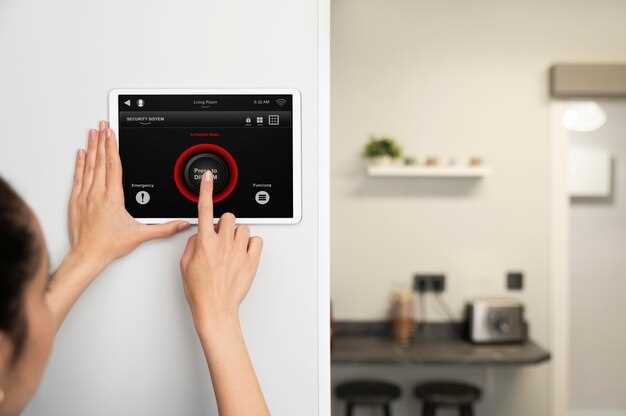
Börja med en dubbelriktad integrering som dirigerar rätt larm till incidentplattformen och skickar tillbaka statusuppdateringar till centraliserade dashboards, så att teamen vet nästa steg och snabbt kan agera.
Studier på sjukhus genomfördes för att mäta MTTA och MTTR. när larm matas direkt in i incidentplattformar förbättrades MTTA med 20-35 % och eskaleringar blev mer konsekventa inom offentliga och privata anläggningar.
I komplexa miljöer, designa en ren datamodell och robust mappning mellan larmfält och incidentposter, med deduplicering och kontextbevaring för efterföljande åtgärder.
dessutom, upprätta en scms-baserad taxonomi och ett lättviktigt integrationslager för att standardisera varningsformat och säkerställa att leveranser överensstämmer med incidentprioriteringar bland leverantörer.
scms som ett centralt schema hjälper till att standardisera larmfält och säkerställer att resten av kedjan följer samma definitioner.
Den nationella styrmodellen följer en riktmärke definierade av sjukhuskommittéer, vilket garanterar enhetliga rutiner på alla sjukhus, med insyn tillgänglig för klienter och allmänheten.
För att säkerställa kontinuerlig förbättring, insistera på konceptualiseringen av det fullständiga incidentflödet innan larm kopplas in och en tydlig handlingsplan fastställs; en mantri-nivås sponsor bör övervaka anpassningen till nationella mål och impact, vilket leder till bättre resultat för patienter och personal.