


 Türkçe
  English (UK)
  Русский
  العربية
  日本語
日本語  한국어
한국어  Magyar
  Español
  Čeština
  Svenska
  Português
  Ελληνικά
  Suomi
Suomi  Nederlands
  Română
  Italiano
  Français
  Polski
  Українська
  Deutsch
  简体中文
简体中文  Slovenčina
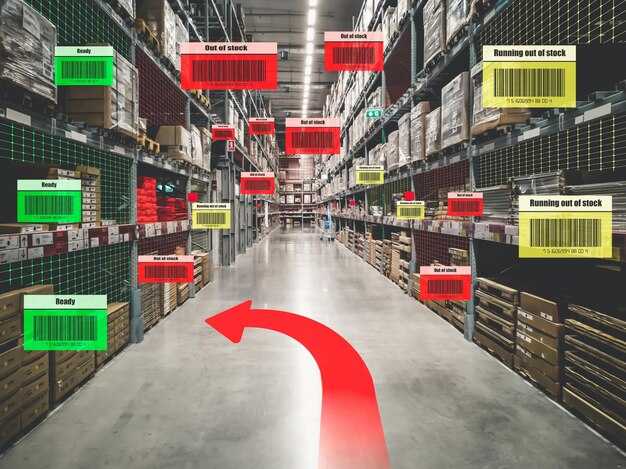
Recommendation: Begin with an uyarlanabilir approach that pairs modular storage units with automated picking, located near major markets. Such setup slashes last-mile costs by roughly 20–35% and shortens order-to-delivery window by 1–2 days, turning unpredictable peaks into manageable loads.
To stay resilient, coordinating flows across suppliers and distributors is essential, especially during seasonal swings. A network that can shift capacity between lines reduces idle labour and keeps service levels above 95% even when demand spikes by double digits, which is a huge challenge for many retailers.
Labour shortages push costs higher; thus, cross-train teams and deploy automation to alleviate bottlenecks. In practice, cross-trained staff handle 15–25% more tasks per shift, while automated sorters reduce mis-picks by up to 40%.
Real-time visibility across stock and orders supports optimized resource use, meeting needs while cutting waste. Seasonal demand signals let hubs reallocate capacity quickly, improving customer-facing metrics and reducing backorders.
Ever more data streams feed decisions, reducing latency and optimizing labour utilization.
With strategic partnerships, distributors receive gifts such as preferential scheduling and fast payouts, while award-winning operators demonstrate lower defect rates. These relationships help face disruptions with shared buffers and faster decision cycles.
Located micro-hubs near urban clusters provide buffers between inbound inputs and outbound orders, enabling smoother recovery from delays and reducing idle time for labour. A phased rollout keeps risk in check and avoids overextension.
Window of opportunity arrives when data-driven pilots prove gains. Start with a two-region trial, measure order cycle time, fill rate, and equipment uptime, then scale. Coordinating expansion yields longer-term savings and less vulnerability to shocks.
Step 4: Strategically Locate Inventory
Locate 2-3 regional inventories hubs in america near major urban clusters and ports to cut transit time, reduce handling steps, and speed fulfilment while operating efficiently.
Adopt dynamic placement: move high-velocity items to front locations, while slow-moving goods collect in a collector node to free space; keep critical items located closer to packing and service teams.
Staff across functions should use seamless communication to align replenishment, fulfilment, and service levels; a single dashboard links suppliers, carriers, and customers. This warehousing approach complements real-time communication.
Off-season planning supports resilience: keep inventories that cover demand while avoiding excess, with related markets guiding seasonal shifts; teams have clearer visibility.
Financial tradeoffs guide hub strategy: compare storage costs with transportation savings, targeting a cost per order reduction while maintaining service quality. Ensure inventories located near priority customers and suppliers to cut lead times.
Know metrics across locations: number of sites, speed of fulfilment, accuracy, and inventory turns; president priorities shape capital decisions for regional hubs; this approach keeps network going forward and ahead.
Define Inventory Velocity Zones for Proximity to Demand
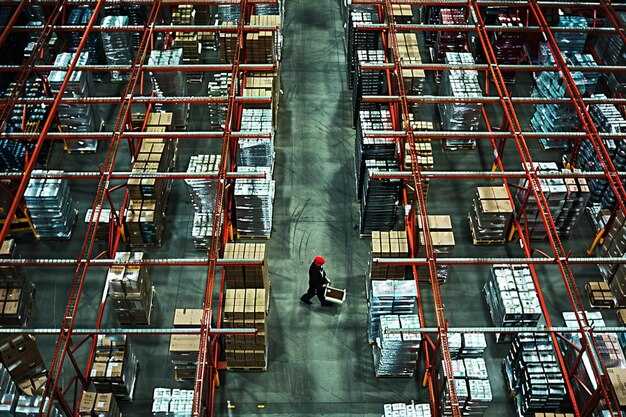
Start by mapping velocity zones aligned with demand concentration and assign proximity tiers for inventory.
Classify SKUs into high, mid, and low velocity using orders per week and shipments frequency; high velocity items should be placed near distributors and client locations, mid velocity items near cross-dock zones, low velocity items in bulk storage; that arrangement reduces travel time and helps handle replenishment when stores are restocked.
Space allocation prioritizes room for fast movers: place high velocity items in accessible pick zones, minimize touches, and deploy equipment such as ergonomic shelves or compact racking; also keep low velocity stock in bulk areas to streamline space usage.
Signal-driven replenishment leveraging demand forecasts, orders, and imports to refresh zone boundaries; even when shipments volumes shift, velocity zones stay aligned with frontline demand.
Shopping patterns and custom configurations across regions create advantages; customizing zone sets for different customers also improves service while reducing holding costs and increasing savings; this offers a more flexible footprint.
President-level governance plus dashboards helps monitor metrics and keep alignment with business objectives; once velocity zoning is in place, teams across eachus facility can adjust space, staffing, and equipment quickly; complexities arise across multiple sites.
Implementation checklist and targets: 1) map velocity by SKU; 2) set zone thresholds; 3) assign storage locations; 4) track shipments, orders, service levels, and savings; 5) refresh boundaries quarterly to reflect imports and shopping trends.
Decide On-site, Near-site, and Off-site Storage Options
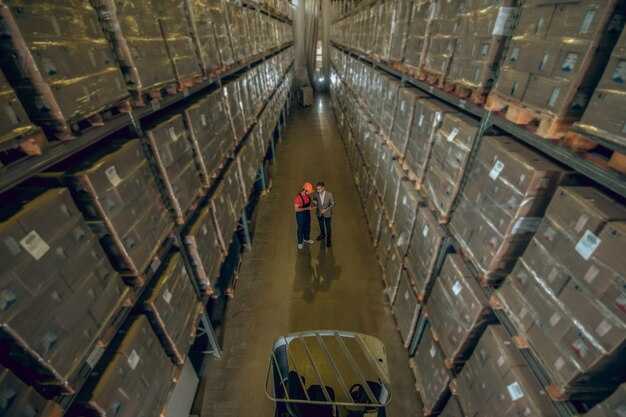
Allocate 30–40% of high-velocity items to on-site or near-site locations so orders reach consumers quickly; keep remaining inventory in off-site hubs to optimize cost and scale. This arrangement streamline replenishment, improves accessibility, and stays resilient against fluctuating demands.
That setup helps streamline operations across locations and scales with fluctuating demands.
- On-site storage (inside office campus or production floor)
- Impact: minimal travelling time, direct access and control, nearby loading docks for vehicles
- Metrics: number of SKUs on-site around 15–30% of total; dimensions sized for peak day demand; supports rapid replenishment to stores
- Best-fit: kind of items with very high turnover; used in consumer orders; reduces stockouts and becomes more resilient to spikes
- Near-site storage – micro-fulfillment near major locations
- Impact: reduces travelling to last-mile, speeds up look-to-delivery cycles for stores and consumers; improves accessibility
- Metrics: number of hubs 3–6 per region; dimensions optimized for daily volume; locations chosen to maximize proximity to customer clusters
- Best-fit: seasonal peaks, trade promotions, and fast-moving items that must reach stores rapidly; even small volumes can be scaled quickly
- Off-site storage – regional hubs and cross-dock facilities
- Impact: scales capacity, lowers landed cost per unit, optimized routes and consolidated shipments
- Metrics: number of pallets per hub; vehicle mix to support multi-leg routes; inventory turns used to predict future needs
- Best-fit: long-tail SKUs, buffers for seasonal demands, and non-urgent replenishments; enables company to tackle variability across chains
Prioritize Fast-moving Items with ABC Analysis and Dynamic Slotting
Begin with a two-step approach: run ABC Analysis on live item data and apply Dynamic Slotting to position fast movers in picker-friendly zones. This move will reduce travel, lift service levels, and cost-effectively offset peak-season bottlenecks.
ABC bucket guidance
- A items: 10–20% of SKUs, responsible for about 70–80% of volumes. Very high velocity; maintain tight stock cover, replenish daily, and review demand signals hourly during peak-season.
- B items: 20–30% of SKUs, 15–25% of volumes. Slot in centre lanes with moderate accessibility; adjust weekly based on forecast errors.
- C items: 40–60% of SKUs, 5–10% of volumes. Place in back zones or high shelves; rotate regularly to prevent obsolescence (antiques and collectibles often fall here).
Dynamic Slotting approach
- Fast-moving (A) items go to centre aisles near packing stations; frontloading of replenishment ensures within 24–48 hours; use slot templates that minimise travel for orders against forecast.
- Mid movers (B) placed on secondary lanes with clear pick paths; use movable totes and adjustable dividers to adapt to volumes across shifts.
- Slow movers (C) stored in back zones; run regular looser replenishment; apply cycle counting within quarterly cycles to keep accuracy.
Operational tips and metrics
- Track core KPIs: order cycle time, follow-up rates, inventory accuracy, and turnover rate; target fast inventory turns above 6x annually for A items.
- Use quick wins: frontloading for high-velocity items; consolidate orders to reduce handling; align with shopping patterns to minimize backlog during peak-season.
- For imports-heavy categories, align slotting with inbound schedules; adjust slots to absorb supplier lead times and cross-dock when possible.
- Centre all data: assign an owner for ABC buckets, update every 1–2 weeks, and publish a simple dashboard for working teams.
- Adjust replenishment based on historical volumes; track orders against forecasts to identify drift and adapt quickly.
- Keep a separate zone for fast service items that customers search for during peak-season shopping; this reduces delays for shopping orders and improves on-time performance.
- logistical constraints require close alignment between inbound receipts, cross-docking, and slotting to avoid misfits.
- managing across suppliers and internal teams requires clear ownership and cross-functional rituals; use a single source of truth to prevent mis-slotting.
Uygulama adımları
- Map items to ABC buckets, including category notes such as antiques or high-variety imports; store in a shared file with an eachus tag for auditing.
- Redesign slotting plan around centre pick paths; move 20–30% of top-velocity SKUs into front-loading positions within two sprints.
- Train staff on a dynamic slotting approach; install simple tools for frontline staff to re-slot during changes in volumes.
- Review after peak-season and adjust buckets, slotting, and min/max values to sustain gains.
Set Clear Replenishment Triggers and Location Rules
Set SKU-level reorder triggers based on data-driven thresholds: average daily demand, demand variability, supplier lead times, and available spaces. This approach reduces stockouts and overstock while preserving spaces for strategic items. Evaluate changes in demand by season, promo, and off-season, and adjust triggers monthly to reflect actual performance, thus tightening between forecast and execution. Also, as told by analytics team, adjust thresholds after quarterly reviews.
Location rules assign items to spaces by velocity: A items in high-visibility spaces near dock, B items in cost-efficient racks, and C items stored in budget spaces. Add off-season adjustment to location rules to keep seasonal SKUs closer to receiving docks.
Process adoption: adopt automated alerts, integrate with existing processes and systems, invest in scalable inventory platforms. Build in handover steps: when triggers fire, who acts, and how to document outcomes. Between spaces, eachus policy aligns actions, thus reducing handling time and improving responsiveness.
Tips to start: 1) classify items by velocity and demand stability; 2) map locations by cost and speed; 3) set triggers with safe margins; 4) configure alerts and ownership; 5) run a pilot in off-season to verify results. For sales teams, faster replenishment offers competitive benefits and supports resale opportunities. Steps to adopt new practices include evaluating factors, investing in processes, and adopting custom handling approaches to be competitive.
| Trigger | Location Rule | Eylem | Owner | KPI |
| Demand change | Fast movers in high-visibility spaces near dock | Raise reorder point; adjust min/max | Planning head | Fill rate, stockouts |
| Üretim süresi sapması | Distributed across multiple sites | Adjust order quantity and reorder point | Procurement head | Lead-time variance, OTIF |
| Seasonal spike | Counter-seasonal spaces near receiving | Preplace extra stock | Logistics head | Carry cost, stockouts |
| Promosyonlar | Promo zones | Move inventory pre-promo | Promotions head | Promo uplift, stockouts |
| Custom/resale opportunities | Channel-specific resale spaces | Channel-specific replenishment | Channel manager | Resale revenue, margin |
Utilize Real-time Data to Inform Placement and Reallocation
Deploy a real-time data fabric ingesting POS, WMS processing, and transport telemetry to decide where to place goods and when to reallocate them. This approach helps predict demand shifts and bring faster actions, taking less effort.
Link market signals to a location and logistic planning engine; ensure data streams are optimized for short window cycles, through real-time feedback loops, capturing delays and travel times. Use what matters most to respond swiftly to shifts, and keep operations lean.
Move stock to centre near emerging demand, supporting long-term needs and resale opportunities. Centres arent always in same markets; theyre able to respond to what matters, using popular channels that retail buyers favor to move stock between centres.
Respect indigenous insights and local travel patterns to inform zone boundaries and centre placement. Align with indigenous stakeholders to reduce delays and improve service across retail touchpoints.
Set release window for reallocations and automate steps to streamline movement between centres, reducing delays and enabling resale opportunities. Taking decisive actions ensures less disruption and faster market response.