


 Türkçe
  English (UK)
  Русский
  العربية
  日本語
日本語  한국어
한국어  Magyar
  Español
  Čeština
  Svenska
  Português
  Ελληνικά
  Suomi
Suomi  Nederlands
  Română
  Italiano
  Français
  Polski
  Українська
  Deutsch
  简体中文
简体中文  Slovenčina
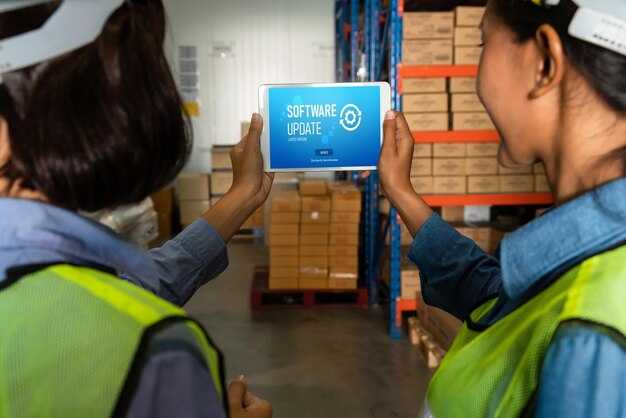
Adopt a standardized tracking system for containers across sectors within 30 days to curb unlawful movement and bypass attempts, ensuring visibility of each status for ports, terminals, carriers, and buyers.
Proposals include shared data feeds among carriers, terminals, regulators; rapid permissions for critical routes; digital bills of lading; and reserve funds to cover shortages.
Several sectors participate in a bill that coordinates funding and oversight; they seek to align cadence across ports, trucking, and warehouses.
In a 90-day pilot across three gateways, average container dwell time dropped by 18-22%, while penalties for late container arrivals and detentions fell by a similar margin, reducing movement-related costs.
To sustain gains, they propose shared funding, as several participants contribute resources before crisis peaks, to drop costs and improve reliability across corridors.
If enacted, the plan will improve supply networks, ease shortages, and reduce the severity of crises that disrupt container flows in busy sectors.
FMC Initiatives and Legislation Plan for Shippers Facing Supply-Chain Challenges
Adopt a four-point national framework that unifies policy relief, data-sharing modernization, and port-rail efficiency to alleviate frictions in the logistics network and keep American commerce moving.
americans benefit from a cohesive package that reduces delays and price pressure across the goods movement system.
- Data and transparency: Create a single dashboard integrating reports from customs, importers, carriers, and ports; provide real-time visibility; the oaklands area demonstrates how aligned data reduces bottlenecks in sailings; advanced metrics include projected clearance, dwell times, and port throughput.
- Timelines and efficiency: Establish maximum release windows for cargo and publish quarterly numbers on processing times; align schedules to sailings and inland movements; implement advance screening where risk is low; these steps reduce cycles and improve predictability above prior levels.
- Protections for smaller participants: Provide targeted financial relief, access to working capital, and contingency measures to absorb shocks; require proportional risk-sharing between the public sector and private sector; this reduces stress on smaller importers and carriers while maintaining overall protections for the national supply stream.
- Regulatory alignment and collaboration: Harmonize federal, state, and local rules to streamline licensing, inspections, and reporting; establish a dedicated board to oversee progress; ensure related actions are coordinated in oaklands area and national picture; continue to monitor and adjust.
- Reduced dwell times at terminals
- Enhanced predictability of sailings
- Faster clearance at customs
- Higher reliability in inland connections and port calls
- Agency and board oversight: national-level board oversees progress; accountability demonstrated through semi-annual reports.
- Industry teams: cross-functional squads of importers, carriers, customs specialists, and terminal operators; support data standards, risk controls, and operational improvements.
- Regional pilots: oaklands area serves as a testbed; feedback informs scale-up across the national picture.
Who Qualifies for FMC Aid Programs and How to Apply
Verify you are a us-based, legally registered business operating in the freight sector and able to document operational disruptions or demand spikes. If criteria are met, eligibility is likely and you should proceed to submit an application through the official portal. A good starting point is a concise picture of the issue, its timeline, and the requested relief.
Eligibility targets those businesses engaged in commercial transport and logistics activities. Some programs focus on small and mid-sized players, while larger operations may qualify for parallel support. The initiative aims to reduce delays across routes affected by border, port, and inland congestion and to stabilize service levels around peak demand.
Qualifying conditions include maintaining a legal entity, current registration details, and a clear hardship narrative tied to recent operational effects. Found evidence may include contracts, invoices, or performance reports. The commitment to use any provided support for approved purposes must be demonstrated by a legally binding plan and a named person responsible for oversight.
Required documents include proof of legal entity, official registration, taxpayer ID, current commercial contracts with vendors or customers, recent invoices showing impact, a description of disruptions, a plan for funds usage, and a point of contact person. A concise picture illustrating the issue helps reviewers assess related urgency and aligns with the stated goal of the initiative.
Timeline and notification: The initial screening is typically 5-7 business days after submission; full evaluation spans 14-21 days; the notification of decision is released within about 30 days. In complex cases, the timeline may extend. Applicants should expect updates via the portal as provided.
How to apply: Access the agency’s program page, create an account, fill the form using required data, attach documents (invoices, contracts, and a brief impact description), provide a contact person, and submit. After submission, a confirmation notification is provided. If more information is needed, a us-based program manager will reach out to obtain clarification.
Strong applications present a clear goal, justified demand, and a feasible plan to restore operations. Include figures showing the impact and a realistic cost estimate; the picture of losses helps reviewers assess urgency. The file should include a signed commitment from an authorized person and related legal assurances to ensure compliant use of potential funding.
Legal review by the wesccon team checks compliance and risk; border-related considerations are weighed; some cases require additional related documents. Once foundations are found to be solid, the package becomes available for consideration and the process advances toward a final decision.
Available guidance is released to assist around the country; participants receive next-step instructions, reporting requirements, and timelines for results. This approach targets steady performance, reducing delays and preserving good service levels across commercial corridors and domestic corridors alike.
Grants, Loans, and Tax Incentives for Capacity Upgrades
Recommendation: register now via national agencies offering capital for capacity upgrades at freight hubs; target programs covering 25–40% of eligible capex and submit required documents before the week deadline to secure priority review.
Eligibility spans carriers, offices, and shared facilities that prove flow improvements. Applicants justify projects by baseline dwell times, congestion data, and projected express gains. Include a procurement plan, cost estimates, a procurement strategy, and a plan to monitor hours and throughput. (henry) notes that the chairman emphasizes integrity in reporting outcomes and the need to align incentives across sectors.
Notice periods vary; some programs require 60–90 days from registration; during the current week, organizers will host virtual briefings and a gong rings to signal the start of registration windows.
Key instruments and typical ranges: grants cover 20–35% of eligible capex; loans carry 1–5% APR with terms 7–15 years; tax incentives offer 10–30% ITC plus accelerated depreciation. For a project in the 10–20 million range, combining two instruments can reduce upfront cash by 40–60% and lower annual debt service by 20–40%. Pilots found that combining grants and loans delivered up to 50% more upfront cash relief, and shared data practices across agencies improved risk assessment and planning.
Implementation steps: identifying needed upgrades across sectors such as ports, warehouses, and inland corridors; assemble a core team comprising carriers, offices, and agencies; prepare a shared registration packet; upload project plans, cost estimates, procurement strategies, and a performance dashboard; set a 6–8 week review cycle and a regular update cadence.
Operational design: create express lanes for high-priority freight, optimize dwell times at facilities, and adopt energy-efficient equipment; ensure a robust plan to protect integrity of data; include a risk register and an audit trail.
National programs favor applicants who demonstrate measurable impact across sectors; a coordinated approach reduces congestion, improves flow, and yields less dwell time. Engagement across participants, agencies, and government offices accelerates approval; notice periods shorten when the pipeline includes clear metrics and a finance plan showing hours saved and capacity added. A gong rings to mark each milestone in the process.
Congestion Data Standards, Sharing Roles, and Privacy Considerations
Recommendation: Authorize a cross-agency task force to define congestion data standards within 30 days, publish a shared dictionary, and require terminals to participate.
Define three roles: data providers, data stewards, and data users. Providers supply congestion metrics from terminals, yards, and road corridors; data stewards oversee data quality, access controls, and privacy compliance; data users interpret results through interpretive dashboards to guide daily operations, enabling rapid decisions along the course of days.
Standards should specify interoperable formats (JSON, XML, real-time feeds), a common data dictionary, and key fields: congestion status, dwell times, container counts, ETA, and prices. Siloed data can snowball into significant delays; interoperability keeps the risk above multi-day thresholds and supports a common view across offices and terminals, reducing the likelihood of delays in recent forecasts. This clarity minimizes being a root cause of misaligned actions across agencies.
Privacy by design: minimize PII, apply anonymization and aggregation, enforce retention windows, and limit access to authorized roles. Governance should require authorization by a designated authority, incorporate interpretive risk assessments, and include periodic audits. Retention periods should be aligned to days to balance utility and privacy, including recent data and historical context.
Incentivize participation and long-term resilience by tying funding for infrastructure upgrades to data-sharing milestones; provide continued support to offices that publish reliable feeds; align prices with congestion levels to motivate faster container turnover. This approach makes the most sense for three corridors and other critical routes, further strengthening supply reliability.
Implementation cadence: publish updates in three-week cycles, and allow participation by third parties; ensure the interpretive dashboards deliver actionable insights to port authorities, terminal operators, trucking firms, and back-office offices. This framework makes it easier to act promptly, supporting advance planning and continuous improvement across the most congested windows.
Overall, this framework strengthens resilience in the supply network, lowers congestion, reduces costs, and supports informed decisions across days, including peak periods. The offices and terminals can act quickly to mitigate bottlenecks and sustain performance in the most congested windows, making operations more predictable and less prone to a snowball of delays.
Not: Avoid wicker jargon; use precise, actionable terms in all documentation.
Port-Side and Inland Corridor Upgrades: Scope, Funding, and Timeline

Recommendation: authorize a seven-year program totaling $7 billion to upgrade port-side facilities, dredge access channels, replace aging container cranes, and strengthen inland corridors from coastal hubs to inland distribution centers. Funding should come from a mix of government allocations, national transportation funds, bond issues, and port authority capital plans; January milestones define actions, while progress publishes here for participants.
Scope emphasizes port-side enhancements such as dredging, berth rehabilitation, crane replacement, yard automation, shore-power installations, and IT systems delivering real-time visibility; inland corridor modernization covers rail capacity expansion, intermodal yards, bypass options for diversions, grade separations, and road-rail connectors. The pacific coast route is prioritized due to congestion concerns and shortages at key nodes.
Funding framework: government backing forms the backbone; national funds enable cross-state coordination; private-sector contributions through public-private partnerships accelerate procurement; proposals following transparent evaluation published by authorities; until funds are secured, ports publish case studies and findings to guide decisions. peter notes concerns about regional conditions; because disparities exist, funding formulas follow the following criteria: port volume, strategic role, readiness, and economic impact.
Engagement plan: monthly webinars deliver progress reports; share here; participants include port authorities, terminal operators, trucking firms, railroad operators, and government bodies; the national government publishes proposals and findings after each session to inform subsequent steps.
| Area | Scope | Funding | Zaman Çizelgesi |
|---|---|---|---|
| Port-Side | Dredging to deepen channels, berth rehabilitation, crane replacement, yard automation, shore-power installs, upgraded IT visibility | Government allocations; national transportation funds; bond issues; port authority contributions; PPPs | Planning 2025–2026; procurement 2027–2028; construction 2028–2031; January milestones yearly |
| Inland Corridor | Rail capacity expansion, intermodal yards, bypass options, grade separations, road-rail connectors | National funds; PPPs; private capital; grants | Planning 2025–2026; sequencing 2027–2030; completion 2030–2031 |
Legislative Provisions, Compliance, and Oversight for Shippers and Carriers
Adopt a unified compliance calendar anchored to enacted date and appoint an officer to authorize updates to procedures.
Where mandates focus on export controls, data retention, safety, and fair commerce, implement a framework that tracks obligations, penalties, and incentives for americans across routes.
- Appoint an accountable officer and authorize updates to procedures; establish a recurring governance cycle, with quarterly reviews, and a standing delegation for mtos updates.
- Create a terms-and-definitions matrix to map statutory duties to operational steps, ensuring alignment across facilities, container, chassis, vessels, and inland modes.
- Institute daily reporting of key metrics: shipment status, delay reasons, and compliance flags; implement automated alerts for disruptive events.
- Deploy technologies that capture journey data end-to-end, from origin date to final delivery, while safeguarding privacy and export controls, and ensure data exchange is auditable.
- Synchronize the documentation standard across business partners and perform routine audits at seven critical touchpoints, including container preparation, loading, haulage, and terminal handoffs.
- Incentivize correct behavior via performance bonuses, fee waivers, or preferred access for entities meeting mtos thresholds and demonstrated risk controls; publish suggested best practices to encourage adoption in april release cycles.
- Establish an oversight plan that includes periodic independent reviews, public reporting on compliance, and a clear escalation path for violations; align with osaki guidance and align enforcement with consumer protection and commercial law.
In addition, addition to governance: maintain a repository of released guidance, including date stamps, a record of amendments, and a log of daily checks to improve delivery reliability and reduce friction in commerce.
Recommended actions for carriers and other parties: map terms, implement container and vessel data streams, and ensure access control for authorized personnel; the use of gtec-enabled dashboards and seven-day cadences can improve visibility and reduce delays across americans, markets, and networks. Consider extending to international routes for export workflows and ensure alignment to domestic regulations and international frameworks.