




Recommendation: implement a centralized cold chain dashboard to manage transit and protect the integrity of pharmaceuticals. Such a solutions-driven platform, powered by IoT devices and edge analytics, enables real-time alerts and significantly reduces losses in transit while meeting rising demand across asia. Start with a six-month plan to connect 15 key nodes and 8 vessel routes to a single visibility layer.
Fragmentation spans suppliers, distributors, and transport operators in India, with standards varying by state and carrier, inflating expenses and eroding product quality. In pharma logistics, such misalignment causes temperature excursions and breaks the chain of custody between warehouses and transit legs, including road, rail, air, and vessel routes. A uniform data framework will bind these segments into a cohesive flow that supports the demand for timely doses and critical medicines.
Adopt technologies that integrate across modes–RFID and GPS for transit, data loggers for temperature, and a cloud-based dashboard that harmonizes readings from trucks, rails, air freight, and vessel legs. This approach enables proactive exception management, reduces losses, and cuts emissions by optimizing route planning and reducing idle time. In India, focusing on core routes and high-demand corridors will lower operational expenses and raise service levels for pharmaceuticals.
Action plan: map the network and inventory all cold storage and transit nodes within 90 days; equip 70-80% of facilities and critical transport legs with sensors and data loggers within 12 months; onboard 5 major freight operators to the shared dashboard; monitor KPIs: real-time visibility for at least 95% of shipments, temperature excursions under 2°C, and a 20-25% reduction in losses within 18-24 months.
Public-private collaborations can scale these gains; subsidies for energy-efficient cold storage, solar-powered facilities, and standardized data exchange will accelerate solutions adoption. By aligning incentives across manufacturers, distributors, and logistics providers in Indian markets and broader asia corridors, the supply chain gains resilience, lowers expenses, and preserves product integrity.
India Cold Chain Improvement: Tackling Fragmentation and Improving Visibility; APM Terminals Signals USD 2 Billion Investment

Adopt a private-public program under a 5-year horizon that unifies fragmented cold-chain assets into regional hubs, connected by a single visibility tool. Flag critical gaps in temperature-controlled handling and regulatory compliance; establish a partner network with a clear commitment, budgets, and milestones.
Prioritize investment in regional corridors–east, north, and south–leveraging Australian expertise to accelerate innovation and capture efficiency gains. Focus on long-term asset modernization for temperature monitoring, cold-chain handling, and specialized storage for pharmaceuticals. This approach creates more value for exporters by tightening data, boosting trust, and enabling precise stock control.
Adopt a common data standard and a secure platform that tightly exchanges data across sectors, boosting exports visibility and compliance. Use tools to track repair cycles and maintenance needs, reducing spoilage and waste. The emphasis on precise temperature data supports pharmaceutical handling and general goods across the supply chain.
APM Terminals' USD 2 billion signal aligns with a strong commitment to modernize handling and storage, and to boost private sector confidence. They will see more consistent performance across shipments, driven by better data quality and predictable repairs. Hold formal partner engagements with manufacturers, logistics providers, and distributors to ensure common requirements and better coordination. Develop a long-term roadmap that adds capacity while repairing gaps in the value chain and strengthening professionals.
Focus on private company roles, including specialized service providers, to deliver targeted temperature control, precision handling, and compliant exports. Set up a governance body with cross-sector representation to monitor progress, share best practices, and adjust plans as needs evolve. Define measurable metrics on spoilage reduction, on-time delivery, and tool uptime to ensure long-term value. Invest in training for professionals and build a shared language of technical standards to elevate the overall capability of the Indian cold chain. APM Terminals' signal could act as a flag that attracts further investments from private players and international partners.
Critical implementation areas for connecting storage, transport, and digital tracking
Deploy a unified, real-time data layer that directly connects storage, transport, and digital tracking, starting with gujarat's produce corridors to demonstrate impact. This step creates a single source of truth across professionals, growers, and logistics partners, enabling end-to-end visibility for perishable items from farm to retailer across countrys and different regions.
Adopt standardized data schemas and identifiers so stakeholders can share information without manual data-entry, according to GS1 guidelines. This reduces data-entry and rework, and enables experts, professionals, and regulators to monitor custody events, quality, and compliance across the industry.
Equip specialized IoT sensors in cold storages and transport to monitor temperature, humidity, location, and door openings, with alerts when conditions deviate and containers flagged seaworthy when loaded. Such data enables maintaining produce quality across the supply chain and allows rapid response to spoilage risks.
Implement role-based access control so farmers, processors, distributors, and retailers view relevant data. Create a control framework that keeps sensitive information secure while enabling across countrys and across various stakeholders to act on insights. This reduces notes and increases confidence among professionals and experts.
Run pilots in three corridors: gujarat to major markets, coastal ports for sea shipments with seaworthy containers, and inland cold chains. Track key metrics: reduce perishable spoilage by 15-20% in year one, cut average dwell time by 10-15%, and improve on-time delivery by 12-18%. Use step-by-step milestones to expand from pilot to full-scale, bringing more value to the industry and sustaining growth.
To sustain the momentum, finance models should be designed to share cost across producers, logistics firms, and tech providers. Establish partnerships across leading players, farm associations, and state initiatives in gujarat and beyond. Invest in training for professionals, from field agronomists to transport managers, ensuring all can operate the platform with minimal hands-on steps while migrating traditional agriculture workflows into digital tracking.
Identify fragmentation hotspots by corridor and asset class, with ownership assignments
Map fragmentation hotspots by corridor and asset class and assign ownership immediately. Build a corridor-by-asset matrix covering vessels, cargo handling, yards, cold storage, and the links between road and rail. For each hotspot, tag ownership as company-owned, port authority, leaseholder, or third-party operator, and attach a data source: transit logs, manifests, and repair records. Aggregate data from the источник feed and from vessel calls and terminal logs to create a single view. The result shows where demands spike or capacity is tight, and governance is diffuse. This approach will support world-class infrastructure development and targeted investments to maintain service quality and drive expected growth.
By corridor, prioritize West Coast routes (pipavav, Mundra, Mumbai) and major East Coast corridors (Kolkata–Chennai–Vizag). Fragmentation hotspots arise at gate complexes, yard movements, feeder links, and cross-docking with cold storage gaps. Asset-class hot spots include vessel calls with late berth allocations, container yards with limited crane productivity, and road-rail interfaces with inconsistent handoffs. Assign primary owners for each hotspot: terminal operators oversee yard and gate performance, shipping lines or logistics companies own vessel-call reliability, and authorities or private rail/road partners own last-mile and cross-border links. Different corridors require tailored ownership models. Every hotspot gets a backup owner and a service-level expectation to reduce handoffs and avoid double-accountability. In the pipavav node, emphasize gate throughput and crane repair cycles to keep goods moving with minimal dwell. Beyond pipavav and Mundra, other corridors show similar fragmentation signals.
Use a uniform KPI set and a lightweight, technical data framework to track progress: dwell time, transit time, on-time departure, and damage rates by corridor and asset class. Feed technical dashboards with real-time visibility for owners and investors. Ensure sensitive data is shared under secure protocols while maintaining confidentiality of partner information. Regular cross-owner reviews tighten accountability and accelerate repair plans, enabling cargo to move with less delay and more predictable outcomes across corridors and modes. This foundation will enhance collaboration among the company and its partners, helping to deliver steady cargo flow.
Operational actions by asset class: vessels – enforce standard turnaround times, expedite repairs on critical hull or engine systems, and maintain spare parts for key vessels; yards – upgrade crane rails, optimize yard layouts, and automate gate operations; cold storage – install temperature monitoring and backup power to prevent spoilage; road-rail interfaces – align schedules and invest in last-mile hubs. Maintain ownership clarity to drive consistent repair and maintenance cycles and to keep cargo flowing through Pipavav and other hubs without unnecessary delays.
Expected outcomes include less variability in transit and a larger share of cargo moved along rail and coastal networks. With clear ownership, more investment can target growth areas to produce faster throughput and higher service levels. This approach also supports sustaining the flow of goods while maintaining trust among company partners and customers, delivering a steady cargo stream to markets and stakeholders.
Build an end-to-end visibility layer: data standards, system interfaces, and real-time dashboards
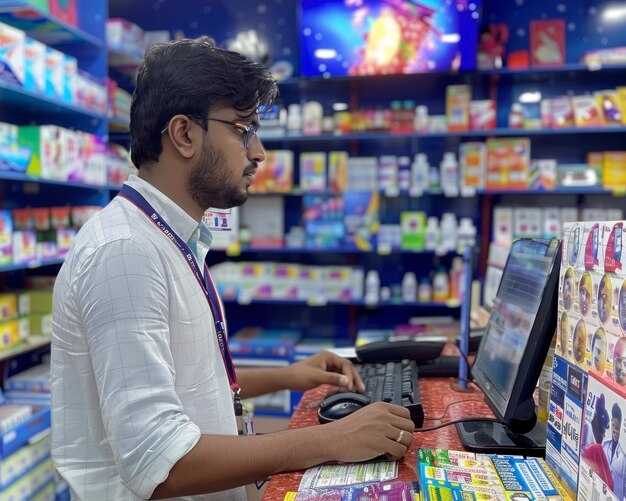
Define a core data standard and implement an API-first interfaces stack within a quarter to achieve end-to-end visibility. This creates a single source of truth for shipments, temperature and humidity logs, cargo status, and inventory across manufacturing, packaging, and distribution, enabling professionals to act quickly and reduce losses.
- Step 1: Data standards and governance
- Consolidate data models for shipments, orders, inventory, temperature readings, device telemetry, and transit events with standardized fields such as location, timestamp, status, and unit.
- Establish data quality rules, data lineage, and role-based access to protect sensitive information while maintaining visibility across countries and partners.
- Agree on time zones, units, and event naming to simplify onboarding and data sharing across the network, including pilot work in Gujarat.
- There: create a simple, scalable master data layer that supports both countrys ecosystems and regional partners.
- Step 2: System interfaces and integration
- Build API-first connectors to ERP, WMS, TMS, and IoT platforms; support streaming and batch data to capture real-time cargo status, vessel movements, and temperature excursions.
- Include EDI adapters for legacy partners and lightweight connectors for smaller suppliers to accelerate onboarding and reduce onboarding time, cutting inefficiencies.
- Deploy an event broker (MQTT, Kafka, or equivalent) to decouple data producers and dashboards, enabling scalable growth across countries networks.
- Enforce security controls, encryption in transit, and token-based authentication for all interfaces.
- Step 3: Real-time dashboards and user experience
- Design role-based dashboards for operations, planning, and leadership; display OTIF, spoilage risk, and exception rates at a glance.
- Offer vessel- and cargo-level views with geofences, alerting on excursions, and drill-down from country or state to site level.
- Provide a simplified view of key metrics: transit times, losses as a percentage of value, and on-time handoffs across routes.
- Ensure offline-capable dashboards for field teams and mobile professionals who operate in regions with intermittent connectivity.
- Step 4: Deployment plan and impact
- Run a phased rollout starting with Gujarat to validate data quality, interfaces, and dashboards, then expand to other states within 3–6 months.
- Track KPIs: spoilage reductions, improved OTIF, decreased exception rates, and lower logistics costs; anticipate a 12–20% reduction in losses for fresh-cargo segments in the first year.
- Scale gradually by adding partners, devices, and data sources to preserve performance while expanding coverage into key markets.
Investing in this end-to-end visibility layer strengthens capabilities, produces world-class logistics insights, and lowers inefficiencies across the market. There is a clear link between real-time control and cargo preservation. For professionals in Gujarat and broader countrys networks, they can act quickly, produce faster, data-driven decisions, and sustain growth into new channels.
APM Terminals investment plan: phasing, milestones, and node readiness across key ports
Implement a phased rollout at two high-volume nodes–JNPT and Mundra–with an 18-month target to reduce losses of perishable goods during transit by 15% through tighter private-partner coordination and more reliance on integrated technology.
Phase 1 (0–12 months) targets node readiness by upgrading quay cranes and yard equipment, installing 120 additional reefer plugs in warehouses, and deploying a common WMS and TOS interface for real-time tracking. Establish MOUs with a private partner and align logistics data sharing to improve visibility across goods classes, including sensitive produce and other high-demand items. Set up remote monitoring for critical assets and begin standard data exchange to support inspections with reduced delays.
Phase 2 (12–24 months) scales to two additional ports and extends automation into yard operations and cold storage networks. Add 2–3 automated container-handling lines, expand warehouses to hold 6,000 TEUs of produce storage, and implement an end-to-end traceability layer linking supplier, manufacturing, and transit data. Leverage technology to minimize idle time, optimize routing for optimal efficiency, and cut emissions by adopting electrified equipment and energy-efficient HVAC for warehouses, thereby reducing operating expenses for manufacturers and private partners. Focus on improved integrity of goods during handling and cross-docking, particularly for high-value, high-sensitivity goods from indian suppliers to countries with strong demand.
Phase 3 (24–36 months) completes node readiness across all target ports by achieving full automation, rail and road connection upgrades, and integrated cold-chain data across the network. Ensure private partner support for sourcing more imported and domestic goods through the network, grow reliance on remote monitoring, and deploy technology-enabled visibility across a wider range of goods, including manufacturing outputs and produce. Target a further 20–25% reduction in transit losses, a 10–15% decrease in inspections time, and a measurable drop in indian emissions from port operations by adopting electrified handling and solar-assisted energy in warehouses. Establish a continuous improvement loop with partners to sustain these gains through scalable investments and best practices across countries.
Regulatory alignment and data-sharing norms to enable collaboration among shippers, carriers, and authorities
Adopt a harmonized regulatory framework and a shared data model within 12 months to enable collaboration among shippers, carriers, and authorities.
- Establish a trusted источник of data and a common data model that captures temperature, handling, container IDs, vessel, location, and status for pharmaceuticals and vegetables, across all areas in asia, including mumbai.
- Standardize data fields and formats (timestamp, GPS, batch, lot, and inspections) to support maintaining data integrity and providing a verifiable chain of custody across the supply chains, for every transfer.
- Define data-sharing norms that specify who may access what data, for how long, and under which conditions, with role-based controls for operators and regulators, and with anonymization where appropriate for competition.
- Harmonize regulatory requirements across countrys to simplify inspections, align temperature ranges, packaging, and remote monitoring standards while preserving government oversight.
- Leverage technologies such as IoT sensors, remote temperature monitoring, and blockchain-enabled provenance to improve visibility across operations and vessel movements.
- Build interoperable interfaces (APIs, EDI, dashboards) so shippers, carriers, and authorities can view live status, alerts, and deviations in real time, supporting incident response and fewer delays.
- Institute joint initiatives to measure and report emissions and energy efficiency in cold-chain activities, tying compliance to business performance and market expansion plans.
- Create a shared inspections toolkit with standardized checklists and mobile tools to accelerate verifications at warehouses, transit hubs, and ports, reducing bottlenecks in handling for pharmaceuticals and vegetables alike.
- Allocate investments to strengthen capabilities across operators and other stakeholders, including remote regions and major hubs like Mumbai, while ensuring the governance framework maintains data privacy and national security concerns.
Financial modeling: capex vs opex, ROI scenarios, and risk-adjusted funding options
Recommendation: start with a blended capex-opex plan for India’s cold chain by deploying modular, refrigerated units in 4–6 high-demand corridors, financed as capex but paired with long-term, risk-adjusted opex services for maintenance and handling. This needed approach improves control over domestic logistics, supports agriculture and pharmaceutical segments, and reduces losses from spoilage by ensuring strict product temperature and chain integrity.
Financial framing: capex investments create depreciable assets with tax shields; opex models shift costs into annual service fees, spare parts, and remote monitoring, while repairing and sustaining operational uptime. Use a total cost of ownership (TCO) lens to compare scenarios across diverse markets and countries, including energy, repair expenditures, and uptime requirements. For them, a long-term contract with vendors can stabilize cash flow, while maintaining operational control and flexibility. Consider grants or concessional debt to lower the cost of capital, and apply risk-adjusted funding options such as revenue-sharing, performance-based payments, and guarantees to reduce default risk. These financing solutions keep cash flows manageable while enabling scale across market chains and across countries.
ROI scenarios: Build three profiles–Base, Optimistic, and Pessimistic. Base assumes capex of 8.0 USD million, opex of 1.2 USD million/year, and revenue uplift from reduced losses and improved handling of 2.0 USD million/year; payback around 4 years; ROI near 14%. Optimistic assumes capex of 6.5 USD million, opex of 0.9 USD million/year, and revenue uplift of 2.8 USD million/year; payback near 2.8 years; ROI near 22%. Pessimistic uses capex of 9.5 USD million, opex of 1.6 USD million/year, and revenue uplift of 1.5 USD million/year; payback around 6.5 years; ROI near 9%. Significantly, sensitivity to 20% demand shifts in agriculture and domestic markets can alter outcomes; pharmaceutical segments, with controlled handling requirements, tend to push higher margins. The long horizon highlights how capex-heavy approaches compare with enduring opex arrangements while sustaining long-term control over the supply chains and their handling.
| Scenario | Capex (USD mln) | Opex (USD mln/yr) | Revenue uplift (USD mln/yr) | ROI (%) | Payback (years) | Key risks |
|---|---|---|---|---|---|---|
| Base | 8.0 | 1.2 | 2.0 | ~14 | 4 | Energy costs, uptime |
| Optimistic | 6.5 | 0.9 | 2.8 | ~22 | 2.8 | Vendor reliability, demand growth |
| Pessimistic | 9.5 | 1.6 | 1.5 | ~9 | 6.5 | Repair needs, supply shocks |
Funding options and risk mitigation: Combine debt with government guarantees, grants, or blended finance to support needed scale across diverse markets. Revenue-backed lending suits segments with strong cash flows, notably pharmaceutical cold chain, while OPEX-based contracts can serve small-scale agriculture logistics. Implement a robust monitoring framework with remote sensors to maintain operational control over long-term handling and reduce losses, enabling further optimization of the capex/opex mix as demands evolve within the domestic market and across countries’ chains.