


 Türkçe
  English (UK)
  Русский
  العربية
  日本語
日本語  한국어
한국어  Magyar
  Español
  Čeština
  Svenska
  Português
  Ελληνικά
  Suomi
Suomi  Nederlands
  Română
  Italiano
  Français
  Polski
  Українська
  Deutsch
  简体中文
简体中文  Slovenčina

Map your supply network today and implement redundancy for critical components to curb disruption. In crises, resilience begins with clear ownership of processes at the источник (source) and with operations that can pivot quickly. Build strategies that have built-in esneklik, including dual sources and contracts that allow variable volumes. This approach creates redundancy and preserves throughput when one link fails, protecting beds of inventory and customer commitments.
Decision-making must be based on data, not gut feel. Use real-time indicators such as on-time delivery rates, component lead times, and site-level fill rates to replay scenarios. In todays context, adapt procurement and production plans and implement cross-functional reviews every two weeks to stay ahead of shifts in supply and demand, implementing early-warning triggers to act before disruption widens. This also helps reduce potential delays and keeps buffer capacities intact, especially where circular strategies are most helpful.
Think of your network as a pradera–a living field that thrives when you balance sun and rain. Separate strategic suppliers from commodity suppliers, and map geographic dependencies to reduce single-region risk. Include a diverse supplier base to lower concentration risk, and place backup sourcing within reach of key markets to shorten transit times. A practical rule: keep critical inventories at regional depots to cushion delays and keep production flowing even if transport slows.
Set up an early-warning dashboard that tracks supplier health, transport constraints, and production readiness. Preserve flexibility by implementing modular manufacturing, short-cycle planning horizons, and adjustable sourcing contracts that permit volume swings. Include contingency playbooks for top risk scenarios and rehearse them quarterly with procurement, logistics, and operations teams. The payoff appears in steadier lead times, fewer stockouts, and improved cash flow during disruptions.
Keep a single источник for decisions by centralizing a critical data repository and labeling it as the single source of truth for supply decisions. This keeps teams aligned and speeds recovery when crisis hits, turning uncertainty into measured actions rather than reactions.
Practical steps to safeguard JIT operations under uncertainty
Audit all critical nodes and implement redundancy across suppliers, facilities, and distribution points to reduce vulnerabilities in todays disrupted environment.
- Map and monitor chains end-to-end using real-time dashboards to spot bottlenecks between sourcing, production, and delivery, and categorize vulnerabilities by product family.
- Establish beds of safety stock for high-risk products and components, distributed across multiple facilities and regions to cushion unexpected delays.
- Deploy technological tools such as models and real-time analytics to simulate crisis scenarios, quantify risk exposure, and guide decision-making when orders shift or needs change.
- Keep production flexible by building modular lines that can switch between products, enabling producing capacity to respond efficiently to todays needs and forecasted demand.
- Build a diversified supplier base and define contingency orders with clear trigger points to cover unforeseen events and crisis periods.
- Strengthen distribution planning with alternative transport routes and cross-docking to minimize disruption between facilities and marketplaces.
- Institute a continuous improvement loop: after each disruption, capture lessons to improve your strategy, update models, and train teams to respond rapidly to unexpected changes.
Identify critical suppliers and mitigate single points of failure
Map your supplier base and label the critical ones immediately. Build a dependency map that assesses item share, lead times, and geographic exposure. Use a simple risk score to flag single-source items, long replenishment cycles, or suppliers with limited alternative options. They can rely on real-time analytics to watch on-time delivery, quality, and capacity across your most important partners, thanks to dashboards that alert you when a metric breaches the threshold.
Adopt a methods-driven approach to reduce risk: dual sourcing for top items, regional diversification, and a disciplined inventory strategy. For each critical supplier, establish one or two alternate sources that can step in within days, between regions to avoid disruption. This reduces dependence on a single provider and improves operation continuity.
Design cross-functional collaboration to ensure resilience: procurement, manufacturing, distribution, and facilities must share data and align on priorities. Keep processes standardized so transitions are smooth during a disruption. Also, implementing supplier risk reviews and quarterly stress tests to surface gaps before they break the line.
Inventory and distribution readiness: carry safety inventory for critical parts while maintaining lean levels elsewhere. Use real-time analytics for optimizing safety stock and reducing carrying costs. Additionally, diversify distribution routes and carriers to prevent bottlenecks in one corridor or facility.
| Tedarikçi | Dependency (%) | Lead Time (days) | Mitigation |
|---|---|---|---|
| Alpha Components | 28 | 20 | Secondary source in another region; automated alerts |
| Beta Plastics | 15 | 15 | Maintain safety stock; flexible SLAs |
| Gamma Electronics | 8 | 30 | Cross-source plan; monitoring |
Quantify risk with scenario planning and uncertainty ranges
Start with a concrete recommendation: implement a rolling 12-week scenario plan to quantify risk across suppliers and inventory, attaching explicit uncertainty ranges to demand, lead times, and delivered quantities. This approach gives the company a clear view of exposure and guides timely actions.
These steps help the organization build a robust picture of its operating environment and inform decisions that improve delivery performance. By adopting collaborative practices with suppliers, teams align on forecasts, buffers, and replenishment cadences, strengthening overall resilience.
Develop three scenarios including base, demand shock, and disruption, each with probability estimates, and quantify metrics such as service level, stock coverage, safety stock, and days of supply to compare outcomes across conditions.
Across scenarios, run sensitivity analyses to identify safe quantity targets and inventory levels that preserve service while steering costs downward, then adapt replenishment rules to reflect new realities and trade-offs between cost and performance.
Translate insights into concrete actions: diversify suppliers, adapt procurement strategies, implement collaborative practices with key partners, and explore circular options like refurbishing stock or reusing packaging to reduce waste and bolster readiness for swift shifts in demand.
Diversify sources through dual sourcing, nearshoring, and supplier development
Implement dual sourcing for most critical material categories by designating a primary supplier and a backup, with a right balance of volumes and a safety-stock target that keeps inventory at a level covering two to three months of demand. This strategy reduces risks when a supplier faces disruption and preserves key resources for production. Make decisions informed by quarterly reviews of delivery performance, cost, and quality to adapt to uncertainty. Keep some redundancy across parts and materials, thus streamlining procurement and maintenance of the supply base, while ensuring the company can respond quickly to changed conditions.
Nearshoring cuts transit times and geopolitical exposure, while enabling closer collaboration with suppliers. Move a portion of assembly and component sourcing to nearby regions where you have established hubs and familiar regulatory environments. Target delivered lead times reductions of 2–4 weeks for critical parts and, where possible, adopt modes such as vendor-managed inventory or consignment to increase responsiveness. Build a shared analytics view with suppliers to monitor on-time delivery, quality, and cost trajectories, thus expanding the set of options available in uncertain contexts.
Develop a formal supplier development program for strategic partners. Classify suppliers into tiers and invest in capabilities, process improvements, and joint upkeep of preventive maintenance plans. Provide access to analytics dashboards, co-create improvement roadmaps, and hold regular QBRs that align on KPIs like delivered performance, defect rates, and price stability. Use multiple methods of collaboration–training, joint problem solving, and knowledge sharing–to elevate the right suppliers and turn them into reliable partners that can scale with you. For example, pradera can participate in forecast sharing and joint maintenance activities to raise the overall resilience of the network.
A circular mindset strengthens resilience by reusing materials, components, and packaging wherever feasible. Redesign parts for easier disassembly, extend supplier collaboration to remanufacturing or refurbishing cycles, and implement take-back programs that feed material back into inventory. Streamline handling, storage, and transport of reusable modules to reduce waste and total cost, while maintaining quality delivered to customers. This approach supports a broader strategy to balance cost, risk, and sustainability in a high-uncertainty environment.
Action steps for immediate impact: map critical inventory and parts, set dual-sourcing plans with clear SLAs, pilot nearshoring for high-risk categories, establish a supplier-development framework, deploy analytics-driven dashboards, implement maintenance collaborations, and run scenario planning to stress-test the supply chain. Track geopolitical and regulatory risks, supplier financial health, and performance across modes of procurement to keep the most important risks in check. By combining these methods, a company can improve delivery, reduce volatility, and maintain continuity even when disruption hits.
Design adaptive inventory policies to balance flow with risk
Adopt adaptive inventory policies that balance flow with risk by pairing real-time demand signals with dynamic safety stock and diversification across suppliers. For some SKUs, diversify across regional suppliers to reduce vulnerabilities in their chains. Use informed decisions to adjust orders as todays conditions change.
Attach these policies to tangible actions: set reorder points that respond to lead-time variability, maintain circular buffers for critical items, and use digitalization to translate dashboards into concrete steps. This is a fundamental capability for resilient operations. Real-time visibility across suppliers and inventories helps companies anticipate problems, reroute shipments, and minimize stockouts.
Ferrovial illustrates how a global operator aligns procurement, logistics, and asset management to cut disruptions. By mapping its chains and using collaborative planning with suppliers, it shifts inventory around the network to cover delays and port holdups. They prioritize informed risk assessments and align around solutions.
Circular practices complement this approach: refurbish or remanufacture components, share spare parts across partners, and pre-stage critical items in diversified warehouses. These steps reduce capital tied up and shorten lead times, especially around high-risk corridors, delivering resilience across their operations.
Track metrics such as service levels, days of inventory coverage, and shifts in disruptions over a rolling horizon. Use these insights to refine diversification, update supplier lists, and accelerate digitalization across the value chain for a more resilient, cost-conscious flow.
Improve end-to-end visibility using real-time data and digital tools
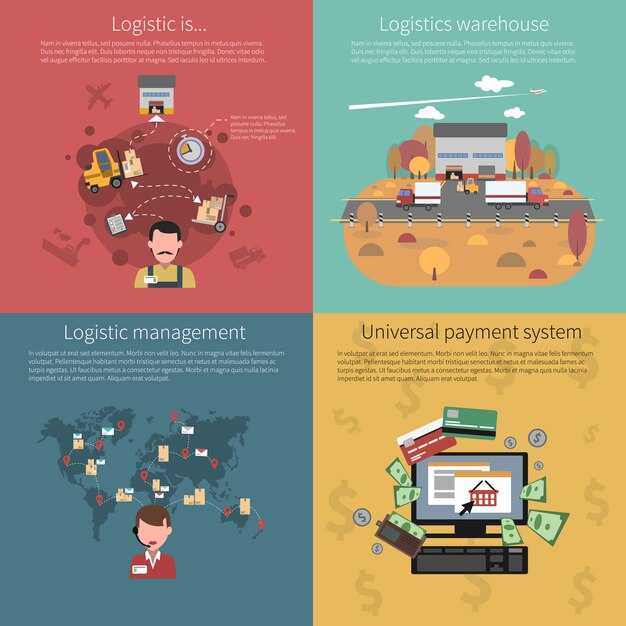
Start by establishing a single, collaborative visibility platform that ingests data from ERP, WMS, TMS, supplier portals, and IoT sensors on shipments. This setup provides real-time visibility across your distribution network, letting your brand and customer see status, bottlenecks, and opportunities to act.
Three concrete actions will deliver end-to-end visibility: map inventory and shipment flows across your network to the right level of detail; enable real-time alerts triggered by threshold breaches; conduct a periodic reassessment with supplier and carrier partners to keep data aligned.
Integrate data streams via APIs, standard EDI feeds, and secure file exchanges; ensure data quality with automated deduplication and matching rules. Use RFID or barcode scans to confirm goods movement and reflect updates in the dashboard instantly. This creates a clear picture of where items are, who holds them, and when they leave each node.
To reduce risks in volatile environments, build redundancy by multi-sourcing and alternate carriers; maintain stock buffers at strategic nodes to cushion a crisis. Use a global view to spot regional gaps and adjust allocation in real time, then run a collaborative plan with suppliers to close any gaps. Reassessment should occur quarterly or after major events to keep the data accurate; nothing should stay stale.
Measure success with concrete targets: cut issue resolution time by 20–40%, improve on-time delivery by 10–25%, and raise the fill rate for critical orders. Track inventory turns, service level, and forecast accuracy to verify that your resources are allocated where they make the biggest impact. Use the three levers–data quality, automation, and governance–to benchmark performance across suppliers and regions.
Implement governance and training: empower operation teams with role-based access, define ownership for data quality, and ensure data stewardship across your company. Align with global suppliers to standardize data formats, thus speeding collaboration and reducing miscommunication.