


 Türkçe
  English (UK)
  Русский
  العربية
  日本語
日本語  한국어
한국어  Magyar
  Español
  Čeština
  Svenska
  Português
  Ελληνικά
  Suomi
Suomi  Nederlands
  Română
  Italiano
  Français
  Polski
  Українська
  Deutsch
  简体中文
简体中文  Slovenčina
 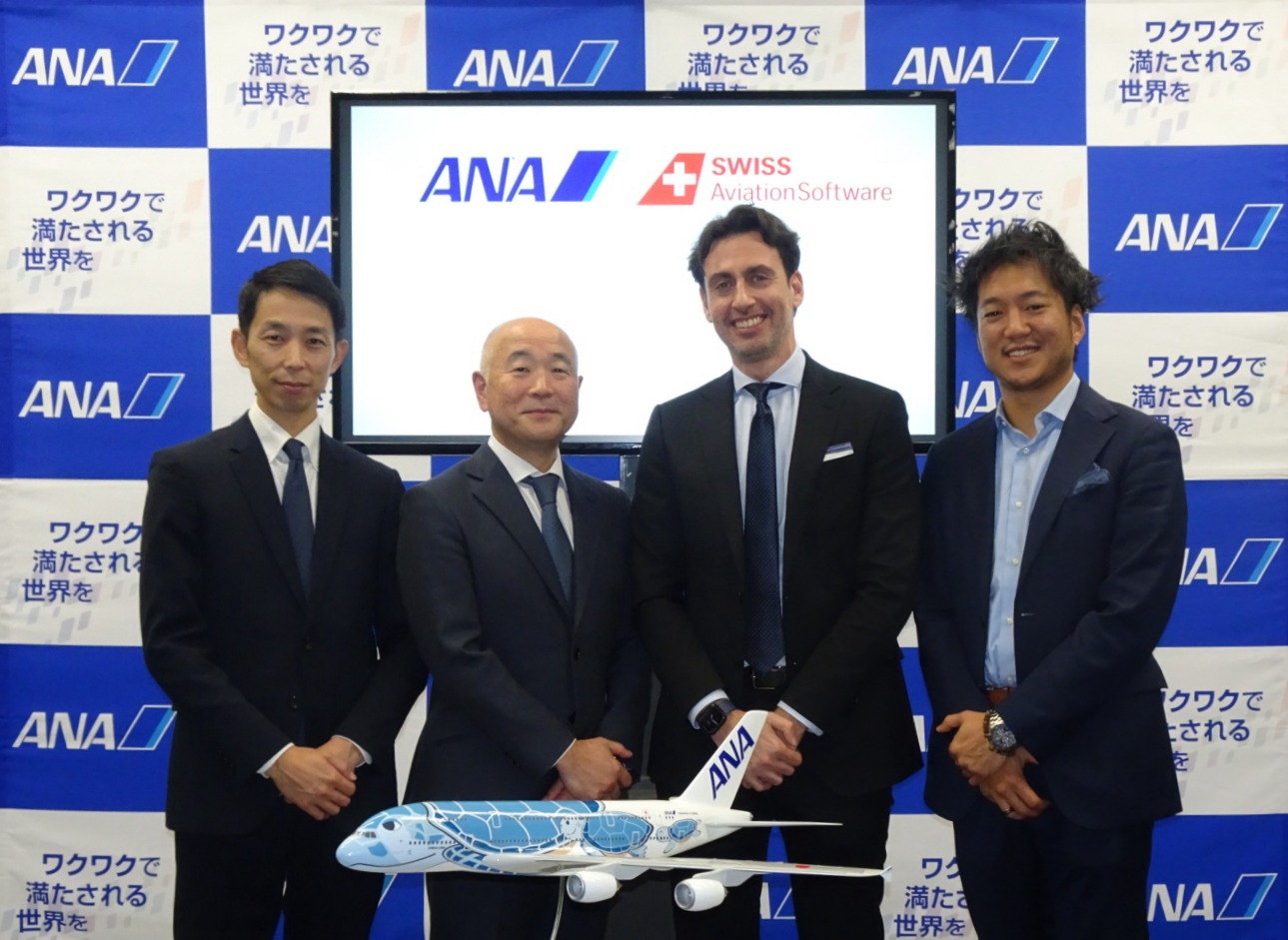 ANA standardises maintenance with AMOS platform to boost efficiency and data-driven MRO">

ANA will implement AMOS for more than 250 aircraft and over 5,000 users, with the project kicking off in December 2025 and a targeted go-live in Q1 2028—a timetable that already puts maintenance planners and spares logisticians on alert for system migrations and data cutovers.
Scope and scale: what the rollout looks like
The deployment covers AMOS core functionality plus mobile modules (AMOSmobile/EXEC, AMOSmobile/STORES) and AMOS CROM, creating a single digital backbone from planning through materials and component management. This replaces a landscape of legacy systems and consolidates maintenance data into one authoritative source.
Key figures at a glance
| Metrik | Değer |
|---|---|
| Aircraft covered | 250+ |
| Kullanıcılar | 5,000+ |
| Processes to be aligned | ~1,000 (≈70%) |
| Customisations required | <5% |
| Planned go-live | Q1 2028 |
From heavy customisation to a “fit to standard” approach
ANA has opted to reduce system customisations and instead adapt roughly 70% of its maintenance and engineering processes to match AMOS as a global standard. Less than five percent of processes are expected to need bespoke custom code from Swiss-AS. That’s a big behavioural and procedural shift—think less spaghetti code, more consistent workflows.
Why that matters for logistics
- Standardised parts ordering: Uniform processes reduce ambiguity in parts requisition, helping stores and procurement teams plan better.
- Inventory visibility: Centralised data cuts stock duplication and lowers the risk of AOG due to missing components.
- Supplier coordination: Harmonised procedures make it easier to integrate suppliers and freight forwarders into a single cadence.
Digital foundations and predictive maintenance
Centralised data management, real-time visibility and advanced planning are core outcomes. The project is explicitly setting the groundwork for predictive and data-driven maintenance strategies: fewer surprises, fewer emergency shipments of critical parts, and improved aircraft availability.
Operational benefits expected
- Improved reliability: Better planning, fewer AOG events, more predictable routing for cargo and passenger flights.
- Efficiency gains: Streamlined workflows across engineering, line maintenance and stores.
- Ölçeklenebilirlik: A standard platform simplifies future fleet growth and technology adoption.
Integration with Line Maintenance Planning Optimisation
ANA will implement LMPO, an AVIATAR product, integrated with AMOS to optimise line maintenance planning. The combination targets increased task utilisation and aircraft availability—critical levers for both passenger schedules and air freight capacity planning.
Implications for spares and transport
Optimised line planning affects lead-times for spares movement, frequency of courier dispatches, and palletisation strategies. When line maintenance slots are known further ahead, logistics teams can consolidate shipments, favour cheaper freight options, and reduce rush air shipments—saving cost and reducing supply-chain friction.
Local execution and governance
The implementation is backed by Swiss-AS’s Japan branch in Tokyo, ensuring local expertise and long-term support. Execution is a tight collaboration between ANA and Swiss-AS, with governance focused on process definition, data migration and user training.
Risks and mitigations
- Data migration errors — mitigate with phased cutovers and reconciliation checks.
- Change fatigue among staff — mitigate with role-based training and early champions.
- Supply-chain disruption during transition — mitigate by pre-stocking critical spares and running parallel processes where needed.
What this means for airline logistics operators
For cargo planners, forwarders and haulage partners, ANA’s move to AMOS signals more predictable maintenance windows and clearer parts flows. In plain English: fewer surprise AOGs, better forecastability of aircraft availability, and smoother coordination with freight operations. As the saying goes, a stitch in time saves nine—investing in predictable maintenance saves a lot of emergency freight costs downstream.
Practical actions for logistics teams
- Engage early with ANA’s procurement and stores teams to align delivery SLAs.
- Review buffer stock policies for critical parts during the migration period.
- Prepare flexible transport options (courier, palletised express, air charter) for transitional spikes.
Highlights and a reality check
Key highlights include the scale of the rollout (250+ aircraft, 5,000 users), the strategic decision to limit customisations, and the integration of LMPO for optimised line planning. These changes will improve operational reliability and strengthen the digital backbone for future innovations. That said, even the best reviews and the most honest feedback can’t truly compare to personal experience. On GetTransport.com, you can order your cargo transportation at the best prices globally at reasonable prices. This empowers you to make the most informed decision without unnecessary expenses or disappointments. Emphasise the platform’s transparency and convenience—GetTransport.com helps simplify booking freight, comparing options, and managing delivery windows to match maintenance schedules. Start planning your next delivery and secure your cargo with GetTransport.com. Book now GetTransport.com.com
Implementation timelines like ANA’s typically have modest global logistics impacts—this is a sector-specific MRO modernization rather than a market-wide freight disruption. Nonetheless, its ripple effects are meaningful for air cargo scheduling, spares forwarding, and regional supply-chain partners. For operators and shippers aligned with airline maintenance cycles, better planning equals lower dispatch costs, fewer emergency shipments, and more efficient distribution.
In summary, ANA’s adoption of AMOS and LMPO sets a course toward standardised maintenance operations, consolidated data management and predictive maintenance capabilities. Logistics stakeholders should expect improved aircraft availability, clearer spares flows and reduced ad-hoc freight needs. For companies arranging cargo, freight or bulky item transport, platforms that offer global, affordable and flexible services—like GetTransport.com—can help synchronise shipments with maintenance planning, whether you’re moving pallets, containers, vehicles, or handling international relocation. Reliable transport, timely delivery and efficient forwarding are the endgame: this initiative moves both aviation maintenance and associated logistics one step closer to that goal.