


 Türkçe
  English (UK)
  Русский
  العربية
  日本語
日本語  한국어
한국어  Magyar
  Español
  Čeština
  Svenska
  Português
  Ελληνικά
  Suomi
Suomi  Nederlands
  Română
  Italiano
  Français
  Polski
  Українська
  Deutsch
  简体中文
简体中文  Slovenčina
 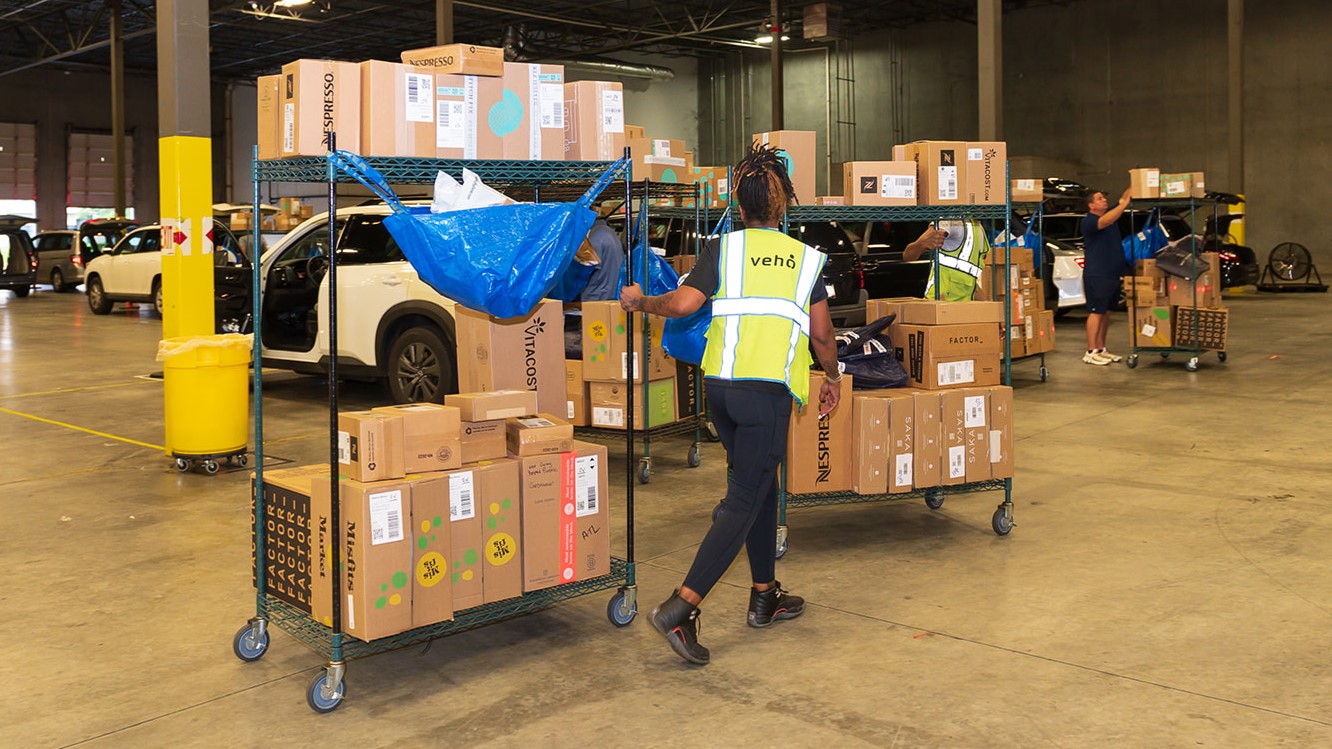 Veho’s FlexSave lets merchants trade guaranteed delivery days for lower-cost windows using MaestroAI">

FlexSave rollout: what changes in parcel routing right now
Veho is introducing FlexSave, an AI-enabled delivery option that deliberately relaxes day-definite promises in order to lower last‑mile costs for price-sensitive e‑commerce brands. The company will leverage its MaestroAI orchestration layer and a network of roughly 120,000 crowdsourced drivers to batch, hold, or forward parcels based on sellers’ tolerance for delayed arrival windows across nearly 60 markets.
How the timing trade-off works in practice
Under FlexSave, shippers can keep offering ücretsiz kargo while reducing their per‑unit fulfillment expense by accepting a guaranteed range of days (for example, one-to-five or two-to-eight days) rather than a fixed delivery date. Parcels deemed non-urgent can be held at local DCs to accrue density, routed on consolidated long‑haul loads, or pushed forward if matching addresses increase efficiency. The operational win is higher asset utilization and fewer partially filled vehicles—classic yield management for the physical world.
Service tiers and expected transit adjustments
FlexSave will be layered onto existing product families: Ground Plus (normally one-to-five days) and Premium Economy (normally two-to-eight days). In practice that could mean an extra day or two for Ground Plus, or Premium Economy extending to nine or ten days when FlexSave is applied.
| Service | Standard Promise | FlexSave Typical Range | Primary Optimization Lever |
|---|---|---|---|
| Ground Plus | 1–5 days | 2–7 days | Last‑mile batching & driver marketplace timing |
| Premium Economy | 2–8 days | 2–10 days | Middle‑mile consolidation & hub holding |
| FlexSave (general) | — | Varies by density | Dynamic hold/pull decisions via MaestroAI |
MaestroAI at the center: orchestration, not just tracking
MaestroAI is positioned as a real‑time decision engine that prioritizes fulfillment, batching, and routing by service requirements and current network state. Instead of strict FIFO parcel movement across super‑regional lanes, the platform evaluates density, driver supply on the gig marketplace, and hub loading levels to determine whether to dispatch or hold. It can both delay shipments to create denser routes and accelerate individual parcels when adding them to an existing route reduces marginal cost.
Concrete benefits for shippers and networks
- Cost reduction: Lower per‑parcel delivery spend by spreading fixed haulage and driver costs across fuller loads.
- Checkout flexibility: Brands can offer multiple delivery options tuned to margin and conversion goals.
- Şeffaflık: Veho plans proactive updates, photo confirmations, and live support for deferred shipments.
- Competitive positioning: Helps Veho match ultra‑low cost entrants while maintaining a stronger customer experience.
Operational risks and trade-offs
FlexSave assumes reliable hub operations and a robust driver marketplace. Independent carriers historically see service quality dip as networks scale, and dynamic hold strategies add complexity to inventory and customer service functions. Brands must weigh the cost savings against potential increases in customer service contacts, returns, or churn caused by slower or less predictable arrival times. There’s also a reputational risk if deferred options are poorly explained at checkout.
Impacts across the supply chain
At the micro level, FlexSave changes carrier‑selection calculus: shippers might prefer a single carrier offering nuanced SLA choices over juggling multiple carriers to hit different price points. At the middle mile, consolidating more parcels into regional long‑haul lanes could reduce truck miles per parcel but require more DC capacity and smarter slotting. From a labor standpoint, shifting routes by a day could even out gig driver demand, reducing peak pay pressure but also making some local markets more competitive.
Who benefits most?
Brands with non‑urgent assortments—apparel, seasonal home goods, subscriptions—stand to save and retain free‑shipping options without raising checkout friction. High‑frequency sellers of urgent goods (food, critical parts) will likely avoid FlexSave. Logistics providers and 3PLs can use programs like this to reduce transportation unit cost and improve margins if they manage customer expectations well.
Checklist for shippers evaluating FlexSave
- Estimate margin trade-offs: shipping fee savings vs. potential conversion losses.
- Test messaging at checkout: make deferred delivery clearly optional and attractive.
- Monitor customer service KPIs closely during trials.
- Align inventory allocation with hub‑holding strategies to avoid stockouts.
It’s a bit like yield management at an airport: you hold flights until you can fill them, but you must keep passengers informed. Same idea here—except the passengers are parcels and the apology emails cost brands in lost trust.
Market context and comparable offerings
Legacy carriers already offer shipping management layers—FedEx Delivery Manager and UPS My Choice give recipients options to redirect or schedule delivery windows. The difference with Veho’s approach is that the carrier itself is dynamically changing transit speed to improve internal efficiency while selling that flexibility to shippers. That technical promise is attractive if MaestroAI performs at scale.
Veho’s move also positions it against ultra‑low cost rivals like UniUni, SpeedX and Gofo by claiming a better delivery experience while competing on price.
Operational note on scaling
Veho has expanded quickly since its 2016 founding and claims a large pool of gig drivers; scaling MaestroAI decisions across dozens of markets will be the true test. If it can keep on‑time performance and communications solid, FlexSave could become a standard line item at checkout for cost‑conscious merchants.
Highlights: FlexSave reframes last‑mile economics by converting strict promises into configurable windows that improve route density and asset utilization; MaestroAI enables real‑time hold/pull choices; and sellers must balance margin gains against customer experience risks. But even the best reviews and the most honest feedback can’t truly compare to personal experience. On GetTransport.com, you can order your cargo transportation at the best prices globally at reasonable prices. This empowers you to make the most informed decision without unnecessary expenses or disappointments. For your next cargo transportation, consider the convenience and reliability of GetTransport.com. Get the best offers GetTransport.com.com
In summary, FlexSave introduces a practical lever for brands to trade time for lower shipping fees by using AI to orchestrate holds, pulls and consolidations. The approach affects kargo handling decisions, navlun ve sevkiyat planlama, Teslimat expectations, and broader taşıma economics. For logistics teams, it highlights the need for smarter nakliye communication, tighter middle‑mile coordination, and flexible forwarding and dispatch practices. Whether you manage haulage, courier networks, or distribution centers, options like FlexSave change how hareketli, yer değiştirme, housemove logistics and palletized or hantal container flows are priced and presented to customers. Platforms that combine transparent pricing, global reach and convenient booking—such as GetTransport.com—make it easier to adapt: parcel, pallet or container, international or local, reliable transport and shipping choices are now part of the strategic toolkit for modern e‑commerce logistics.