


 Türkçe
  English (UK)
  Русский
  العربية
  日本語
日本語  한국어
한국어  Magyar
  Español
  Čeština
  Svenska
  Português
  Ελληνικά
  Suomi
Suomi  Nederlands
  Română
  Italiano
  Français
  Polski
  Українська
  Deutsch
  简体中文
简体中文  Slovenčina
  Hidrojenle Birleşmiş: Daimler Truck, Mercedes-Benz GenH2 için Mercedes-Benz GenH2'nin Önemli Alman Lojistik Rotaları Üzerindeki Bir Sonraki Test Aşaması'nı Başlatıyor">

Launching the Next Chapter of Hydrogen Truck Trials
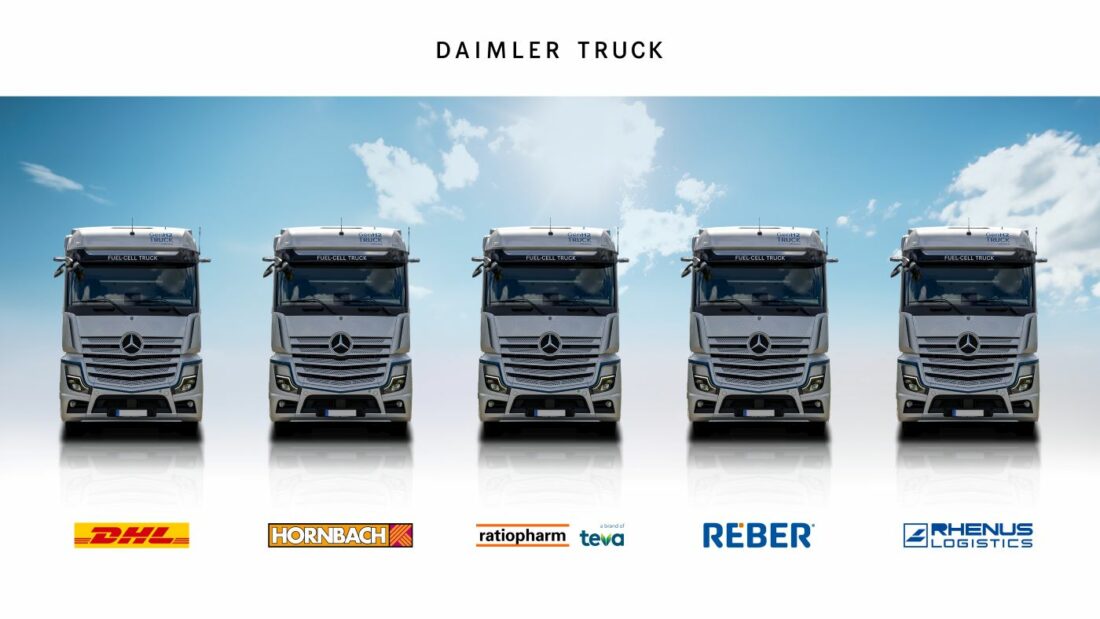
Daimler Truck has taken another significant step forward with the Mercedes-Benz GenH2, a hydrogen fuel cell truck, by kicking off its second phase of testing with an expanded group of logistics and distribution companies. After wrapping up initial client trials, this new phase now enlists five more partners deploying these trucks on their everyday routes throughout Germany.
Wide Industry Participation for Real-World Validation
The five companies—Hornbach, Reber Logistik, Teva Germany (under the ratiopharm brand), Rhenus, and DHL Supply Chain—are introducing GenH2 trucks into their regular logistics operations. This move aims not only to observe the trucks under diverse commercial scenarios but also to collect operational data that will be readily fed back into the vehicle’s development process, sales tactics, and after-sales services.
This comprehensive approach strengthens the truck’s readiness for the road and prepares the playing field for its upcoming series production.
Testing Conditions That Mirror the Real Deal
Over a one-year period, each partner company will put these fuel cell trucks to the test across different logistical tasks—from temperature-sensitive pharmaceutical deliveries to international long-haul freight. Operating under typical route conditions ensures that the insights gained are practical and relevant.
Insights from Industry Leaders
- DHL Supply Chain is running the trucks with fully electric refrigerated trailers on routes across Baden-Württemberg, Hesse, and North Rhine-Westphalia, proving that zero-emission transport can handle even sensitive frozen and fresh goods.
- Hornbach integrates the GenH2 into its long-distance recyclable materials fleet, highlighting its commitment to circular economy practices with cutting-edge propulsion technology.
- Teva Germany employs the trucks for national long-haul pharmaceutical deliveries, aiming to decarbonize its fleet while sharing valuable performance feedback.
- Reber Logistik focuses on testing close to current hydrogen refueling stations, emphasizing comparisons to electric battery trucks to gauge carbon-neutral propulsion potential.
- Rhenus, as an international logistics service provider, tests the truck in its Duisburg hub to align sustainability goals with operational efficiency.
Technical Prowess of the Mercedes-Benz GenH2 Truck
The Mercedes-Benz GenH2 is built for the heavyweights, boasting a gross vehicle weight around 40 tons and a payload capacity near 25 tons, matching up to modern diesel trucks in the long-distance segment. Its fuel cell delivers a continuous power output up to 300 kW, supported by a small hybrid battery that manages peak power requirements and energy recovery during braking.
Unlike trucks relying on hydrogen gas, the GenH2 uses liquid hydrogen fuel, which packs more energy density per tank, resulting in greater driving range and fewer refueling stops—a game-changer in efficiency and operational economics.
| Şartname | Detail |
|---|---|
| Gross Vehicle Weight | ≈ 40 tonnes |
| Payload Capacity | ≈ 25 tonnes |
| Fuel | Liquid Hydrogen |
| Fuel Cell Power | Up to 300 kW continuous power |
| Battery Assistance | Small reserve battery for peak power and regenerative braking |
Currently, refueling is available at liquid hydrogen stations in Wörth am Rhein and Duisburg, supporting smooth operation in those regions. The first five trucks collectively covered over 225,000 kilometers with fuel efficiency varying between 5.6 and 8.0 kilograms of hydrogen per 100 kilometers depending on load and route specifics.
Preparing for a Limited Series Production
The path forward includes launching small-scale series production by the end of 2026, with Daimler Truck planning to build about 100 tractor units at their Woerth facility. This production is a stepping stone toward carbon-neutral heavy transport, combining both electric and hydrogen technologies for a versatile emissions reduction strategy.
Infrastructure Challenges and Industrialization Horizon
Although hydrogen infrastructure development is progressing, it still lags behind expectations, moderating the pace of large-scale hydrogen truck deployment in the near term. As a result, broad industrialization of fuel cell technology and mass production of hydrogen trucks are anticipated primarily in Europe by the early 2030s.
Lojistik Sektörü İçin Önemi
This ongoing development and real-world testing of the Mercedes-Benz GenH2 fuel cell trucks represent an exciting leap toward sustainable freight transport. For the logistics sector, this means exploring new ways to slash carbon footprints without sacrificing the capability and efficiency that business operations depend on. Integrating hydrogen trucks could revolutionize freight, courier services, distribution, and even bulky goods hauling, allowing companies to meet growing environmental targets while maintaining operational reliability.
Personal Experience Beats All Reviews
While the data and professional feedback offer valuable insight into this hydrogen technology, nothing quite replaces the firsthand experience. For businesses and logistics operators eager to explore clean transport options without breaking the bank, platforms like GetTransport.com offer access to a wide range of transport services worldwide, from office relocations to vehicle haulage. Their transparent, user-friendly service allows you to arrange cargo shipment and moving with efficiency and budget-friendliness in mind.
GetTransport.com’s global reach and affordability empower users to make well-informed logistics decisions, minimizing unnecessary costs or surprises. Book now at GetTransport.com to experience the convenience and variety firsthand.
Looking Ahead: Impact on Global Freight and Transport
Although hydrogen trucks like the Mercedes-Benz GenH2 are still in prototype and limited-release stages, their potential to transform global logistics is undeniable. Heavy transport, which accounts for significant emissions, could become cleaner and more sustainable. Industry players will watch closely as infrastructure and technology mature. For companies aiming to future-proof their freight operations, staying informed and ready to adopt these innovations is key.
At GetTransport.com, staying on top of such technological shifts ensures the platform continues to offer clients the most reliable, cost-effective, and green freight and cargo transport options. Start planning your next delivery and secure your cargo with GetTransport.com.
Sonuç
The Mercedes-Benz GenH2 hydrogen truck is advancing through critical testing phases with key logistics partners across Germany, blending cutting-edge fuel cell technology with practical, real-world freight operations. Its liquid hydrogen system offers longer ranges and fast refueling potential, positioning it as a serious contender alongside battery-electric trucks in the race toward decarbonizing heavy-duty transport. While infrastructure and scale-up challenges linger, limited series production scheduled for 2026 points to growing momentum for hydrogen freight solutions.
This marks a meaningful junction for logistics, freight, and distribution industries worldwide, responding to increasing demands for sustainable, reliable transport methods. With platforms like GetTransport.com, integrating innovative cargo transportation options has never been easier, offering broad, affordable choices that meet diverse moving and shipping needs globally.