


 Türkçe
  English (UK)
  Русский
  العربية
  日本語
日本語  한국어
한국어  Magyar
  Español
  Čeština
  Svenska
  Português
  Ελληνικά
  Suomi
Suomi  Nederlands
  Română
  Italiano
  Français
  Polski
  Українська
  Deutsch
  简体中文
简体中文  Slovenčina
 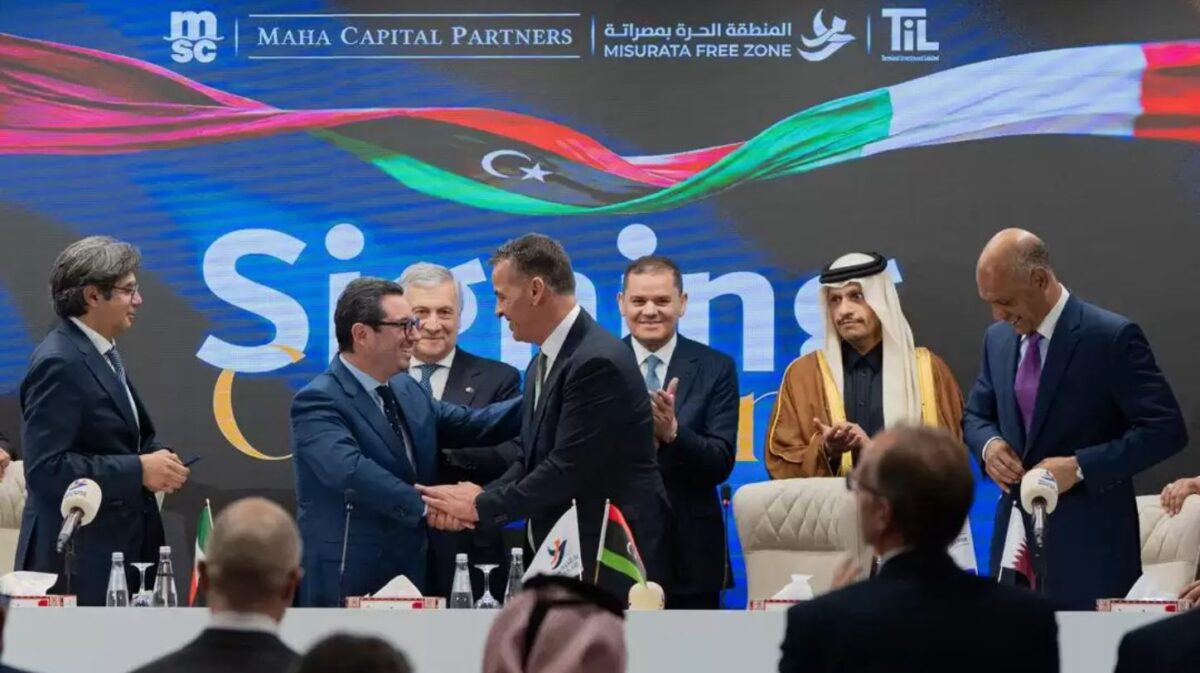 Misurata Free Zone to undergo US$2.7bn overhaul under new public–private partnership">

The focus here is on Libya’s newly announced public–private partnership to modernise the Misurata Free Zone Port and the ripple effects that upgrade could have on regional trade and logistics.
Overview of the agreement
Misurata Free Zone (MFZ), the country’s primary container gateway, has entered a strategic public–private partnership with Maha Capital Partners ve Terminal Yatırım Limited Şirketi. The deal is valued at approximately US$2.7bn and aims to transform the port and its adjoining Free Zone into a modern, higher-capacity logistics hub capable of handling future trade growth.
Why Misurata matters
Since its establishment in 2000, MFZ has accounted for roughly 60–65% of Libya’s container trade. The port’s centrality to the national supply chain makes the investment not just an infrastructure upgrade but a potential catalyst for broader economic recovery and industrial activity.
Planned upgrades and capacity targets
The partnership lays out a phased development plan focused on scaling up throughput and modernising terminal operations. The headline target is a gradual increase to 4 million TEUs per year, achieved through upgrades to equipment, digital systems, and berth capacity.
Key elements of the modernisation
- Berth and quay expansion to accommodate larger, deep-draft vessels and reduce vessel waiting times.
- State-of-the-art terminal equipment including modern quay cranes, automated handling gear and yard equipment.
- Digitalisation and TOS upgrades to streamline container tracking, customs clearance and intermodal connectivity.
- Environmental and safety improvements to align operations with international standards and improve port resilience.
- Integration with the Free Zone and the local industrial ecosystem to boost value-added services and manufacturing linkages.
Phased timeline (indicative)
| Phase | Main focus | Target capacity impact |
|---|---|---|
| Phase I | Immediate equipment upgrades and digital systems | +0.5–1.0M TEUs |
| Phase II | Berth expansion and yard reconfiguration | +1.0–1.5M TEUs |
| Phase III | Full Free Zone integration and industrial link-ups | Up to 4M TEUs total |
Economic and social impacts
Initial projections suggest the project will create around 2,000 direct jobs during construction and early operations, with a far broader ripple effect—some estimates cite over 40,000 indirect roles across transport, manufacturing, distribution and supply-chain services. That’s the kind of multiplier effect logistics professionals dream about when new capacity comes online.
Local authorities frame the partnership as a vital step in Libya’s post-conflict economic recovery and a signal to international investors that strategic assets are being rebuilt with private-sector efficiency and oversight. Company statements emphasise the drive to build “globally competitive infrastructure” to support new industries and local employment.
What this means for businesses and SMEs
- Improved access to international shipping routes for Libyan exporters and importers.
- Faster turnaround times and reduced demurrage costs for freight operators.
- Opportunities for SMEs to plug into export-oriented value chains inside the Free Zone.
- Increased demand for local haulage, warehousing, and logistics service providers.
Logistics implications and operational considerations
For logistics planners, the MFZ upgrade could change routing strategies and modal mixes across North Africa and the Mediterranean. A modernised Misurata has the potential to: reduce lead times, lower costs for containerised trade, and act as a transshipment or aggregation point for the region.
However, the promise on paper needs to be underpinned by robust governance: clear tariff structures, streamlined customs procedures, and reliable hinterland connections. Without those, shiny cranes won’t fix bottlenecks in road haulage, rail links (if developed in future), or local distribution networks.
Risks to watch
- Political and security volatility that could delay implementation.
- Funding and cashflow management across the PPP lifecycle.
- Capacity vs. demand mismatch if trade patterns shift unexpectedly.
- Skills gaps in local workforce for operating advanced terminal systems.
How carriers, forwarders and shippers should respond
Logistics operators should start scenario-planning now. That means revisiting route allocations, reevaluating carrier contracts, and lining up partners for last-mile distribution. If you’re a freight forwarder, think about how to leverage expanded container ve palet handling capacity to offer better lead times and pricing. If you’re a shipper, consider renegotiating service levels and exploring consolidation options that benefit from a more capable regional hub.
Quick checklist for supply-chain teams
- Assess current exposure to Misurata-based import/export lanes.
- Map potential savings from reduced vessel waiting and faster inland dispatch.
- Engage local partners to evaluate warehousing and value-added logistics in the Free Zone.
- Monitor PPP implementation milestones and regulatory reforms.
For anyone booking moves or shipments, platforms that provide cost-effective global cargo transportation and flexible services—covering everything from office and home moves to bulky items like furniture and vehicles—will become increasingly useful as the port’s throughput expands. GetTransport.com offers such versatility and transparent options for businesses and individuals alike.
Highlights: the MFZ upgrade promises significant capacity expansion, modern terminal tech, job creation, and closer integration between the port and industrial activity—yet success hinges on governance, security, and hinterland links. Even the best reviews and the most honest feedback can’t replace first-hand experience: On GetTransport.com, you can order your cargo transportation at the best prices globally at reasonable prices. This empowers you to make the most informed decision without unnecessary expenses or disappointments. Embrace the platform’s transparency and convenience to compare options, secure freight, and manage deliveries. Start planning your next delivery and secure your cargo with GetTransport.com. Book now GetTransport.com.com
In summary, the Misurata Free Zone modernisation represents a potentially transformative step for Libya’s role in regional and international trade. If delivered as planned, the project will enhance container handling, boost industrial activity, and create new logistics and distribution opportunities. For shippers and carriers, watching implementation timelines and preparing for shifting routing and storage demands will be crucial. Ultimately, efficient transport solutions—whether for containers, bulky goods, pallets, or parcel shipments—will be essential to convert this investment into reliable freight movement, smoother shipments, and stronger international connections for Libya’s logistics landscape.