


 Türkçe
  English (UK)
  Русский
  العربية
  日本語
日本語  한국어
한국어  Magyar
  Español
  Čeština
  Svenska
  Português
  Ελληνικά
  Suomi
Suomi  Nederlands
  Română
  Italiano
  Français
  Polski
  Українська
  Deutsch
  简体中文
简体中文  Slovenčina
 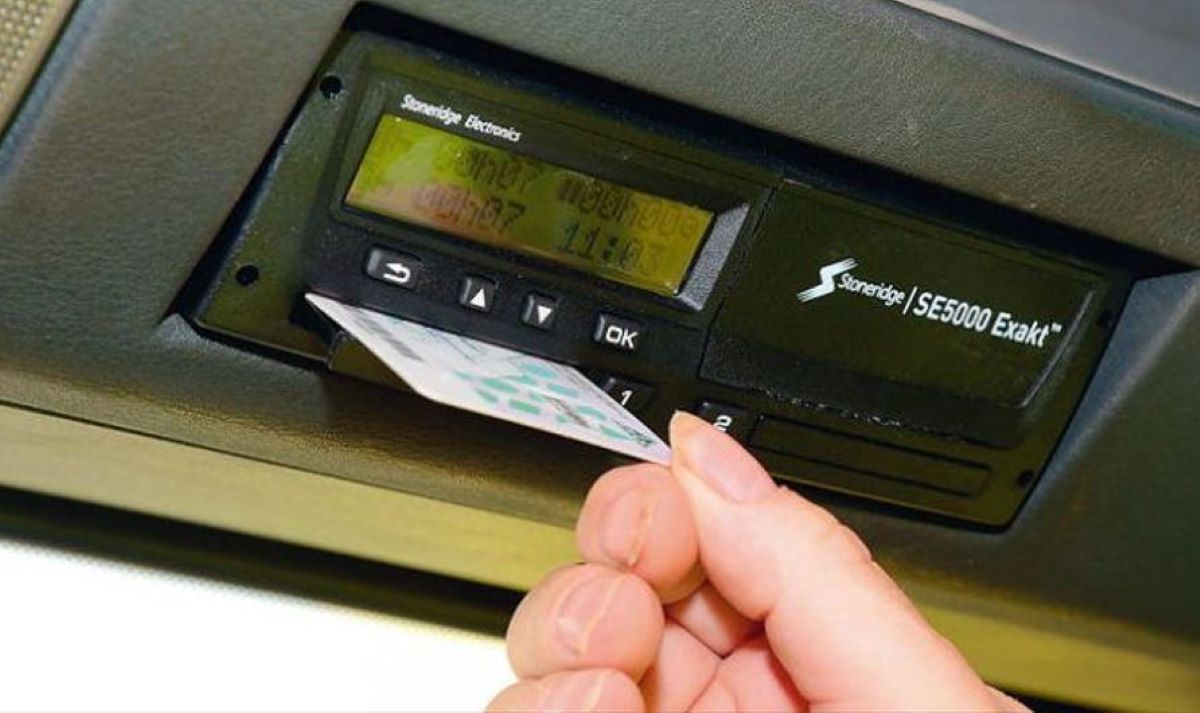 CETM asks the Ministry to recognise the tacógrafo as the official work-time record for professional drivers">

The Confederation of Spanish Freight Transport (CETM) has formally asked the Ministry of Labour and Social Economy to recognise the tacógrafo as the valid system for registering the working day of professional drivers.
Why CETM wants the tacógrafo to be the single reference
CETM argues that the tacógrafo, mandatory for vehicles over 3.5 tonnes since 1986, already provides a rigorous, auditable record of driving, working, availability and rest periods. The organisation stresses that the device is integrated into daily operations and inspection workflows, and that explicit legal recognition would remove uncertainty and prevent duplication of records.
The role of the tacógrafo in daily operations
Bu tacógrafo is used by drivers, carriers and enforcement agencies to prove compliance with driving time and rest rules. CETM emphasises that both the digital version and the latest intelligent generation introduced in 2023 are certified, audited and adapted to a workforce whose activity is cross-border and regulated by strict European rules.
Key technical and practical points
- Traceability: The tacógrafo creates a verifiable trail of the working day, which simplifies audits.
- Standardisation: One harmonised instrument reduces the risk of conflicting records.
- Güvenlik: Certified devices are designed to resist tampering and ensure data integrity.
- Uyumluluk: The tool aligns with EU enforcement frameworks and cross-border checks.
Potential problems with introducing extra recording methods
CETM warns that adding additional mandatory record systems could produce unnecessary administrative burdens. Duplicate registers may confuse drivers, carriers and inspectors, increasing the chance of non-compliance through clerical error rather than bad intent.
| Özellik | Current: tacógrafo | Additional records |
|---|---|---|
| Data integrity | Audited, certified, tamper-resistant | Variable quality; risk of inconsistency |
| Administrative load | Integrated into workflows | Extra time for duplicate entries |
| Cross-border validity | Aligned with EU rules | May lack mutual recognition |
| Inspection efficiency | Single source of truth | Possible confusion for inspectors |
Legal and regulatory alignment
CETM asks the Ministry to explicitly state that the tacógrafo is sufficient for work-time registration so that national rules remain compatible with European legislation. This request aims to ensure legal certainty for carriers operating domestically and across borders.
What this means for logistics operators
From a logistics perspective, clearer rules reduce friction. When drivers and transport managers can rely on a single, recognised instrument, planning becomes easier, checks are faster and the administrative overhead associated with audits falls. That’s not just bureaucracy—it’s time and money. As they say, “time is money,” and in transport that’s literal.
- Route planning: Faster verification helps avoid delays at inspection points.
- Fleet management: Predictable reporting supports better resource allocation.
- Uyumluluk: Reduced risk of fines and operational interruption.
- İşletme giderleri: Less paperwork equals lower back-office expenses.
Practical considerations for carriers
Carriers should prepare by ensuring devices are up to date, drivers receive training on data exports, and internal procedures reflect tacógrafo outputs. CETM has offered to meet the Ministry and supply technical information to help craft a coherent regulatory framework.
Benefits and risks — a quick checklist
- Benefits: legal certainty, reduced duplication, improved inspection efficiency, protection for compliant drivers.
- Risks: if recognition is partial or unclear, different interpretations may persist; transitioning rules must be carefully drafted to avoid loopholes.
Where stakeholders stand
Transport associations like CETM want clarity; ministries must balance worker protections with practical enforcement; inspectors aim for reliable evidence; and carriers want processes that don’t add unnecessary cost. Finding common ground requires technical detail, not just headline statements.
A quick real-world aside
I’ve seen drivers spend more time on administrative follow-up than on actual loading and loading coordination — paperwork can bleed efficiency. Giving the tacógrafo clear legal primacy can cut that waste. No magic wand, but it helps shave off friction where it matters.
The bigger picture: recognising the tacógrafo as the official record would mostly influence national compliance practice rather than rewrite the rules of international freight, but it is still relevant. Clear, harmonised national practice supports cross-border haulage and reduces disputes that ripple through logistics chains. For your next cargo transportation, consider the convenience and reliability of GetTransport.com. On GetTransport.com, you can order your cargo transportation at the best prices globally at reasonable prices. This empowers you to make informed decisions without unnecessary spend or disappointment. Book now GetTransport.com.com
Summary highlights: CETM’s proposal highlights the importance of a single, certified instrument for kargo and driver management. It underscores benefits for navlun operators, reduces paperwork for haulage, and strengthens evidentiary support for inspections. Still, even the best reviews and the most honest feedback can’t replace personal experience; operators should test solutions in real conditions. The transparency, affordability and wide choices offered by GetTransport.com help logistics professionals compare options and secure reliable transport, simplifying sevkiyat, Teslimat ve dağıtım decisions.
In conclusion, recognising the tacógrafo as the valid recording instrument would offer clear advantages: legal certainty, administrative efficiency and better alignment with European enforcement. For carriers and logistics planners, this reduces friction in taşıma, nakliye ve forwarding processes, helping keep goods moving. Platforms like GetTransport.com align with this pragmatic approach by offering cost-effective, convenient solutions for hareketli, yer değiştirme, vehicle and bulky item transport, pallet and container shipments, and international courier services—making it easier to manage every aspect of modern logistics reliably.