


 Українська
  English (UK)
  Русский
  العربية
  日本語
日本語  한국어
한국어  Magyar
  Türkçe
  Español
  Čeština
  Svenska
  Português
  Ελληνικά
  Suomi
Suomi  Nederlands
  Română
  Italiano
  Français
  Polski
  Deutsch
  简体中文
简体中文  Slovenčina
  6 Причин, чому глобальні ланцюги постачання змінюються – ключові фактори">

Diversify sourcing and regionalise procurement to stabilise rates and reduce exposure to regional disruptions. In our market this will allow Improve agility across bordering suppliers, our supply network, and evolving conditions.
Six influences reshaping the major landscape of world logistics emphasise technologies, nearshoring, data sharing, and new collaboration models, driving tighter coordination and more resilient networks.
Factor 1: Technologies and data-driven transparency enable real-time tracking, AI forecasting, and automation across suppliers, distribution hubs, and carriers – reducing volatility in тарифи and improving planning under changing conditions.
Factor 2: Nearshoring and bordering by design shorten transit times, lower exposure to long-haul disruptions, and improve collaboration with regional manufacturers whilst aligning with local market needs.
Factor 3: Economic conditions and capital allocation shape inventory targets, supplier financing, and risk buffers; traditional models are being rebalanced as inflation, rates, and consumer spending cycles influence where to locate stock.
Factor 4: Geopolitical disruptions and regulatory conditions including Houthi-related tensions in Red Sea routes and related sanctions risk, forcing route diversification and new contracting terms.
Factor 5: Shifts in market demand and consumer expectations demand more responsive replenishment, flexible contracts and performance metrics that reward reliability and speed.
Factor 6: Two-pronged digitalisation leverages digital twins and edge computing along with cloud analytics to coordinate production and distribution, enabling scenario planning across two horizons and reducing latency.
Key Drivers Behind Global Supply Chain Shifts
Adopt regional supplier networks to shorten lead times and reduce drought-driven disruptions; target 40-60% of critical inputs from regional partners within three years, and align contracts to lock in capacity whilst preserving optionality.
These key influencers include regional demand shifts, faster harmonisation of standards, and the rapid deployment of technologies that enable real-time visibility across networks.
Organisations assess a range of risk factors, including drought-related bottlenecks, energy volatility, and geopolitical pressures that drive input price swings; build scenario plans that anticipate 0.5-2.0 percentage point cost increases under stress scenarios.
For implementation, establish a clear approach: diversify suppliers, set up dual sourcing for critical items, and maintain safety stock; examples from book case studies illustrate outcomes, including tariffs during the Trump era as stress tests.
Technologies such as AI-driven demand sensing, RFID tracking, digital twins, and cloud platforms boost predictability; corporate standards for data interoperability shorten decision cycles and enable faster action across regional footprints.
From a governance perspective, embed resilience metrics in procurement, production, and logistics; particularly, track key indicators such as regional share, lead-time reliability, and cost volatility, with a worldwide risk framework and a book-style summary for executives.
Summary: Target metrics include increasing regional input share to 40-60%, shortening lead times by 15-25%, and reducing drought-related exposure by 30% by 2026; monitor these within corporate risk dashboards and report progress periodically.
Nearshoring and supplier diversification to reduce risk

Adopt a nearshoring-first framework and diversify suppliers across regions to significantly cut exposure to disruption, targeting a 40-60% reduction in transit risk and 20-30% faster inventory turns by consolidating critical parts in two regional hubs such as Mexico and select Caribbean or Central American sites. This move reduces lead-time variability and strengthens contingency capacity, with a practical 12–18 month roadmap.
Seven concrete steps to implement within 12–18 months: map critical items by function; classify by risk and criticality; identify two regions with complementary capabilities; run pilots with three to five suppliers per item; negotiate flexible contracts and shared incentives; establish regional logistics and vendor-managed inventory; build a regional supplier index and quarterly review cadence to meet targets.
Resource and benchmarking cues from getabstract and libros offer actionable guidance; assess seven principales aspectos of resilience and adapt the framework to parece your contexto. When assessing opciones, seek preguntas and metrics that illuminate costs, lead times, quality, and reliability, leveraging insights presented in libro content and inspired by historias de éxito in otros regiones. Use estas señales para alcanzar un nivel de interconexión (interconnected) that minimises risk (уровень) and aligns with нашей стратегии, especially in regiones cercanas; for sobre, acéra a estas fuentes, presenta insights (presenta) that can be translated into prácticas concretas (acerca, para).
Meet regional suppliers with a common standards baseline, share logistics assets, and leverage digital dashboards to minimise disruption. Target regions with robust supplier ecosystems to improve adaptability (adapt) and offer efficient, cost-conscious options (efficient). Use a resource-centric approach to minimise total exposure, and seek to leverage local capabilities to deliver near-term results while expanding capacity across zonas and mercados (regions). Libros and getabstract annotations can help validate this path and inspire pragmatic, scalable steps.
Trade policies, tariffs, and geopolitical influence on sourcing
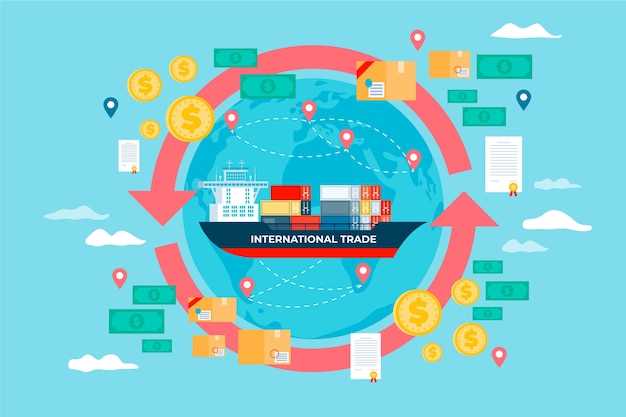
Diversify regional sourcing to minimise tariff shocks and strengthen resilience. Tariff rates have risen, creating enormous pressures on margins for billions of dollars of goods. A classification-aware approach and strict origin controls help minimise duties and stabilise costs while expanding conocimiento, something useful for our team.
Geopolitical influence shapes where items are produced and sourced, often altering transit times and the flow of товара across borders. Sanctions, policy blocs, and incidents in critical corridors can lift costs and reconfigure supplier maps. In the Red Sea region, houthi actions have added risk to shipping and raised freight costs, affecting a wide range of goods. Companies must build ready, flexible sourcing options to absorb these pressures without compromising quality.
Points To consider: regional interconnected networks, nearshoring potential, classification accuracy, and strict origin tracking to minimise costs. Considering policy shifts, monitor rates in real time and adjust plans across the range of suppliers. Ready, efficient procurement requires clear ownership, data, and contingency options that can minimise disruption during increases in duties or sanctions.
Implementation steps include building a book of reference with current trade policies, a robust classification workflow, and a real-time risk dashboard. Useful knowledge for teams and a clear view of policy risk support faster decisions. Establish regional hubs to reduce transit times and costs. This approach scales to billions of dollars of goods and aligns with our commitment to minimise costs while maintaining service levels.
Digital visibility and real-time analytics driving decision-making
Adopt a unified data fabric across procurement, manufacturing, and distribution, and deploy real-time dashboards that reduce decision lead times by 20–25% in the first quarter.
- Seven data streams: demand, inventory levels, supplier capacity, transit status, regional conditions, cost drivers including inflation, and related external signals; refresh cadence 5–10 minutes for critical nodes to support accurate calculations.
- Maintain applicable data grammar across modules to ensure clean joins and reduce latency by 40% in pilot deployments.
- Link dashboards to automated decision rules: reorder points, production shifts, and carrier selection; this pressure reduces stockouts by up to 12% and improves service levels.
- Remove disincentives for data sharing through transparent governance, shared savings, and clearly defined ownership of information assets.
- Environmentally friendly routing and supplier selection: include energy intensity and emissions metrics to cut environmentally harmful outputs by 8–12% and lower fuel costs by 5–9%.
- The level of transparency across top regional hubs targets 95% coverage, enabling the beginning of rapid responses that are more predictable.
- This KPI framework tracks time-to-decision, fill rate, and landed cost, which helps quantify impact and guide continuous improvement.
- Beginning with a 90-day pilot prompted by disruptions, the programme expands regionally as demand signals stabilise and benefits materialise.
- Navigate these demands with scenario modelling that balances service levels and cost, providing clear trade-offs for management.
- Більш деталізовані погляди на сімейства продуктів і регіони дозволяють виконати розрахунки для уточнення ціноутворення та планування потужностей, забезпечуючи своєчасну реакцію на інфляцію та зміни попиту.
- які metrics узгоджуються з екологічними, регіональними та часово-орієнтованими цілями, допомагаючи керівництву підтримувати контроль за рівнями ризику та результативності.
Стратегії управління запасами: страховий запас, точки роз’єднання та рівні обслуговування
Рекомендація: Встановити багаторівневий страховий запас для критичних матеріалів для підтримки цільових показників рівня обслуговування (уровень) 97% для стратегічних товарів та 90% для звичайних товарів; розмістити точки роз’єднання у дружніх локаціях, щоб захистити операції від волатильності валюти та різких коливань інфляції. Цей підхід, який зустрічається в кількох бенчмарках, дозволить знизити ризик дефіциту та підтримувати показники заповнення на різних ринках, включаючи попит та сезонність.
Кроки включають: 1) категоризація матеріалів за бізнес-впливом та політичним впливом; 2) обчислення страхового запасу з використанням мінливості попиту та невизначеності терміну виконання замовлення; 3) позиціонування точок роз’єднання поблизу партнерських мереж (френдшор) для зменшення коливань валют; 4) встановлення цільових рівнів обслуговування, специфічних для ринку, за кожним найменуванням, включаючи попит; 5) впровадження циклу постійної переоцінки кожні 4–8 тижнів та відстеження показника заповнення, випадків дефіциту та витрат на утримання запасів. Цей підхід застосовний у різних галузях промисловості та корисний в інфляційних умовах; він також підтримує адаптацію до зміни політики та забезпечує корисні рекомендації для менеджерів, які прагнуть оптимізувати операції на різних ринках.
| Strategy | Дія | Метрики |
|---|---|---|
| Страховий запас | Розрахувати, використовуючи попит протягом часу виконання + буфер; цільовий рівень обслуговування (уровень) 97% для критичних товарів | Коефіцієнт заповнення, випадки дефіциту, вартість утримання запасів |
| Роз'єднання точок | Розмістіть вузли поблизу прибережних зон; відрегулюйте мережеві потоки для поглинання шоків | Зменшення беклогу, час циклу, індекс стійкості |
| Рівні обслуговування, специфічні для ринку | Встановлюйте цілі за ринком і різновидом; оновлюйте щомісяця | Коефіцієнт заповнення ринку, своєчасна доставка |
| Управління інвентаризацією | Регулярні перегляди; прив’язка до інфляції, попиту | Повороти, витрати на утримання, досягнення рівня обслуговування |
Витрати на транспортування, волатильність фрахтового ринку та оптимізація маршрутів
Рекомендація: Впровадити централізовану платформу маршрутизації в режимі реального часу, яка отримує дані від перевізників, складів та митниці, щоб скоротити загальну вартість доставки на 12–18% протягом 9–12 місяців. Використовувати порівняння маршрутів на основі діапазонів, скорочувати переміщення, де це можливо, та гарантувати якість обслуговування за допомогою стандартів і диверсифікації постачальників.
Волатильність на ринку вантажоперевезень зумовлена вартістю палива, змінами в потужності та політичними подіями. Планування базуйте на даних за 30 днів, зі звичайними місячними коливаннями 10–25% і піками до 30% у пікові періоди. Пом'якшуйте вплив завдяки попереднім бронюванням, захисту від коливань ставок та контрактним цінам з фіксованою ставкою, щоб зменшити вплив на стратегічних маршрутах, одночасно підтримуючи прозорі розрахунки в різних сценаріях.
Тактики проєктування маршрутів зосереджені на скороченні циклів і підвищенні надійності. Об’єднайте відправлення, щоб скоротити поїздки, згрупуйте сусідні маршрути в прикордонному коридорі та застосуйте двохетапний підхід до планування, щоб узгодити два сусідні маршрути, зменшуючи передачі та час очікування.
Розрахунки та стандарти визначають прийняття рішень. Детерміновані та розрахунки сценаріїв є основою вибору смуги та вибору режиму, а стандарти забезпечують сумісність між перевізниками та системами. Створюйте знання з даних і збирайте інформацію про майбутнє для підтримки прийняття рішень у глобальних коридорах.
План виконання: встановити управління для управління програмою; відстежувати ефективні надходження, вартість обслуговування та своєчасну доставку. Контролювати використання ресурсів та готовність до викликів; підтримувати конкурентну перевагу; готуватися до політичних ризиків та прикордонних тертя; використовувати дані, отримані на основі сигналів ринку, для коригування маршрутів.