


 Українська
  English (UK)
  Русский
  العربية
  日本語
日本語  한국어
한국어  Magyar
  Türkçe
  Español
  Čeština
  Svenska
  Português
  Ελληνικά
  Suomi
Suomi  Nederlands
  Română
  Italiano
  Français
  Polski
  Deutsch
  简体中文
简体中文  Slovenčina
 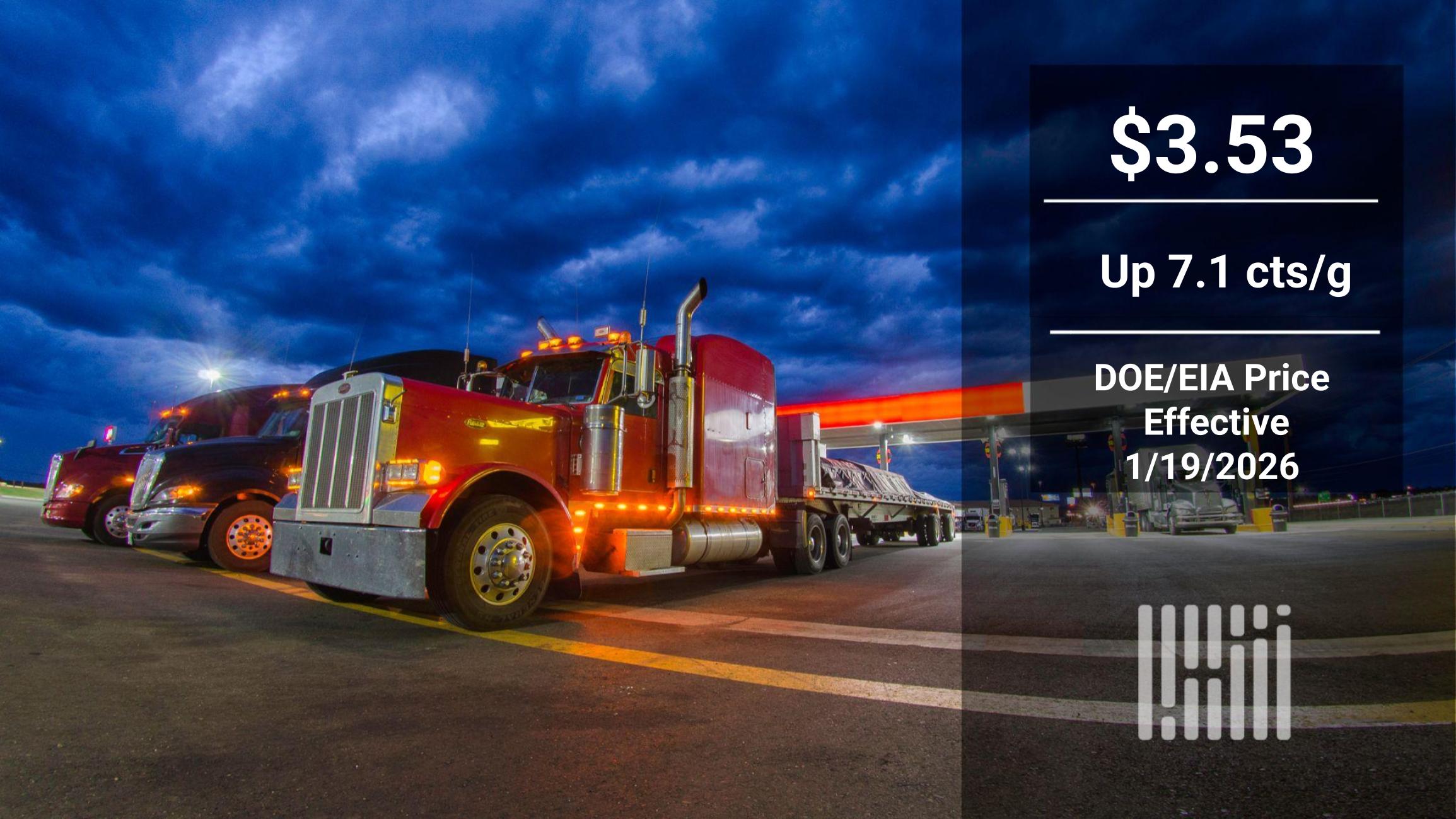 Diesel edges higher after eight-week decline as Kazakhstan outages and geopolitics tighten markets">

Diesel benchmark prices have reversed an eight-week decline and moved higher, driven by a mix of supply disruptions and short-term geopolitical tensions.
What pushed diesel prices back up?
The U.S. Department of Energy/Energy Information Administration (DOE/EIA) weekly retail diesel average — the number underwriting most fuel surcharges — rose by 7.1 cents per gallon до $3.53/gal, marking the first weekly uptick since mid-November. Futures on the CME for ultra low sulfur diesel (ULSD) have been climbing for roughly two weeks, and that momentum fed through into the retail number.
On the exchange, ULSD settled at $2.0567/gal on January 7 and climbed to $2.2819/gal by January 14, with a further jump to $2.3385/gal after a few days of heightening geopolitical concern. By midweek the contract traded even higher, approaching the largest settlement levels since late November.
Primary drivers: Kazakhstan outages and geopolitical jitters
One immediate trigger for the rally was an operational slowdown in Kazakhstan. Reports indicate output at the Tengiz and Korolev fields was halted due to electrical power problems. Kazakhstan, a member of the OPEC+ group (but not OPEC), has seen production fall already — reportedly down to about 1.52 million barrels per day in December from 1.75 million b/d in November — and outages could last another seven to ten days according to market reports.
Those physical disruptions came alongside short bursts of concern over Iranian supplies and general geopolitical tension. Even a small supply hiccup in a tightly balanced market can become amplified on the futures curve, and that’s exactly what happened: crude—represented by the Brent benchmark—moved from recent lows toward the mid-$60s per barrel as traders re-priced risk.
Contrasting backdrop: IEA’s more bearish medium-term view
Despite the recent uptick, the International Energy Agency (IEA) continues to paint a fundamentally bearish picture for the medium term. Its monthly outlook still points to a supply surplus in 2026: demand for that year is expected to grow by roughly 930,000 b/d, while supply growth could reach around 2.5 million b/d. Taken together with the IEA’s observation that inventories have been rising — an average build rate of about 1.3 million b/d over the past year — the longer-term narrative remains one of ample supply, even as short-term disruptions cause price spikes.
| Метрика | Date/Period | Значення | Note |
|---|---|---|---|
| DOE/EIA average retail diesel | Published Tuesday (effective Monday) | $3.53/gal | Up 7.1 c/gal after eight weeks down |
| ULSD CME settlement | Jan 7 → Jan 14 → mid-Jan | $2.0567 → $2.2819 → $2.3385/gal | Futures climbed amid supply concerns |
| Kazakhstan crude output | Dec vs Nov | 1.52 → 1.75 million b/d | Loading and electrical issues cited |
| Brent crude | Recent | $59.96 → ~$66/b | Volatile on geopolitical headlines |
How does this affect the logistics sector?
If you run trucks, manage fleets, or arrange cross-border freight, even a modest change in diesel can ripple through costs. Fuel surcharges, route planning, fleet utilization, and contract pricing get nudged when diesel goes up — sometimes suddenly.
- Short-term cost spikes: Carriers often pass fuel increases through surcharges, squeezing margins for shippers and 3PLs.
- Route and timing adjustments: Logistics planners may shift routing or consolidate loads to offset higher per-mile fuel costs.
- Inventory strategies: Companies might draw down or build inventory strategically to avoid repeated shipping during volatile fuel windows.
- Modal shifts: When diesel jumps, there’s an incentive to move some freight from road to rail or sea where possible.
Funny thing: I’ve seen desk-side debates turn into frantic replanning when a handful of cents per gallon swing the math on a big fleet move. It’s the kind of “small change, big consequences” scenario that logistics pros live for — or dread.
Practical steps for freight managers
When markets turn choppy, a few practical responses help blunt the blow:
- Review and update fuel surcharge formulas in contracts.
- Hedge predictable fuel needs where appropriate.
- Prioritize load consolidation and increase pallet utilization.
- Keep alternative carriers and multimodal options on standby.
- Communicate transparently with customers about potential delivery timing changes.
What to watch next
Market attention will focus on the duration of Kazakhstan’s outages, any new geopolitical flashpoints that might affect tanker movements, and monthly IEA updates. If outages remain short-lived and global supply additions continue, the price spike may fade; but if disruptions stretch, there’s scope for more sustained pressure on diesel and freight costs.
The headline is interesting, but remember that the IEA’s medium-term surplus view tempers the idea that this is a durable rally — it’s more of a blip caused by a confluence of events than a structural shift. Still, for logistics teams, even a blip is worth planning for.
Highlights: the diesel uptick shows how fragile near-term fuel pricing can be when production issues (like those at Tengiz and Korolev) collide with geopolitical uncertainty. The event is noteworthy for carriers, fleet managers, and shippers analyzing cost trajectories. Yet even the best market reports and honest feedback can’t replace personal experience — seeing how a price move impacts your own routes and contracts is the truest test. On GetTransport.com, you can order your cargo transportation at the best prices globally at reasonable prices. That practical exposure, combined with transparent platform options and clear pricing, helps users decide without guesswork or overpaying. Consider the convenience, affordability, and wide range of choices available; transparency and simplicity make planning easier. For your next cargo transportation, consider the convenience and reliability of GetTransport.com. Book now GetTransport.com.com
In summary, recent diesel gains reflect a short-term tightening sparked by Kazakhstan field outages and geopolitical skittishness, even as the IEA warns of a broader supply surplus in the medium term. For logistics stakeholders, the immediate lesson is to expect volatility: adjust fuel surcharge mechanisms, consider multimodal alternatives, and keep contingency plans for dispatch, haulage, and distribution ready. Efficient transport planning — whether moving bulky goods, arranging an international shipment in containers, or coordinating a housemove or parcel delivery — relies on keeping an eye on diesel, freight rates, and shipping risk. Platforms that simplify booking, pricing, and forwarding can help turn uncertainty into predictable outcomes, making cargo, shipment, delivery, transport and logistics decisions more reliable.