


 Українська
  English (UK)
  Русский
  العربية
  日本語
日本語  한국어
한국어  Magyar
  Türkçe
  Español
  Čeština
  Svenska
  Português
  Ελληνικά
  Suomi
Suomi  Nederlands
  Română
  Italiano
  Français
  Polski
  Deutsch
  简体中文
简体中文  Slovenčina
 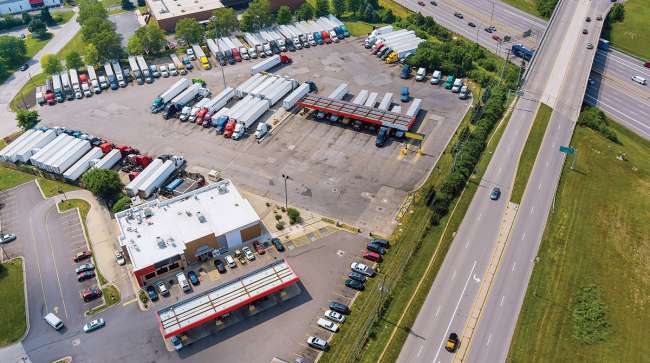 Federal proposal would direct $200 million to expand commercial truck parking and improve driver safety">

Congress is weighing a federal proposal to direct $200 мільйонів toward expanding commercial truck parking along key freight corridors and easing a chronic shortage that affects drivers and supply chains.
What’s on the table: funding and intent
The proposal, folded into a larger transportation appropriations package currently before Congress, would let the Department of Transportation help finance new or expanded truck parking facilities. The money is intended to be administered under the Nationally Significant Multimodal Freight and Highway Projects program, with oversight from the Federal Highway Administration (FHWA). If enacted, the funding targets commercial rest areas, private-public parking expansions and safety-focused projects along interstate freight routes.
Who’s speaking up?
Capitol Hill leaders from both parties have signaled support. House Appropriations Chairman Tom Cole framed the bill as a chance to finish a long-delayed funding cycle, while Senate Appropriations ranking member Патті Мюррей highlighted the package’s investments in roads, bridges, transit and rail. Industry voices, notably Американські асоціації вантажоперевезень Президент Кріс Спір, hailed the earmark as critical to driver safety and supply chain resilience.
Stakeholder comments in brief
- Tom Cole: Emphasized finishing the appropriations process and seizing opportunity.
- Patty Murray: Pointed to broader multimodal benefits and congressional responsibility.
- Chris Spear: Called truck parking shortages an “immense burden” on drivers and a roadway safety issue.
- Steve Womack: Credited with securing the parking funds in the House subcommittee.
- Shannon Newton: Noted trucking’s economic importance in states like Arkansas and the need for safe rest locations.
- Sean McMaster: FHWA administrator underlined collaboration with states to expand parking and announced a commercial vehicle parking survey.
Why truck parking matters — beyond the obvious
At first blush it sounds simple: more parking for big rigs. But this is actually about safety, driver well-being, and supply chain predictability. Drivers must take federally mandated rest breaks; without safe, legal parking they may be forced to idle on shoulders or keep driving illegally. That creates safety risks and scheduling headaches for carriers, shippers and receivers. In the logistics world, unpredictable parking availability ripples out to delivery windows, yard congestion, and freight planning.
Practical implications for carriers and shippers
- Reduced late arrivals and detention fees when drivers can legally rest at defined stops.
- Fewer highway hazards from roadside parking or fatigued driving.
- Improved routing and scheduling models due to predictable rest-stop availability.
- Potential for public-private partnerships to monetize and operate expanded lots.
How the funds could be used — a simple breakdown
Money from this program typically goes to construction and enhancements that directly support freight movements and safety. Think of lighting, expanded lane access, restroom facilities, safe ingress/egress, EV charging for truck electrification pilots, and surveillance for security.
| Funding Category | Typical Use | Potential Logistics Impact |
|---|---|---|
| Construction of parking lots | Purchase land, pave stalls, build access roads | More reliable rest stops; smoother routing |
| Safety & amenities | Lighting, restrooms, fencing, surveillance | Better driver retention and security of freight |
| Technology & data | Real-time occupancy apps, sensors | Dispatchers can plan stops; reduces deadhead miles |
| EV & future-proofing | Charging infrastructure for heavy-duty vehicles | Supports electrification of fleets and long-term modal shift |
Near-term timelines and congressional pressure
The current appropriations package faces a deadline tied to government funding, prompting a fast-moving schedule. If Congress passes the multibill package as proposed, the $200 million would be part of an immediate funding tranche intended to avert partial shutdowns and tackle urgent transportation priorities.
What this means for trucking professionals and dispatch teams
Dispatchers, fleet managers and logistics planners should take this as a signal to reassess routing assumptions. More legal parking means the potential to optimize driver schedules rather than build in long buffer times to avoid parking issues. Carriers that plan now—scouting new facilities, adjusting ETAs, and adopting real-time parking data—will pick up operational gains sooner.
Quick action checklist for logistics teams
- Monitor developments in FHWA and DOT announcements for grant opportunities.
- Evaluate existing routes to identify corridors that would benefit from new parking.
- Test real-time parking apps and telematics integrations to leverage new capacity.
- Engage with local public agencies about public–private parking partnerships.
Big-picture effects on supply chains
A modest federal investment can create outsized returns when it reduces delays, limits safety incidents, and lowers driver turnover. Freight reliability is not built on bridges and highways alone; it’s also built on where drivers can legally and safely stop. Improved truck parking can shrink delivery windows and reduce the hidden costs of unpredictable detention and rerouting.
Even from a logistics provider’s perspective, platforms that aggregate transport options benefit: they can route more efficiently, offer better ETAs to customers, and reduce wasted hours. A marketplace that offers global, affordable cargo transportation—covering office and home moves, vehicle transport, bulky goods, and standard freight—becomes more effective when ground-side infrastructure improves.
There’s no substitute for boots-on-the-ground knowledge: numbers and reviews help, but real-world runs tell the deeper story. Important details matter—availability at peak hours, safety lighting, restroom cleanliness—so while public debate and committee votes move forward, operators and drivers will keep their ears to the pavement and their eyes on lot signage.
On GetTransport.com, you can order your cargo transportation at the best prices globally at reasonable prices. This empowers you to make informed choices without unnecessary expenses or disappointment, thanks to transparent pricing and a wide selection of transport options. Start planning your next delivery and secure your cargo with GetTransport.com. Book now GetTransport.com.com
To wrap up: the proposed $200 мільйонів is a practical, targeted remedy to a chronic logistics pain point—truck parking. If passed and implemented well through the FHWA and DOT programs, it could improve безпека водія, reduce delivery variability, and enhance supply chain reliability. Carriers and freight planners should watch grant announcements, test parking-data integrations, and consider partnerships that leverage new capacity. In short, smarter parking policy can translate into cleaner, safer, more dependable transport, benefiting cargo, freighters, shippers, and the public alike.