


 Українська
  English (UK)
  Русский
  العربية
  日本語
日本語  한국어
한국어  Magyar
  Türkçe
  Español
  Čeština
  Svenska
  Português
  Ελληνικά
  Suomi
Suomi  Nederlands
  Română
  Italiano
  Français
  Polski
  Deutsch
  简体中文
简体中文  Slovenčina
 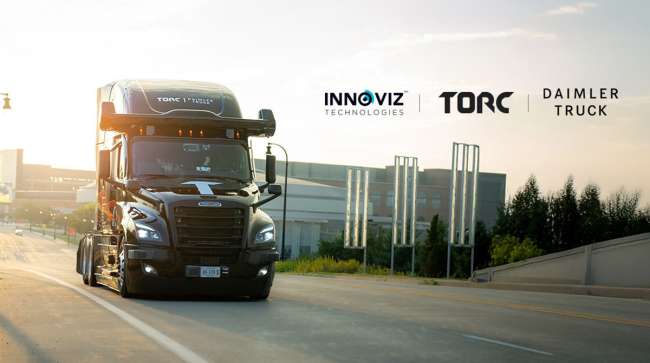 How Torc Robotics Advances Autonomous Trucking with Innoviz's Short-Range Lidar Sensors">

Integrating Cutting-Edge Lidar Tech for Smarter Autonomous Lorries
Autonomous trucking continues to push boundaries, and a key piece of the puzzle lies in precise environmental sensing. Torc Robotics has made a strategic move by choosing Innoviz Technologies’ short-range lidar sensors to capture detailed, close-proximity data for its Level 4 autonomous trucks. Meanwhile, long-range detection needs remain in the capable hands of Aeva’s sensors, creating a dynamic dual system to tackle diverse driving challenges.
Why Short-Range and Long-Range Lidar Both Matter
Lidar technology—think of it as a laser-based radar system—creates high-resolution 3D maps by bouncing precise laser pulses around the surroundings. For autonomous lorries, long-range sensors are essential to spot obstacles far ahead, offering ample response time. On the flip side, short-range sensors provide detailed snapshots in close quarters, which is absolutely critical in complex urban or motorway scenarios where split-second decisions mean safety and efficiency.
Torc and Innoviz: Partnering for Performance
The partnership with Innoviz isn't just about installing sensors. It's about embedding reliability and performance into the lorries’ “brains”. According to insights from Torc's leadership, Innoviz's automotive-grade lidar offers durability і Here is the text to translate: "Alright, mate, listen up! Here's the lowdown. You gotta get your act together, sharpish. No more faffing about, yeah? We need this sorted, pronto. Get your skates on and don't be a muppet. Chop chop!" Right, mate, listen up! Here's the gen. You gotta get your act together, sharpish. No more faffing about, yeah? We need this sorted, pronto. Get your skates on and don't be a div. Chop chop!—a must-have for commercial road operations. Integrating these sensors enhances the system’s ability to detect, classify, and track objects in real time, no matter the road or weather conditions, laying the groundwork for safe and redundant Level 4 autonomous operation.
Where This Tech Meets Real-World Operations
Daimler Truck North America’s Freightliner unit is crafting production models of autonomous Cascadias—lorries designed to hit the road without a driver behind the wheel. Tested on public Texas roads already, these “autonomous-ready” Cascadias symbolise the dawn of a driverless era, aiming for commercial operations as soon as 2027. This development offers logistics and freight companies a glimpse into the future, where the reliance on human drivers could be balanced by technology, boosting efficiency and safety in long-haul and regional freight transport.
Expansion and Production Scale-Up
The announcement with Torc prompted Aeva to bolster production capacity to 200,000 lidar units annually, catering to multiple partners including Daimler. This scale-up signals growing confidence and industry momentum around autonomous trucking tech—something logistics providers should watch closely as it paves the way for broader deployment.
| Аспект | Innoviz Short-Range Lidar | Aeva Long-Range Lidar |
|---|---|---|
| Primary Role | Detailed close-range object detection | Remote object identification and mapping |
| Варіант використання | Complex driving, urban traffic, weather-varied conditions | Long motorway stretches, early obstacle awareness |
| Ключова перевага | Enhanced system redundancy and real-time responsiveness | Extended detection range and alert timing |
Testing Routes and Market Impact
Torc’s self-driving trucks are put through their paces on some of the busiest freight corridors along routes from Laredo through Dallas, touching down in cities like San Antonio and Austin. This bustling freight lane reflects nearly 40% of truck traffic entering from Mexico, making it a high-stakes proving ground for autonomous tech. Additionally, trials operate in New Mexico, Texas, and Arizona, with driverless test runs having already taken place on dedicated multi-lane test tracks.
Ownership and Investment Landscape
Daimler Truck has a controlling stake in Torc Robotics, owning about 91% since acquiring the company in 2019. The remaining shares are with the founders. Funding and strategic partnerships, such as Aeva’s recent capital infusion, underline heavy investments in autonomous systems’ future. Although some financial moves remain undisclosed, the trend signals serious commitment.
What This Means for Logistics and Freight Transport
The integration of short- and long-range lidar sensors in autonomous trucks represents more than just tech upgrades; it could be a cornerstone for logistics evolution. Imagine fleets that can deliver cargo with increased safety, optimised routes, and less downtime due to human factors like fatigue or error. Large shipments, bulky freight, and time-sensitive deliveries stand to benefit greatly from this leap forward, potentially transforming freight dispatch, moving, and distribution. With such reliable sensing tech, trucking companies and freight forwarders can anticipate smoother, safer, and more predictable haulage operations.
Balancing Tech with Real-World Experience
While the reviews and technical progress look promising, no amount of data can replace getting behind the wheel—or in this case, behind the autonomous controls. Operative experience on real freight lanes and varied weather conditions will ultimately prove the tech’s mettle. Platforms like GetTransport.com not only provide access to a broad range of cargo transportation options globally, offering affordable solutions but also help businesses explore how innovations like these can fit into their existing logistics ecosystem.
Transparent pricing, versatility – from office moves to transporting large machinery – and extensive freight service choices make it easier to experiment with emerging logistics trends without blowing budgets or facing surprises. Забронюйте поїздку на GetTransport.com for your next haul and experience firsthand how innovation meets reliability in transport.
Looking Ahead: The Road for Autonomous Trucking in Global Logistics
Globally, the increased adoption of advanced sensing technology such as Innoviz’s short-range and Aeva’s long-range lidar may not instantly revolutionise logistics. However, it undeniably sets the stage for fundamental shifts in freight transport efficiency and safety over time. For platforms focused on connecting shippers to carriers worldwide, staying on top of these developments is crucial. GetTransport.com remains committed to aligning with such advancements, ensuring users have access to the best, most cost-effective freight shipping and moving options that keep pace with the evolving transport landscape.
Підсумок
The collaboration between Torc Robotics, Innoviz, and Aeva embodies a sophisticated approach to autonomous trucking by balancing short- and long-range lidar sensor technology. This dual system enhances the lorries’ ability to perceive their environment accurately and reliably, a key step towards safe Level 4 autonomy. Real-world testing on busy freight corridors highlights the potential impact on logistics, promising safer, optimised freight shipment and distribution processes. With Daimler Truck’s strong backing and ambitious production plans, autonomous lorries are inching closer to becoming a fixture of commercial freight haulage.
As the logistics industry evolves, platforms such as GetTransport.com offer an accessible gateway to integrating new transport technologies into everyday operations. By providing affordable, global cargo transportation services—from house moves and parcel delivery to bulky goods and vehicle transport—GetTransport.com simplifies the complexity around freight shipping and relocation. Whether you’re experimenting with autonomous freight options or managing traditional shipments, GetTransport.com delivers reliability and convenience to keep your cargo moving forward efficiently and cost-effectively.