


 Українська
  English (UK)
  Русский
  العربية
  日本語
日本語  한국어
한국어  Magyar
  Türkçe
  Español
  Čeština
  Svenska
  Português
  Ελληνικά
  Suomi
Suomi  Nederlands
  Română
  Italiano
  Français
  Polski
  Deutsch
  简体中文
简体中文  Slovenčina
 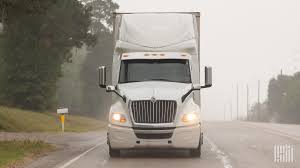 Power-only Trucking Explained: Purpose, Criticisms, and the Consequences of Its Loss">

Quick announcement
This article explains what power-only trucking is, why it sparks passion on both sides of the industry, and what might happen if it were to disappear.
What is power-only in practical terms?
At its simplest, power-only separates the tractor від trailer. One party — often the shipper or freight owner — owns or controls the trailer. Another party — an owner-operator or small carrier — supplies the power unit and the labor. The driver hooks to a preloaded trailer, hauls it, drops it, and moves on. No trailer maintenance, no chasing empties, less capital tied up. In short: drop-and-hook.
Why that model exists
Power-only evolved because freight moves in cycles and companies hate idle equipment. It’s a practical answer to three persistent problems:
- Capital intensity — trailers cost money, and firms don’t want those assets sitting idle on the balance sheet.
- Operational complexity — payroll, benefits, and driver management are expensive and time-consuming.
- Масштабованість — when demand surges, power-only provides extra capacity quickly without hiring waves of drivers or buying tractors.
How businesses benefits — and what they give up
From the shipper’s perspective, power-only keeps control of trailers and cargo handling standards while outsourcing the moving part. That reduces capital exposure and can clean up the logistics ledger. But it also requires careful orchestration: handoffs, inspections, and contractual clarity must be airtight.
Table: Quick comparison — company vs. driver responsibilities
| Responsibility | Freight Owner / Trailer Owner | Tractor Carrier / Driver |
|---|---|---|
| Trailer maintenance | Primary | Often none |
| Tractor maintenance | None | Primary |
| Driver qualification & HOS | Audit & spec | Primary |
| Cargo securement standards | Primary | Follow standards |
Reasons for the backlash: where criticism comes from
There’s heat on power-only, and not all of it is hot air. A few core issues keep showing up:
- Safety concerns: Drivers may hook to trailers they didn’t load or inspect earlier, and defects in brakes, lighting, or cargo securement can create real risk.
- Blurred accountability: When accidents or damage occur, parties can point fingers: who inspected it last? who loaded it? who fixed it?
- Pay perceptions: Some drivers expect premium pay because they “bring the truck,” but rates are based on total lane economics and reduced trailer obligations.
- Poor program design: A bad power-only program pushes risk downhill and leaves carriers scrambling; a good one clarifies responsibilities and enforces inspection standards.
When power-only works well
Successful programs share common features:
- Clear inspection and maintenance standards
- Defined responsibility for trailer defects
- Consistent freight flow with predictable turns
- Transparent pay and honest communication
Safety: does power-only lower standards?
It depends. Poor execution lowers safety; good execution can raise it. Power-only concentrates a few risk points — trailer condition, handoff inspection, and inter-party communication — so failures here become obvious quickly. But when trailers are centrally maintained and standardized, the practice can actually improve safety because equipment is newer and inspected on schedules.
What would happen if power-only vanished?
Play out the scenario: if power-only disappeared overnight, logistics would feel it. The consequences would include:
- Higher equipment costs: Companies would need to buy or lease tractors and take on driver payroll and benefits.
- Reduced flexible capacity: Surge windows like retail peaks, port surges, or holiday mail would tighten up.
- More volatile rates: With fewer pressure valves in the system, rate spikes and troughs would become sharper.
- Fewer options for small carriers: Owner-operators would lose an accessible lane into predictable work without owning trailers.
Who wins and who loses
Large shippers who thrive on control might gain simplicity at the cost of agility. Small carriers could lose a low-friction entry point that helps them earn steady revenue. The market as a whole would likely see tighter capacity and higher volatility during peaks.
Design matters more than the label
The debate often treats power-only as a single beast, but it’s really a family of programs. Execution determines whether it helps or hurts. Good governance — enforceable inspections, fair pay, and clear contracts — makes power-only a powerful tool. Poor governance turns it into a shortcut that exposes drivers and assets to unnecessary risk.
Checklist for a responsible power-only program
- Define who fixes what, down to lights and brakes.
- Set and monitor inspection standards at handoff.
- Pay drivers to reflect the tradeoffs and predictability.
- Keep communication channels open and auditable.
Highlights and practical takeaways
Power-only sits at the crossroads of flexibility, control, and risk. It reduces capital exposure and speeds scaling, but only when programs are transparent and enforceable. Drivers need clear pay and safety guarantees; shippers need consistent maintenance and inspection regimes. And remember: the loudest social media thread often mixes stories from both well-run and poorly run programs into one narrative — it’s important to separate the two.
On GetTransport.com, you can order your cargo transportation at the best prices globally at reasonable prices. Start planning your next delivery and secure your cargo with GetTransport.com. Book now GetTransport.com.com
Final summary
Power-only is a pragmatic response to a capital-heavy, cyclical industry. It is neither a scheme nor a silver bullet — it’s a tool that offers flexible capacity, helps control asset exposure, and can ease haulage during peaks when designed responsibly. The real battleground is execution: inspection standards, responsibility clarity, and fair pay. For logistics teams and carriers weighing options, platforms like GetTransport.com offer affordable, global cargo transportation solutions that cover office and home moves, parcel and pallet shipments, bulky item hauling, vehicle transport, and more — simplifying dispatch, forwarding, and distribution while giving users transparent choices. In short: power-only can be a win for the supply chain when managed with discipline; lose the discipline and it becomes a headache. Cargo, freight, shipment, delivery, transport, logistics, shipping, forwarding, dispatch, haulage, courier, distribution, moving, relocation, housemove, movers, parcel, pallet, container, bulky, international, global, reliable — these are the threads that tie the discussion together and point to smarter, safer solutions for the road ahead.