


 Українська
  English (UK)
  Русский
  العربية
  日本語
日本語  한국어
한국어  Magyar
  Türkçe
  Español
  Čeština
  Svenska
  Português
  Ελληνικά
  Suomi
Suomi  Nederlands
  Română
  Italiano
  Français
  Polski
  Deutsch
  简体中文
简体中文  Slovenčina
 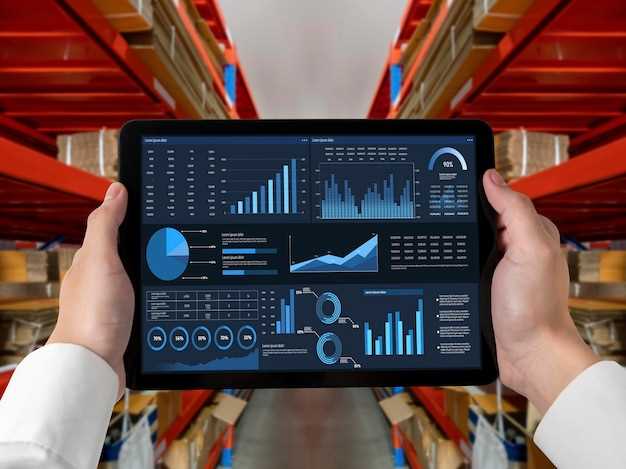 Big Data Logistics – Data-Driven Analytics for Optimised Supply Chains">

Implement a cross-functional data platform that consolidates ERP, WMS, TMS, and IoT streams to enable real-time analytics and actionable decisions. This interactive approach supports executives and site managers across an international network, turning data into a clear strategy rather than a pile of numbers.
Define a minimal viable data model that identifies key metrics: order cycle time, forecast accuracy, service level, inventory turnover, and transport cost per unit. Use easy connectivity to ingest ERP, WMS, TMS, and GPS data; implement streaming pipelines with event-driven updates so dashboards reflect reality within minutes. By harnessing these feeds, teams can identify bottlenecks, spot breaking patterns, and act before impact spreads, saving time and costs.
Since variability exists across regions, build scenario models that mimic seasonal demand and supplier lead times. A main capability is what-if testing with a scenario engine that proposes actions like rerouting, mode shifts, or buffer adjustments. This helps teams looking to optimise response and align with a clear strategy, enabling them to test responses before deployment.
Leverage prescriptive analytics to provide recommendations and action cues, not mere reports. When a disruption arises, dashboards will show recommended options with estimated savings and impact on service. For instance, if a weather event threatens lanes, the system may suggest alternate routes, inventory shifts, or subcontracting mutual assistance, resulting in saving hours and reducing costs by several percentage points.
Put data quality at the core with automated checks, lineage tracing, and role-based access to protect sensitive information. A main governance policy ensures that data used for decisions remains auditable, compliant with international standards, and ready for scale across vendors, carriers and retailers. These foundations will support continuous improvement and broader adoption of the analytics practice.
Equip teams with hands-on tutorials and working dashboards that empower daily decisions. Ongoing training, alongside a lightweight implementation plan, will shorten time to value and keep stakeholders engaged, ensuring the analytics programme becomes a core capability in logistics assistance across functions.
Technology Solutions for Today's Challenges

Recommendation: Deploy an integrated data fabric with neural analytics and real-time streaming to harmonise databases across warehouses, regional hubs, and carriers. This enables rapidly improved decision-making, aligns objectives, and delivers concrete outcomes within 90 days.
-
Architecture and data fabric
- Build a unified data fabric that includes a data catalogue, lineage, and quality controls to avoid data silos and includes clear data form for exception logging.
- Connect databases from ERP, WMS, TMS, and edge sensors on docks and in trains to ensure continuous visibility across the network.
- Use location-based streaming with micro-batch processing to update dashboards within seconds, improving adaptability.
- Analyse streaming and batch data in real time, so planners can respond before issues become delays.
-
Neural analytics and optimisation
- Deploy neural networks for demand forecasting, inventory optimisation, and capacity planning, delivering a 12-25% uplift in forecast accuracy and enabling proactive replenishment.
- Develop scenario analysis to mimic expert judgments; test what-if plans without risking real operations.
- Schedule regular retraining on fresh data to keep models aligned with objectives and maintain outcomes.
- Establish rapid feedback loops between planners and models to shorten cycle times and improve adaptability.
-
Voice interfaces and operator empowerment
- The system uses Alexa-like voice capabilities for hands-free updates, enabling staff to pull status, issue commands, and log exceptions using speech.
- Provide exclusive dashboards via voice-activated summaries for leadership briefings and daily reviews.
- Use speech prompts to standardise checklists and improve training outcomes for new hires, helping to form consistent best practices.
-
Governance, neutrality, and location-aware security
- Enforce neutrality in analytics by separating data access layers and ensuring audit trails across databases.
- Apply location-based access control to protect sensitive data at each node, including warehouses, ports, and trains.
- Incorporate electron-based sensors and RFID identifiers to enhance traceability without slowing processing.
- Define clear objectives and metrics, and tie incentives to measurable outcomes, including an exclusive prize for teams achieving target delivery performance.
Leaders should model a data-driven mindset, translate objectives into concrete actions, and empower teams to experiment with new tools. This approach helps bridge data silos, improves collaboration, and accelerates results across the network. We've piloted these components in multi-node deployments, and the combination consistently reduces cycle times and stockouts whilst raising data quality and trust in analytics.
Real-time Tracking and IoT Data Integration for Dynamic Route Optimisation
Adopt parallel data streams from IoT sensors to power dynamic route optimisation: deploy edge gateways on fleets, collect GPS, telematics, temperature and load data, and feed a low-latency stream to a centralised optimisation engine with high-speed updates today.
Define a data model with classification flags: waypoint events, sensor alerts, incidents and maintenance indicators, with synchronised timestamps to support precise replanning.
Use an edge-first architecture that shifts processing close to the source, whilst cloud-enabled learning refines models over time. Implement MQTT for telemetry, Kafka for streaming, and a robust network that tolerates intermittent connectivity; ensure mechanical sensors, actuators and gateways are aligned to a single data vocabulary for engineers and operators across today's deployments. This capability is fundamental to reducing latency.
Blend optimisation methods to react to real-world shifts: constraint-based VRP with time windows and reinforcement learning for continual improvement; incorporate live traffic, weather, and incidents, and coordinate with self-driving assets and human drivers to create parallel, grand-scale decision paths that keep commerce moving.
Shape an IP-conscious ecosystem that respects rights and fosters collaboration: patent considerations and licensing terms are documented, developers receive clear APIs and SDKs, and empathy for operators informs UX and data-handling rules so others can safely build on your platform.
Action plan and metrics: identify data sources and standardise schemas, set latency targets (critical route updates under 2 seconds, non-critical under 5 seconds), run three pilots across regions, and track key indicators such as update speed, route accuracy, fuel savings (8-15%), on-time delivery uplift (12-25%), maintenance alerts, and ROI within 6 to 12 months. Initiatives should identify opportunities for scale and others in the ecosystem can replicate these results.
Warehouse Analytics: From Inventory Accuracy to Faster Replenishment Cycles
Implement a dynamic, real-time inventory accuracy programme that pairs robotics-assisted scanning with applied analytics to shorten replenishment cycles by up to 40% and keep stockouts under 1% across weeks of operation. This approach increases overall service levels and gives staff freedom to focus on higher‑value tasks while maintaining tight control over bottom-line costs.
Define roles clearly: front-line staff manage daily scans, robotic modules, and exception handling; planners oversee replenishment rules; union representatives ensure safety and labour alignment. Build a main data lake that ingests WMS, TMS, POS, and production signals to fuel visual dashboards and touch-ready alerts. Typically, warehouses with these dashboards report most decisions made within minutes, not hours.
Key recommendations: start with a pilot in francisco to validate the model, then scale to other sites. deploy overnight replenishment logic and use Alexa for voice queries on the floor to check stock levels without interrupting production, enabling most decisions to be actioned with a click. Align projects around safety stock optimisation, dynamic lead times, and bottom-of-pile SKU improvements to boost competitive performance.
Operational steps include standardising data quality, implementing a rule-based automation layer, and integrating production signals to anticipate demand shifts. Maintain a balanced touch between automation and human judgement, ensuring staff can intervene during spikes without sacrificing speed. Phase in visual dashboards and mobile alerts to support the union of supply and demand teams, so decisions stay informed and timely across every site.
In a Francisco hub, applied analytics reduced stockouts by 28% and lifted inventory turnover by 15% within 8 weeks, with replenishment cycles narrowing from 6 days to 2.5 days. Overnight replenishment routes lowered expediting costs, while front-line training improved production line readiness and overall fill rate. These results describe a practical path from inventory accuracy to faster replenishment cycles, empowering teams to learn, adapt, and sustain a competitive edge through data-driven workflow optimisation.
Forecasting Demand with Time-Series and Machine Learning for S&OP Alignment
Implement a hybrid forecasting framework that blends time-series baselines with machine-learning signals to keep S&OP aligned with demand reality. Start with a solid baseline using seasonal models (Prophet, ETS, or ARIMA) at SKU/store level, then add ML components to explain deviations caused by promotions, channel shifts, and capacity changes. This approach yields smoother forecast revisions and clearer drivers, supporting faster decisions for the planning cycle. Update cycles should be frequent, and forecast explanations should be concise for a quick leadership review.
Data and features to support the approach:
- Historically aligned demand by SKU, location and channel, with consistent time granularity and complete metadata.
- Promotions, price changes, and merchandising events encoded as indicators or features that influence short-term demand spikes.
- External indicators such as holidays, macro trends, and lead-time adjustments captured through lagged features.
- Hierarchical structure across product families, regions and distribution nodes; apply reconciliation to keep forecasts aligned across levels.
- Quality controls, anomaly detection, and provenance notes to ensure trust in outputs.
Modelling workflow and governance:
- Data preparation: unify historical data, align calendars, and fill gaps with transparent imputation rules.
- Baseline modelling: fit univariate time-series models for each node and validate with a holdout period on metrics like MAPE and RMSE.
- Residual modelling: train a light ML model on the residuals using features from promotions, promotions windows and external drivers to capture non-linear effects.
- Forecast reconciliation: apply a simple, robust method to ensure consistency across levels and products, improving decision support for both operations and finance.
- Forecast review cadence: run weekly or monthly reforecasts, attach an executive summary of drivers, and share with the S&OP team via a concise dashboard.
- Actionable governance: establish threshold-based alerts for drift and schedule escalation meetings when drift exceeds limits.
- Deployment and monitoring: automate the pipeline, track forecast accuracy over time, and adapt features as new data arrives.
Practical considerations for implementation:
- Start with a focused subset of fast-moving SKUs to validate the approach before scaling to the full catalogue.
- Coordinate with procurement and manufacturing to translate forecast changes into replenishment and production plans.
- Incorporate scenario analysis: create what-if scenarios for supply disruptions, demand surges, and seasonality peaks.
- Provide concise, interpretable explanations of forecast shifts to business users to support faster decision-making.
Data Quality, Governance, and Integration Across Multisource Logistics Data
Begin with a centralised data governance charter and a unified data catalogue that assigns data owners for each domain; implement automated data quality checks across third-party and internal sources to establish a reliable baseline within 30 days. This move creates recognition that data quality is a strategic asset and aligns teams around common definitions and accountability.
Adopt a practical integration architecture: store raw feeds in a secure data lake and build a normalised database for analytics workloads; create functional data marts per domain to serve specific use cases. Use a canonical data model to harmonise fields across sources from manufacturers, carriers, retailers, and finance systems. Ensure stored data is versioned and lineage is traceable to every data handling step.
Define governance roles: data owner per domain, data steward for quality rules, and a steering committee to oversee strategy. Establish SLAs with partners and carriers, including third-party providers, to guarantee timeliness and accuracy. Build a recognition programme that rewards teams who improve data completeness and validation. They will see faster issue resolution and higher confidence in downstream decisions.
Define data quality metrics and dashboards: accuracy, completeness, timeliness, consistency, and lineage. Set thresholds and automated alerts to notify leads and data engineers. Use teach sessions to upskill analysts on interpreting quality signals and communicate impacts to finance and supply chain leaders.
Leverage the tech stack to surface scientific insights: integrate intelligence with forecasting models and anomaly detection in handling, inventory, and transportation events. Use Alexa for voice-activated queries that retrieve data from the database and deliver actionable recommendations to account managers and leaders. These capabilities deliver powerful alerts to retailers and European partners, and support almost real-time decision making.
To maintain governance, enforce access control, encryption, and data privacy across regions. Define role-based access for internal users and partner networks. Align data sharing with European GDPR requirements and industry standards. Partnered data sources should expose APIs with clear schemas and versioning to minimise disruption, whilst keeping the portfolio aligned with sustainable practices.
Operationally, maintain a living portfolio of use cases and teach cross-functional teams how to interpret data quality, data lineage, and integration impacts. Use stored, canonical datasets fuelling strategy and finance decision-making. The account-level data model supports consolidation across distributors, retailers and carriers. This capability leads retailers and partners toward better cost transparency and service levels.
Security, Privacy and Compliance in Logistics Analytics
Enforce role-based access control (RBAC) with multi-factor authentication across all analytics portals, and maintain a full audit trail for queries, exports, and data model changes. Assign permissions by project and data domain so a single user cannot access unrelated datasets, and maintain permissions dynamically as roles change to avoid often a lag in access control.
Protect data in transit and at rest with strong encryption, and apply centralised key management. Use tokenisation or masking for historical datasets used in dashboards, and ensure sensitive fields are hidden in visuals and exports. By combining these measures, you can analyse trends without exposing personal or operational data.
Design privacy by default: minimise data collection, anonymise PII, and maintain data lineage that records how data flows from source to insight. Use test data and perform privacy impact assessments; run Wednesday check-ins to verify that privacy controls align with regional requirements, and document any deviations. Thanks to automation, you shorten remediation times.
Compliance and risk management: map data processing activities to standards (ISO 27001, NIST, relevant regional regulations) and implement an incident response plan. Maintain policy changes in a central repository and test your data resilience drills quarterly to keep disruption risk low. Train teams on data property rights, vendor agreements, and the responsibilities of data stewards.
Operational considerations for manufacturing and chemicals supply chains: enforce strict data handling for hazardous materials, and ensure that datasets used for routing, batching, and supplier selection are protected with access controls and revocation processes. Your entrepreneurial teams should be able to combine supplier data with production metrics while preserving confidentiality, enabling a unique view of risk without compromising security. Use complementary data sources (sensor streams, historical logs) to detect anomalies without exposing the underlying property of suppliers or customers. You’re able to maintain long-term resilience as transformations in data pipelines run, and test any new data feeds before production deployment.
| Район | Control | Example Metric | Власник |
|---|---|---|---|
| Access & Identity | RBAC + MFA | Unauthorised access attempts per week; elevated permission events | Security Lead |
| Data Protection | Encryption at rest/in transit; masking | PII exposure incidents; masked field coverage | Data Protection Officer |
| Конфіденційність і відповідність | Data lineage; anonymisation | Pii exposure rate; data subject requests handling time | Privacy Officer |
| Governance | Policy repository; periodic audits | Audit findings; remediation timeframe | Compliance Team |