


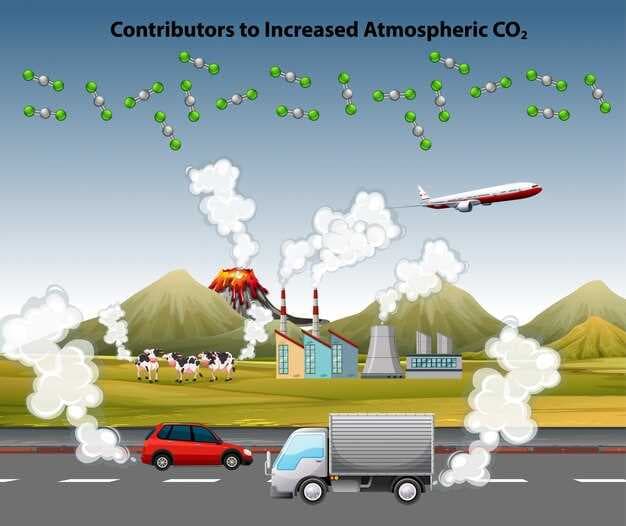

Adopt a rapid electrification and multimodal shift for motorized transport by 2030, with a clear reduction target and a funded project that includes subsidies for early adopters. This approach aligns business needs with public guidance and sets concrete milestones for fleets, including long-distance corridors and urban delivery.
Achieving success requires action across the entire system: vehicles, charging, grid capacity, and data-sharing. Policy and regulation should reduce friction with standardized charging standards, predictable tariffs, and performance-based incentives that encourage fleets to replace gasoline and diesel with electric or low-emission alternatives. This plan provides guidance to municipalities and operators on speeds of deployment and required timelines.
Key solutions include building fast-charging networks along long-distance routes, deploying hydrogen and battery-electric modes, and using autonomous operations to optimize energy use and routing. A business can pilot autonomous fleets and collaborate with public agencies to scale first‑mile/last‑mile deployments while reducing emissions and improving reliability.
Regarding implementation, governments should issue clear guidance for procurement, siting, and grid interconnection. They should promote cross-sector collaboration through joint ventures, subsidies, and open data to accelerate adoption, reduce total cost of ownership, and align incentives with climate targets.
To accelerate change, align subsidies, tax credits, and procurement rules with decarbonization goals, and create a pipeline of pilot and scale projects that demonstrate rapid reduction in emissions. A strategic program that includes urban, rural, and freight corridors will meet diverse transport needs and help entire regions lower transport emissions.
Regular monitoring and public reporting will help stakeholders see progress, adjust guidance, and promote ongoing investment in decarbonization projects, research, and workforce training.
Practical paths to decarbonize transport: challenges, solutions, and behavior change
Launch an international plan to decarbonize transport by electrifying fleets, expanding cycling networks, and streamlining urban logistics with adequate funding and clear plans.
Challenges
- Grid capacity must scale with rising charging demand, and the electricity mix should shift toward low-emission sources to maximize reductions in transport emissions.
- Upfront costs for low-emission vehicles, charging, and grid upgrades require investments from member states and predictable plans from business and government partners.
- Urban space constraints for charging stations and cycling infrastructure demand setting rules and incentives for curb access, safety, and parking.
- International alignment on charging standards, data interfaces, and cross-border logistics reduces friction for fleets and travelers.
- Battery supply chains face material constraints; automotive players like Renault test modular platforms to decarbonize vans and cars while controlling footprint and price.
- Pandemic-related demand shifts stress delivery networks; resilience comes from micro-hubs, intermodal routes, and flexible routing to cut trips.
- Data gaps and inconsistent monitoring hinder reductions tracking; need standardized reporting across transport modes to compare options.
Solutions
- Electrify urban and regional fleets where it yields the largest footprint reductions, and ensure the electricity supply comes from an environmentally friendly and low-emission mix.
- Scale green charging networks and smart charging, including vehicle-to-grid pilots, to balance grid loads and support renewables; leverage technological innovations to optimize routing and loads for business operations.
- Promote multimodal logistics: urban consolidation centers, rail or waterborne freight, and dynamic routing to reduce trips and emissions; some deliveries can shift to overnight windows to smooth demand.
- Encourage manufacturers and buyers to collaborate on common specifications and procurement to drive price reductions; Renault and other leaders can help decarbonize vans through standardized low-emission options.
- Expand cycling and pedestrian infrastructure with protected lanes, lighting, and secure parking, boosting people to replace short car trips.
- Invest in public transit upgrades: higher frequency, reliable service, and integrated ticketing to shift travel away from cars.
- Adopt policies and business incentives that reduce total cost of ownership for low-emission options, with clear metrics for footprint reductions and clean energy use.
Behavior change
- Use pricing signals and parking policies to nudge people toward transit, cycling, and walking, while ensuring some options remain free or affordable to maintain access.
- Offer workplace programs and incentives that encourage employees to cycle or take transit; provide secure bike parking and showers to support widespread adoption.
- Implement school and employer campaigns that visualize personal footprint reductions and provide simple dashboards showing progress toward milestones.
- Share best practices internationally, supporting member cities and firms to implement proven measures with faster rollouts.
- Engage communities in co-designing local mobility solutions; local pilots help refine approaches to fit diverse neighborhoods and settings.
Urban charging infrastructure: siting, capacity, and grid readiness

Prioritize siting that minimizes detours and aligns with travel patterns. Deploy curbside charging along major corridors, near workplaces, transit hubs, and in dense housing blocks where residents lack private parking. In new multi‑unit buildings, target one charger for every four parking spaces, and ensure dense urban blocks have at least one fast charger within 300 meters. Public capacity should include 30–40% DC fast stations (50–150 kW) at core nodes to support long trips and fleet travel, with modular wiring that scales as demand grows. Build with robust metering, fire safety, and accessible signage so citizens feel confident about reliability and safety.
Capacities must be scalable and demand‑driven. Use a mix of Level 2 chargers (3–11 kW) for everyday charging and DC fast chargers for corridors and business districts. Plan for 10–15% of curbside sites to operate under flexible, shared access models that adjust to peak periods, reducing idle hardware and optimizing turnover. Invest in smart charging software that limits simultaneous peak loads, prioritizes essential trips, and preserves street space for pedestrians and cycling infrastructure.
Grid readiness requires simultaneous grid upgrades and smart integration. Conduct local grid studies to identify feeder and transformer constraints within each corridor, then sequence upgrades to match deployment. Anticipate 1–2 MW of feeder reinforcement per dense urban district as charging ramps up, with dedicated energy storage at select sites to smooth peaks. Enable bidirectional charging pilots where tariffs and grid codes permit, so vehicles can contribute ancillary services during peak demand and help stabilise the local grid.
Policy and governance should align internal and external actions to accelerate decarbonization in transport. Governments can mandate pre‑wiring and modest oversizing in new builds, set clear installation standards, and provide targeted incentives for developers and fleet operators. Policies lets cities plan coherent expansion, while unified standards across jurisdictions reduce installation friction and improve user experience. Planning in a united context with utilities, regulators, and manufacturers helps ensuring manufacturing capacity keeps pace with demand and spares cities from supply bottlenecks.
Implementation should use a long‑term plan with measurable milestones. Establish annual targets for installed stalls, uptime, and grid impact, and publish progress dashboards for citizens and local businesses. Monitor utilization, dwell times, and charging speed mix to reallocate resources where needed. Integrate charging with cycling networks and micro‑mobility hubs to support a multimodal transport strategy, and coordinate with port authorities to prepare urban grids for maritime logistics that increasingly rely on electrified inland routes and shore power where feasible. This integrated approach strengthens the context for transport decarbonization and builds public trust through transparent delivery.
Policy tools to accelerate zero-emission vehicle uptake
Adopt a regulatory target that requires zero-emission vehicles to account for 20% of new passenger car registrations by 2026 and 60% by 2030, with freight fleets reaching 25% by 2027 and 50% by 2030. This rapid shift creates a predictable market signal, reduces risk for manufacturers, and aligns with energy and climate goals.
Coordinate a regulatory and fiscal package that must deliver; streamline vehicle approvals, offer purchase incentives for battery vehicles, and finance charging infrastructure for cities and logistics hubs. An agency should administer grants, monitor progress, and implement performance reporting to decision-makers. The package must make adoption possible for operators and households, with some flexibility for different regions.
Build a harmonized regulatory framework for charging and grids: define interoperable connectors, minimum service levels, time-of-use pricing, and energy-related charging standards; require building codes to include pre-wiring for EVs in new structures. This reduces friction for buyers and logistics operators and speeds implementation.
Public procurement: require that 30% of new government vehicles and 25% of fleet logistics contracts are zero-emission by 2025, with a preference for suppliers meeting lifecycle criteria. This creates good demand signals and helps to bring costs down through scale.
Support for battery supply chains: encourage domestic battery manufacturing, recycling, and second-life use; require supplier disclosure on raw materials; establish standards to ensure ethical sourcing and safe end-of-life handling.
Africa and other developing regions receive targeted investment in charging corridors, grid strengthening, and affordable finance; pilot energy-efficient charging solutions using solar-plus-storage; partner with local agencies and development banks to align with economic development goals and energy-related reliability.
Metrics and governance: create dashboards on vehicle stock, charging availability, energy consumption, and transport emissions; publish annual progress against objectives about mobility neutrality and transport emissions.
Collaboration and governance: regional coalitions among states, industry, cities, and civil society; set common data standards; align with france-led frameworks while respecting local conditions; engage actors across sectors to ensure uptake and scale.
Take a data-driven approach: establish clear targets, monitor progress, and adjust incentives to maintain momentum; states must take a coordinated stance, while agencies coordinate funding and oversight; some countries report annual outcomes to legislators and the public.
Transit-first planning and safe active mobility corridors
Prioritize transit-first planning by designing corridors that place high-capacity modes–buses, trams, and rail–alongside protected active-mobility routes for pedestrians and cyclists. Implement a policy framework that reserves street space, coordinates signal timing, and links sidewalks with transit stops to improve reliability on your core routes. Your plan should identify core routes, allocate dedicated lanes where feasible, and connect feeder networks to major hubs for seamless trips.
Data from early pilots show that dedicated corridors with safe active mobility reduce car usage and shorten travel times for transit users. In cities that adopted this approach, transit mode share on core corridors rose 15-25% within three to five years; walking and cycling shares grew 20-35%, and car trips dropped 10-25%. Distances traveled by car users in these corridors shortened as trips shifted to walking, cycling, or transit, yielding lower overall emissions.
To scale, add carpooling options, fare integration, and last-mile services that connect neighborhoods to transit nodes. The bonus comes from fewer delays, lower emissions, and a more predictable schedule. Lastly, set targets for adoption of safe mobility corridors and track progress with a simple management dashboard that surfaces questions like where routes underperform, where gaps in protected facilities exist, and where to invest next.
Implementation requires working partnerships across agencies, transparent management, and constant evaluation. Needed actions include data sharing, rapid decision loops, and route adjustments as demand shifts. Challenges such as funding gaps, land-use constraints, and public acceptance test the approach, but practical solutions exist. By concentrating investments on corridors with strong feeder networks, cities still can achieve meaningful mode shifts and contribute to policy targets to decarbonize transport.
Behavioral interventions: nudges, information, and incentives
Launch a tiered program that blends clear information, gentle nudges, and no-cost trials to move travelers away from car use toward biking, walking, and shared mobility.
Place prompts at decision points: workplace apps, transit hubs, and street signage that show faster, cheaper, and cleaner options for trips of a few kilometers.
Use bite-sized, multilingual messaging that explains emissions impacts, health benefits, and time savings with simple numbers.
Offer no-cost trials for transit passes and discounted memberships for bike-sharing, plus a public‑recognition program to highlight early adopters and long-term supporters.
Design for broad reach by partnering with employers, unions, and local governments to reach workers across different sectors and schedules.
Evidence from pilots shows non-car trips rise by 8-18% when messaging is clear, planning tools are easy to use, and no-cost passes are available.
Provide safe, well-connected routes, bike parking, and real-time service updates to reduce friction and boost repeat use.
Measurement and learning: track mode shares, trip counts, and user feedback; adjust messaging, signposting, and incentives on a quarterly cycle. Start with a three-neighborhood pilot, then expand based on measurable changes in travel mode mix and user satisfaction.
Freight decarbonization: electrification, alternative fuels, and logistics optimization
Adopt a three-pronged freight decarbonization plan now: electrify urban fleets, deploy alternative fuels for long-haul segments, and optimize logistics to move freight with lower emissions. This transformation is supported by strategic tools and levers, includes targeted taxation measures, and relies on a groupe of shippers and carriers to coordinate across supply chains and tourism-related sectors. Let data play a central role in mode choice, route planning, and consolidation to move decisions from guesswork into measurable performance.
Electrification first, focusing on urban fleets: electrify last-mile vans, port drayage, and city delivery vehicles. In current markets, 60-100 kWh battery packs enable 150-250 miles per charge with typical payloads for class 6–8 trucks. Battery costs have fallen to roughly 100–150 USD per kWh, enabling total cost of ownership parity for many routes within 3–7 years. Build a charging corridor with fast DC chargers every 150–250 miles along major routes and depot charging at distribution hubs. Where feasible, apply vehicle-to-grid to provide grid services and support decent grid stability while keeping reliability high. Each vehicle type requires a tailored battery and charging strategy.
Alternative fuels for long-haul: Hydrogen fuel cells offer zero-emission operation with high energy density, suitable for heavy trucks on long corridors; well-to-wheel CO2 reductions range from 40% to 90% depending on production, with renewable hydrogen delivering the strongest results. Biofuels and Renewable Diesel provide immediate decarbonization in existing diesel engines, delivering lifecycle emissions reductions of 60–80% depending on feedstock. LNG can serve as a transitional option where electrification is not yet feasible, but methane leakage and supply chain management must be addressed to realize net benefits, and work towards lower emissions across the network.
Logistics optimization rounds out electrification and fuels: Use route optimization, load consolidation, and intermodal transfers to trim energy use. Dynamic scheduling and real-world visibility reduce empty miles by 10–30%, and modal shifts to rail/intermodal networks can yield substantial gains on suitable corridors. Invest in digital technologies such as route-planning algorithms, telematics, and digital twins as core tools to plan network moves, promoting efficiency, and supporting a decarbonization transformation across the supply chain.
Policy and finance push the transition forward: set taxation frameworks that reward early adopters, pair capital subsidies with performance-based incentives, and align green procurement with decarbonization targets. Establish KPIs for supplier performance and require fleets and supply chains to include low-carbon technologies and fuels.
Company-wide collaboration: Build a groupe of companies to coordinate pilots and share learnings. Initiatives include shared data platforms, open APIs, and joint last-mile carpooling pilots to reduce vehicle miles in dense urban zones. Promoting decent working conditions and upskilling for drivers and warehouse staff while ensuring reliable service. Align supply strategies with tourism demand cycles to avoid peak congestion and unnecessary trips; this includes coordinating with tourism operators and hospitality providers.
Measurement and targets: Track CO2 per ton-km, energy intensity, total landed cost, and reliability. Use dashboards to show progress, verify results with third-party audits, and adapt plans quarterly. Set a d-carbonize target for a share of fleets, then expand the target as technologies mature and supply chains scale. Where possible, drive transformations below current baselines and shift to moves that maximize load factors and reduce idle time.
Implementation roadmap: begin with pilots in high-impact routes, scale to multi-country networks, and ensure leadership maintains a strategic focus on decarbonization while balancing cost, reliability, and decent service.