


 Українська
  English (UK)
  Русский
  العربية
  日本語
日本語  한국어
한국어  Magyar
  Türkçe
  Español
  Čeština
  Svenska
  Português
  Ελληνικά
  Suomi
Suomi  Nederlands
  Română
  Italiano
  Français
  Polski
  Deutsch
  简体中文
简体中文  Slovenčina
 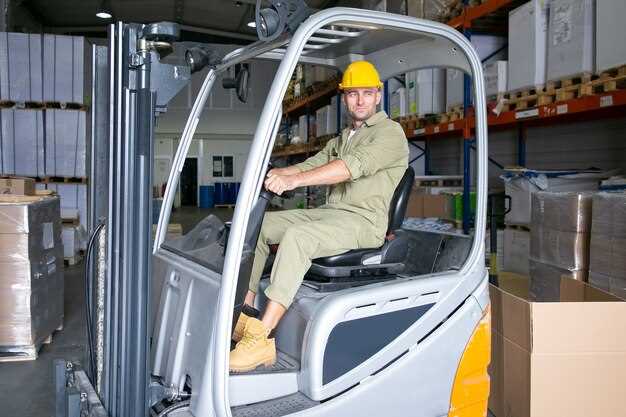 Підйом автоматизації – Як розумні навантажувачі підвищують продуктивність на сучасних складах">

Почніть з зосередженого пілотного проєкту: оберіть одну зону, запровадьте невеликий флот розумних навантажувачів і підключіть їх до вашої системи управління складом. Визначте 12-тижневий план KPI для відстеження часу пробігу, швидкості комплектування та робочих годин, а потім масштабуйтеся на основі результатів. Цей конкретний підхід дає вам вимірювані дані та чіткий шлях до збільшення пропускної спроможності без порушення основних операцій.
У налаштування входять модульний флот: автономні одиниці з уникненням зіткнень, оптимізація маршруту в режимі реального часу, та й attachment система, що обробляє палети, піддони та клітки. Оператори сидять в ергономічних сидіння та контролювати потік, must Будьте напоготові та готові втрутитися, якщо це необхідно, щоб безпека залишалася на першому плані. Ця конфігурація допомагає вирішувати вузькі місця в подорожах та раптових сплесках пакування.
У сучасних складах, з відповідним practices"У нас тут є process стає більш плавним і safe. У початковій фазі, очікуйте capacity підйом, коли час подорожі між зборами скорочується. У польових пілотів час подорожі зменшується приблизно на 20–30% та збір. picking продуктивність зростає на 15–25%, що призводить до меншої потреби в робочому часу та меншої втоми протягом зміни.
Щоб максимізувати користь, вирішуйте питання зарядки та battery management, and ensure the fleet uses batteries оптимально: плануйте заряджання під час періодів низького попиту, підтримуйте здоров’я акумулятора та налаштуйте систему, щоб запобігти порожньому ходу. Переконайтеся, що в зонах навантажувачів працюють лише навчені оператори, а транспортні засоби маршрутизуйте до районів з високим попитом, щоб парк транспортних засобів рухався smoothly між завданнями. Ретельно спланований графік заряджання зменшує час простою та підтримує рух ліній.
При виборі рішення дотримуйтесь практичних practices: перевірити безпечні функції, підтвердити замкнений цикл даних між флотом та WMS та протестувати picking workflow with real orders. The plan should include a choice між автономними та напівавтономними режимами, чіткий process для передачі зміни та шляху для прийняття нових рутин протягом labour teams. Завдяки такому підходу, ваша операція може перейти від пілотного проєкту до масштабування, контролюючи витрати.
1 Розширені датчики та інтеграція з IoT
Почніть із впровадження модульної сенсорної стеку наприкінці кожної прохідності для моніторингу присутності піддонів, руху навантажувачів та заторів. Розгорніть Edge IoT-вузли, які об'єднують камери зорового контролю з LiDAR та ультразвуковими сенсорами для виявлення перешкод, зайнятості та температурних умов. Ця конфігурація підвищує ефективність, надаючи практичні сигнали на операційній підлозі та робить дані корисними для міжпрохідних рішень.
Прийміть багаторівневу архітектуру даних, яка обробляє дані на периферії та передає підсумки до централізованої платформи. Використовуйте стандартні протоколи, такі як MQTT для обміну повідомленнями та OPC UA для промислової сумісності. По всій зоні, безперервне виявлення створює узгоджене зображення даних, що дозволяє швидко вносити корективи у маршрутизацію, розміщення та пріоритезацію завдань за допомогою взаємодіючих технологій, які можна масштабувати по всьому підприємству, уникаючи залежності від постачальників.
Що вимірювати та як діяти:
- Виявляйте перевантаженість проїзду в режимі реального часу та автоматично регулюйте сигнали або призначення смуг руху, щоб уникнути затримок, знімаючи напругу з перевантажених перехресть.
- Відстежуйте наявність палет та місцезнаходження SKU, щоб оптимізувати розміщення та зменшити відстані пересування між рядами.
- Відстежуйте показники роботи навантажувача (швидкість, гальмування, порожньою) для запуску профілактичного обслуговування та уникнення збоїв.
- Збирайте дані про навколишнє середовище (температура, вологість) для чутливих товарів і сповіщайте операторів, коли порогові значення перевищені.
- Реєструйте час перебування та щільність вибірки, щоб керувати поповненням і плануванням хвиль, покращуючи пропускну здатність без додавання робочої сили.
Вплив та рекомендації на основі польових пілотних проектів:
- Зростання пропускної здатності на 6–15% при комплектуванні замовлень та 8–20% у циклах поповнення запасів, коли датчики надають рішення щодо маршрутизації в режимі реального часу.
- Ефективність праці покращується за рахунок зменшення зайвих рухів на 12–18% у середніх складах.
- Використання даних для підтримки зменшує непередбачувані простої до 15–25% для флотів з суворими умовами експлуатації.
- Неважливо, чи це один сайт, чи мультисайтова мережа, рентабельність інвестицій (ROI) зазвичай з’являється протягом 12–24 місяців, коли впровадження здійснюється поетапно.
Вартість, закупівлі та управління:
- Оренда датчиків і периферійних шлюзів може зменшити початкові інвестиції та забезпечити прогнозовані OPEX, допомагаючи вам масштабуватися на різних об’єктах.
- Почніть з пілотного проекту в 2–3 проходах для валідації інтеграції, потім розширтеся до повного складського простору, зберігаючи при цьому управління даними та безпеку.
- Чітка цінність полягає в архітектурі, незалежній від постачальника; визначайте відкриті інтерфейси даних для підтримки майбутніх оновлень та уникнення прив’язки.
- Чи орендуєте ви, чи володієте, узгоджуйте з поетапним розгортанням та вимірюйте ROI щодо встановлених KPI.
Найкращі практики переходу від ізольованих рішень до інтегрованого підходу:
- Об'єднайте потоки даних від сенсорів, камер та RFID в єдину аналітичну платформу.
- Стандартизуйте формати даних і маркування, щоб технології від різних постачальників могли взаємодіяти безперешкодно.
- Навчіть операторів інтерпретувати сигнали датчиків та коригувати операційні практики без порушення робочих процесів.
- Використання підходу, орієнтованого на дані, допомагає мінімізувати марні рухи та максимізувати цінність даних у режимі реального часу.
- Набуття імпульсу на різних сайтах вимагає послідовного управління, регулярної калібрування та спільних цільових показників KPI.
Risks to watch and mitigation steps:
- Overfitting models to one facility; mitigate with cross-facility testing and regular recalibration.
- Latency in decision signals; address with edge processing and prioritized messaging.
- Privacy and security concerns; implement role-based access and encrypted data streams.
Sensor Suite Unpacked: LiDAR, Cameras, Proximity Sensors, and Odometry

Always perform hands-on sensor calibration before starting a shift to prevent incidents and keep operations moving.
LiDAR sensors deliver fast, dense point clouds that support 3D mapping and obstacle detection. Indoors, ranges commonly span 5–40 meters depending on model and surface, with 360-degree coverage reducing blind spots in the aisle near shelves, which lowers collision risk and supports smoother moving workloads. Performance depends on dust, wear, and calibration; follow guidelines to verify calibration and field test daily before shift starts. Prevention is strengthened by multi-sensor fusion, including cameras and proximity sensors. This reduces concern about perception gaps and enhances reliability.
Cameras provide color and texture data to improve object recognition and signage reading. When fused with LiDAR, they improve accuracy in complex layouts, which is essential for identifying pallet IDs and safety cones. In low-light zones or dusty environments, cameras alone can struggle, so coupling them with LiDAR reduces risk and incidents.
Proximity sensors cover near-field obstacles such as forklift legs, hand-trucks, or worker silhouettes. They are crucial in restricted zones and crowded aisle; they generate rapid alerts and can trigger slow-downs to prevent contact. The hands-on integration with operator controls helps maintain a comfortable rhythm while staying safe.
Odometry estimates position and motion by integrating wheel encoders, inertial measurement units (IMUs), and occasional GPS when near doors. Odometry keeps the forklift aware of its path between sensor updates, which is essential during guidance around shelves and when floor texture changes. However, odometry can drift, especially after wheel slip or sensor wear; mitigate with fusion and periodic recalibration.
Approach to fusion combines data from LiDAR, cameras, proximity sensors, and odometry into a single perception layer. This multi-sensor fusion offers resilience across different lighting, floor textures, and pallet colors. The system can offer extra reliability in harsh environments and create a complex perception stack that enhances safety margins. Adopt a structured maintenance plan to handle sensor wear and lens cleaning; guidelines should cover cleaning, alignment checks, and software updates. This approach can connect fleet data with operations for better visibility.
For industries with high throughput, this sensor suite reduces risk through prevention and lower incidents. Companies that embrace a structured, hands-on onboarding and regular sensor checks keep operators comfortable with the system and connect data to fleet management for visibility. The approach boosts uptime, reduces wear-related maintenance, and supports rapid changes in workflow. Operators could rely on this setup to guide decisions under varying loads, and the impact on productivity is measurable across industries.
To start, deploy this suite in one aisle, monitor performance for two weeks, and document changes in error rates, response times, and near-misses. Then scale to other zones with updated guidelines and ongoing, hands-on training for staff.
On-Device Edge Processing vs. Cloud Analytics: Trade-offs for Warehouses
Recommendation: Deploy on-device edge processing for real-time control of smart forklifts in high-traffic zones and for critical picking paths, while funneling aggregated data into cloud analytics for long-term improvements and cross-building benchmarking. This split keeps the program responsive at the spot where it matters and uses the cloud to enhance utilization across zones and fleets.
Edge processing delivers latency of roughly 5–20 milliseconds for perception and control loops, enabling a human-machine handoff that feels seamless to operators. In contrast, cloud analytics typically deliver 200–1000 milliseconds of delay for non-real-time tasks like route optimization, maintenance scheduling, and performance dashboards across the whole building. To maintain well-maintained operations, keep edge workloads lean: handle immediate tasks such as obstacle detection, grip and release decisions, charging scheduling, and fault spot checks on-device; push learning and historical trend analysis to the cloud.
Data strategy centers on a hybrid cadence: store high-frequency sensor streams on the edge for a rolling window of 24–72 hours and summarize to cloud for 12+ months to support improvements. Cloud analytics enable zones comparison, utilization benchmarking, and the shape of replenishment cycles across the fleet. A hybrid approach ensures resilience when connectivity fluctuates and allows the learning loop to inform both on-device behavior and long-term planning.
Implementation steps are concrete: map zones and charging spots; deploy a lightweight edge runtime on forklift controllers; run a special pilot program focusing on one building wing or a single spot; establish data governance and security; define charging schedules that balance load and avoid contention; use clear signals so operators know when to intervene, and set thresholds that trigger alerts in the on-device UI and in cloud dashboards.
Performance metrics to monitor include on-device response time, fleet-wide utilization, maintenance window reductions, mean time to fault detection, and improvements in order cycle time by zone. A well-balanced setup reduces wasted travel distance and feet, smooths peak loads, and makes the operation more predictable. The whole system becomes more capable when edge decisions are refined by cloud learnings and data enrichments, shaping competitiveness as warehouses scale.
Real-Time Telemetry, Uptime Metrics, and Anomaly Alerts
Install a centralized telemetry hub that ingests location, speed, load, battery, and temperature into a single dashboard. Configure alert rules to trigger within 60 seconds of a deviation, and route warnings to the operator via in-cab screens or mobile apps, enabling immediate actions across operations and keeping the fleet productive.
Track uptime with MTBF, MTTR, and OEE. In pilots across large and small warehouses, MTBF rose from 120 hours to 180 hours, MTTR dropped from 45 minutes to 28 minutes, and OEE improved from 68% to 78% within six months. Real-time telemetry feeds into a well-maintained software stack that highlights performance trends and enables teams to schedule prevention tasks before faults hit critical points.
Set thresholds for speed, acceleration, battery health, and payload shifts. A machine-learning model flags deviations and generates anomaly alerts to the operator console and, if needed, to a central monitoring desk, and enables rapid human-machine collaboration.
Ensure role-based access, encryption in transit and at rest, and data segmentation by location. Keep visibility of fault-critical metrics to on-floor operators and to the central admin team, while Enterprises dashboards present non-sensitive performance for planning.
Roll out in three phases: pilot on 6–8 forklifts across two routes, calibrate anomaly thresholds with historical data, then scale to the entire fleet in weeks. For each week, review the alert rate and tune thresholds to avoid alert fatigue. Turn telemetry insights into preventive maintenance tasks and route updates that improve throughput across entire operations.
Provide quick-start training for operators on how to respond to alerts and how to interpret real-time telemetry. Pair human-machine workflows with simple playbooks to shorten response times after an alert.
IoT Protocols and Data Standards for Interoperability
Adopt a dual-protocol strategy: MQTT for lightweight telemetry and OPC UA for rich, machine-readable data models; deploy a compact gateway layer to translate between MQTT, CoAP, and OPC UA, ensuring seamless data flows between devices and the cloud. This setup is showing tangible benefits in pilots with forklifts, racking sensors, and conveyors, reducing fragmentation and keeping data synchronized with clock-level precision and uninterrupted time.
Implement a compact, schema-driven data approach. Encode telemetry with Protobuf or CBOR for shorter payloads, and model events with EPCIS alongside GS1 identifiers to support cross-vendor visibility. Align device capabilities with an OPC UA information model to enable semantic interoperability, becoming a common language across the team. Studies indicate this mapping cut data processing delays by much while preserving data fidelity, which managers can monitor with real-time dashboards.
Balance security and governance to prevent vulnerabilities. Enforce TLS 1.3, mutual authentication, and robust device identity through certificate-based access control, with regular rotation and auditable logs. Keep data governance lightweight yet effective by tagging data streams with meta-data about origin, time, and custody, ensuring care for privacy and compliance without slowing operations. Special attention to edge-token lifecycles helps prevent outages and keeps pipelines flowing even when network conditions vary, reducing risk to zero in critical moments.
For managers and engineers, create a practical protocol map and run controlled pilots across two lines to demonstrate impact. A team-focused approach facilitates faster learning curves, enabling much faster decision cycles and quicker refinement. Measures to report include latency reduction, fewer translation errors, and uninterrupted throughput, with studies showing shorter integration cycles and reliable cross-vendor data exchange. By focusing on a seamless flow from sensor to analytics, you can excel in execution and demonstrate real-time value to stakeholders.
Define interoperability levels and governance to sustain momentum. Separate syntactic, semantic, and process interoperability, then standardize data models, event schemas, and security controls across vendors. This approach keeps evolution manageable, supports becoming scalable, and provides a clear path for future extensions. With a zero-tolerance posture toward data loss at critical moments, you build confidence among operators, managers, and the team as a whole, ensuring that warehousing remains agile even as technology deepens.
Safety Systems: Sensor Fusion and Collision Avoidance Mechanisms
Adopt a fused sensor platform that integrates LiDAR, high-resolution cameras, radar, and ultrasonic sensors into a synchronized perception layer and control loop. This approach reduces blind spots heavily and lowers collision risk in busy warehouses, delivering timely alerts and automated braking when necessary. For leasing fleets, this safety package reduces downtime and maintenance costs. A robust edge computer supports a fusion cycle under 150 ms to drive fast responses during shifts.
Sensor fusion across modalities maintains a reliable level of detection in dusty aisles, variable lighting, and reflective pallets. By cross-verifying signals from multiple sensors, the system minimizes false alarms while preserving sensitivity to pedestrians, workers, and loaded pallets. Thorough validation uses 1 million simulated events and 10,000 hours of field data, show near-miss indicators respond to routine patterns and data show improvements in stability across busy shifts.
Collision avoidance mechanisms implement a three-layer loop: perception, fusion, and decision. Proximity triggers initiate a soft stop at ranges around 0.6–0.9 m for pedestrians and 1.0–1.5 m for objects, with a hard stop if risk exceeds the threshold. Trajectory re-planning maintains safe clearance while minimizing disruption to operations, and the system logs every event to support continuous improvement. This creates a safety net that operators can rely on. This approach ensures consistent stopping decisions in real time.
Operational impact: Compared with conventional forklifts, todays leading automated systems perform more consistently across shifts, reducing abrupt stops and protecting assets. The choice of a redundant sensor suite yields better resilience in dust, smoke, or fog, delivering sustainable productivity gains. This transformation aligns with leasing terms that favor equipment with integrated protection.
План реалізації: запропонувати поетапне впровадження, починаючи з пілотного проекту в одному об’єкті, а потім розширити охоплення на інші об’єкти. Підтвердити за допомогою вимірюваних показників: час виявлення, час припинення та час безвідмовної роботи. Для більшості об’єктів вибрати провідного постачальника з модулями безпеки, які відрізняються високою надійністю та підтримують віддалений моніторинг. Цей підхід вирішує проблему для операторів і менеджерів, забезпечуючи значні покращення безпеки та більшу довіру до автоматизованих операцій.