


 简体中文
简体中文  English (UK)
  Русский
  العربية
  日本語
日本語  한국어
한국어  Magyar
  Türkçe
  Español
  Čeština
  Svenska
  Português
  Ελληνικά
  Suomi
Suomi  Nederlands
  Română
  Italiano
  Français
  Polski
  Українська
  Deutsch
  Slovenčina
 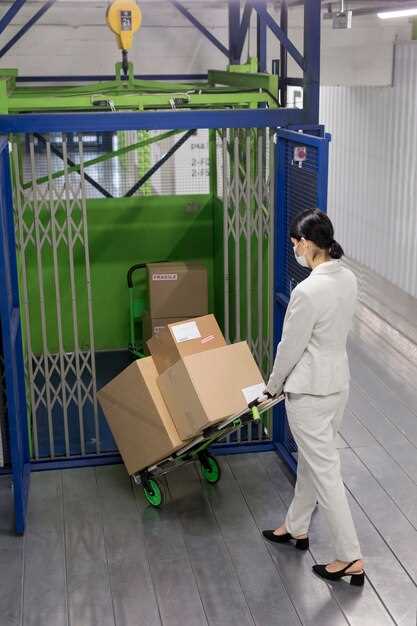 3PL仓库安全 - 采用自动叉车的新标准">

Deploy these systems to gain higher throughput and lower risk in daily operations. These machines improve cycle times and reduce human exposure in high-traffic areas, creating a steadier status for your teams.
These machines cut cycle times by 15-40% in typical pallet moves, because they follow optimized routes and avoid human blind spots. Yet you must manage these limitations: perception in wet floors, load variations, and signage clutter. Build a plan including on-site training, dedicated charging zones, and a clear safety norma for interactions with human staff.
角色 of leadership is to define the workflow, map the product flow, and update status in your WMS to reflect real-time location of goods and machines. Use autónomas units to move the product from receiving to staging, into storage, and toward fulfillment while keeping humans in sight lines. These steps provide flexibility and reduce bottlenecks.
To maximize safety, combine prevention strategies with training: daily checklists, visual and audible prompts, and supervised trials before going fully live. These actions reduce incident rates and show ROI within 6-12 months. Sites that have already piloted automation report fewer near-misses and smoother shift transitions.
In regions where local regulations permette autonomous operations, start with a single aisle or dock and scale as you verify reliability. The norma includes a risk assessment, signage, and dedicated lanes so these machines operate directly alongside humans without dead zones. Into the plan, align with your fulfillment schedule and keep the status up to date.
What Are Autonomous Forklifts? Practical Guide for 3PL Safety
Implement a one-warehouse pilot in a single zone ahead of full rollout to validate sensor reliability, path accuracy, and safe human-robot interactions; use outcomes to refine procedures before broader deployment.
Autonomous forklifts are machine-powered trucks that navigate warehouses without a human driver, guided by sensors, mapping, and automation software to move material efficiently and with minimal manual input. They operate in controlled environments and can reduce repetitive tasks, but require clear safety rules and reliable data to maintain performance across warehousing operations.
To reduce risks, establish layered safety: clearly defined routes, physical barriers, geo-fencing, and emergency-stop integration; implement automatic detection of pedestrians and workers nearby. Ensure that every interaction plan is documented and practiced, and include a supervisor or observer when trucks share space with people in high-traffic zones to maintain safe operations. Use continuous feedback to adjust speeds, distances, and stopping tolerances so safety outcomes improve consistently.
Operational design should specify where autonomous trucks run: loading docks, narrow aisles, and receiving areas, with deep integration to the warehouse management system to receive real-time task assignments. Include additional sensors such as LiDAR and cameras to extend environmental coverage, and set environmental conditions thresholds so machines can operate without sudden halts. Where manual tasks are replaced, ensure workers have clear roles, training, and recovery options, keeping cumplimiento and safety as the core priority while avoiding disruption to critical material handling processes.
People involvement remains essential: train operators, supervisors, and maintenance staff to monitor performance, perform quick inspections, and respond to alerts. Track metrics for greater throughput, safety incidents, and equipment uptime to demonstrate that autonomation adds value without compromising safety. Maintain a plan to scale across warehouses while protecting workers and ensuring that all procedures are followed consistently, with a focus on environmental stewardship and responsible automation adoption.
Autonomous Forklift Types in 3PL
Adopt a two-tier mix of autonomous forklift types aligned to tasks: autonomous counterbalance forklifts for floor-to-pallet moves, and autonomous reach trucks for high-rack zones, starting with a pilot in receiving. This approach will provide consistent throughput and reduce worker exposure to heavy lifts. To ensure safety, map the environment with real-time positioning, install guard zones, and train staff to work alongside machines so they move forward onto new processes ahead.
Autonomous counterbalance forklifts (ACF) handle general pallet movement from dock to staging. They offer payloads up to 3,000–4,000 lb (1.4–1.8 t), with speeds around 5–7 mph. They rely on avanzados navigation features (LIDAR/SLAM) to plan routes and stay aligned with aisles in real-time. In environments with limited GPS, the navegación engine updates maps continuously, allowing the unit to move ahead without missing a beat. They consistently advance onto the next pick or put-away step, accelerating throughput and improving accuracy.
Autonomous reach trucks (ART) serve high-rack zones where pallet heights exceed standard aisles. They typically carry 1.5–2.5 t payloads and extend reach to get pallets off upper levels, increasing storage density and reducing walking distances for operators. Their narrow-aisle operation fits 2.4–2.6 m aisles, and the units maintain forward-facing travel to simplify task sequencing. Real-time task updates keep the robot aligned with the pick window and reduce travel time by significant margins.
Autonomous pallet jacks (APJ) excel in line-side replenishment and order-picking support in expanded elevations, moving loose pallets around with payloads around 500–1000 kg. They are compact, easy to deploy, and complement larger units by handling short-range hops, loading docks, and staging points. APJs provide real-time feedback to the WMS and can extend longer operation hours with optimized battery management, reducing manual handling for the worker and improving pick rates.
Across all types, safety features dramatically improve environment safety: obstacle detection, speed limits that adapt to pedestrian zones, automatic braking, and geo-fencing. They provide visibility through dashboards and real-time alerts, enabling supervisors to intervene if a workflow stalls. Significant gains come from coordinating inventory movement in real-time with WMS and by standardizing task assignments so workers consistently receive clear directions about next steps–from inbound receipt to outbound dispatch–and from the automation stack rather than manual routes.
Start with a controlled pilot in a single zone, such as the receiving dock, before scaling to the entire facility. Use a data-driven cadence: track throughput, accuracy, dwell time, and incident rate for at least two weeks, then adjust allocation of ART versus ACF versus APJ. Ensure alignment with safety policy, operator training, and maintenance windows. The result is a longer-term reduction in handling time and a steadier, more predictable flow that supports growth from peak seasons to steady operations.
Sensors and Safe Navigation Protocols
Install a layered sensor suite and Safe Navigation Protocols that immediately establish zone-based speed caps and geofencing. In entornos with humanos on the floor, this minimising risk without sacrificing throughput. The architecture includes redundancy so operations continue when a sensor momentarily fails, a feature that supports automatización and keeps safety at the center. These measures made warehousing safer for employees and help them focus on higher-value tasks, while enabling the talent pool to grow in capability.
Sensor stack includes LIDAR (range up to 40 m with 2 cm accuracy), stereo cameras (1080p, 60 fps), ultrasonic arrays (0.2–4 m), and inertial/motion sensors. All data feed a fusion engine on edge hardware, delivering navigation commands within 50 ms and minimising false positives. This setup reduces blind spots in warehousing environments and supports safe operation even in dim aisles, without requiring extensive changes to existing workflows.
Protocols include dynamic path planning, pedestrian detection, velocity adaptation, and explicit no-go zones around loading docks and high-traffic crossings. The system uses predictive models to anticipate human movement and replan routes in real time; these rules become implemented across the network, providing a unified safety baseline beyond a single facility. These measures, when in place, ensure workers and robots share the floor with confidence, and the control logic includes a clear emergency-stop option.
Performance data from pilots: in five facilities, the collision rate fell by 42% within six months, and near-miss reports decreased 35%. Sensor uptime exceeded 99.5%; maintenance downtime stayed under 2%. The data found throughput rose by 12% as routes stabilised and tasks aligned with occupational safety goals. This evidence supports minimising risk in warehousing without sacrificing efficiency.
Implementation and training plan: roll out in phases, starting with a core zone and expanding to full-site coverage. Form a cross-functional team–safety, IT, operations–to tune sensors, maps, and rules; collect feedback from employees and adjust. Invest in talent development focused on automation literacy and occupational safety, so teams can manage automatización assets and respond to alerts. This approach keeps entornos safe and helps the workforce grow, turning safety investments into measurable gains rather than cosmetic changes.
Pedestrian and Vehicle Interaction Rules in Shared Aisles
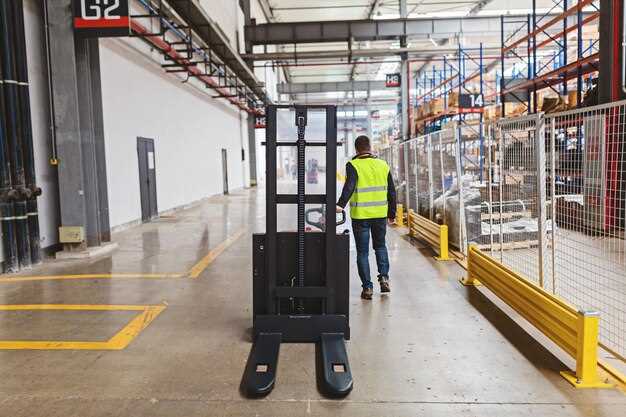
Enforce a fixed speed limit of 5 km/h in shared aisles and require pedestrians to use clearly marked walkways, significantly reducing accidents and injury risk.
- Install clearly marked pedestrian paths and physical separators to create a large, safe corridor for people and material handling equipment, minimizing dangerous interactions.
- Position high-visibility PPE and reflective material on all staff, with lantern-style indicators on forklifts to improve detection even in low-light shifts.
- Use sensor-driven warning systems that trigger audible alerts and slow-down commands when a vehicle approaches a pedestrian, a solution that provides immediate feedback without interrupting operations.
- Implement a layered communication protocol: eye contact, hand signals, and then audible warnings, ensuring pedestrians stay alert and operators respond promptly.
- Establish coordination rules for shifts to prevent crowding in high-traffic zones; stagger breaks and material movements to reduce peak-pileups and avoid bottlenecks.
- Develop a rapid incident-response process: document accidents or near-misses, analyze root causes, and adjust controls to prevent recurrence, thereby increasing health protection for all workers.
- Design aisles with strategic width and turn radii; allocate large cross-aisle intersections for crossing, enabling vehicles to slow gradually rather than stop abruptly.
- Incorporate automated controls and a central systems dashboard that permite real-time escalation to supervisors if a rule is violated, improving oversight without slowing core operations.
- Treat safety training as an ongoing investment: include occupational safety modules, autonomous forklift interactions, and drills that simulate common conflict scenarios in shared aisles.
- 跟踪事故、未遂事故和清理过道所需时间等绩效指标,以衡量改进情况,并随着时间的推移超越安全基线。.
部署协议:区域管理和任务调度
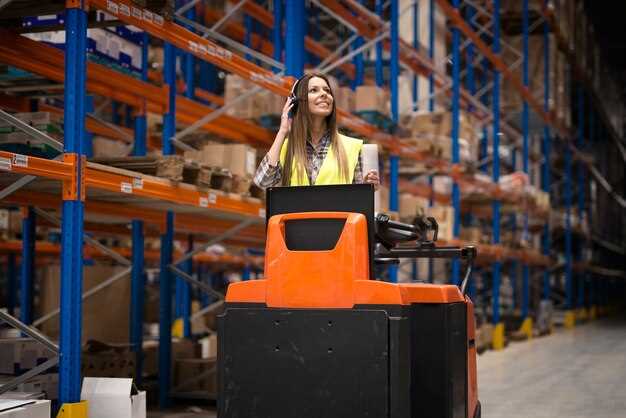
定义非重叠区域,并发布工人实时状态仪表板,以防止运输和库存流程之间的冲突。将每个区域绑定到清晰的访问规则、边界标记和基于激光雷达的边缘检测,以强制执行安全分离。这种配置减少了交叉交通,并支持平稳运营。.
配置任务调度器,使其按优先级和交付窗口分配工作,同时确认区域准备就绪情况、电池状态和库存位置。仅当区域畅通、车辆电量充足且路径上没有行人时才发布任务。这种设置能够实现更平稳的吞吐量,并减少空闲时间。.
将传感器集成到统一的系统中,通过激光雷达和摄像头,生成随库存移动而实时更新的区域地图。操作员可以在此查看实时状态,并在需要时进行干预。这种可见性有助于公司优化工作流程,并支持安全和创新。.
使用自动化程序来处理例行检查、边缘情况处理和避碰。在任何发布之前,验证路径是否畅通,行人穿越风险是否降至最低;确保高风险区域有工作人员在场。实施安全协议,在出现异常情况时触发声光警报并启动紧急停止。状态应反映区域是否适合操作,并清晰标记关键区域。.
推广检查清单:选择试点区域,与当前运营保持一致,培训员工,并用新的区域模型替换过时的地图。安排受控测试,测量交付时间、库存准确性和安全事件;投资于该协议可以带来可衡量的改进。只有当KPI达到目标且状态保持绿色时,才能升级到全面实施。.
培训、维护和紧急程序
为自动叉车采用正式、标准化的培训周期,结合理论、实践操作和基于情景的演练。首先,针对新操作员和与运输流程交互的员工进行为期2周的入职培训,作为第一个里程碑,然后每季度进行复习,以保持技能的更新。跟踪达到胜任水平的时间和完成率,以确保在工作通道上线之前达到关键能力,并完成入职、实践和复习。.
内容涵盖卫生协议、职业安全以及物料搬运区域周围安全的人车互动。使用guiado演练和norma支持的指导方针,并借鉴德勤的最新基准来设定战略目标并实现改进。风险不容丝毫侥幸;安全是一项共同责任,而且风险不容丝毫侥幸,通过持续的辅导和可能的调整来实现。.
维护计划通过每日检查传感器和安全功能、每周校准关键系统、每月软件更新和每季度预测性维护审查来运作。维护一个中心化的系统和物料日志,以追踪变更、更换和校准历史,确保数据为审计和调查工作保持最新。.
紧急程序:定义停止命令、安全关闭、锁定挂牌以及疏散路线。安装清晰可见的标牌,并确保控制室和现场团队之间快速沟通。使用涉及自动叉车和行人沿交通走廊移动的真实场景进行季度演练,以验证响应时间和协调性。.
指标与持续改进:监控平均故障间隔时间 (MTBF)、平均修复时间 (MTTR) 和事件发生率;设定战略目标并促成改进。将结果与培训、传感器和维护计划的前期投资联系起来,以减少停机时间并提高运营弹性,投资于持续更新,以支持当前运营中的物料流动和安全。.