


 简体中文
简体中文  English (UK)
  Русский
  العربية
  日本語
日本語  한국어
한국어  Magyar
  Türkçe
  Español
  Čeština
  Svenska
  Português
  Ελληνικά
  Suomi
Suomi  Nederlands
  Română
  Italiano
  Français
  Polski
  Українська
  Deutsch
  Slovenčina
 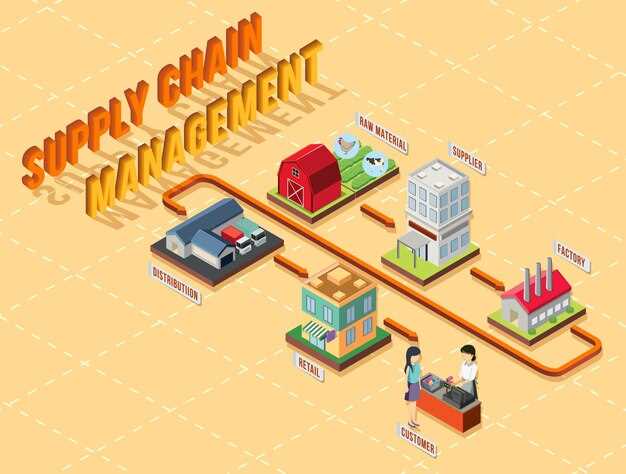 How the Supply Chain Enables Frictionless Operations">

Begin by mapping critical paths and standardizing data interfaces across suppliers, plants, and distributors. Real-time visibility helps realize 效率 gains and keeps operating rhythms predictable, moving from 典型的 firefight modes to proactive planning. This approach, been validated across industries, creates a resilient, scale capable ecosystem.
A term of ‘seamless integration’ emerges when ERP, WMS, TMS, and supplier portals share a common data model via standardized APIs. This integration yields a clear advantage in forecast accuracy, reduces order cycle times, and lowers safety stock. Analysts and operators can monitor shipments across transit, manufacturing, and distribution with granularity down to item level.
Industries such as automotive and aerospace rely on 铝质 parts; aluminum content has grown, making scheduling precision vital. A 24‑hour delay in metal deliveries can idle lines, while real-time supplier signals reduce risk. Leveraging cross-supplier data, companies can accelerate replenishment and stabilize line fill.
Perhaps a pilot in a focused aluminum component category demonstrates ROI quickly. Want to expand across margins? Start with a defined scope: one plant cluster, two key suppliers, and a handful of products. Points to measure include on-time delivery, safety stock, and inventory turns; a target of 15–20% reduction in safety stock is realistic with strong integration. Much of this success comes from standardizing data feeds and automating exception handling.
Want to scale further? Build cross-functional teams, appoint a data steward, and publish a weekly risk dashboard. Points covered include supplier risk, transport capacity, and inventory health. This approach, when applied consistently, yields much steadier service levels across industries and strengthens every order cycle.
Frictionless Operations Through the Supply Chain
Deploy real-time traceability across distribution and finance workflows to shrink disruptions and elevate services. Keep members from different teams aligned so they address gaps quickly. For beverage programs, apply this approach to demand shifts and cold-chain events, showing measurable returns.
- Build a unified data fabric linking orders, inventory, and cash flows to provide a single source of truth for planners and touchpoints.
- Establish event-driven alerts that trigger automated actions when exceptions occur, while reducing delays in production, transport, and invoicing.
- Leverage traceability to connect supplier deliveries, warehousing, and customer receipts, ensuring beverage products remain within quality and compliance windows.
- Coordinate care teams with logistics providers to maintain high services levels even during unpredictable conditions.
- Address disruptions by empowering planners to dive into data, identify root causes, and implement corrective actions quickly.
- Be mindful of beverage category specifics: cold-chain traceability, batch-level tracking, and batch recall capabilities.
They address gaps quickly thanks to shared data and clear ownership. Metrics from pilots show improvements in delivery reliability, inventory efficiency, and cash-cycle timing, with different channels maintaining strong service continuity.
Align Demand Signals with Inventory and Capacity Planning
Implement daily demand-signal alignment between forecasting, inventory, and capacity planning. In practice, feed signals from POS, e-commerce, and replenishment systems into a single analytics layer, then translate them into concrete inventory targets and capacity buffers.
Step 1: join internal data streams from procurement, manufacturing, and logistics into a single data fabric. Step 2: apply intelligent analytics to turn signals into precise order plans. Step 3: publish intuitive dashboards for your team. Step 4: track performance with traceability and tracking metrics. Step 5: close loop by updating forecasts after execution.
To ensure alignment, assign ownership to a dedicated planning tower led by a president or senior executive in larger firms. This governance group joined by demand, procurement, and manufacturing teams does care about data integrity. This makes alignment concrete across teams. A company-wide subscribe mindset helps ensure early signal capture; perhaps this configuration achieved smoother decision flow, with alerts that trigger replenishment actions once thresholds are met. Traceability of orders across suppliers, shipments, and receipts becomes visible in dashboards.
KPIs guide execution: forecast accuracy, service level, inventory turns, and capacity utilization. Achieved targets require scenario planning, after action reviews, and analytics comparing planned versus done results. A typical margin improvement arises from balancing stock with throughput, reducing stockouts and excess.
Invest in a lightweight data fabric that joins ERP, manufacturing, and supplier data; leaning on intelligent analytics to surface anomalies quickly. Planning tower coordinates procurement, manufacturing, and logistics activities. Your team benefits from an intuitive UI that highlights root causes, enabling non-technical stakeholders to participate. After changes, run a quick impact analysis to confirm no disruption to service. Insights from intelligence streams inform prioritization. Analytics-driven governance helps your company reduce friction in decision making and keeps investors satisfied.
Establish Real-Time Data Exchange Across the Supply Network
Deploy event-driven data hub linking retailers, manufacturers, carriers, and direct-to-consumer flows; such architecture supports real-time exchange of status, location, and delivered events. Prioritize data contracts, security, and reliability to reduce cycle times and costs.
This approach supports improving decisions by turning real-time signals into actionable guidance for those involved.
- Define data contracts with fields like created, address, delivered, and timestamps; assign a unique instance per truckload or part, supports traceability from origin to consumer.
- Adopt nanoservices at per-part granularity; each nanoservice publishes status events via a compact payload, reducing latency and making intelligence actionable for retailers and others.
- Coordinate touchpoints across carriers, warehouses, and stores; ensure those events create a continuous traceability trail; dashboards display delivered status, ETA, and status changes for each shipment.
- Support direct-to-consumer flows by connecting consumer apps with retailer portals; deliver visibility into inventory, delivery progress, and address-related updates.
- Address costs and resources by applying real-time routing, load optimization, and exception handling; measure action-oriented improvements in delivery times and returns.
- Establish governance around data quality, access control, and data retention; set reusable data models, validation rules, and cross-partner standards to drive consistency.
- Key metrics to track: delivered accuracy, traceability coverage, touchpoint resolution, and consumer sentiment.
- Environment strategy: start with a reusable instance in a sandbox or staging environment, then replicate across regions; monitor security, reliability, and performance.
Choose Predictive Analytics Models for Forecasting and Replenishment
Adopt a hybrid forecasting framework blending time-series models with machine-learning predictors to span short-, mid-, and long-term horizons, and attach a replenishment loop translating forecasts into purchase orders or production plans.
Combine these model families: univariate ARIMA-style ones capturing seasonality; multivariate models leveraging exogenous drivers; causal structures for promotions; demand-sensing neural nets for near real-time signals; nanoservices wrappers to enable reusable pipelines.
Focus on data quality and governance: integrate internal ERP, MES, supplier portal data, market indicators, and logistics events; use multiple data feeds that arrive at different cadences; ensure data lineage and validation at nanoservices layer.
Outputs include replenishment signals with quantity and timing, safety-stock envelopes, and service-level targets; align with production agenda and partner agenda; use multiple scenarios to hedge market volatility; planners and team review results after cycles; these steps reduce risk and frictions in workflows.
That alignment across data quality, governance, and replenishment reduces transaction frictions while transforming availability across markets; monitor metrics such as forecast bias, data drift, lead-time variability, and supplier reliability; respond quickly to risk signals to withstand disruption.
Implement a focused, scalable stack built on nanoservices: multiple reusable components, focused on signal fusion, scenario testing, and automated replenishment triggers; partners across production teams, planners, and units gain faster alignment; after cycles, reassess thresholds and availability.
That approach yields measurable gains in forecast accuracy, inventory turns, and service levels, while curbing inefficiencies that often ripple along value networks.
Incorporate External Data Sources to Sharpen Forecasts
Subscribe to diverse external data streams and integrate them into tracking models to augment forecasts across term horizons.
Source categories include macro indicators, weather, geo-risk signals, port and rail schedules, currency and commodity quotes, and consumer sentiment. Build a data catalog with fields, update cadence, and data quality metrics to ensure consistent access for years ahead. Include transaction signals from ERP and logistics platforms to sharpen granularity of demand signals. Pair signals with business rules mapping event types to downstream processes, reducing latency from signal receipt to decision.
Architecture uses nanoservices to decouple sources, publish to a streaming bus, and feed multiple models in parallel. This full-stack approach boosts speed, supports worldwide processes, and keeps cost predictable when scaling with subscribe-enabled providers. Use versioned schemas and data quality checks to minimize drift in term forecasts.
Governance: establish data usage rules, lineage traces, access controls, and vendor risk checks. Create a lightweight scorecard for external sources (accuracy, freshness, coverage) and assign owners; freeman and team review monthly.
Cost management: quantify incremental cost per signal, track spend, and subscribe to a mix of free and paid streams to keep access scalable. Map external data to gmas dashboards so decision makers see augmented intelligence alongside internal signals.
Outcomes include forecast error reductions across a sample set of products, measured across multiple years. Run backtests on nanoservices pipelines comparing prior signal sets with current external feeds; quantify gains in service levels, stock turnover, and cost avoidance. This strengthens business case and aligns plans with your agenda.
Bottom line: external data access expands decision visibility, improves control, and streamline processes across many markets. By maintaining full lifecycle governance and continuous evaluation, your company maintains reliable forecasts amid shifting conditions.
thats agenda gains traction across business units.
Track Forecast Accuracy and Translate Insights into Actions
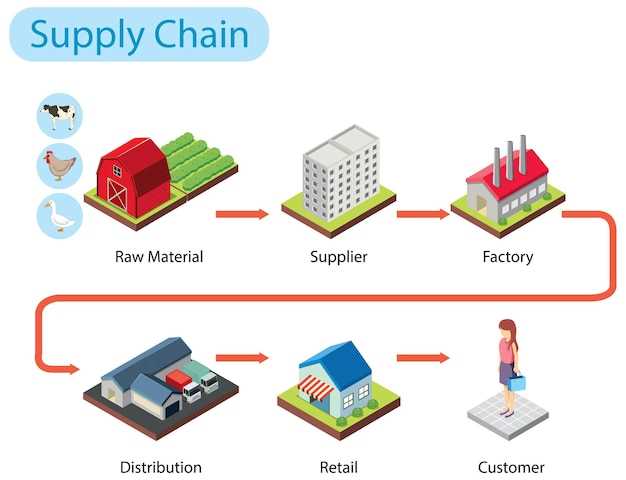
Adopt a forecast accuracy score and an action playbook that translates insights into concrete steps. This keeps teams focused on customers and reduces variability across worldwide processes.
Metrics are driven by data from multiple sources, with same definitions across organizations. Use five points to guide action: bias, accuracy, horizon coverage, variability, and response time.
Insights are shared within a cross-functional team including production, finance, and logistics. Kevin leads talking points to ensure alignment across environment, capabilities, and control. Data signals from customers and promotions feed models, while talking drives rapid response.
Typical goods categories in worldwide markets include electronics, clothing, and perishables; this mix requires multi-region forecasts and constraint checks.
Needed actions surface when signals differ across markets; escalate to Kevin’s team for alignment on a single proposition and production plan.
| 公制 | Definition | 目标 | Current | 行动 |
|---|---|---|---|---|
| Forecast accuracy (MAPE) | Deviation between predicted and actual demand across categories | ≤10% | 12% | Root-cause analysis; refresh seasonality and promotions; update models weekly |
| Forecast bias | Mean error direction across horizon | −1% to +1% | −0.5% | Adjust base demand; re-bias forecast with latest promotions |
| On-time fulfillment | Delivery date adherence for customer orders | ≥92% | 88% | Coordinate with suppliers; adjust inventory targets; trigger alert in planning portal |
| Response time to deviation | Time between detection and action | ≤48 hours | 72 小时 | Automate alerts; assign ownership to team; schedule daily stand-up |
| Inventory coverage | Average inventory days of supply | 40–50 days | 42 days | Adjust replenishment cadence; hedge with safety stock by concept |
Steps to action when metrics drift: 1) capture signals from customers, finance, and production; 2) run root-cause analysis; 3) adjust model parameters; 4) realign procurement and production plans; 5) monitor impact over two cycles. This approach minimizes disruption and speeds learning within capabilities across teams.
Environment and control: implement data quality checks, lineage tracking, and audit trails to ensure reliability of inputs. This underpins accurate projections and faster response by a cross-functional team operating in a focused environment.
Benefits accrue in improved proposition to customers, stronger finance planning, and smoother flow of goods across multiple markets worldwide. Organizations adopting this driven cadence achieve more consistent outcomes, with Kevin and peers talking through what works and applying insights to production planning and fulfillment.