


 简体中文
简体中文  English (UK)
  Русский
  العربية
  日本語
日本語  한국어
한국어  Magyar
  Türkçe
  Español
  Čeština
  Svenska
  Português
  Ελληνικά
  Suomi
Suomi  Nederlands
  Română
  Italiano
  Français
  Polski
  Українська
  Deutsch
  Slovenčina
 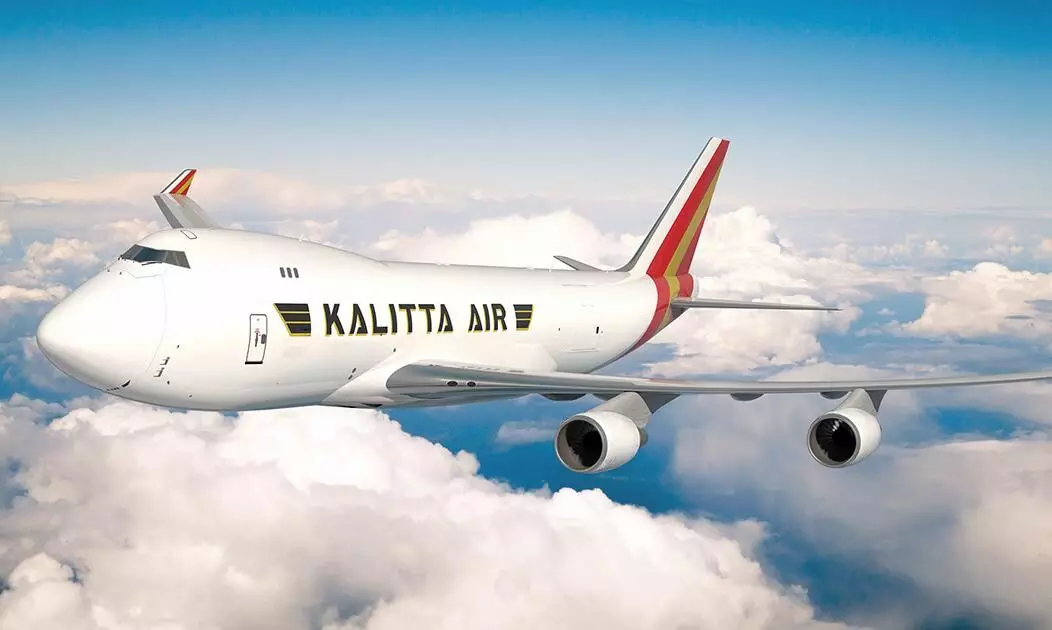 2025年11月安克雷奇货运航班显着增加:重点航空公司及航线">

November’s Cargo Traffic Boom at Anchorage Airport
November 2025 unexpectedly turned into the busiest month of the year at Ted Stevens Anchorage International Airport, recording a significant surge in international cargo aircraft movements. With nearly 3,000 landings, that’s a hefty 14% increase compared to the previous year, indicating a strong uptick in activity for this northern hub. This spike reflects shifting patterns along vital Asia–America freight corridors, revealing an intriguing tale of who’s expanding, who’s pulling back, and how these changes could ripple through the logistics world.
Major Players and Their Performance
Among the rising stars in Anchorage’s November activity was Kalitta Air, which saw its flights land soar by an eye-popping 49% up to 530 landings. This leap catapulted them into the top ranks of operators at Anchorage for the month. Not far behind, Atlas Air continued to hold its ground with 744 landings, an 8% increase over the prior year, securing its position as the busiest carrier. However, on the flip side of the coin, FedEx experienced a sharp slowdown, with their landings dropping by 35% to 380. Other carriers like EVA Air and China Southern also contributed to the upward momentum, with increases of 21% and a remarkable 90%, respectively.
| 承运人 | November 2025 Landings | Year-over-Year Change |
|---|---|---|
| Kalitta Air | 530 | +49% |
| Atlas Air | 744 | +8% |
| 联邦快递 | 380 | -35% |
| EVA Air | 144 | +21% |
| China Southern | 120 | +90% |
Asia–America Routes: Who’s Gaining and Who’s Losing?
The strong rebound in Anchorage demand was mirrored in specific trade lanes between Asia and the United States. China to the U.S. remained the heavyweight of these pairings, growing 17% to nearly 640 landings. South Korea to the U.S. showed similarly solid growth, at 20%, crossing 370 landings. The flipside saw some dwindling traffic from the U.S. heading outwards: flights bound for Hong Kong fell 24%, and those to South Korea slid 33%. This patchwork of increasing inbound flows combined with softer outbound demand tells a story of changing trade dynamics that logistics firms should watch closely, especially for trans-Pacific freight routes.
Key Route Traffic in November 2025
- China → USA: 638 landings (+17%)
- South Korea → USA: 371 landings (+20%)
- USA → Hong Kong: 137 landings (-24%)
- USA → South Korea: 108 landings (-33%)
Year-to-Date Trends Illustrate Market Shifts
When zooming out to the whole year, the trends underscore a blend of steady growth and sharp shifts: Kalitta Air clocked an 18% increase to over 4,000 landings, while Atlas Air solidified its lead with 7,200 landings, up 8%. EVA Air’s consistency was reflected in a 20% gain, hitting 1,545 movements. Meanwhile, geographic pairings varied: Hong Kong to USA saw a decline of 22% year-to-date, but traffic from the USA to China climbed 22%, with the USA to Taiwan corridor impressively rising 25%. These developments reveal clear winners and laggards in the freight landscape, painting a nuanced picture of demand and supply.
Top City-To-City Cargo Connections Through Anchorage
The powerhouse city-pairs bringing eastbound cargo through Anchorage included Taipei to New York, leading the pack, followed by Shanghai to Miami. Westbound, Chicago to Taipei and Chicago to Hong Kong topped the charts, demonstrating the massive transcontinental trade flows anchored by this critical airport hub.
这对物流和货运代理意味着什么?
Anchorage’s surge in cargo movements reflects more than just numbers on a screen; it carries implications for supply chain planners and logistics managers worldwide. The airport’s role as a trans-Pacific freight hub means that shifts in carrier performance and route traffic directly affect global shipment schedules, haulage timing, and the availability of airspace slots, all crucial for seamless distribution. The mix of carriers expanding and contracting their operations signals changing routing strategies that logistics companies must anticipate.
With global freight transport increasingly demanding transparency and affordability, platforms like GetTransport.com play an instrumental role in helping businesses and individuals navigate these choppy waters. By offering versatile options ranging from office and home moves to cargo deliveries — including bulky goods, vehicles, and furniture — GetTransport.com empowers customers to find reliable, cost-effective transport solutions worldwide. This is especially useful when sudden traffic pattern shifts introduce uncertainties in shipment planning.
Insights and Beyond: The Takeaway for Shippers and Forwarders
The November surge at Anchorage showcases how a mix of carrier expansion, route realignment, and market demand can cause significant shifts in the logistics landscape. Despite FedEx’s downturn, the robust increases from Kalitta Air, China Southern, and others highlight interesting strategic moves by cargo forwarders and carriers on trans-Pacific routes. For freight companies, understanding these patterns is as crucial as knowing the lay of the land when moving a bulky shipment or high-value cargo.
Still, no matter how accurate and detailed the data or how insightful the market analysis, nothing quite beats seeing the situation firsthand. The best way to gauge how these changes may affect your freight or relocation needs is to harness the flexibility and transparent pricing offered by shipping platforms. On GetTransport.com, you gain access to a wide variety of global cargo transportation options at competitive rates, enabling smarter decisions without breaking the bank or getting caught off guard.
So whether it’s managing your shipments from Asia to America, coordinating vehicle transport, or handling office moves, you’re equipped with dependable, affordable choices. Book your Ride with GetTransport.com for the most convenient experience.
Forecast: Anchorage’s Cargo Shift and the Wider Logistics Picture
Though the November increase at Anchorage might be a more regional phenomenon, it’s a noteworthy signpost in the global logistics map. Asia–US freight corridors are vital arteries in worldwide supply and distribution chains. While the immediate impact may not overhaul global shipping, these route swings highlight how dynamic cargo logistics can be, emphasizing the need for flexibility and up-to-date intel.
GetTransport.com keeps pace with such evolving trends, ensuring that its users stay ahead of the curve and can adapt smoothly to market changes. Start planning your next delivery and secure your cargo with GetTransport.com.
Summary: Navigating Anchorage’s Cargo Surge and Logistics Opportunities
The recent surge in cargo flights at Ted Stevens Anchorage International Airport during November 2025 signals a significant reshuffling in trans-Pacific air freight flows. Key carriers like Kalitta Air and Atlas Air expanded their presence strongly, while FedEx experienced notable declines. The main Asia–US routes showed mixed dynamics, with inbound traffic from China and South Korea to the U.S. rising, contrasted by softer outbound flows from the U.S. to Hong Kong and South Korea. These shifts underscore evolving trade demands and carrier strategies that impact shipment dispatch, haulage timing, and global freight forwarding operations.
Logistics providers and shippers can leverage platforms such as GetTransport.com to navigate these changes effectively. Offering a robust, affordable, and transparent service for a wide range of cargo transportation needs—from pallets and parcels to bulky and international freight—GetTransport.com simplifies the complexity of global shipping and relocation services. Whether moving household goods, vehicles, or commercial cargo, this platform aligns perfectly with current industry trends, providing reliable, cost-efficient solutions for the modern logistics landscape.