



China's Trade Surplus Hits Record High
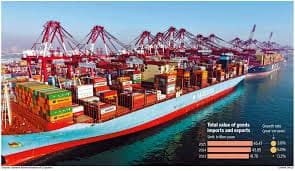
The latest data reveal that China’s trade surplus has soared to an unprecedented 792.57 billion renminbi (approximately 111.7 billion US dollars). The General Administration of Customs in China reported that exports surged by 5.9% year-on-year in November, marking a sharp rebound from October’s 1.1% decline. Overall, exports have grown 5.4% so far this year, demonstrating a very strong upward trend.
On the flip side, imports have not kept pace. Although November saw a modest 1.9% increase after a 1% rise in October, cumulative import volumes have declined by 0.6% this year. This divergence hints at a significant slowdown in China’s construction sector, which has historically been a heavy consumer of raw materials and components imported for building activities.
Table 1: Year-on-Year Export and Import Growth in China (2024)
| Month | Export Growth (%) | Import Growth (%) |
|---|---|---|
| October | -1.1 | 1.0 |
| November | 5.9 | 1.9 |
| Year-to-date | 5.4 | -0.6 |
What’s Driving Export Growth?
The surge in exports isn't only driven by high-tech products like semiconductors, which posted a remarkable 24.7% increase in November, or automobiles, which grew 16.7% year-on-year. Even large goods like ships have seen export volumes jump by 26.8% compared to November of the previous year. However, some traditional consumer goods—such as toys, footwear, and furniture—have experienced a fall in exports. This decline is largely influenced by dampened sales to the US market, which has imposed tariffs that affect the competitive edge of Chinese-made goods.
Export Growth Highlights
- Semiconductors: +24.7%
- Automobiles: +16.7%
- Ships: +26.8%
- Toys, Footwear, Furniture: Declining due to tariffs
The Ripple Effect on International Logistics
China’s export boom fuels a growing appetite for maritime container shipping between Asia and Europe. Unlike the US, many European markets have not imposed similar tariff regimes, which sustains strong demand for Chinese exports in those regions. This vibrant flow of goods sustains numerous facets of the global logistics ecosystem including sea freight, air cargo, road transport, and warehousing operations.
Yet, a looming question remains: how sustainable is this export dynamism? The vast volumes China exports underpin much of the growth experienced in key logistics sectors worldwide. Should these volumes ease up, the impact might send waves across the maritime container freight industry and beyond, touching air freight and trucking as well.
Key Components Impacting Logistics
- Steady container shipping volumes from China to Europe
- Potential strain on logistics growth if exports decline
- Impact on ancillary services like warehousing and road haulage
The Import Picture: A More Sluggish Recovery
Compared to the vibrant export sector, import activities present a more cautious story. The limited growth—underpinned by the construction industry's weakness—means decreased demand for bulk imports such as construction materials and some intermediate goods.
This imbalance between rising exports and declining imports points to structural shifts within China's domestic economy, with notable implications for inbound logistics and freight forwarding companies that typically handle large-volume shipments of industrial inputs.
Implications for Global and Regional Cargo Transport
Since China acts as a backbone for international trade flows, fluctuations in its export-import balance ripple throughout the global cargo market. Efficient forwarders and logistics providers must stay alert to these trends to optimize transit routes, manage warehousing capacities, and anticipate shifts in demand for shipping services.
Container shipping lines, air freight carriers, and truck haulage services servicing China trade corridors need adaptable strategies to navigate these changes. Meanwhile, distributors and importers should brace for supply chain adjustments as import volumes wobble.
Summary Table: Impact Areas in Logistics Due to China's Trade Dynamics
| Logistics Segment | Current Trend | Potential Impact |
|---|---|---|
| Maritime Container Shipping | Increasing demand due to export growth | Pressure on shipping capacity, route planning |
| Air Freight | Supported by export surge | Need for agility if export volumes dip |
| Road Transport | Linked to both exports and imports | Adjustments needed due to weaker imports |
| Warehousing & Distribution | Rising demand with export-driven logistics | Sustained investment in storage and sorting |
Why This Matters for Logistics Players and Freight Forwarders
For anyone in the transport and logistics arena, understanding China’s export-import pattern is like having a crystal ball. It's the "canary in the coal mine" signaling shifts that could redefine shipment flows and freight volumes globally. Logistics providers need to keep their eyes peeled and their operations flexible to thrive in this evolving market landscape.
GetTransport.com emerges here as a savvy partner for those navigating these dynamic waters. Specializing in economical and versatile cargo transport—whether moving office equipment, handling bulky freight, or arranging vehicle transport worldwide—GetTransport.com offers solutions that mesh well with changing market demands. Its global reach and service diversity ensure logistics operators and clients alike find reliable shipping options at competitive rates.
Final Thoughts: Navigating the Waves of Change
While export growth energizes shipping lanes, the slower import recovery spotlights ongoing economic recalibrations within China. These developments carry significant weight for freight, transport, and distribution networks. Yet, nothing beats firsthand experience to truly gauge their impact.
Thanks to platforms like GetTransport.com, users can tap into transparent, convenient services that help balance cost-efficiency with broad choices across cargo and logistics needs. Whether shipping household moves, freight pallets, or sizable industrial goods, the ability to compare global offers empowers customers to avoid costly surprises and secure dependable transport.
Book your ride today and experience firsthand how smooth and affordable cargo forwarding can be on GetTransport.com.
Looking Ahead: Logistics in a Shifting Trade Environment
Though the current surge in China’s exports strongly underpins global logistics growth, the subdued import trajectory and the question of how long overseas markets can absorb these shipments should temper expectations. On a global scale, this trade pattern signals potential adjustments, but perhaps not a seismic upheaval. Still, staying up-to-date on these fluctuations is vital, and platforms such as GetTransport.com remain committed to tracking these trends to enhance service delivery.
So, for those planning their next shipment or looking to adapt their forwarding strategies, now is the time to start leveraging efficient, reliable, and competitively priced transport solutions.
Start planning your next delivery and secure your cargo with GetTransport.com.
Summary
China’s record trade surplus with soaring export growth masks a more modest, and even negative year-to-date, import performance, significantly influenced by the slowdown in construction demand. This duality drives shifts in global logistics—from increased maritime container traffic to more cautious inbound freight volumes. Key export sectors such as semiconductors, automobiles, and shipbuilding propel robust shipping needs, while tariff effects temper certain consumer goods’ shipments. These trends underline the interconnected nature of global freight, transport, and distribution networks, which must adapt quickly to changing trade flows. Leveraging flexible, affordable cargo transport services like GetTransport.com helps logistics players and cargo owners stay a step ahead in this fluid environment, ensuring smooth dispatch, haulage, and delivery across the globe.