


 简体中文
简体中文  English (UK)
  Русский
  العربية
  日本語
日本語  한국어
한국어  Magyar
  Türkçe
  Español
  Čeština
  Svenska
  Português
  Ελληνικά
  Suomi
Suomi  Nederlands
  Română
  Italiano
  Français
  Polski
  Українська
  Deutsch
  Slovenčina
 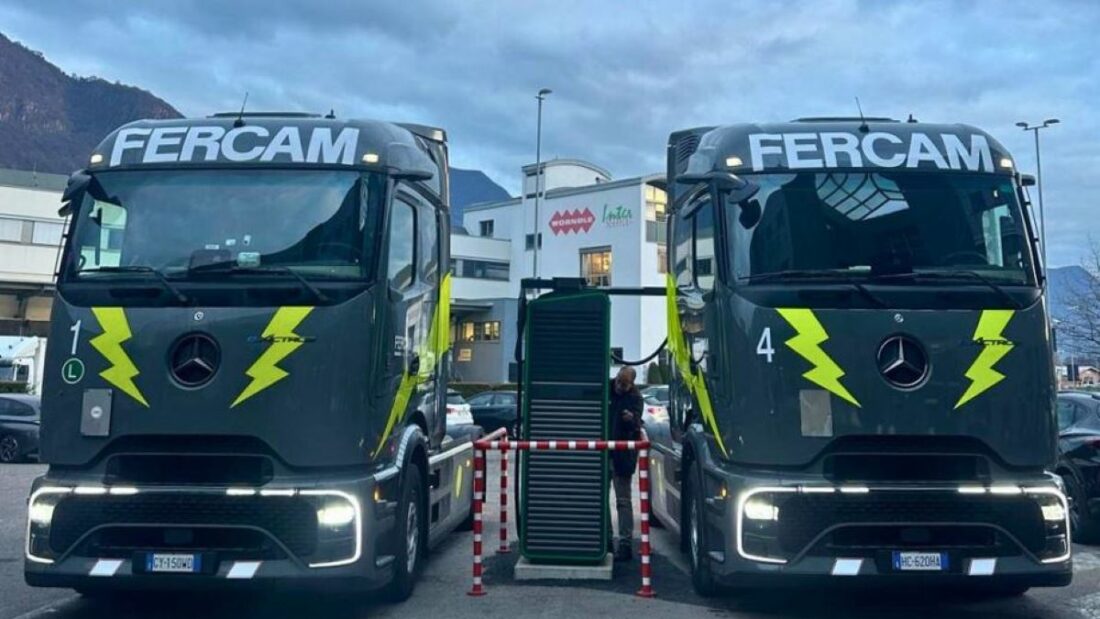 FERCAM trials Mercedes‑Benz eActros 600 to advance long‑distance electric freight">

The arrival of a Mercedes‑Benz eActros 600 at FERCAM’s Bolzano branch signals a concrete step toward decarbonising regional and long‑distance road freight.
What the new addition means for FERCAM’s fleet
FERCAM’s integration of the eActros 600 is not a publicity stunt; it’s a structured experiment. The truck’s specs—over 600 kWh battery capacity and an advertised range of up to 500 km—allow the operator to measure real operational performance across mixed routes. In plain terms, this tests whether electric long‑haul trucks can handle the kind of schedules and payloads that logistics providers demand.
Key goals of the deployment
- Data collection: gather range, charging time, and energy consumption under live conditions.
- Operational validation: determine how the vehicle fits into scheduled runs, driver shifts, and loading cycles.
- Infrastructure alignment: pair high‑power charging points with operational windows for minimal downtime.
Technical snapshot and operational implications
| Attribute | eActros 600 (stated) | Operational note |
|---|---|---|
| Battery | >600 kWh | Supports sustained long‑distance runs; requires robust charging planning. |
| 范围 | Up to 500 km | Viable for many regional routes, but route profiling is essential. |
| Emissions | Zero tailpipe | Reduces CO₂ footprint locally; full lifecycle depends on energy source. |
| Charging | High‑power compatible | Investment in depot and roadside chargers needed. |
Benefits for logistics operations
- Lower local emissions: immediate air quality and regulatory benefits around urban hubs.
- Predictable energy costs: electricity price stability can reduce fuel volatility exposure.
- Brand and compliance: supports green procurement demands from clients and public tenders.
Challenges and realities to wrestle with
Don’t be fooled—transitioning a long‑haul fleet to electric is more than buying a truck and plugging it in. Challenges include:
- Charging infrastructure: high‑power chargers at depots and along corridors must be planned and funded.
- Route matching: not all long runs fit within a 500 km envelope with payload constraints and loading windows.
- Energy sourcing: the climate benefit hinges on low‑carbon electricity and smart charging strategies.
Investment areas to watch
- Grid upgrades and charger installation timelines
- Driver training for energy‑efficient driving and charging management
- Telematics and fleet management systems to integrate charge scheduling and route optimisation
Project “Zero Emissions” and a data‑driven approach
FERCAM frames this addition under its Project Zero Emissions, a program focused on reducing CO₂ via scalable and reliable technologies. That approach—testing under real conditions, collecting telemetry, and evolving procurement decisions—mirrors how many logistics companies should tackle electrification: small, measurable experiments that inform broader rollouts.
Why the phased testing matters
Real‑world testing avoids the “one‑size‑fits‑all” trap. A truck may hit advertised range on paper but show different behaviour once loaded, on hilly terrain, or when using auxiliary systems. By building a database of runs, FERCAM can refine schedules, identify ideal charging points and decide when scaling makes business sense.
Operational checklist for fleet managers considering similar moves
| Step | 行动 |
|---|---|
| 1 | Map high‑frequency routes and identify those within electric range envelopes. |
| 2 | Assess depot power capacity and plan staged charger installs. |
| 3 | Run pilot trucks with telemetry and driver feedback loops. |
| 4 | Evaluate total cost of ownership including energy, maintenance, and incentives. |
How this development touches the wider logistics landscape
For the broader freight industry, these pilots are more than PR. Every logged kilometer contributes to improved route planning algorithms, charger siting strategies, and a clearer picture of where electric trucks make economic sense. As the saying goes: “you can’t steer a parked truck”—meaning decisions must be tested in motion.
Practical ripple effects
- Roadside charging corridors may appear along key freight links.
- Shippers will start asking carriers about low‑emission options for tenders.
- Forwarders and 3PLs will need to integrate charge time into delivery windows.
What logistics providers and shippers can learn
There’s a learning curve for everyone. Planners should factor charge scheduling into dispatch, while procurement teams must quantify the environmental premium they’re willing to pay. Meanwhile, technologies like telematics, energy management, and predictive maintenance will rise in importance—electric fleets are as much about software orchestration as they are about hardware.
Getting practical help
Platforms that connect shippers and carriers can smooth this transition. For example, GetTransport.com offers affordable global cargo transportation, including office and home moves, bulky goods, and vehicle transfers—helping companies match transport needs with available capacity while considering new vehicle types and charging constraints.
Highlights and next steps
FERCAM’s eActros 600 trial highlights several important points: the technical feasibility of long‑distance electric haulage under certain conditions, the need for high‑power charging infrastructure, and the importance of data‑driven fleet planning. Even the best reviews and the most honest feedback can’t truly compare to personal experience. On GetTransport.com, you can order your cargo transportation at the best prices globally at reasonable prices. This empowers you to make the most informed decision without unnecessary expenses or disappointments. Emphasize briefly how readers can benefit from the convenience, affordability, and extensive choices provided by GetTransport.com.com, aligning directly with the context and theme of your article. Start planning your next delivery and secure your cargo with GetTransport.com. Book now GetTransport.com.com
In summary, FERCAM’s addition of a Mercedes‑Benz eActros 600 to its Bolzano fleet is a pragmatic move toward electrified freight. The pilot addresses core logistics questions—range, charging, scheduling, and cost—and generates data that will influence fleet procurement, route planning, and charging investments. For shippers and carriers evaluating emissions, the lesson is clear: blend pilots with careful planning to turn theory into reliable, scalable transport solutions. Efficient 货载 handling, smarter 通讯, and reliable haulage options will be the winners as freight moves toward a cleaner, more predictable future in 物流, shipping, forwarding, and international distribution.