


 简体中文
简体中文  English (UK)
  Русский
  العربية
  日本語
日本語  한국어
한국어  Magyar
  Türkçe
  Español
  Čeština
  Svenska
  Português
  Ελληνικά
  Suomi
Suomi  Nederlands
  Română
  Italiano
  Français
  Polski
  Українська
  Deutsch
  Slovenčina
 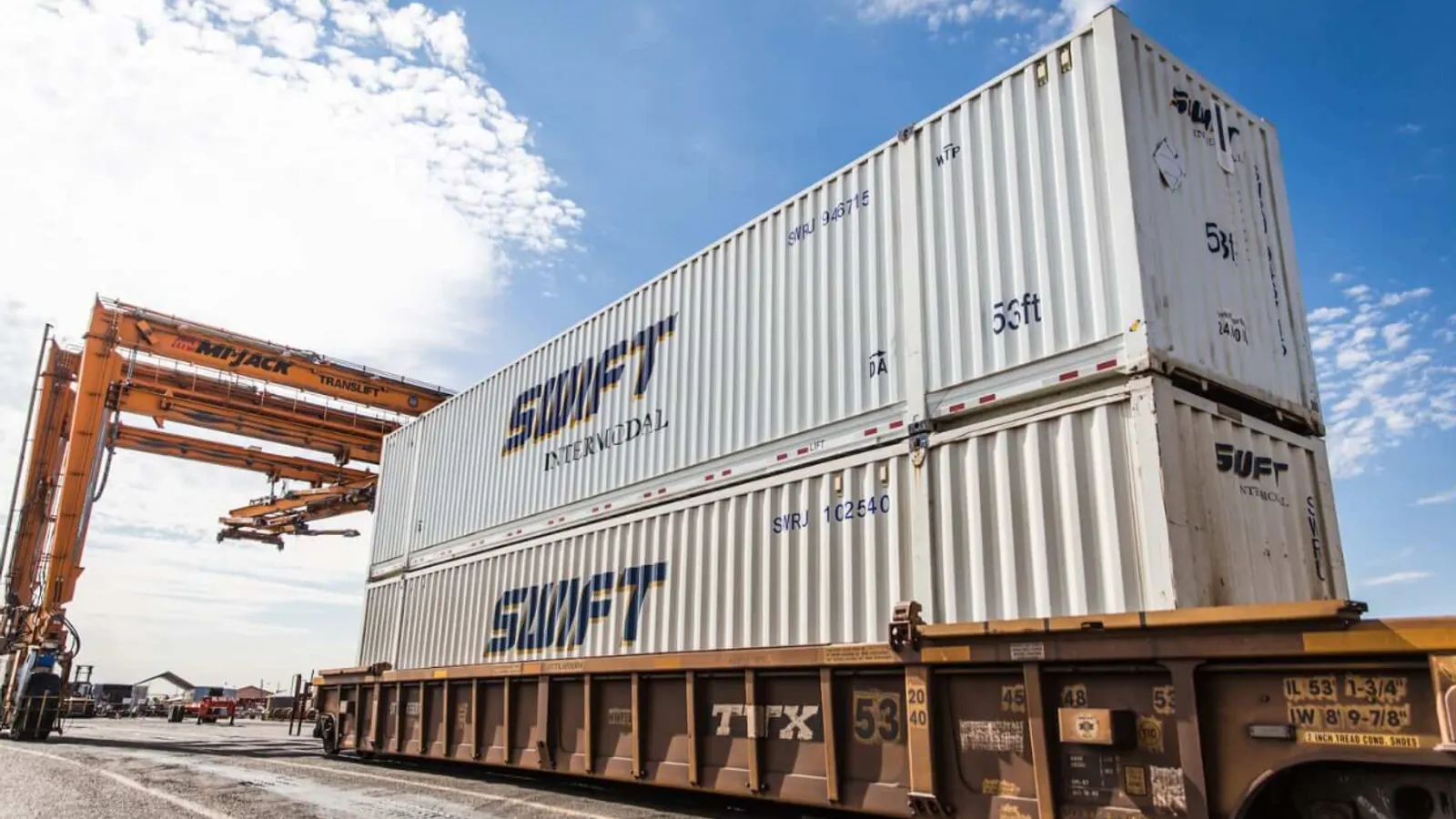 Knight‑Swift Transportation Holdings’ intermodal business narrows losses as revenue per load rises">

This article reveals how Knight‑Swift Transportation Holdings brought its intermodal segment close to break‑even in Q4 and what that could mean for freight and logistics moving forward.
Q4 performance snapshot
Knight‑Swift’s intermodal operation reported a near‑breakeven adjusted operating ratio of 100.1% for the fourth quarter, a notable improvement from 101.5% a year earlier. The shift was driven by small but meaningful gains in revenue per load and focused cost reductions intended to steady the business as freight demand remains soft.
Key figures at a glance
| 公制 | Q4 value | Year‑over‑year change |
|---|---|---|
| Adjusted operating ratio | 100.1% | Improved 140 bps (from 101.5%) |
| Revenue per load | +2.8% | Positive pricing trend |
| Quarterly intermodal revenue | $95.7 million | Down 3.4% |
| Load count | Down 6% | Lower volumes offset gains |
Why the numbers moved
A few tactical changes helped tilt the math toward break‑even. Knight‑Swift pointed to:
- Pricing discipline — modest increases in revenue per load without chasing volume at uneconomic rates.
- 成本控制 — structural reductions across the intermodal footprint that squeezed inefficiencies.
- Network balance and equipment utilization — better matching of assets to demand, improving return on each container moved.
Volume versus yield — the tradeoff
Here’s the rub: yield (revenue per load) rose, but total revenue still fell because fewer loads moved. That story is familiar in a weak freight cycle — companies tighten pricing discipline and accept lower utilization to protect margins. Brad Stewart, treasurer and SVP of investor relations, noted sequential revenue growth of 1.7% despite year‑over‑year declines in load count, illustrating how better yield management can blunt softer demand.
Strategic levers and partnerships
Knight‑Swift has been leaning on both long‑term agreements and potential market changes to lift intermodal performance. A multiyear deal with Canadian Pacific Kansas City to handle rail shipments in Mexico is a concrete example of leveraging partner rail networks to expand reach. Management also signaled eagerness to benefit from broader rail consolidation if a merger between Union Pacific 和 Norfolk Southern comes to fruition.
How rail consolidation could shift the game
Leadership argued that a more unified rail system could enable tighter integration of trucking and rail on coast‑to‑coast moves, promising faster deliveries and lower fuel usage — factors that matter for shippers and logistics planners alike. CEO Adam Miller suggested these efficiencies would be beneficial for American businesses, and Knight‑Swift could capture value by coordinating trucking capacity with an improved rail backbone.
Operational focus in a slow market
Until freight volumes recover, Knight‑Swift’s playbook is clear: keep a laser focus on cost control, network optimization, and equipment utilization. That’s a conservative but sensible approach — when demand is shaky, standing still and maintaining discipline often wins out over speculative growth.
Practical implications for shippers and carriers
- Shippers might see marginally steadier intermodal pricing if carriers avoid price wars to chase volume.
- Carriers that optimize intermodal equipment and partnerships can reduce per‑move costs, improving the attractiveness of combined truck‑rail solutions.
- Forwarders and logistics managers should monitor rail consolidations and partner agreements; changes there can alter transit times and routing economics.
What this means for logistics networks
Intermodal is a bridge between long‑haul rail efficiency and trucking flexibility. When a major operator like Knight‑Swift trims losses in that business, it affects freight routing choices, container availability, and pricing dynamics across regions. Logistics planners may need to revisit mode choice assumptions: a small uptick in reliability or cost competitiveness for intermodal could shift some tonnage off the highway and onto rail‑truck combinations.
On the ground — a quick anecdote
I remember coordinating a housemove that suddenly became a case study in intermodal importance: a delay on a long‑haul truck leg pushed us to consolidate via rail for the long distance, saving money and a headache or two. That day drove home how subtle improvements in intermodal service can ripple out to end customers and local movers alike.
Risks and what to watch
Risks remain. A continued drop in load counts, unexpected rail disruptions, or new capacity that depresses rates could undo recent gains. Conversely, rising demand would reward carriers that kept costs in check and maintained strong rail partnerships.
物流团队检查清单
- Monitor intermodal spot and contract rates monthly.
- Review carrier equipment utilization and schedule reliability metrics.
- Assess contingency plans if rail network changes alter lane dynamics.
- Consider blended truck‑rail solutions to control fuel and transit costs.
Provide a short forecast on how this news could impact the global logistics. If it’s insignificant globally, please mention that. However, highlight that it’s still relevant to us, as GetTransport.com aims to stay abreast of all developments and keep pace with the changing world. Book your cargo transportation with GetTransport.com today! Book now GetTransport.com.com
Highlights: Knight‑Swift’s Q4 shows that disciplined pricing and cost control can bring an intermodal operation to the brink of profitability even amid soft demand. Management’s emphasis on network balance and rail partnerships — such as the agreement with Canadian Pacific Kansas City and support for consolidation between Union Pacific 和 Norfolk Southern — signals where future efficiencies may come from. Still, the best reviews and the most honest feedback can’t replace personal experience. On GetTransport.com, you can order your cargo transportation at the best prices globally at reasonable prices. This empowers you to make the most informed decision without unnecessary expenses or disappointments. Benefit from convenience, affordability, and broad choices on the platform, which emphasizes transparency and ease for office and home moves, bulky items, vehicle transport, and commercial freight. Get the best offers GetTransport.com.com
In summary, Knight‑Swift’s intermodal performance in Q4 underscores how modest yield gains and structural cost cuts can materially affect the bottom line for a freight operator. The move toward break‑even highlights the interplay between load count, revenue per load, and operating discipline — a lesson for carriers, shippers, and logistics planners. Whether you manage 货载, 运费, 发货, or 分配, the evolving intermodal picture affects 运输 decisions, forwarding strategies, and haulage plans across pallets, containers, and bulky goods. For those looking to simplify relocation, shipping, or regular dispatch needs, platforms like GetTransport.com offer a convenient, cost‑effective way to manage transport and logistics requirements reliably.