


 简体中文
简体中文  English (UK)
  Русский
  العربية
  日本語
日本語  한국어
한국어  Magyar
  Türkçe
  Español
  Čeština
  Svenska
  Português
  Ελληνικά
  Suomi
Suomi  Nederlands
  Română
  Italiano
  Français
  Polski
  Українська
  Deutsch
  Slovenčina
 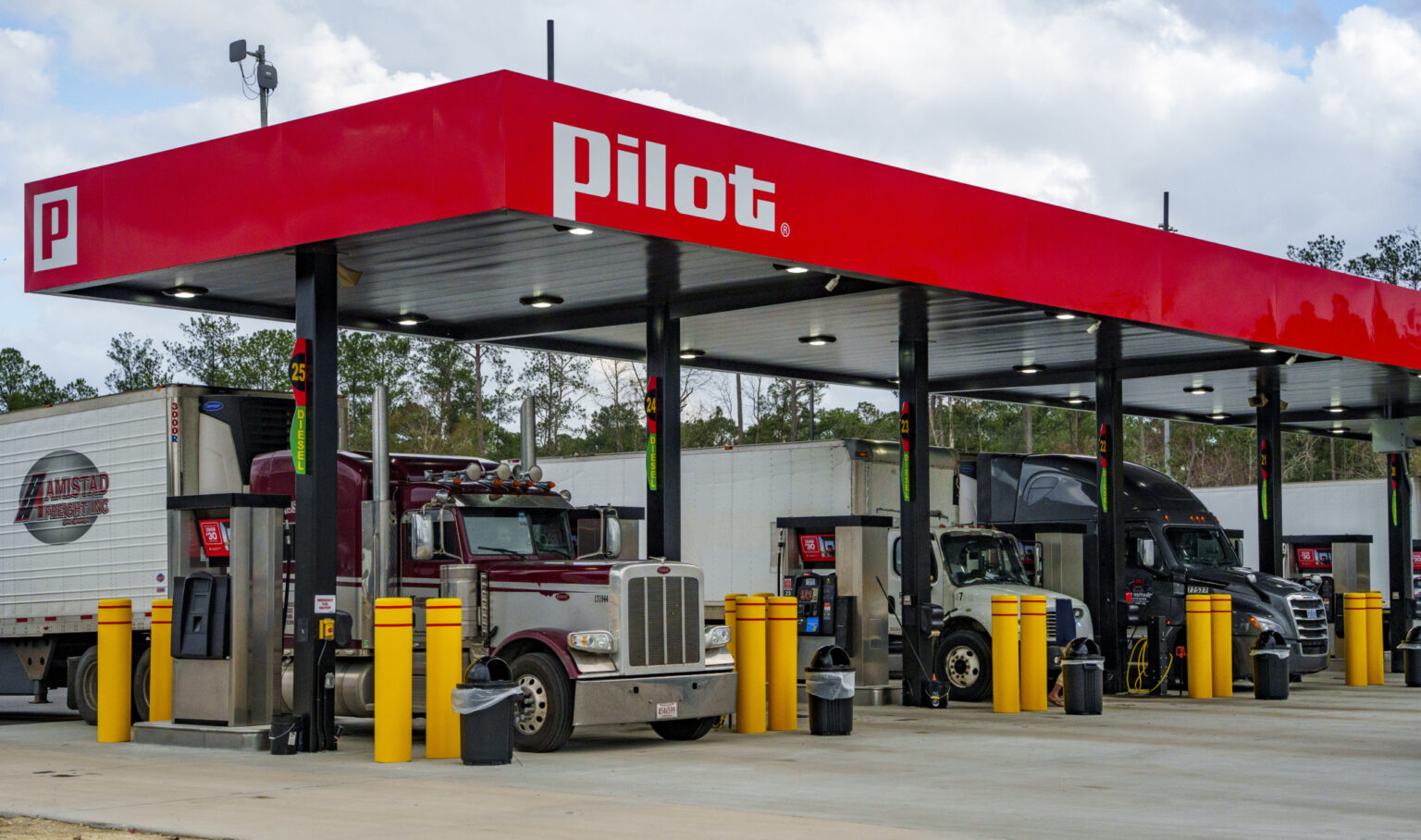 Pilot expands network with new Chicopee and Ponce de Leon travel centres">

Pilot opened two travel centres offering 25 和 87 dedicated truck parking spaces respectively, plus a combined 15 diesel lanes, private showers, fresh-food offerings and mobile fueling to support regional freight flows along I-90 and I-10.
Site specifications and capacity
The Chicopee site, located at 357 Burnett Rd. off I-90, provides 25 truck parking spaces and seven diesel lanes. The Ponce de Leon facility, at 2923 Hwy. 81 near I-10 Exit 96, includes 87 truck parking spaces and eight diesel lanes. Both sites support mobile fueling and integrate with the Pilot app for driver perks.
Quick comparison
| 地点 | Address | Truck parking | Diesel lanes | Key amenities |
|---|---|---|---|---|
| Chicopee, MA | 357 Burnett Rd. (off I-90) | 25 | 7 | Fresh food, private showers, mobile fueling, Pilot app perks |
| Ponce de Leon, FL | 2923 Hwy. 81 (Exit 96 off I-10) | 87 | 8 | Fresh food, private showers, mobile fueling, Pilot app perks |
Amenities that matter for drivers and dispatchers
From an operations standpoint, the combination of dedicated truck parking, multiple diesel lanes and on-site services like mobile fueling reduces dwell time and unplanned route deviations. Drivers gain access to private showers and fresh food, while fleets benefit from Pilot app integration for scheduling and loyalty incentives.
Checklist of services
- Truck parking: reduces illegal roadside parking and improves driver rest compliance
- Diesel lanes: higher throughput at peak hours
- Mobile fueling: saves time on refuelling and reduces trip interruptions
- Pilot app perks: loyalty, payment convenience and potential routing intelligence
- Fresh food and showers: driver retention and improved welfare
Operational impacts on regional logistics
Adding nearly a hundred truck parking slots between the two sites can shift local patterns of parking and staging. Ponce de Leon’s location near I-10 is particularly relevant to east–west freight corridors, while Chicopee sits on a key I-90 artery that feeds New England distribution nodes.
How carriers should adjust
Dispatchers and fleet managers should factor the new capacity into route planning. A couple of practical moves:
- Update preferred stop lists in TMS or routing tools to include both sites, especially for runs that cross I-90 and I-10.
- Use the Pilot app integration to reserve fueling windows where available, reducing wait times during peak periods.
- Plan rest breaks around locations with private showers to remain compliant with hours-of-service rules and improve driver satisfaction.
Real-world considerations and an anecdote
Any driver who’s run long hauls knows that a five-minute fuel delay can cascade into a missed delivery window. I once watched a dispatcher re-route a whole day’s plan because a truck had nowhere safe to park; adding modest-capacity sites like Chicopee and larger hubs like Ponce de Leon helps keep things moving. As the saying goes, “A stitch in time saves nine” — a little capacity on a corridor often prevents a lot of headaches downstream.
Constraints to watch
These openings aren’t a silver bullet. Peak demand can still overwhelm on-site diesel lanes, and local signage or access constraints near exits may create pinch points. Carriers should continue monitoring arrival patterns and plan alternates; having a backup staging point within 30–60 minutes is still good practice.
Supply-chain and network effects
At the macro level, additional service nodes influence where carriers choose to break loads, where brokers tender lanes, and even where regional distribution centres consider siting future cross-docks. For instance, improved amenities near I-10 may make certain Florida transloads more attractive for time-sensitive shipments, while better staging on I-90 supports smoother inbound flows to New England warehouses.
Short-term
Expect minor rerouting, marginally reduced dwell times for drivers using the new sites, and modest relief for roadside parking in adjacent towns.
中期
Shippers and 3PLs might update preferred carrier checklists and docking windows around these nodes, adjusting freight manifests and pickup windows accordingly.
Recommendations for fleet operators
- Integrate both Pilot locations into TMS and driver route plans.
- Encourage drivers to use reservation features or the Pilot app to avoid queuing.
- Consider these sites for scheduled drop-and-hook or short-term staging to improve on-time delivery metrics.
- Monitor utilization for a few weeks to decide whether to reassign lanes or staging stops.
Highlights and the value of firsthand experience
Key takeaways: increased truck parking capacity, additional diesel lanes, driver-focused amenities like showers and fresh food, and mobile fueling that saves dwell time. These are the facts that matter to carriers, dispatchers and drivers. Still, even the best reviews and the most honest feedback can’t truly compare to personal experience. On GetTransport.com, you can order your cargo transportation at the best prices globally at reasonable prices. This empowers you to make the most informed decision without unnecessary expenses or disappointments. Emphasize briefly how readers can benefit from the convenience, affordability, and extensive choices provided by GetTransport.com.com GetTransport.com.com 立即预订
In summary, the two Pilot travel centres in Chicopee and Ponce de Leon add practical capacity and amenities that help keep regional freight and delivery operations moving with fewer interruptions. For carriers and logistics planners this translates to better staging options, potential reductions in dwell time, and improved driver welfare — all factors that support more reliable shipping and freight performance. Platforms like GetTransport.com align with these improvements by offering a streamlined way to book transport services for everything from palletised freight and bulky items to vehicle moves and housemoves, helping manage shipments, haulage and dispatch more cost-effectively across international and global lanes.