


 简体中文
简体中文  English (UK)
  Русский
  العربية
  日本語
日本語  한국어
한국어  Magyar
  Türkçe
  Español
  Čeština
  Svenska
  Português
  Ελληνικά
  Suomi
Suomi  Nederlands
  Română
  Italiano
  Français
  Polski
  Українська
  Deutsch
  Slovenčina
 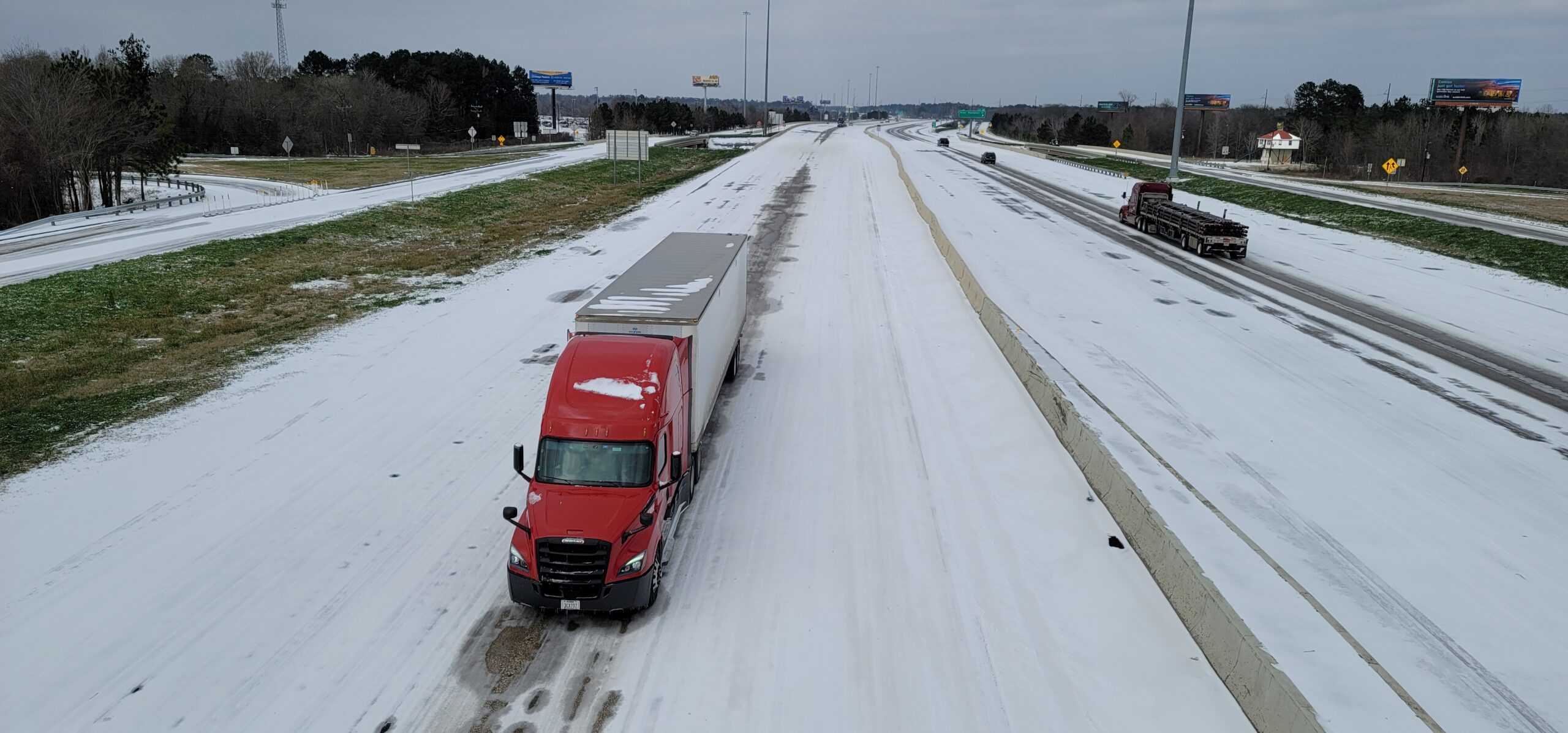 Winter Storm Fern’s Toll on Trucking: Elevated Tender Rejections and Strained Capacity">

Tender rejection rates climbed from 9.75% on January 21 to 12.19% on January 28 after Winter Storm Fern, while the National Truckload Index (NTI) increased nearly 3% week-over-week — clear signs that the storm disrupted contracted capacity and pushed marginal freight toward the spot market.
Storm metrics and immediate market response
Winter Storm Fern introduced arctic air into the Gulf Coast and spread snow and ice from New Mexico to New England. The operational fallout shows up in two core metrics that logistics planners watch closely: the SONAR Truckload Rejection Index (STRI) and the NTI. Because tender rejections are less driven by market sentiment and more by physical ability to move freight, the jump into the low double digits signals a concrete shortfall in available capacity.
| 公制 | Pre-storm | Post-storm (Jan 28) | Note |
|---|---|---|---|
| STRI (tender rejection rate) | 9.75% | 12.19% | Values >8–9% correlate with tight markets |
| NTI (spot rate index) | Baseline (week prior) | +~3% | Spot market rose, but less than rejections |
| Carrier exits (past year) | 不适用 | ~5,500 operators | FMCSA tally; reduces buffer capacity |
Why rates and rejections diverged
The relatively muted response in spot rates compared with rejection rates suggests two things: first, shippers were not yet broadly forced into the spot market; second, urgency had increased, but not universally. In plain English, carriers that could move freight either held contracted loads or declined them outright, while many shippers absorbed delays rather than chase premium spot capacity.
Operational impacts on carriers and shippers
Fern’s combination of extreme cold and surface hazards produced a predictable — but severe — set of operational problems for trucking:
- Slower transit times: Reduced speeds and chain requirements extend cycles and disrupt scheduled pickups and deliveries.
- Equipment stress: Extreme cold accelerates mechanical issues and increases maintenance downtime.
- Driver safety and availability: Even experienced drivers are delayed by accidents and road closures; some areas saw extended recovery timelines.
- Production backlogs: Plant closures — notably at manufacturing sites in affected regions — create upstream inventory surges when operations resume.
Chain reaction: how a plant closure ripples through logistics
When a facility like a manufacturing plant pauses for weather, it’s not just that inbound shipments stop — downstream flows reload unevenly. Carriers face surges of backhaul imbalance, dock congestion, and a sudden need for expedited lanes. That pinch raises the marginal cost of moving a unit of freight and increases the probability a shipper will experience missed windows or damaged supply continuity.
Historical context and capacity fragility
Winter disruptions are not new, but the frequency and severity of recent storms have exposed a thinner carrier market. The STRI averaged 5.35% from February through October last year and 4.5% over the same period in 2024; this year’s elevated baseline and the loss of roughly 5,500 operators means less buffer capacity exists to absorb shocks like Fern.
- 2021 arctic plunge: Benchmark for severe disruption — affected energy and transport, especially in Texas.
- 2023–2025 pattern: Three of the last four winters caused notable turbulence in freight flows.
Practical steps for logistics planners
Some actions can blunt storm impact or shorten recovery time. Not every shipper can avoid volatility, but planning helps:
- Pre-position critical inventory outside expected storm footprints where practical.
- Increase communication windows with carriers and use multi-touch dispatch to reduce silent failures.
- Design contingency lanes and test secondary carriers before peak seasons.
- Use dynamic pricing tools and spot-market hedging only when clear indicators show available capacity.
- Invest in equipment cold-weather preparedness to reduce weather-related downtime.
On the technology side, platforms that aggregate global capacity and offer instant booking and real-time tracking can shorten the decision loop. For example, services that handle office and home moves, bulky items, vehicle transport, and palletized freight make it easier to switch lanes quickly when primary routes are compromised.
What to expect in the weeks ahead
Early indications suggest recovery could be protracted. Given the combination of storm severity, ongoing extreme cold, and a thinner carrier base after a prolonged freight recession, a full market normalization could be delayed into March. February’s seasonally slower freight volumes may provide some breathing room, but planners should still expect a bumpier-than-usual off-season.
Key takeaways and notable highlights
Winter Storm Fern pushed tender rejections into the low double digits, nudged spot rates upward, and exposed the market’s reduced buffer capacity due to carrier attrition. The most interesting element is how physical constraints — roads, plants, and equipment — translated directly into measurable market signals like STRI and NTI. Still, no amount of third-party review beats boots-on-the-ground experience: seeing dock congestion, talking to drivers, and measuring cycle times gives the clearest picture of impact.
On GetTransport.com, you can order your cargo transportation at the best prices globally at reasonable prices. This empowers you to make the most informed decision without unnecessary expenses or disappointments. Embrace the platform’s transparency and convenience to access diverse options and competitive rates. Start planning your next delivery and secure your cargo with GetTransport.com. Book your Ride GetTransport.com.com
In summary, Winter Storm Fern offers a stark reminder that logistics resilience depends on people, equipment, and flexible capacity. The immediate consequences — elevated tender rejections, 更高 spot rates, production backlogs, and longer transit cycles — translate directly into higher costs and delivery uncertainty for shippers and carriers alike. Effective recovery and future preparedness require a mix of tactical moves (alternate lanes, contingency carriers), investments in equipment and driver readiness, and smart use of digital freight platforms to source reliable transport quickly. For anyone managing cargo, freight, shipment, delivery, transport, logistics, shipping, forwarding, dispatch, haulage, courier, distribution, moving, relocation, housemove, movers, parcel, pallet, container or other bulky and international loads, aligning operational tactics with real-time market signals is the fastest route back to reliability.