




Begin with a focused 90-day pilot at one inbound distribution center: deploy autonomous drones equipped with rfid readers to scan pallets during unloading, automatically updating your transport data in your WMS and ERP. This addition can cut dock-to-stock time by 25-40% and raise inventory accuracy from 95% to 99% in the first quarter, positioning the company to replicate the same gains across other sites.
Define a project with a clear approach and measurable KPIs, aligning drone actions with your existing processes and IT data flows. In addition to piloted tests, focus on implementing timelines that target 20-35% reductions in transport times and 40-60% fewer manual scans. Track inventory accuracy and damage rates, and involve partners across logistics, IT, and operations to deliver solutions that fit your company standards. This setup keeps you poised for rapid scaling while managing risk. It also enables the ability to reallocate labor to higher-value tasks.
Choose a scalable approach that balances autonomous flying and guided piloted support. Deploy an autonomous drone layer for routine scans and inventory checks, and keep a piloted fallback for confined spaces or quality checks. With this mix, the operation remains poised to expand to additional sites and more complex tasks while keeping safety and regulatory requirements in check. Expect minor disruptions at the start, quickly offset by consistent data from rfid-enabled tags and camera analytics.
Develop a partner ecosystem to maximize value: equipment vendors, software providers, and logistics partners must align on open APIs and data governance. Choose an ecosystem that offers integrated hardware, rfid readers, and fleet software as solutions with minimal integration friction. In addition to hardware, invest in a cloud-based data pipeline so your company can track real-time drifts in processes and adjust the approach accordingly. This keeps your drone program poised for rapid ROI while maintaining security and compliance.
Track ROI with a rolling dashboard and governance that keeps partners aligned across sites. When you prove measurable gains on a single project, replicate the pattern across the network and extend the autonomous layer to additional warehouses and transport hubs. The outcome is tighter processes, faster transport cycles, and clearer value for customers and suppliers alike.
Drones and Value Chains: Beyond the Hype
Begin with a 90-day pilot that ties drone use to one KPI, such as inventory accuracy or last-mile speed, and plan a broader rollout only if the target is met. Define a clear hypothesis, a budget, and a cadence for review; use dashboards to track progress in real time and share results with customers and partners.
Map the value chain and pick three concrete use cases where drones pay off: inbound replenishment to warehouses, remote inspections of high-value assets, and on-site asset monitoring for maintenance windows. There, set data collection points, review cycles, and expected payloads to ensure the plan stays tight.
Prefer driver-operated drones for complex sites and autonomously for repeatable routes; this reduces the need for full automation upfront while delivering early ROI. Build safety checklists and ensure regulatory compliance from day one.
Build the infrastructure: reliable communication links, secure charging racks, weather-aware scheduling, and a data layer that ties flight logs to ERP and dashboards. This foundation supports both performance measurement and rapid recovery after disruptions.
Enable traceability with blockchains and a common data model so data from flights, deliveries, and inventory actions stays consistent across suppliers, carriers, and customers. This plus enhances recall readiness and audit transparency.
Launch a concise training program: 2–4 days for operators, ongoing coaching, and a monthly safety and maintenance plan. Provide continuous support through a dedicated operations team and clear escalation paths, plus behavior monitoring to reinforce safe, consistent practices across roles from pilots to managers.
Track what matters with dashboards that surface the same metrics for all stakeholders: dispatch lead times, drone uptime, payload accuracy, and customer-facing delivery ETA. Communicate results regularly to customers to maintain confidence and drive collaboration.
Late adopters can gain momentum by starting with a small, controlled site and a tightly scoped ROI study, then expanding in 2–3 waves. Pair drone tooling with vendor partnerships to accelerate scale and limit upfront capital expenditure.
From the perspective of the value chain, drones create a plus when used to improve order accuracy, reduce late shipments, and shorten planning cycles. What matters is the discipline–plan the use cases, align on data sharing, and build dashboards that translate flight data into actionable decisions for customers and internal teams, with clear communication across suppliers and partners, enabled by the technology.
Inventory Visibility: Real-Time Stock Counts via Aerial Inspections
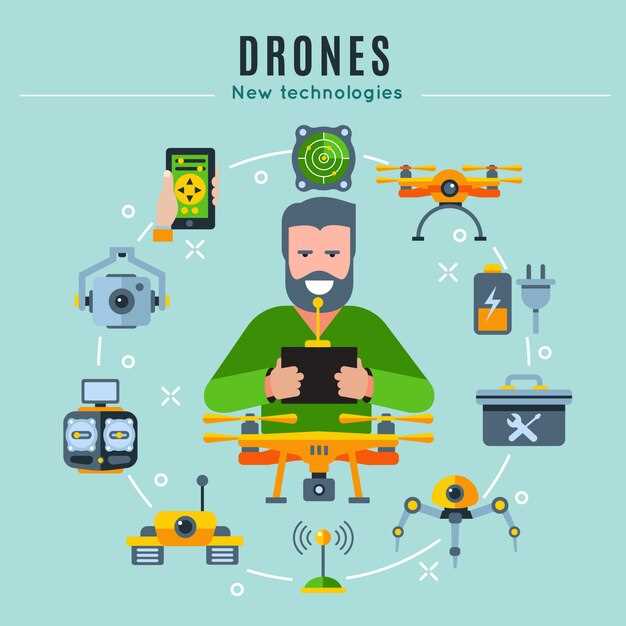
Starting with a clear business case, secure funding for a pilot that tests drone-based stock counts in one distribution center. Deploy driverless aerial vehicles that map racks, count SKUs, and flag discrepancies in real time, feeding updates to the WMS within minutes, which reduces manual touching and frees staff for value tasks. Expect 15–25% faster cycle counts and 20–30% fewer counting errors in the first quarter, boosting on-shelf availability and order accuracy.
Set up a controlled pilot in a single facility to validate accuracy against manual counts. Train operators and internal champions through a structured program of 2-hour sessions weekly for the first month, then quarterly refreshers. The program includes formal training modules to reinforce best practices. Define setting windows for flights during low-activity periods to minimize interference with picking. Run a pilot fleet of driverless vehicles and validate integration with the WMS and ERP so counts flow automatically to the inventory module.
Being able to run flights during off-peak hours reduces congestion and guards safety. With insights on cycle accuracy, SKU behavior, and aging signals, the team can adjust replenishment rules in near real time. Leadership dashboards summarize variance by aisle, by supplier, and by contract terms, helping track value at a glance. The pilot's results should demonstrate a credible ROI to justify broader deployment. An eforum shares progress and insights across sites, accelerating learning and issue resolution.
Across industries such as retail, manufacturing, chemicals, and logistics, aerial stock counts provide consistent stock visibility and faster response to changes in demand. The approach pairs with RFID or barcode scans where needed and scales to multi-site networks through a shared data model. It supports providing continuous visibility for fulfillment centers, cross-docks, and field operations while coordinating with trucks to align inbound and outbound flows.
Governance and contracts: Draft vendor contracts that cover safety, flight authorization, data ownership, and API access. Establish security and compliance playbooks, including privacy controls and flight logs. Leadership secures executive sponsorship and budget for a rollout across additional sites, and a staged plan helps expand after predefined milestones. The program uses clear metrics to demonstrate value before scaling further.
Scale-ready plan: with a proven ROI, the program is poised to scale to 30 sites within 12 months, supported by a centralized data model, standard operating procedures, and a governance board. Expand the fleet with a mix of vehicles and trained pilots or service partners, and align funding for stage two. The result is a unified, real-time view of inventory that strengthens control across facilities and industries while improving coordination with logistics networks and trucks.
Warehouse Operations: Reducing Cycle Time with Aisle Scans

Launch a 12-week ai-powered aisle-scan trial in a single distribution center to cut cycle time by 25–35%. Deploy drones with high-resolution cameras, barcode readers, and RFID tags to sweep aisles, verify stock in-place, and flag misplacements before picks proceed. A real-time feed streams to the warehouse management system, and there the system triggers alerts when discrepancies exceed a two-slot threshold.
Pair the scan data with an ai-powered vision model that recognizes exact SKUs, batch numbers, and expiry indicators. This streamlines tasks by guiding pick paths, updating slot statuses, and reducing manual recounts. The power of automated scans cuts travel distance and increases throughput, delivering measurable gains in distribution center velocity.
In practice, a case study across three facilities showed cycle-time reductions of 20–40% in core operations. The system tracks precision to a degree, lowering mis-picks to a minor fraction and boosting inventory accuracy from 93% to 98% within a quarter. Across over a million SKUs handled daily, the gains compound as standardization spreads.
Implementation steps include selecting a minor zone to pilot; align drone hardware with your existing WMS and ERP; define KPI sets: cycle time, pick-rate, accuracy, safety incidents; schedule a 6–8 week calibration phase; train staff; establish escalation paths for exceptions. Use a single solution for inbound and outbound scans to support streamlining operations. Ensure safety protocols cover hazardous zones, and deploy geofencing to keep drones away from humans when needed.
Data governance relies on blockchains to secures data provenance, making audits straightforward and audit trails immutable. This adds trust for internal teams and external partners. A security layer encrypts telemetry, and access controls limit operator exposure during hazardous tasks. Run the trial in a dedicated test environment to protect production data.
Beyond efficiency, the approach benefits society by reducing repetitive strain and minor injuries for warehouse staff, freeing them for more skilled tasks. The ai-powered solution balances manual and automated workflows, supporting developing operations staff to climb the skills ladder, from basic scanning to complex problem solving. The shift helps meet growing demands and keeps distribution competitive in a tight market.
To scale, run parallel trials in additional facilities, adjust route logic, and gradually expand to handle more SKU families. Consider a phased rollout by degree of complexity; track ROI, and plan for a multi-center deployment that can process a million items per day. The power of automation makes the system poised for long-term adoption, with partners from logistics providers to manufacturers benefiting from this solution. The approach remains ready for blockchains integration and coordination with last-mile networks.
Site Inspections and Safety: Monitoring Infrastructure in Hard-to-Reach Areas
Implement a piloted drone inspection program with RFID-tagged assets to verify structural integrity before ground teams enter.
This approach cuts road travel, lowers exposure to hazards, and speeds up data collection.
Drones capture dynamic imagery and thermal data, enabling streamlining of maintenance across industries such as energy, telecom, and transport.
Tamper-proof enclosures and secure data channels ensure critical components remain intact during inspection, reducing risk of tampering.
Use RFID to tag assets, monitoring status and reducing misplacements, while automated alerts flag anomalies before they escalate.
Field teams gain a sense of safety from remote monitoring, enabling a robust safety program and tighter control of access zones.
Develop a year-long ramp of capabilities by sectors, building on a dynamic risk model and real-time feedback from pilots and sensors.
This program covers above-ground towers, road corridors, and other hard-to-reach infrastructure, delivering clear visibility without unnecessary exposure.
To maximize value, align pilots with regulatory requirements, data governance, and a role for local operators in decision loops, ensuring that pilots, technicians, and managers stay coordinated.
| Asset Area | Data Delivered | Operational Benefit | Recommended Frequency |
|---|---|---|---|
| Bridges and towers | High-res imagery, thermal maps | Early fault detection, reduced on-site visits | Quarterly |
| Road and rail corridors | Aerial mapping, LiDAR | Improved route safety, reduces manual patrols | Semi-annual |
| Pipelines and rights-of-way | Corrosion indicators, thermal anomalies | Targeted maintenance, reduced downtime | Annual |
| Underground conduits (where accessible) | 3D models, sensor readings | Precise locating, safer excavation planning | As needed |
| Hard-to-reach substations | Live video, GPS-tagged assets | Security checks, faster permit validation | Monthly |
Delivery and Last-Mile Feasibility: When Drones Add Value to Freight Flows
Start with a regulated pilot in a defined corridor, deploy driver-operated drones, and use real-time tracking to prove tangible gains within months.
Across shipments that demand speed or have high value, drones complement ground routes by shortening handoffs and increasing visibility. In today’s modern networks, this approach relies on clear roles, a robust procurement process, and dedicated infrastructure to deliver measurable outcomes while satisfying regulatory requirements.
Addressing challenges requires a practical blueprint: define the point where drone legs add value, assess demand signals, and prepare alternative solutions for weather or airspace constraints. The reality is that drone success depends on a steady cadence of testing, data, and collaboration across teams that manage operations, safety, and customer experience.
- Factors and regulatory: secure permits, airspace permissions, altitude limits, and continuity plans that minimize disruption to ground traffic.
- Roles and stakeholders: operators, carriers, receivers, and regulators align on who manages payload, handoffs, and exception handling.
- Infrastructure needs: ground hubs, charging stacks, secure drop zones, and protected routes to reduce delays.
- Demand signals: prioritize time-sensitive, high-priority, or hard-to-reach shipments where drone legs reduce total cycle time.
- Threats and safety: model weather, line-of-sight requirements, night operations, and obstacle detection to protect people and assets.
- Case and validation: use controlled pilots to compare drone and truck performance across similar routes and shipments.
- Define the corridor and service scope: select urban and peri-urban routes with reliable airspace metadata and known ground-handling requirements.
- Set performance targets: on-time delivery rate, average flight time, payload utilization, and real-time visibility latency.
- Plan the phased rollout: starter phase with one facility and a limited number of shipments, followed by expansion to another site and additional SKUs over 6–12 months.
- Integrate with procurement and logistics systems: ensure order release, inventory flags, and carrier handoffs feed into drone scheduling.
- Align with infrastructure providers: guarantee charging capacity, secure landing zones, and contingency routes for outages.
- Monitor behavior and adaptation: track deviations, accident reports, customer satisfaction signals, and operational bottlenecks to adjust quickly.
In a regional case study, a manufacturing network combined drone legs for urgent samples with driver-led routes for bulk shipments. The result: reduced transit time for priority shipments, improved predictability, and lower handling costs. Another sector observed smoother procurement cycles as real-time status updates enabled proactive exceptions, reducing missed deliveries and returns.
What to measure to validate value:
- Service level for time-critical shipments and the average distance saved per drone leg.
- Throughput capacity per hour and per route, accounting for charging and handoff times.
- Regulatory compliance rate, safety incidents, and threat mitigation effectiveness.
- Customer experience metrics tied to last-mile delivery windows and notification accuracy.
- Cost per delivered unit compared to traditional ground-only workflows, including procurement and capital expenditure on infrastructure.
Tip for operators: start small, document the impact across different shipment profiles, and use those findings to refine routing and load-planning strategies. By balancing drone legs with ground movements, the network gains resilience, while teams learn to address the realities of regulatory scrutiny and customer expectations in a coordinated way. This approach helps organizations streamline operations, reduce variability, and unlock new value across multiple worlds of freight flows.
Data Quality and Compliance: Verifying Records and Reducing Audit Gaps
Adopt a centralized data validation workflow that automatically flags anomalies during drone data ingestion. Validate around flight logs, image metadata, and sensor readings across tasks, and verify records before they enter the data package. Implement checks at three levels: ingest, processing, and QA. This approach yields faster reconciliation, significantly reducing audit gaps and delivering the best solution that makes complex data flows easier to manage. It creates a clear pathway for those teams aiming to meet goals and to implement trials and case deployments.
Compliance hinges on verifiable provenance and consistent records across the data lifecycle. Create a full audit trail with versioned data packages, timestamps, and digital signatures to facilitate auditing across departments. Align retention and privacy controls with regional rules, especially for cross-border data, and document every change to reduce risk in the case of an external inquiry. By consolidating metadata into a single, tamper-evident package, you minimize the risk of missing records and close gaps that often appear in manual checks.
Operational teams can leverage automated workflows to streamline data flow from the field to the cloud, with dashboards that track accuracy, completeness, and compliance in near real-time. Focus on those data points that drive decision-making: flight logs, battery cycles, precision timestamps, geotags, and sensor calibrations. Use a standards-based schema to support interoperability across suppliers and drones, and keep a close eye on limitations such as missing metadata or inconsistent units. The power of automation shifts those repetitive tasks away from people and accelerates decision-making, enabling faster, more reliable results. This approach supports streamlining across data sources and yields a stronger, faster, more resilient pipeline that reduces rework and strengthens the evidence used in audits.
Roadmap steps include defining data quality goals, piloting a trials program across multiple sites, and allocating labor for governance. Package data with clear versioning, automate checks, and schedule quarterly audits to close gaps before they become exposure. Embrace emerging data types, such as multi-spectral imagery or payload telemetry, and build a flexible road that scales around operations, regulators, and partner ecosystems across worlds.