


 简体中文
简体中文  English (UK)
  Русский
  العربية
  日本語
日本語  한국어
한국어  Magyar
  Türkçe
  Español
  Čeština
  Svenska
  Português
  Ελληνικά
  Suomi
Suomi  Nederlands
  Română
  Italiano
  Français
  Polski
  Українська
  Deutsch
  Slovenčina
 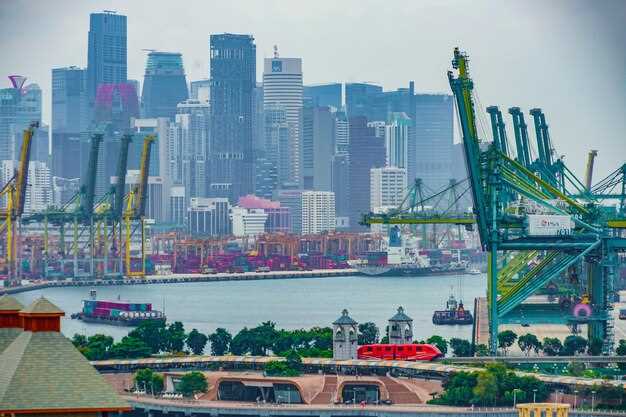 Singapore’s World-Class Ports – Gateways to Global Trade">

Adopt a cross-border freight plan anchored in Singapore’s world-class ports to slash turnaround times and lift capacity, while giving you direct control over critical cargo flows. The port handles about 37 million TEUs annually, with a large share of transshipment that keeps regional supply chains highly fluid and resilient.
Strengthen 第三方 partnerships by offering shared data platforms, predictable berthing, and value-added services such as inland pickup, container repair, and documentation handling to differentiate from competition. A tighter yard planning and real-time berth optimization reduce idle time, improving turnaround for carriers serving americas-bound freight.
This continued automation across quay cranes, automated yard moves, and integrated terminal operating systems boosts efficiency, enabling more capacity without expanding land footprint. The factor for success is not only port throughput but also how well data flows among carriers, shippers, and customs offices to cut dwell time.
To keep the momentum, Singapore will fortify cross-border corridors with unified data standards, expand capacity through phased terminal expansions, and maintain strict cargo control at the gates. The approach will rely on public-private coordination and continued investment that will be crucial for resilience, benefiting shippers, carriers, and economies across the americas and Asia-Pacific.
Plan: Singapore’s World-Class Ports and Global Trade
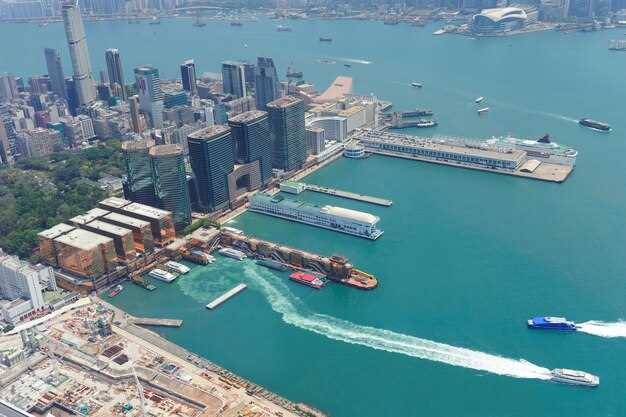
Invest in an integrated port-tech program, pursuing several related initiatives to boost delivery speed across terminals and strengthen Singapore’s gateway role, targeting a 15-20% uplift in container throughput within five years by aligning automation, data sharing, and hinterland links.
Focus on cost-effective, full-scope solutions designed to scale with growing demand while prioritizing sustainable operations and a cleaner environment, providing real-time visibility across the supply chain and reducing turnaround times for ships, cargo, and trucks.
License and compliance play a central role: establish a clear licensing framework for automation, autonomous equipment, and data-sharing platforms to accelerate adoption without compromising safety or security, while standardizing performance metrics across all partners serving the port complex.
Singapore’s ports serve as gateways to markets in the region and beyond; by coordinating several terminals and hinterland connections with other regional hubs, the network remains resilient, delivering reliable delivery windows for exporters and importers while maintaining competitive costs for shippers seeking optimal route options.
Table: Key metrics and actions for plan execution
| KPI | Target / Current | Timeline |
|---|---|---|
| Container throughput | ≈37 million TEUs annually | 2023–2028 |
| Investment in modernization | SGD 20–25 billion | 2019–2029 |
| Emissions intensity (CO2e per TEU) | −20% | by 2030 |
| Digital innovations deployed | 10+ initiatives | ongoing |
| Gateway connectivity | 4 coastal gateways and hinterland corridors | by 2026 |
Reduce Vessel Turnaround Time with Real-Time Berth Allocation
Implement an RBA platform now and begin a three-month trial at two busy berths to measure a 20–35% reduction in average waiting times and a 10–20% drop in quay-crane idle periods.
Integrate live data from AIS, berth status, tide models, and weather forecasts, feeding a dynamic scheduler that adapts in real time.
This approach delivers clearer visibility, minimizes unnecessary shifts, and trims dwell time across dockside operations.
Inputs include ETA, inbound speed, draft, channel constraints, tide windows, and pilot availability.
Resources such as tugs, line handlers, and mooring crews are allocated on a rolling basis.
Rules assign priority to time-critical cargo and to stable arrival windows.
An engine blends deterministic rules with AI forecasts to issue slots with limited reassignments.
Data handling requires an oversight framework, clear data standards, and secure access controls.
Decision rights and escalation paths should be defined in policy documents.
Meetings should include terminal operators, shipping lines, pilots, and authorities to align incentives and reduce conflicts.
Metrics to monitor include berth occupancy, average docking time, and the number of slot changes.
Targets include a 15-25% drop in docking delays and a 5-10% improvement in overall cycle time.
Track cargo volumes and energy use by tug operations; expect fuel savings in the single-digit to low double-digit percentages.
Roll out in phases: pilot at two berths, expand to additional docks once stability is shown.
Publish real-time alerts and dashboards for operators, yard staff, and ship crews.
Establish a formal change-control process to minimize disruption and keep reassignments minimal.
Result: faster turnarounds, higher throughput, and greener operations.
通过数字化数据共享和跟踪来提高货物可见性
采纳一个总部位于新加坡的、可互操作的数据共享骨干网,连接航线、码头、仓库以及公路/铁路路段,提供完整的端到端货物可见性,并为每辆车和集装箱自动更新状态。.
发起跨部门倡议,以标准化数据定义、隐私控制和访问权限,并通过明确的政策和服务级别协议(SLA)加以强化,从而使合作伙伴信任并共享实时事件。.
部署一个实时跟踪层,该层可接收来自车辆 GPS、RFID 扫描和集装箱 ID 的数据,并将其输入到单个仪表板中;这可以提高透明度并缩短各枢纽的停留时间。.
比较分析使托运人和港务局能够比较不同线路和模式的绩效,而总部位于新加坡的运营商则利用此数据来优化路线、减少拥堵并改善客户体验。.
自动化件杂货和混合货物可见性需要专门的数据模型;该系统处理单元级别和单件级别的事件,确保件杂货货物沿链条的完全可追溯性。.
各项政策与全球预期相符,健全的治理框架加强了数据质量、访问控制和审计跟踪,同时鼓励整个生态系统不断改进。大多数利益相关者期望有一致的政策、隐私和数据质量标准,以实现可靠的数据交换。.
利用一个可扩展的、总部位于新加坡的平台来整合托运人、承运人、码头和海关数据;这个生态系统加强了协作,使企业能够快速应对中断,同时支持适应不断变化的监管和市场需求。该方法还允许运营商比较不同市场和货物类型的业绩,从而增强全球贸易的韧性。.
最大化多式联运吞吐量:无缝铁路和公路连接
需要一个统一的实时控制系统,将铁路摆渡车、码头闸口和货运车道连接起来;这种方法不断缩短停留时间,并提高多式联运的可预测性。.
本区域近期在铁路支线升级和公路连接加固方面的投资,为已拥有每年数百万标准箱吞吐量的多式联运系统提供了支持,跨区域供应链已准备好进一步扩张。.
为了最大限度地提高吞吐量,使包装标准与集装箱装卸对齐;在所有货运中实施标准包装,以减少负载变化并优化起重机周期;这可以减少停留时间并提高可靠性。.
一个freightamigos平台可以协调干线铁路和公路运输段,为托运人、货运代理和承运人提供单一链接;在关键交通枢纽站点的早期试点显示,空载回程里程减少了两位数,并降低了碳足迹。.
对区域内联运中间件的投资为港口和物流 सेक्टर创造了机遇;有针对性的战略将公共资本与私人投资相结合,并遵循分阶段的方法。.
对于排序的看法各不相同;有些人赞成近期电气化或更广泛的自动化;该计划将碳减排作为目标,重点是模式转变。.
加强港口安全、合规和复原力规划
采纳统一的、基于风险的安全和韧性计划,整合整个港口网络的物理安全和网络安全、环境保障和连续性计划,以降低风险、简化许可证验证并保护供应链免受中断。该计划为企业、行业和政府带来可衡量的益处,并且可以成为持续业绩的稳定驱动力。.
- 建立治理和许可证驱动的合规性:成立跨部门港口安全委员会,编纂角色,并定义与国家法规和国际最佳实践相符的许可证验证和报告流程;指定公司、当局和供应商之间稳定的数据流,并适应不断变化的安全威胁。.
- 威胁评估和设施加固:排查院区、燃料存储区和转运区存在的薄弱环节;实施分层访问控制,在基本措施之上增设周界围栏、摄像头、照明和入侵检测;每月进行演练,验证响应情况。.
- 数据和技术支柱:部署电子舱单和实时传感器数据;创建安全网络,采用加密通道、标准化数据格式以及与政府机构的API连接;使用异常检测来标记来自内部或外部来源的可疑活动。.
- 运营韧性:制定业务连续性计划,涵盖电力、通信、供水以及关键货物的替代路线;维护冗余系统和环境安全措施;每季度进行事故模拟,每年进行桌面演练,以验证压力下的恢复目标和数据完整性。.
- 流程与合规现代化:标准化安检和货物处理程序;数字化许可证、许可和环境合规等常规验证;实施自动化审计和持续改进循环;监控整个行业的KPI。.
- 人员、培训和文化:为码头装卸队、堆场工作人员和安保团队推出有针对性的培训计划;使用清晰的程序和多语言材料;指定事件处理人员和数据管理员来处理敏感信息。.
- 投资、项目管理与收益:将升级改造视为一个项目组合;明确界定范围、里程碑和风险;分配年度预算,金额达数百万;追踪收益,如减少事故损失、缩短清关时间以及加强环境合规性;向相关国家报告进展情况,并持续征求行业参与者的反馈意见。.
最后说明:积极主动、协调一致的方法能够加强港口安全,降低中断风险,并增强客户、合作伙伴和当局之间的信任。.
推进可持续发展:降低排放和能源使用的实用措施
现在在1-6号泊位安装岸电,并在未来五年内扩展到所有活跃的码头,以便在靠泊期间减少40-60%的船载排放,并降低附近社区的噪音,从而有益于环境,并确认新加坡作为全球贸易门户的角色。.
电气化码头起重机和堆场设备,配合再生制动,并部署岸边电池储能。结合节能型暖通空调和由智能控制系统管理的 LED 照明,将港口年度能源消耗降低约 25–40%。.
新加坡地理位置优越,是连接东南亚地区和美洲的增长门户之一。托运人和承运人发出呼声,要求可靠、低排放的交付和更快的路线。为了满足这些信号,港口生态系统将依靠数字工具、机器人技术和定制程序,以帮助运营商更清洁、更智能地运营。.
- 靠泊时使用岸电可以减少 40–60% 的燃油空耗和二氧化碳排放;安装强大的电气基础设施和标准化连接器端口。.
- 将码头起重机和堆场牵引车电气化;用能量回收系统改造现有RTG; 目标是到2030年实现75%电动驱动普及率,并在各码头分阶段推广。.
- 船坞微电网结合了太阳能光伏、电池储能和备用发电机组,为关键负载供电;在高峰时段将柴油发电机组的使用量减少超过50%。.
- 通过传感器升级照明和建筑系统;预计用电量将下降 30–40%,并为船舶和员工提供更好的气候控制。.
- 在拥有燃料补给基础设施的地区,采用低碳燃料;鼓励使用可使用液化天然气或氢气的船舶,并确保安全、可扩展的供应链。.
- 部署机器人技术用于堆场操作、起重机操作和集装箱跟踪;提高周期时间,减少空闲集装箱移动,将每台起重机每个班次的起重能源消耗降低 15–25%。.
- 使用 freightamigo 风格的路线规划工具来协调托运人、承运人和交货时间;减少空驶里程并缩短交货时间,从而提高速度并降低货运成本。.
- 实施数字化仪表板,汇总来自数百万个传感器的数据,以预测需求、快速检测能源浪费并指导持续改进,从而在时间规划前增强韧性。.
- 为托运人和承运人量身定制的计划,以整合交付、促进高效路线规划并减少空驶里程; 更快的交付和更高的整体效率。.
- 加强区域货运走廊建设,连接东南亚门户与美洲,在支持增长的同时保持较低的能源强度。.