Get The App


Author
The rise of digital nomadism is transforming the travel industry, offering a great opportunity for those who adapt. Digital nomads seek work-friendly destinations with cultural richness, and meeting these needs will position your business as a trusted choice. Now is the time to align your services with this growing trend and tap into the expanding market of remote workers eager to explore the world.

What Is Freight Consolidation? A Complete Guide to Consolidated Shipping
Recommendation: Consolidate shipments to cut freight costs and simplify logistics. Freight consolidation blends multiple smaller consignments into one move that optimizes cost and efficiency, delivering savings on fuel, detention and handling, while maintaining service levels. Knowing these basics helps planners set clear goals and avoid delays, making the process more predictable. This framework helps teams make decisions faster. How it works in practice: carriers blend several orders onto a single truck or container, guided by routes and schedules. The gains come when you regularly evaluate lanes, frequency, and load profiles; the approach optimizes routing and loading, while cutting
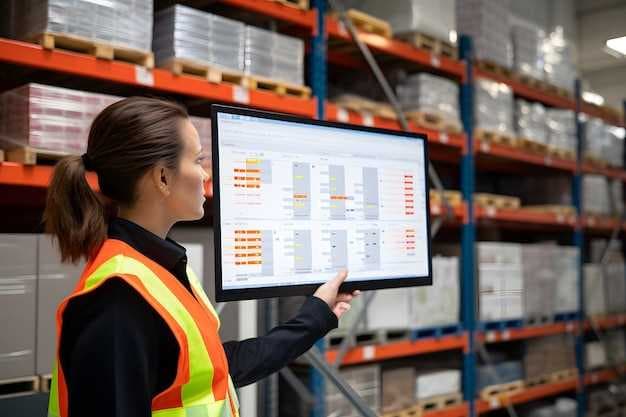
Key Benefits of Warehouse Management Analytics - Efficient Operations
Implement a real-time KPI dashboard to analyse throughput, cycle time, and pick accuracy, and set automatic alerts to trigger actions within minutes. This delivers immediate visibility into where bottlenecks appear and enables operations to respond before stock deltas or mispicks accumulate, keeping lines flowing and docks ready for the next load. With this foundation, the functionality expands beyond basic counts to precision -level insights across zones, lanes, and carriers. Users can drill down by location, order, or picker, enabling targeted improvements. Additionally, the system enhances transparency across receiving, put-away, and outbound processes, so supervisors see performance

Top Six Trucking Industry Challenges and How to Solve Them
Begin with a single, scalable set of fixes: implement real-time route optimization and a centralized KPI dashboard to streamline decisions worldwide, making driving times easier to analyze . This helps planners and drivers alike improve on-time performance across the network. Next, identify the limited capacity and the causes of delays by analyzing historical and real-time data. Find patterns in demand and routing that cause late deliveries, so you can prevent bottlenecks before they are affecting service. Some fixes may show effects overnight , delivering seen results quickly. Address costs by deploying practical alternatives such as lane optimization, fuel-card programs, and dynamic idle

Satellite IoT - The Key to Seamless Multimodal Logistics
Adopt a unified Satellite IoT spine as the core solution to achieve real-time visibility across maritime, rail, and road networks. This enhanced connectivity enables precise tracking, rapid decision-making, and a single source of truth that improves the reliability of multimodal flows. Across a global group of operators, a maritime corridor case demonstrates how orbcomm sensors deliver real-time updates that cut dock-to-ship dwell times and improve asset utilisée across the chain. The opportunities span automated yard sequencing, rapid disruption alerts, and enhanced customer visibility. Data sharing rests on consentir from partners and utilisées in foreign markets, with légitime governance

Traceability, Transparency, and Visibility - What Do They Mean?
Implement a unified traceability framework now: map data origins and assign clear responsibility to each of the tiers of the supply chain, from suppliers to manufacturers to distributors. This clarity helps partners align on data expectations and supports an incredibly resilient economy . In practice, traceability means capturing the origins of materials, tracking each step in the process , and ensuring the accompanying content stays linked across systems . Use a single analytics platform to monitor data flows across multiple domains and safeguard data integrity during every session . Transparency is built by choosing what to share, with whom, and how. Create readable dashboards for

Talk with the Things - Integrating LLMs into IoT Networks for Smarter Edge AI
Deploy a compact, context-aware LLM module at the edge and route decisions through a lightweight console to deliver reliable inferences across the internet-of-things. This setup minimizes packet round-trips and preserves throughput in dense sensor networks. In a vast deployment, break the model into modules deployed at edge nodes and gateway devices, so deployment scales with device count. Each module handles a focused features set: anomaly detection, natural-language querying, intent recognition, and policy enforcement. This keeps a stable latency budget and makes updates less risky, replacing heavy retraining with targeted fine-tuning on local data. In practice, assign a dedicated

Benchmarking - How to Avoid Being the Market's Tallest Outlier
Recommendation: Set your benchmarking to the median of peer profiles rather than chasing the market's top performers, and align your purpose with clear momentum and precise frac adjustments to avoid becoming the market outlier. Use a disciplined framework to explore benchmarking across internal datasets and external studies , anchoring estimates to typical performing trajectories rather than flashy outliers. Normalize inputs with a semimajor axis-like scaling and a frac cap to prevent skew from extreme results, then back-test against multiple profiles . Included studies by riedel , metchev , meshkat , and terrien provide benchmarks that help calibrate your model and avoid overfitting to a
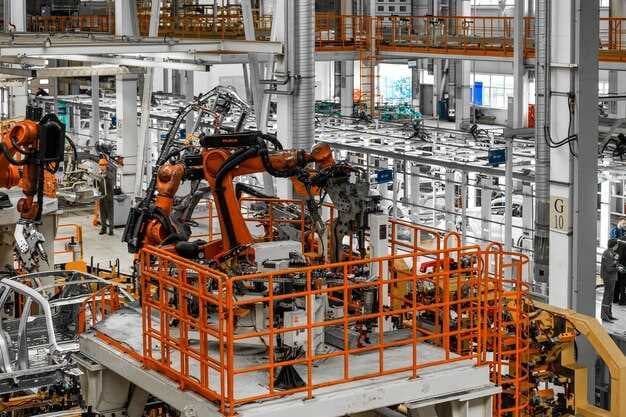
The Smart Factory Revolution - Transforming Manufacturing with Industry 4.0
In the fourth wave of manufacturing, an advanced setup that links robotic arms with cyber-physical systems delivers knowledge from sensors, cameras, and energy meters. Design the pilot to collect data on cycle time, defect rate, and energy use, and download dashboards to your management console. Track environments like temperature and vibration to prevent anomalies before they disrupt output. Think of the rollout as a steady rhythm rather than a quick test; a small, controlled step yields clearer results and more actionable insights. Use a data-driven approach: unify OT and IT data streams to enable competitiveness and management visibility. For a typical line, unplanned downtime costs can

Top 5 New Year’s Resolutions for 3PL Companies in 2025
Start with a security-first technology upgrade to protect data and reduce risk across your network. Ensuring cybersecurity and reliable data flows is the cornerstone of 2025 planning, especially with ongoing uncertainty in freight markets. Having a clear источник for orders, inventory, and routes, and aligning it with cash and fleet capacity across your companys operations creates a single source of truth that helps you respond to change. Embrace data-driven planning to reduce uncertainty and advance partnerships with carriers and shippers. Use real-time visibility across your fleet and warehouses to anticipate delays, adjust routes, and cut idle time. Track performance against key metrics

Transition to Sustainable Aviation Fuel Creates New Opportunities for Aviation
Adopt a phased SAF mandate now, backed by public-private funding and clear cost-sharing rules, and commit to increasing the blend every year. Start with at least 10-15% SAF blends by 2025 in key corridors and push toward 30-50% by 2030 in main hubs. This transition will reduce lifecycle emissions and create change opportunities that reshape supplier relationships, airport logistics, and fleet planning. The aim is to sustain sustainability gains while keeping overall costs manageable through scale and competition. technological advances in conversion pathways and feedstocks enable more efficient SAF production. The most common routes use feedstocks such as used cooking oil, animal fats, and

Walmart Expands In-Store Tech with Pickup Towers for Online Orders and Robotics
Begin with a focused pilot of 40 pickup towers this quarter to accelerate curbside pickup and online order fulfilment. This approach relies on recent data to show which stores gain the most benefit and where the tech will deliver repeatable results. Build the plan with a clear KPI set: order readiness time, mis-pick rate, and worker utilization, and this will inform future expansions. Use a high-tech stack that links pickup towers with automated sorting, systems that handle inventory and order routing, and in-store robots for item handling. The system triggers when an online order lands; the tower scans, pulls, and notifies a worker if a pick step needs human help. This approach reduces

The End of E-Commerce Returns - Reducing Returns and Elevating Customer Satisfaction for Retailers
Start with a single, concrete action: train your service team in handling quick conversations after delivery. A fast, friendly talk reduces the need for a return, especially for shoes where fit and comfort matter. This streamlined approach keeps customers engaged and prevents the issue from escalating into a wasted experience. Each supportive interaction keeps loyalty alive and strengthens profits for the year ahead. Use data to tackle the issue and drive change: track return reasons, then adjust product pages, size guides, and packaging. This changing context requires clear signals across touchpoints. This streamlined approach turns insights into tackling actions that improve handling,
