Get The App


Author
The rise of digital nomadism is transforming the travel industry, offering a great opportunity for those who adapt. Digital nomads seek work-friendly destinations with cultural richness, and meeting these needs will position your business as a trusted choice. Now is the time to align your services with this growing trend and tap into the expanding market of remote workers eager to explore the world.

9 Trends Shaping the Future of Electronics Manufacturing
Recommendation: audit cases across lines, form an enterprise task force, and set a measurable target for the future. This approach turns complexity into visible steps, letting teams see where cycles can be cut and where boards and components flow in different ways. Try a small pilot with a kawasaki vehicle prototype to validate automation steps and confirm the plan can be easily scaled across different lines ahead. Several suppliers announced new modular options, and the team should capture learnings from those cases to refine the playbook. Across nine trends, concrete gains emerge: flexibility and data analytics drive better decisions. In commercial settings, highly automated lines push

Beyond the Hype - How Drones Are Really Improving Value Chains
Begin with a focused 90-day pilot at one inbound distribution center: deploy autonomous drones equipped with rfid readers to scan pallets during unloading, automatically updating your transport data in your WMS and ERP. This addition can cut dock-to-stock time by 25-40% and raise inventory accuracy from 95% to 99% in the first quarter, positioning the company to replicate the same gains across other sites. Define a project with a clear approach and measurable KPIs, aligning drone actions with your existing processes and IT data flows. In addition to piloted tests, focus on implementing timelines that target 20-35% reductions in transport times and 40-60% fewer manual scans. Track inventory
Prioritizing AI in Yard Logistics Amid Supply Chain Pressures
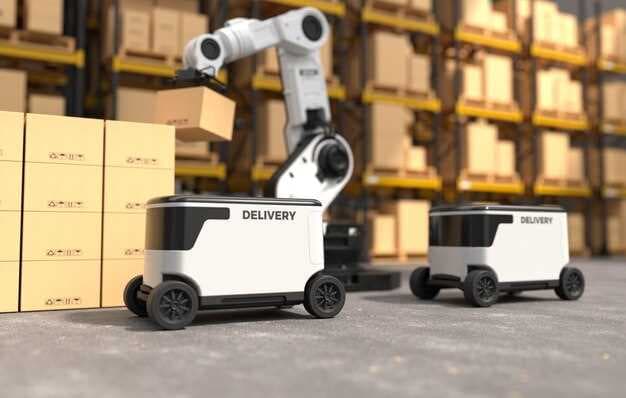
Implement AI-powered yard intelligence now to cut detention times, minimize lost goods, and accelerate trailer movements. In today’s pressures on logistics networks, real-time data supports faster decisions, reduces bottlenecks at gates, and protects customers from spillover delays. To begin, analyze historical and live yard data to identify bottlenecks, then shape decisions around a staged intelligence loop. Consider a three-part rollout: 1) visibility dashboards that show occupancy, queue times, and ETA of goods ; 2) automated gate and dock decisions to prioritize high-value loads; 3) predictive scheduling that aligns with carrier windows and tariff requirements. Across pilots, sites that

Boosting Profitability in Home Delivery - Proven Strategies to Increase Margins and Efficiency
Start with a four-week pilot of zone-based delivery windows and dynamic routing to cut last-mile costs by about 12% and lift operating margins by 4% across urban zones. This approach is derived from 312 respondents across six markets, and it shows an on-time increase of 9% and a 5% uplift in margins when paired with carrier contract optimization and load balancing. Under current operating conditions, combining in-house delivery with selective third-party capacity reduces last-mile costs by 15% and to increase capacity by 20% while preserving service quality. This framework is entitled to scale across segments and regions, supported by dashboards that track cost per stop and on-time rate in

Transport Management System Costs - Save Time and Money — A Practical Guide
Measure your current transport costs now and pick a must-have TMS with robust data analytics to cut spend and speed operations. To stay competitive, managers monitor carrier performance against current benchmarks and meet the needs addressed by this must-have solution, delivering real-time visibility and configurable alerts that help you react within minutes rather than hours. Consolidation of data into a single platform delivers speed and precise routing insights; you receive cleaner reports, faster settlements, and fewer manual entries. In implementing a phased rollout, enable a mobile interface for field teams and dispatch staff, so your team can monitor routes, update statuses, and

Designing Sustainable Supply Chains - Strategies for Resilience
Take weather-resilient steps now: map your critical suppliers, define alternative sources, and set a 30-day safety stock for essential items. addressing vulnerabilities with freshly updated information gives a common baseline for targets and requirements, involving a director and cross-functional teams. Maintain a constant risk-monitoring loop that tracks weather disruptions, transport times, and supplier financial health. Think of resilience as shea–the protective coating that guards critical nodes–while your dashboards translate data into action. Build redundancy with dual sourcing in nearby regions, flexible logistics, and clearly defined service-level targets for core items. For

Amazon Launches AI Foundation Model to Power Its Robotic Fleet and Deploys Its 1 Millionth Robot
Recommendation: Deploy a scalable AI foundation model to coordinate a robotic fleet, there, humanoids and workers, alongside simulations, and begin collecting data today. Amazon's AI foundation model unifies perception, planning, and control to drive a fleet that operates with humanoids and human workers in tandem at scale. It uses tdmpc , a model-predictive control approach tuned for real-time feedback, to route tasks across agents and sites, while running simulations to validate choices before execution. The milestone is anchored by a single scalable policy set that controls thousands of continuous operations. It records an episode_index for each mission, allowing teams to compare
5 Must-Have Features for Supply Chain Risk Management Software in 2025
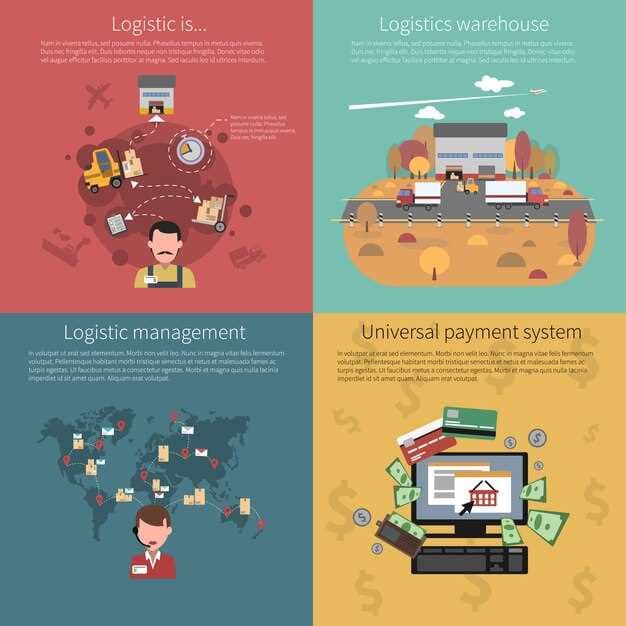
Start with a real-time monitoring and supplier risk scoring module to spot disruptions before they cascade. This approach lets you align stakeholders and trigger the plan without hesitation. These insights let you draw connections across orders, production schedules, and transport legs, so you can respond quickly when risk threatens delivery and the health of your network. Recognize how these factors threaten delivery. Feature two links risk signals to asset health and machinery uptime, pairing IoT feeds with maintenance programs and a range of diagnostics. When vibration spikes or temperature alerts surface, the software should flag risk tiers and show whether a faulty part could delay a

Distributed Order Management - The Key to Efficient Fulfillment
Map orders across all channels and deploy a distributed order management system that routes every order to the nearest capability node. This approach optimizes fulfillment by applying workflows and policy -driven decisions across marketplaces , regional warehouses, and carrier partners. By aligning orders with inventory including safety stock and cross-location transfers, you gain data-driven visibility for volumes and demand. Adopt a data-driven backbone to coordinate demand signals, stock levels, and carrier capabilities. Your DOM should address things like split shipments, backorders, and substitutions without manual intervention. Use policies that trade off cost and service levels,

Building a Sustainable Supply Chain in the Manufacturing Industry - Strategies for Resilience and Efficiency
Recommendation: Begin with a precise map of your production network and a supplier risk scorecard to guide decisions. Start a 12-month pilot to cut Scope 3 emissions by 15–20% through eco-conscious material selection, process tweaks, and enhanced supplier transparency. This effort has begun with a footwear brand and extends to packaging, logistics, and warehouse practices, with milestones reviewed every two weeks. addressing findings from pilots to refine decision-making. Drawing on schmidt frameworks, we combine risk assessment, lifecycle thinking, and supplier engagement. Whether you operate in consumer goods or industrial equipment, the same approach applies. A simple scoring model–25%

Autonomous Trucks and AI Collaboration - Shaping the Future of Transportation
Recommendation: Launch a staged pilot that pairs AI-driven route planning with autonomous trucks on selected highways, backed by rigorous validation and continuous monitoring. Start with a 60-day trial across three routes that connect major logistics hubs, with drivers resting at dedicated rest areas and AI systems guiding rest breaks. This approach creates a clear bridge between human oversight and machine precision, turning planned activities into measurable outcomes for safety and efficiency, with a target of a 15-25% reduction in fuel use through platooning. AI collaboration should enhance decision loops: the AI analyzes real-time sensor data, weather, and traffic to produce actionable

Press Releases - A Practical Guide to Crafting Newsworthy Announcements
Start with a clear, one-sentence answer to what happened and why it matters, then update the details. This direct lead sets the track for the entire release and makes it easy for editors to decide if they should cover the story. What follows should explain context, impact, and next steps in concise, factual terms. Frame the message around operational realities. For a logistics-focused release, mention optifreight involvement, a concrete update from the warehouse , and the exact scope of work. Use certified figures and avoid diluted language; stakeholders expect accuracy from the first line. The lead should be considered credible when backed by verifiable data and a named contact. Build the
