


 Deutsch
  English (UK)
  Русский
  العربية
  日本語
日本語  한국어
한국어  Magyar
  Türkçe
  Español
  Čeština
  Svenska
  Português
  Ελληνικά
  Suomi
Suomi  Nederlands
  Română
  Italiano
  Français
  Polski
  Українська
  简体中文
简体中文  Slovenčina
  20 Best Logistics KPIs &">

Recommendation: Publish weekly scorecards for each operation with owner, target, and trend. Use real-time dashboards today to replace paper reports, improving oversight for the stakeholder and the manager, and speeding informed decisions.
Align KPIs with surrounding demand, shortages, and loading performance. Track sales impact and customer service through a concise set of indicators. Build libraries of benchmarks, including bang-jensen references, so teams compare against proven baselines rather than guessing. Keep the data in a centralized library and ensure accessibility for all decision-makers.
Assign data ownership to a single manager and create a lightweight paperless process. Replace slow paper reports with scorecards updated in real time, tying variations to root causes like capacity gaps, material shortages, or unexpected loading delays. Implement scoring rules that translate measurements into actionable steps, and use informed decisions during daily stand-ups.
Emphasize governance beyond operations by establishing oversight through regular stakeholder reviews. Focus on how metrics drive tangible outcomes, not just activity. Under current standards, align KPI targets with continuous improvement initiatives and integrate with scorecards across the supply chain, from loading docks to last-mile delivery. The article below expands with detailed KPIs, practical benchmarks, and implementation tips for every logistics manager.
20 Best Logistics KPIs & Related Subjects
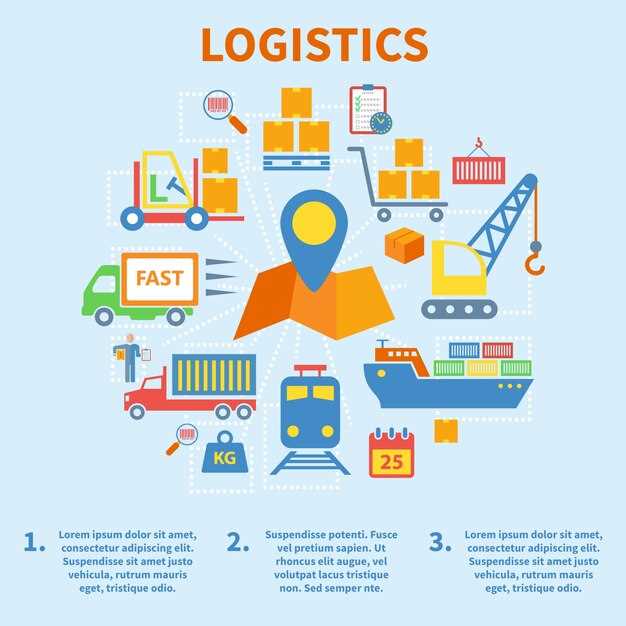
Recommendation: install a cross-functional KPI dashboard tying on-time performance, cost per unit, and asset utilization to driving decision-making across teams. This idee will inform stakeholders and keep the kollektiv aligned with the brand promise of reliable service, already validated in pilot sites.
Core KPIs to start with include: On-time shipments, Perfect order rate, Inventory accuracy, Warehouse capacity utilization, Dock-to-stock cycle time, Order cycle time, Vorhersagegenauigkeit, Transportation cost per unit, Pick accuracy, Returns processing cycle. Targets commonly seen in mature operations: On-time 95–97%, Perfect order 92–96%, Inventory accuracy 99.5%, Warehouse utilization 85–90%, Dock-to-stock under 24 hours, Order cycle 24–48 hours, Forecast accuracy 80–85%, Transportation cost per unit down 3–6% YoY, Pick accuracy ≥99%, Returns cycle ≤5 days.
For implementation, use a vergragt method to map value streams in inbound and outbound flows, then identify non-value steps to remove. Maintain praktische Anwendungen for data quality, and ensure the Lagerhaus data feeds the dashboard in real time. If a KPI turns poor, trigger a rapid root-cause analysis and assign an owner to fix the gap. A single tool sollte inform decisions and allow scenario testing, from staffing changes to mode shifts in transportation. Leadership emphasized the need for timely data to drive prioritization. Executives felt the impact of faster insights on prioritization and resource allocation.
Related subjects include governance, collaboration with suppliers, and political risk planning. The brand und kollektiv teams must align around policy changes (e.g., port congestion or tariff shifts) to avoid disruptions. The illustrated case studies show how small changes in reorder points and safety stock translate into service level gains and cost containment. Use this approach to beurteilen impact and iterate on your KPIs as the market evolves.
Practical guide to selecting, measuring, and acting on core logistics KPIs
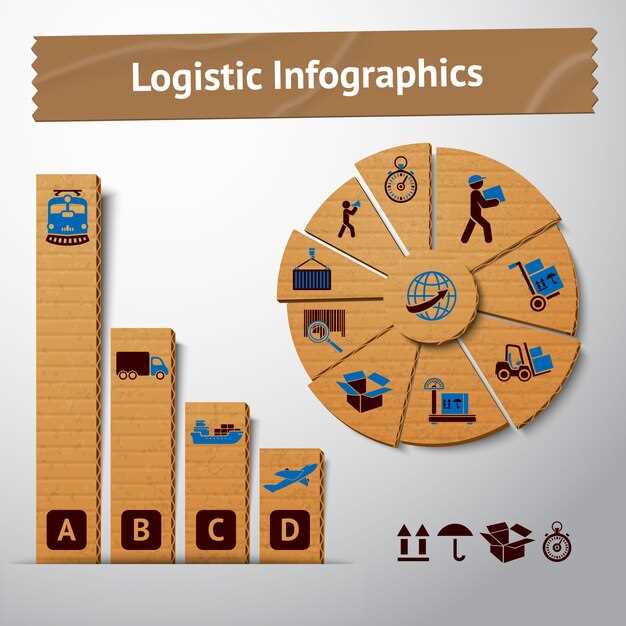
The core KPI set comprises three metrics: availability, on-time delivery, and landed cost per unit of material. Track them in a single source of truth, using completed data to reveal benefits to service levels and cost, and align actions accordingly.
Demonstrating precision, define measurement rules explicitly: OTD = on-time deliveries / total orders; fill rate = shipped items / ordered items. Adopt normative definitions so every site speaks the same language, enabling apples-to-apples comparisons.
Data flow and quality matter. Ensure availability of data from procurement, manufacturing, warehousing, and transport; data should be enabled by integrated systems; monitor for failed updates and data latency to safeguard reliability.
Varying contexts still share a common framework. Targets differ by product family or channel, but the evaluation approach remains constant. Similarly, create a dedicated section in the plan for each material group to ensure consistent evaluation.
Actioning and driving improvement requires disciplined workflows. When a KPI deviates, drive corrective actions with clear owners; use fast feedback loops; maintain a completed action log to show what changed and why.
Prioritize initiatives by benefits and effort. Rank projects, then select top actions to implement in the upcoming period. This focus yields higher impact and easier wins, with implications that are easy to monitor.
Governance ensures alignment. Assign KPI owners, set cadence, and enable cross-functional communication. The section on governance documents decisions, owners, timelines, and next steps.
Science-based analysis supports durable improvement. Apply root-cause methods, test changes, and validate results with data. Document learning so teams can reuse wins, and ensure the process remains enabled across sites.
Reporting and tools translate measurement into action. Build dashboards that show availability, OTD, and cost per unit, plus related metrics that illuminate the material flow. Provide drill-downs by region, facility, and supplier to reveal where to act.
Common pitfalls include ambiguous definitions and incomplete data. Address failed data pipelines, keep targets realistic, and maintain a clear link between KPIs and operational actions. Also, integrate feedback from operations to keep the program relevant.
On-time Delivery Rate: Definition, Calculation, and Benchmarking
Target a 98% on-time delivery rate (OTDR) for standard shipments and run a weekly dashboard that flags late deliveries within 24 hours. Structure the program to report OTDR by carrier, region, and product family, demonstrating trends across groups and time, and shaping actions through collective insights.
On-time delivery rate (OTDR) measures delivery reliability. OTDR = (On-time deliveries / Total deliveries) × 100%.
To calculate OTDR, pull data from ERP, WMS, and TMS, including order date, promised date, ship date, and delivery date. Use a common Methode to classify each delivery as on-time when delivery date ≤ promised date + grace period (0–2 days by service level). Report results as a percentage and by groups such as carrier and region.
Benchmarking starts with an internal baseline built from a rolling 12-month window, adjusted for seasonality and changes in demand. Compare OTDR across groups like region, carrier, and product line, using a consistent Methode and a documented form for calculations. When external data exists, compare against industry benchmarks; in china markets, account for port cycles and holidays, among others. These insights help shaping targets and prioritizing improvements.
Data quality and governance matter. Align definitions across systems, verify time stamps, and track root-causes of late deliveries (weather, capacity, stockouts). Link late deliveries to dissatisfaction signals and patient impact in healthcare contexts, improving preparedness and reducing wait times. Engage a kollektiv cross-functional team (procurement, operations, logistics) to implement changes rapidly. Use a form template and abstrakt rules, and draw on modeling work cited in medline and from the remko and hines groups to refine the approach.
Inventory Turnover: How to Measure, Interpret, and Improve
Start with a concrete action: calculate inventory turnover for each SKU weekly using COGS divided by average inventory, and set a separate target per product family. This lets you act easily on daily signals rather than waiting for month-end summaries. Track variations by dimensions such as item, location, and channel to spot pressure points in the supply chain and adjust orders promptly.
Measure the method precisely: use average inventory = (beginning value + ending value) / 2, with a rolling 12-month window to smooth seasonality. Turnover = COGS / average inventory. Present results on a dashboard by item, category, and geography. Use cycle counts to keep data accurate; a rigorous approach to counting reduces errors that distort turnover. If discrepancies appear, investigate in the next cycle.
Interpret the signals: a high turnover signals strong demand and lean stock, but too high can cause stockouts and lost sales. A low turnover suggests excess or slow-moving items. Compare turnover across dimensions and demographic segments to spot patterns. Buyer behavior and seasonal promotions will shift future turnover; this analysis investigates root causes and highlights where improvements are needed. Results presented to management help drive action, and nejatzadehgan notes that combining qualitative signals with numeric turnover clarifies variations.
Improve with purpose: sharpen forecast accuracy, shorten cycle times, and lower safety stock for items with stable demand. Shorten replenishment cycles, renegotiate lead times with suppliers, and adjust service levels. Use ABC analysis to focus resources on high-value items, coordinate with services such as vendor-managed inventory, and align cross-functional teams to remove bottlenecks in the chain. Implement easy wins like consolidating shipments and reducing setup costs; test these changes in a controlled pilot and measure impact.
Recognize limitations and maintain rigor: turnover alone can hide stockouts and margin pressure, so pair it with GMROI, service levels, and fill rate. Data quality matters; incomplete or late data distorts turnover. The presented numbers reflect known limitations; done correctly, cycle counts and reconciliations keep results reliable. This section investigates how data issues and item churn affect the metric, and how to treat outliers. Then plan to expand with future demographic signals and channel mix to improve predictive power, ensuring you can develop targets that reflect real demand.
Move forward with a concrete plan: build an SOP that defines weekly turnover calculations, how results are presented, and how actions follow findings. Then schedule quarterly reviews to reassess targets by chain and by dimension. Future work includes incorporating qualitative feedback from sales and operations, and developing demographic-based targets to reflect customer behavior. Develop a dashboard that ties cycle performance to service outcomes, and monitor how changes in cycle time influence future turnover, so procurement and resources align with actual demand.
Order Accuracy: Tracking, Causes, and Corrective Actions
Implement a standardized order validation workflow that integrates data from the WMS, ERP, and carrier tracking to detect errors at capture. This approach aligns teams, supports rapid decisions, and drives sustained improvements in fulfillment reliability.
If teams arent aligned on criteria, errors rise.
Tracking and assessment framework
- Define KPI: Order accuracy rate = correct orders / total orders. Example: current rate 98.2%; target 99.5% within the next quarter. Compare against competitive benchmarks to set realistic goals.
- Data sources and collaboration: Pull data from WMS, ERP, TMS, and carrier feeds; establish a single source of truth and ensure collaboration across operations, IT, and outsourcing partners. This reduces data mismatches and speeds corrective actions.
- Cadence: perform daily verification, weekly root-cause analysis, and quarterly reviews. Account for ageing devices and occasional data lag in the assessment.
Causes of order accuracy issues
- Packing and picking errors due to mislabeling, wrong SKU, or quantity mismatches.
- Data entry errors and system mismatches between ERP and WMS; criteria mismatches across systems can create inaccuracies.
- Address validation errors, incomplete or incorrect recipient data.
- Ageing devices and worn labels that increase scan failures and misreads.
- Outsourcing variability: 3PL processes may diverge from in-house standards without aligned assessment and shared KPI governance.
Corrective actions and model-based approach
- Implement a validation model that cross-checks key fields (SKU, quantity, line item, and address) at pick, pack, and ship; the tool evaluates data quality against the criteria and flags discrepancies in real time, enabling quick corrections.
- Standardize labeling and barcodes; replace ageing devices; schedule regular calibration of scanners and verify label visibility in all conditions. Include a pilot to test new devices before rollout.
- Strengthen collaboration with outsourcing partners: share dashboards, set joint KPIs, and establish a documented assessment process; categorize errors using a bang-jensen approach to identify patterns and feed results into process design.
- Investigate root causes with a structured method; compare findings with similar models to validate conclusions; adjust SOPs and training based on evidence; implement corrective actions after verification.
- Establish a continuous improvement loop with monthly reviews, updated criteria, staff training, and controlled pilots before full deployment to sustain gains.
Erwartungen an Ergebnisse und Aufrechterhaltung
- Prognostizierter Anstieg: von 98,2% auf 99,5% innerhalb von 90 Tagen, bei anhaltender Leistung durch laufende Audits und Geräteverwaltung.
- Erfolgsfaktoren: Genauigkeitsrate über 99,4% für zwei aufeinanderfolgende Quartale; Fehlerquote pro 1.000 Bestellungen unter fünf; Leistung des Outsourcing-Partners im Einklang mit gemeinsamen Zielen.
- Messdisziplin: tägliche Verfolgung korrekter Bestellungen und Gesamtbestellungen, mit wöchentlichen Trenddiagrammen und monatlichen Bewertungen zur Überprüfung des Fortschritts.
Frachtkosten pro Einheit: Berechnung, Routenoptimierung und Spediererverhandlungen
Berechnen Sie die Frachtkosten pro Einheit als Gesamtfrachtkosten dividiert durch die Gesamtanzahl der Einheiten und überprüfen Sie diese Kennzahl jeden Monat, um Abweichungen zu erkennen und schnelle Maßnahmen zu ergreifen.
Berechnungsgrundlagen umfassen alle Kostenkomponenten: Grundfrachtraten, Treibstoffzuschläge, Zusatzleistungen, Verpackungsmaterialien, Versicherung, Zeitverzögerung, Lagerung und Querumschlag. Erfassen Sie für jede Sendung den Ursprung, das Ziel, das Transportmittel, das Gewicht, das Volumen (Kubikmeter), die Anzahl der Paletten und Einheiten. Die Berechnung pro Einheit verwendet die Metrik, die mit Ihrem Produkt und Ihrer Strecke übereinstimmt (Gewichts- oder Würfelbasiert). Diese objektive Sichtweise hilft Ihnen, Strecken und Carrier fair zu vergleichen und zeigt, dass die Kosten pro Einheit stärker sinken können als mit der Entfernung allein, anstatt verschiedene Dinge zusammenzufassen.
Routenoptimierung sollte Effizienz und Zuverlässigkeit betonen. Nutzen Sie einen kollaborativen Ansatz mit Spediteuren und Lieferanten, um Ladungen zu konsolidieren, optimale Drehscheibe auszuwählen und bei Bedarf Modi zu wechseln. Für solche Pläne reduzieren Routen, die regionale Lieferungen mit Komplettladungen auf bestimmten Abschnitten kombinieren, die Einheitskosten schneller als ad-hoc-Sendungen; berücksichtigen Sie Optionen wie Eisenbahn, wo dies machbar ist, und passen Sie die saisonalen Schwankungen an, um Zuschläge zu vermeiden, die von Spediteuren angegeben werden. Integrieren Sie COVID-19-Unterbrechungen und wie sie sich auf Kapazität und Preise auswirken.
Carrier-Verhandlungen basieren auf einer transparenten Preisliste, langfristigen Vereinbarungen für Kernrouten und klaren Bedingungen für Zusatzleistungen. Verwenden Sie Daten, um Ihre Forderungen zu untermauern; zeigen Sie, wie sich Volumina entwickeln und wie die Kosten pro Einheit bei unterschiedlichen Servicestufen aussehen würden. Das Ziel ist es, Kosten und Service in Einklang zu bringen, daher sollten Sie Basistarife plus vorhersehbare Kraftstoffzuschläge anstreben, mit jährlichen Anpassungen oder vierteljährlichen Überprüfungen. Bauen Sie eine kollaborative Beziehung zu Transportunternehmen auf, nehmen Sie Leistungsmetriken und Strafen für Serviceeinbrüche auf und nutzen Sie Analysen von Infosys oder Ihrem ERP-System, um Ergebnisse in Echtzeit zu überwachen. Dies unterstützt Teams, indem es schnell und transparent umsetzbare Erkenntnisse liefert.
Externe Faktoren beeinflussen Preis und Verfügbarkeit. Störungen durch COVID-19, Regierungen und geopolitische Ereignisse erfordern einen widerstandsfähigen Plan. Verfolgen Sie China-Routen und andere Produktionszentren; erhalten Sie einen diversifizierten Carrier-Pool, um das Risiko zu mindern. Erstellen Sie ein Szenario-Modell für Preisvolatilität und Treibstoffkosten und lassen Sie angegebene Daten Anpassungen steuern. Halten Sie einen Puffer ein, um Kapazitätslücken in Spitzenmonaten und Kapazitätsbeschränkungen zu vermeiden. Berücksichtigen Sie Variablen wie regulatorische Änderungen und Arbeitskräftepolitik, einschließlich abhörbezogener Aspekte, bei der Szenarienplanung.
Menschen und Schulung sind wichtig. Investieren Sie in Lehrpläne, die auf Logistikabläufe abgestimmt sind, und beziehen Sie Hochschulen und Ausbildungsprogramme ein, um die Fähigkeiten zu verbessern. Ein kollaboratives Ökosystem aus Unternehmen und Universitäten steigert die Fähigkeiten von Planern und Fahrern. Schulungsmaterialien umfassen Routenplanung, Kostenkontrolle, Verhandlungen und Compliance. Der Wert zeigt sich in schnelleren Entscheidungen und niedrigeren Kosten pro Einheit, wobei Beiträge von Studenten und Dozenten dazu beitragen, die Lehrpläne aktuell zu halten. Pflegen Sie eine lebendige Wissensbasis mit praktischen Tipps und Checklisten für den täglichen Gebrauch.