


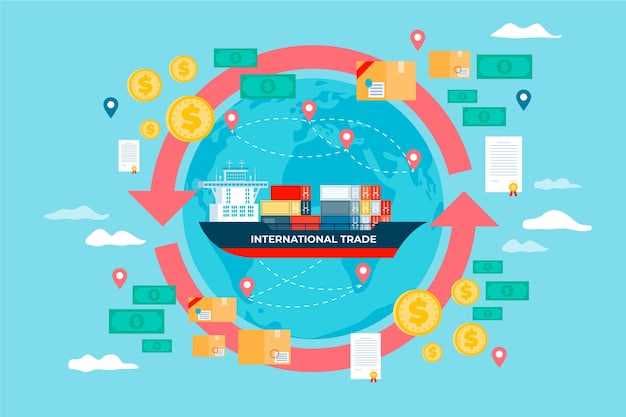

Adopt a permissioned blockchain backbone to unify data provenance across the enterprise and ensure auditable privacy controls. Regarding governance, define access roles, data minimization, and sector-specific data schemas to support changing requirements while keeping integration affordable. This setup enhances the ability to trace provenance across the network and has contributed to higher trust among partners.
Real-world pilots reveal tangible gains: in 9 enterprise trials, order-to-delivery cycles shortened by 12-18%, inventory accuracy improved by 15-22 percentage points, and recall events dropped by 25-40% after introducing a shared ledger. Costs are relatively modest upfront, with rapid ROI when sector-specific modules and modifications are added, and when participants share data more openly.
To protect privacy, use selective data sharing, encryption at rest and in transit, and auditable logs built into the blockchain, enabling trust among suppliers. The mandla framework guides governance to align privacy with auditability.
Steps to scale include drafting a sector-specific data model, testing privacy-preserving features, and establishing auditable workflows. These steps build momentum. In parallel, embed tools for monitoring and analytics to detect anomalies, powered by artificial intelligence.
We believe that connecting sector-specific partners with a shared ledger, powered by artificial intelligence and governed by transparent rules, will accelerate reducing waste and emissions while boosting auditable accountability. Regarding policy alignment, the next phase should layer climate metrics, supplier credits, and privacy safeguards to lock in long-term value.
Practical Trends, Gaps, and Research Directions for Blockchain-Enabled Sustainable SCM
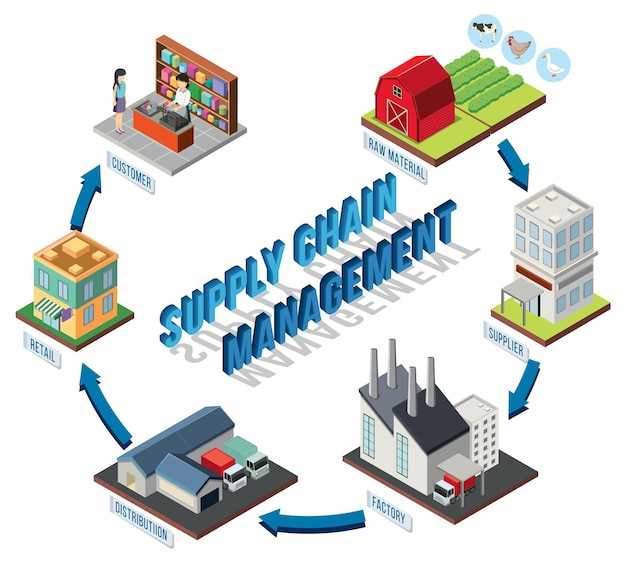
Begin with a focused pilot in kwazulu-natal with an agency-led, multi-stakeholder approach that links vaccine and drug supply chains to a blockchain backbone, using smart contracts to automate traceability and enforce compliance. Establish collaborations across manufacturers, logistics providers, and health agencies, and pilot end-to-end visibility for sector-specific processes from raw materials to patient delivery. Include e-commerce touchpoints to streamline ordering and returns while maintaining data integrity. Target data capture from 5 hospitals, 3 distributors, 2 manufacturers, and 2 clinics over 12 months.
- On-chain traceability enhances visibility of sector-specific processes across vaccines, drugs, and related reagents, enabling real-time alerts for critical deviations.
- Interoperable data standards with descriptors support a shared classification system, respectively enabling ERP and warehouse systems to exchange data and map records to physical goods.
- Smart contracts and algorithms automate risk scoring and enforcement; artificial intelligence augments anomaly detection and compliance monitoring.
- Privacy-preserving methods, including selective disclosure and zero-knowledge proofs, balance transparency with protection for concerned parties in regulated domains.
- Governance models formalize collaborations among manufacturers, distributors, regulators, and buyers to reduce decision latency and improve accountability for onwards adoption.
- E-commerce integration creates transparent marketplaces for lab supplies, vaccines, and pharmaceuticals while preserving provenance and reducing counterfeit risk.
- Energy and cost considerations favor lightweight, permissioned architectures; ongoing analysis guides scalable deployment and sustainability targets.
- Regional pilots, such as kwazulu-natal, test governance, data quality, and KPI attainment across the value chain.
Key gaps hinder scale and sustained impact. First, data quality and interoperability gaps across legacy ERP and supplier systems hinder reliable chain-of-custody records and real-time analytics. Second, regulatory alignment and risk management require clearer guidance from agencies and cross-sector oversight. Third, scalability, unit economics, and energy usage challenge wider deployment; hybrid or permissioned networks with efficient consensus are needed. Fourth, lack of sector-specific KPIs and standardized metrics makes benchmarking across vaccines, drugs, and reagents harder. Fifth, privacy versus transparency trade-offs limit data sharing among smaller suppliers and frontline facilities. Sixth, limited exposure to real-world datasets slows research progress; incentives for data contributions are weak.
Research directions to close these gaps focus on theory, data, and governance. Theoretical work will determine cost-benefit and sustainability outcomes for blockchain-enabled SCM in vaccines and drugs, including lifecycle analysis and sensitivity tests across processes. Build open benchmarks and datasets for descriptors and classification that enable cross-region comparisons, relying on heutger benchmarks for classification to calibrate models. Develop algorithms for anomaly detection, fraud detection, and predictive risk scoring, leveraging artificial intelligence while emphasizing explainability and governance. Investigate privacy-preserving data sharing protocols and governance templates that regulators and organizations can adopt at scale. Establish cross-border and cross-sector pilots with collaborations among manufacturers, distributors, regulators, and e-commerce platforms, measuring time-to-trace and cost savings onwards. Conduct longitudinal impact analysis to quantify reductions in waste, emissions, and counterfeit incidents across sector-specific streams, publishing metrics that reflect vaccines and drug supply chains respectively. Develop policy standards and implementation roadmaps that enable scalable adoption across regions, including kwazulu-natal, aligning interoperability requirements with existing regulatory frameworks.
Chain of Custody and Provenance: Tracking Emissions, Resource Use, and Sustainability Metrics
Answer: Adopt a permissioned Ethereum-based chain-of-custody platform that records emissions and resource-use data at every handoff, with smart contracts triggering timely updates and trusted attestations.
The system is capable of capturing science-based indicators for emissions, energy and water use, and material waste, creating a traceable ledger that supports transparent exchanges across transport legs and borders. Transactions across stages generate a single source of truth, enabling clear traceability and indicating deviations as soon as they appear, so intervention can occur promptly.
Found data from suppliers and carriers feeds dashboards that enhance decision-making, enabling organisations to act efficiently and reduce risk. By linking data streams to on-chain records, the approach creates verifiable provenance that value-holders can trust, supporting cross-country collaboration and ensuring timely, data-driven responses to sustainability challenges. wong, sarkis, and shen act as expert custodians, while ayLak leads intervention playbooks to ensure data integrity and seuring of access9 policies.
This design supports trusted exchanges of information, reduces fragmentation, and promotes accountable actions across the supply network. The resulting visibility helps firms demonstrate progress to regulators, customers, and investors, while allowing researchers to validate claims with repeatable measurements and transparent processes. The focus remains on practical outcomes: faster traceability, stronger control, and measurable improvements in emissions and resource efficiency.
| Stage | Emissions (kg CO2e) | Resource Use (m3) | Data Source | Tracking Mechanism | Status |
|---|---|---|---|---|---|
| Sourcing | 25 | 8 | supplier CO2 data, IoT tag | hash-linked records on ethereum; access9 policy | validated |
| Transport | 40 | 12 | telematics, carrier reports | smart contracts, real-time feeds | in progress |
| Manufacturing | 60 | 20 | factory meters, ERP exports | on-chain event logs; tamper-evident seals | verified |
| Distribution | 15 | 5 | ERP exports, carrier handoffs | cross-border exchanges; auditable trail | available |
| Retail | 5 | td>2store-level data | customer-facing provenance portal | ready |
Interoperability and Standards for Cross-Chain Data Exchange

Adopt a unified cross-chain data standard and verification layer to ensure immutable, auditable data flow across networks. This choice accelerates collaboration among suppliers, manufacturers, and marketplaces, and provides a clear path to trust across ecosystems.
Implement governance and technical controls that align with established standards to operate seamlessly across partners, while delivering quantitative results. Early pilots show time-to-trust reductions when data provenance is anchored on an immutable ledger, enabling faster recalls management and more accurate downstream analytics.
- Standardize data models and event schemas. Use JSON-LD with verifiable credentials (VCs) and a canonical data dictionary for shipping, custody, quality checks, and recalls. Include provenance, timestamp, source, chain_id, and a cryptographic hash. Keywords for success include interoperability, traceability, and trust; anchor critical records to an immutable ledger to deter alteration.
- Choose a cross-chain data exchange protocol and proofs. Favor CCIP-like or IBC-inspired bridging, with Merkle proofs and time-stamped anchors to detect alteration across chains. Maintain a clear auditable trail to support recalls and compliance reporting.
- Strengthen identity, access, and privacy. Employ verifiable credentials to authorize participants while enabling selective disclosure for sensitive data. Build cyber-resilience into the data layer and conduct regular threat modeling to reduce risk exposure.
- Establish governance and auditing. Create an interoperability board that includes industry players, auditors (deloitte can support), and standards bodies. Maintain a transparent repository of policy decisions, interoperability tests, and assurance reports.
- Measure impact with quantitative economics. Track metrics such as data-anchoring costs, cross-chain verification time, and false-positive detections. Use factorial design to test configurations and draw robust results that inform scale decisions.
- Support practical deployment through nandi-enabled marketplaces. Provide a shared data marketplace where participants can publish and access standardized event streams without sacrificing control over their data. This approach fosters truth in reporting and speeds up data-driven decisions.
Case studies from Jeong and Medeni highlight how standardized cross-chain data exchange reduces data reconciliation overhead and improves insight into supplier performance. Drawing on these results, organizations can detect data drift early, accelerating response times and reducing recalls caused by altered or incomplete records. Ideally, pilots show a measurable drop in time-consuming reconciliation tasks and a lift in supply-chain resilience, with Deloitte-led audits confirming the integrity of the data trail.
Implementation plan: start with a baseline data map, align on a shared schema, select an interoperable bridge, and pilot with a closed cohort of partners. Track metrics such as latency, throughput, and trust score, and adjust governance as data flows expand. Hopefully, this path yields dependable truth across networks while enabling scalable, cyber-secure operations that support a marketplace-ready, sustainable supply chain.
- Baseline assessment: inventory current data assets and map them to the standardized model.
- Protocol selection: adopt CCIP/IBC-like bridging and define proof requirements.
- Governance setup: form an interoperability board and establish audit routines.
- Privacy by design: implement verifiable credentials and selective disclosures.
- Pilot execution: run factorial design experiments to compare configurations and quantify benefits.
- Scale strategy: plan for network expansion, governance updates, and ongoing monitoring.
Smart Contracts for Sustainability KPIs and Compliance Enforcement
Adopt smart contracts to automatically enforce sustainability KPIs across the supply-chain, delivering transparent, auditable compliance without manual checks. A flowchart maps data sources and triggers actions when inputs meet thresholds, accelerating accountability and creating a cleaner movement toward responsible sourcing ready for faster execution.
The contract refers to official standards and activates supervision when a KPI deviates. Each contract refers to external data via trusted oracles, ensuring traceability from supplier to consumer and enabling audit trails that stakeholders can verify in real time.
Inputs from IoT sensors, carrier logs, attestations from suppliers, and third-party audits feed the on-chain logic. The system rates performance against targets, stores cryptographic hashes of certificates, and traces events so supervision teams can identify bottlenecks and remedy issues without disrupting the flow throughout the chain.
A noteworthy framework includes KPIs such as energy intensity per unit, water use per unit, waste diversion rate, and the share of inputs that are certified. Each KPI has a numeric threshold and a remediation path; noncompliance can jeopardize contracts and trigger sanctions or corrective actions. The framework highlights noteworthy insights by comparing performance across categories and trends in real time, giving stakeholders a clear view of where to allocate resources.
A diaconita-inspired governance model assigns supervision roles to an official multi-stakeholder panel. It defines prior approvals for policy changes and uses paré-level controls to prevent unilateral edits. This approach reduces the risk of bias and builds resilience against fraud, protecting the supply-chain against disruptions.
Interoperability across platforms is essential for scalable deployment. Standardized data formats, common ontologies, and interoperable APIs enable faster data exchange, integrate with ERP and WMS systems, and support a transformative shift in how supply-chain sustainability is managed. Disruptive capabilities emerge when contracts interface with external registries and compliance authorities, while maintaining clear chain-of-custody traces.
Strategies for rollout include starting with a minimal viable set of KPIs, mapping data inputs with a flowchart, and piloting with a selected group of aujla suppliers to gather input and refine contracts. Use official audit trails and a robust rate-limiting policy to prevent data floods, while ensuring that supervision and traceability stay intact throughout the process. Adopt a modular architecture to scale with supplier growth and legal requirements, and prepare a phased timeline that accelerates adoption without risking noncompliance.
Audit, Verification, and Trust: Decentralized Validation Methods
Adopt a permissioned, decentralized validation framework that anchors auditable, tamper-evident records across the supply network. This cooperation will offer transparent traceability, reduce reconciliation errors, and provide better decision support for your operations. Implement contract-based verification to enforce compliance at each handoff and create an auditable trail that auditors can review in minutes rather than days. This approach is effective in reducing cycle times and errors. This approach reflects changed risk models and new regulatory expectations.
Design the system for multi-echelon networks that link suppliers, manufacturers, distributors, transporters, and retailers. Each event, namely receipts, quality checks, attestations, and shipments, produces a cryptographic proof that anchors to a shared ledger. In the pharmaceutical segment, serialization data, batch numbers, and expiry dates become inseparable records, helping to prevent counterfeits and enabling rapid recalls. The system also poses fewer friction points for compliance and supports end-to-end visibility for regulators and customers alike.
Governance and standards: align with global compliance frameworks and updated data models. A fundamental requirement is strict access control blended with privacy-preserving proofs, so suppliers share only necessary data. Independent reviews published in scopus-indexed outlets show that modular validation scales across a multi-echelon chain.
Implementation plan includes a 90-day period to validate improvements. Track data accuracy rate, verification cycle time, and the rate of rejected events. Use updated dashboards for visualization and to share insights with your partners. This concrete cadence helps leadership compare baseline and progress, and informs if process changes are needed.
Visualization and insights: dashboards provide visualization across the network, showing flow, exceptions, and performance hotspots. To maximize impact, leverage visualization dashboards to present insights for your teams and regulators, and to align actions across partners.
bleik analytics support anomaly detection and pattern mining by correlating events across nodes; they help reduce latency in corrective actions and improve data quality over time, and they contribute to audit readiness by surfacing drift in processes before it becomes a compliance issue.
Implementation Roadmap: Pilot Design, ROI Considerations, and Risk Management
Recommendation: Launch a 12-week pilot across three connected nodes–supplier, vehicle, and retailer–to prove end-to-end visibility and cost benefits. Start with a selected group of suppliers and one product family to establish a baseline area, then scale based on learning and governance readiness. Track usage, user adoption, and early cost reductions to justify the next phase, delivering value faster than traditional audits.
Pilot design should specify objective, scope, data schema, and governance. Map data flows with diagrams showing who contributes, who consumes, and where decisions occur. Use a second, lightweight method to estimate ROI in parallel with the main measurement, so teams see value quickly while the system matures. Align with selected standards and reference points from publications and studies that discuss traceability benefits; integrate insights from govindan and kückelhaus to sharpen risk signals that matter for the area.
ROI considerations: quantify cost-to-serve reductions, labor savings, and fewer disruptions; set a payback target within 12-18 months and compute net economic value. Track service level improvements and the impact of data sharing across partners to strengthen the competitive position across the kingdom of partners. Build a bibliometric baseline using publications and studies to compare results with external benchmarks, and capture learning that informs future area expansions.
Risk management: identify risks we face to meet a real need, including data privacy, cyber threats, and supplier disputes; develop a risk register, checklists, and escalation paths. Implement strong access controls, encryption, immutable logs, and regular back-ups. Define data ownership and sharing boundaries with providers; run periodic risk reviews and conduct vendor checks to maintain resilience in that area.
Establish governance and learning loops: appoint a cross-functional team, define clear success criteria, and establish an area for pilot results to guide expansion. Document original insights, capture lessons learned, and build a practical expansion plan anchored in publications, studies, and bibliometric evidence. Use diagrams to communicate progress and maintain a vehicle for ongoing feedback to keep stakeholders aligned with a transparent timeline and connected to the area.