


 Deutsch
  English (UK)
  Русский
  العربية
  日本語
日本語  한국어
한국어  Magyar
  Türkçe
  Español
  Čeština
  Svenska
  Português
  Ελληνικά
  Suomi
Suomi  Nederlands
  Română
  Italiano
  Français
  Polski
  Українська
  简体中文
简体中文  Slovenčina
 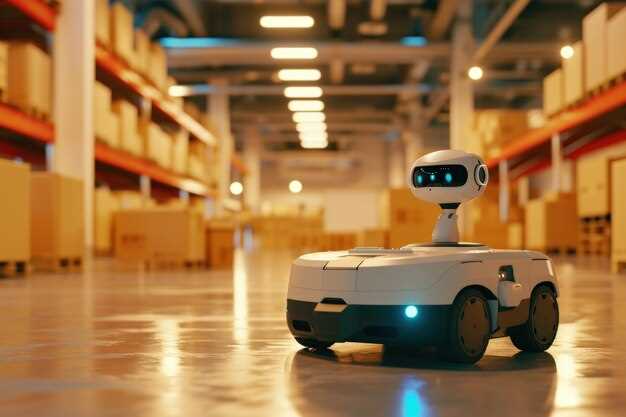 Robotik in der Logistikautomation einsetzen – Effizienz und Durchsatz steigern">

Setzen Sie jetzt KI-basierte Robotik in einer Zone ein, um den verarbeiteten Durchsatz um 20–40% zu erhöhen und die Ermüdung des Personals zu reduzieren. Paare Maschinen mit optimale Layouts die separaten eingehenden, Verarbeitungs- und Verpackungsschritte. Behalten Sie den Umfang fokussiert, damit Sie Auswirkungen auf messen können. each Aufgabe und Skalierung nach dem Wertnachweis. Dieser Ansatz vermeidet Unterbrechungen und liefert schnelle Erfolge, deshalb beginnen wir klein und validieren, bevor wir eine breite Einführung vornehmen.
Weisen Sie jeder Zone eine dedizierte, KI-basierte Zelle zu, die eingehende Artikel, Verpackung und Palettierung handhabt, und stellen Sie sicher, dass die Daten in Echtzeit in das WMS eingespeist werden. Kommunikation. Das reduziert unnötiges Gehen und Ermüdung, während die Sichtbarkeit über Schichten hinweg erhalten bleibt. Verfolgen costs per verarbeitet eine Einheit festlegen und einen Ziel-ROI innerhalb von 6–12 Monaten definieren; sobald der ROI bewiesen ist, skalieren.
Um den Durchsatz zu maximieren, implementieren Sie ein modulares System: machines in austauschbaren Modulen, was die Anpassung ermöglicht layouts wenn sich die Nachfrage verschiebt. Maintaining End-to-End-Sichtbarkeit erfordert kontinuierliche Daten Kommunikation. Daten zu Durchlaufzeit, Fehlerrate und Linienauslastung sammeln; verarbeitet orders track improvements.
Entwickeln Sie die Steuerungslogik, sodass Sie bedienen können. without slowing the line. Use AI-based scheduling to balance tasks across zone segments und behalten Sie level von Automatisierung über Schichten hinweg konsistent. Überwachen Sie Zykluszeiten und Energieverbrauch, um zu vermeiden länger Zyklen und um aufrechtzuerhalten costs vorhersehbar. Wenn ein Roboter langsamer wird, Ressourcen umverteilen, um das Tempo aufrechtzuerhalten, ohne einen Bediener zu überlasten.
Integrate Kommunikation zwischen Robotern und dem Lagerverwaltungssystem, um Datensilos zu vermeiden. Ein KI-basierter Ansatz kann sich anpassen an unbekannt items by recognizing formats and adjusting processing Schritte spontan anpassen. Verwenden Sie Dashboards, um die level von Automatisierung über Zonen, und plant, die Abdeckung auf alle Bearbeitungsphasen auszudehnen. Das System stabilisiert sich und liefert schließlich eine vorhersehbare Durchsatzrate.
Using Robotics in Logistics Automation: Increasing Throughput and Operational Output
Setzen Sie eine modulare Robotik-Station ein, die Paare bildet Bots mit menschlichen Kommissionierern; daneben, dieses Setup increases Durchsatz und reduziert Fehler für hohe Bestellvolumen. In Industrie-Lagerhallen können autonome mobile Roboter, die mit Zonsensortierern gepaart sind, den Ausgangsdurchsatz um 25–40% steigern und Fehlpicken um 30–60% reduzieren, je nach Artikelvielfalt und Bestellprofilen. Obwohl die anfänglichen Kosten hoch sind, realisiert sich der ROI typischerweise innerhalb von 12–18 Monaten für Einrichtungen, die mehr als 5.000 Bestellungen pro Woche abwickeln. Um zu beginnen, sollten Sie die Kommissionierzonen standardisieren, optimale Lagerplätze definieren, Kapazitätengpässe beheben und die Automatisierung sich wiederholende Hebearbeiten übernehmen. here während das Personal mindestens einen Teil der Schicht engagiert gehalten wird.
Zusätzlich, ordnen Sie die pfade Güter transportieren und Vision sowie Sensorik einsetzen, um Routen in Echtzeit neu zu planen, wenn sich Staus verschieben. Dies Adresse Engpässe beseitigt, unnötige Bewegungen reduziert und gefährliches manuelles Handling minimiert. Unternehmen verlassen sich auf eine Mischung aus Bots und menschliche Arbeitskräfte zur Abdeckung von Sonderfällen; sie können autonom für Routineabläufe arbeiten, sie sind jedoch auf Menschen angewiesen für Aufgaben, die Urteilsvermögen erfordern. Die Routen Intelligenz erlaubt Ihnen, dynamisch zu planen, und sie können auf Nachfragespitzen reagieren.
Um den Durchsatz zu maximieren, entwerfen Sie eine skalierbare Einführung: Beginnen Sie mit einer einzelnen Zone, validieren Sie die Ergebnisse und replizieren Sie sie dann in angrenzenden Korridoren. heres ein kompakter Rollout-Plan: klein anfangen, Wirkung messen, dann auf zusätzliche Zonen ausweiten. Das System lets operators reallocate tasks automatically as demand grows, and it goes on to strip unnecessary motions. This leads to fewer disruptions, reduces stuff movement, and keeps manufacturing readiness high. By relying on sensor data, you address risk controls and train staff to operate in collaboration with automated motion.
Implementation Playbook for Robotics in Warehousing
Start with a six-week pilot in a single high-velocity zone using autonomous mobile robots (AMRs) to assist inbound handling and fast-moving fulfillment tasks; set a target to reduce cycle time by 15–25% and raise task accuracy by a couple of percentage points.
Key steps to guide deployment:
- Define goals and baselines: capture current cycle times, error rates, labor hours per unit, and space utilization; establish go/no-go criteria and a date for the review.
- Assess process fit: identify zones with repetitive motions, crowded aisles, and high throughput needs; earmark flexible tasks for automation and preserve human oversight where judgment matters.
- Choose hardware and software: select modular AMRs, end-effector options for handling diverse items, and a fleet controller that integrates with your WMS and ERP; confirm charging, docking, and remote monitoring capabilities.
- Plan data and integration: map data streams from scanners, sensors, and scales; ensure real-time visibility and alarming; create operator dashboards and supervisor views.
- Run the pilot and iterate: launch with a cross-functional team; monitor daily; adjust routing, task assignment rules, and batch sizing; document the adjustments and learn from them.
- Scale with governance: set a zone-by-zone rollout, designate ownership, update SOPs, and coordinate with safety and training programs; build a schedule for broader deployment.
People and process
- Provide hands-on training for operators and maintainers; appoint a floor liaison per shift to handle exceptions and escalation.
- Establish a feedback loop: collect input on task flow, robot behavior, and operator comfort; translate feedback into concrete tweaks for the control rules.
- Define new roles: robot monitor, zone lead, and maintenance liaison; clarify responsibilities and shift handoffs to keep workspaces running smoothly.
Safety and risk management
- Perform a formal risk assessment and update it as automation expands; implement guarding, emergency stops, and clear exclusion zones around charging docks.
- Update procedures: lockout-tagout, incident reporting, and safe-material-handling rules; run drills to validate readiness across shifts.
- Protect people and assets: use sensors for collision avoidance, audible/visual cues for humans, and clear signage for robot pathways.
Operations, maintenance, and metrics
- Set a maintenance cadence: preventive checks for battery health, bearings, and sensors; schedule firmware updates during low-traffic windows.
- Track key indicators: cycle time per task, picker velocity, robot availability, mean time to repair, and energy consumption per shift; review weekly and adjust targets.
- Plan for continuous improvement: run monthly retros and capture adjustments to the playbook; reuse learnings for next zones and product families.
Choosing Robotic Configurations for Receiving and Putaway
Start with a mixed, modular configuration: goods-to-person (G2P) in receiving lanes paired with autonomous mobile robots (bots) on the putaway path, and lightweight conveyors to move totes to static storage. This approach reduces errors, minimizes forklift usage, and boosts throughput by handling high-demand items and unpredictable flows more reliably. Rely on a focused set of platforms to simplify software maintenance and training, while keeping the state of the system visible to operators and managers. For region demand, position automated lines near inbound docks and minimize automation where velocity is low to control costs and idle time.
Patterns of work support each zone around roles–operators handle exceptions, bots handle repetitive flows, and information flows between WMS and robot controllers stay continuous. A clear state of operations helps reduce problems and avoid errors. Use goods-to-person in high-demand regions and keep manual lanes as backups for peak periods. Many organizations do this to save labor costs during busy seasons. You cant rely on a single configuration across all regions; tailor the setup to SKU mix, handling difficulty, and dock layout.
When selecting configurations, consider the region-specific demand, space constraints, and total cost of ownership. Align each configuration with skills in your teams, and test for errors under peak loads before full rollout. The goal is to optimize flow, shorten putaway cycles, and provide scalable support for growth across multiple facilities and markets. Below is a practical comparison to guide decisions.
| Configuration | Best Use Case | ||||
|---|---|---|---|---|---|
| Goods-to-Person (G2P) with AMRs | High SKU variety, small items, fast putaway | AMRs, G2P towers, portable scanners | Medium footprint; compact dock-to-pick lanes | 20–40% shorter putaway cycles; improved accuracy | Higher upfront cost; requires robust integration with WMS |
| Bots-led Putaway with Conveyors | Bulk pallets and predictable flows; medium SKU range | AMRs, conveyors, dock management modules | Medium footprint; scalable staging areas | 25–35% throughput uplift; smoother peak handling | Maintenance of conveyors; path-conflicts must be managed |
| Narrow-Aisle AS/RS with Robotic Stackers | Dense storage, fixed SKUs, high-density putaway | AS/RS, robotic stackers, sensors, LPR/vision | Smaller footprint per storage unit; higher vertical lift | 40–60% space savings; higher pick density | High capital cost; payback dependent on sustained demand |
As demand shifts, use the table as a live guide to reallocate resources–relying on data streams from the fleet to adjust roles and patterns. Platforms that centralize state data help organizations compare regional performance, spot bottlenecks, and stay ahead of competitors. By combining goods-to-person with targeted bot-led putaway and selective AS/RS where justified, you can manage many SKUs efficiently, save labor, and maintain a good balance between upfront investment and long-term gains.
Automated Storage and Retrieval Systems (AS/RS) vs Autonomous Mobile Robots
Use AS/RS for fixed-pallet storage to maximize density and throughput; pair with Autonomous Mobile Robots to handle flexible, high-variability picks. These arent interchangeable, but together they streamline operations by combining high-capacity storage with agile picking cycles. For warehouses with packaging and product variety, this setup ensures timely fulfillment and scalable capacity, enabling efficient workflows.
AS/RS relies on machines such as cranes, shuttles, and stackers and comes in these types of layouts: pallet-based cranes, carousels, and vertical lift modules. Models are optimized around demand patterns, with cycle times typically in the 20–60 second range per move and footprint reductions of about 40–60% versus conventional rack storage. Analytics monitor throughput, errors, and maintenance needs, ensuring consistent performance even during peak seasons and shortages of staff. Needed setting calibrations for start-up include calibration of pick waves and cross-docking schedules.
Autonomous Mobile Robots operate across complex spaces with dynamic layouts. They map, localize, and navigate with SLAM and technological sensor fusion, reducing travel distances and enabling flexible goods-to-person workflows. In practice, a fleet of 5–20 robots can sustain 300–1000 picks per hour depending on task granularity, while avoiding manual transfer steps and smoothing packaging flows. These arent only about one task; AMRs also handle replenishment, out-of-stock checks, and proactive returns, increasing predictive capability and vision for operations.
For a balanced solution, run a hybrid model: core AS/RS in the heavy-load zones and deploy AMRs to move items between AS/RS and picking zones, plus staging areas. Your analytics should measure utilization, energy use, and cycle reliability, and you should prepare employees with cross-training that covers both the machines and the software controlling them; setting up the integration between hardware and WMS. This arrangement reduces product shortages and improves visibility for products, while delivering timely data to managers.
Automated Sorting, Packing, and Conveyor Integration
Implement a modular automated sorting, packing, and conveyor integration with a single control plane to achieve maximum throughput and reduce manual labor. This setup coordinates robotic sorters, diverters, packing stations, and conveyor strips, letting items move from receiving to doorstep destinations with minimal human touch. The system has been seen in multiple deployments and proven with tested modules.
Identify item attributes at intake via barcode or RFID, then route automatically to the ideal packing lane. This reduces overstocking in consolidation zones and shortens the shift by eliminating rework. In several facilities, the integrated line delivered a measurable reduction in mis-picks and returns, while enhancing accuracy across the team.
Packing stations connect to main conveyors through rugged strips and synchronized diverters. The system automatically handles sealing, labeling, and carton formation, while the forklifts and trucks handle hauling pallets from the dock to the line and back. This lets operators preempt jams and adjust line speed during peak periods. Additionally, modular bays support peak loads without disruption, enabling maximum scale and keeping uplift stable. This setup helps eliminate queue jams and delivers a remarkable lift in throughput, ending bottlenecks in packaging.
Social dashboards provide real-time visibility for the team across shifts, showing queue lengths, progress, and key performance indicators. Teammates can coordinate, share insights, and adjust workflow in real time. The automation itself ends inconsistent handling and enhances predictability across the supply chain. It lets teams plan better, cut handling, and improve doorstep service by reducing delays at the last mile.
Implementation tips: run a pilot in a single zone, validate data interfaces, install a modular sorter with robust safety interlocks, and measure cycle time against a target. Use tested sensors and enforce a simple spare-parts kit and training plan. The approach yields a remarkable improvement in pace, reduces hauling, and fosters enhanced coordination across shifts.
Real-Time Task Allocation and Dynamic Routing
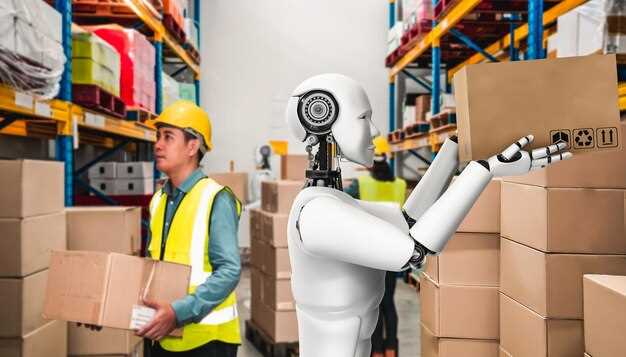
Deploy a centralized real-time task allocator that continuously allocate tasks and recalculate routes within minutes to keep operations smoother and more predictable.
Leaders across operations align with the scheduler, and whos responsibilities are clarified by automated handoffs, which improves accuracy and throughput.
The allocator fuses live sensor streams, surveillance feeds, and task queues to decide which robot or operator takes what task and which routes to follow, reducing idle time and conflicts, and addressing issues that come from congestion, causing smoother flows and safer work conditions.
Examples showcase the advantages of this approach by illustrating how automated routing reduces cross-aisle chatter, supports fast recovery from disruptions, and offers real-time visibility to stakeholders. It also helps weather contingencies, ensuring robots and humans adapt routes to avoid weather-affected zones and maintain safe distances.
- Data fusion: gather telemetry, surveillance, weather, and location data to map workloads and identify whos tasks.
- Task allocation and route optimization: continuously allocate tasks and compute routes that minimize travel time; update as conditions change, with minutes-level granularity.
- Safety and support: embed safety checks to lower injuries, provide decision support to operators, and address exceptions quickly to keep work moving.
- End-of-shift handling: plan ending-of-shift handoffs with balanced workloads and clear follow-ups to avoid spillover into the next shift.
Maintenance, Diagnostics, and ROI Evaluation
Begin with a condition-based maintenance plan supported by remote diagnostics and run a one-zone pilot with a six-axis robotic cell to quantify uplift in uptime, shipping throughput, and safety. Align tasks with compliance requirements and partner responsibilities to ensure safe operations across modern facilities.
Diagnostics should leverage vibration, thermal, and energy data from six-axis arms, conveyors, and forklifts across these zones; deploy sensors on critical assets, push data to dashboards that are also accessible to facilities teams and partner integrators, and set thresholds that trigger maintenance actions, enabling proactive servicing and reducing unexpected downtime.
ROI Evaluation: Define a clear model that accounts for hardware, software, integration, and training costs; quantify benefits as downtime reductions, a rise in productivity, and throughput gains in shipping and transport within each zone; calculate payback period and net present value; typical projects deliver a 15–30% reduction in maintenance costs and a 5–15% rise in productivity, with financial advantages spanning facilities and last-mile shipping.
Implementation tips: Start with integrating maintenance workflows with ERP and WMS, tag assets for compliance, and select a partner with proven experience in integrating robotics within modern facilities; deploy a modular software stack to add more robots, transforming environments, and handling complex use cases; track ROI monthly with dashboards to adjust budgets and schedules, making these changes also very actionable in practice.