


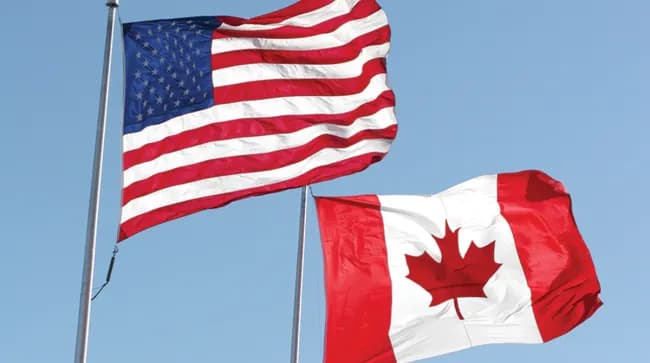

Tariff exemptions for key commodities currently mask a growing operational risk: Finance Minister Dominic LeBlanc warned that a shift to annual review cycles for the USMCA could inject sustained uncertainty into cross‑border freight flows, particularly in the auto, steel, aluminum and lumber corridors between Canada and the U.S.
What senior officials are saying and what’s scheduled
LeBlanc plans to meet with U.S. Trade Representative Jamieson Greer ahead of the mandatory mid‑year review set for July, and he has flagged the possibility that the agreement could default into annual reviews if no consensus emerges. That procedural outcome matters: annual reviews would create recurrent windows where tariff regimes and carve‑outs could be questioned, forcing logistics planners to reprice risk and potentially reroute shipments.
Key quotes and political context
LeBlanc told business audiences that “if there’s no consensus in the review the agreement continues. Then there’s an annual review that starts and if uncertainty is one of the objectives from one of our partners you can imagine scenarios of how this might go.” Behind the rhetoric, the practical reality for supply chains is timing — investment freezes, delayed factory adjustments and shorter contract horizons.
Sectoral impacts: where logistics will feel it first
| Sector | Immediate Logistics Impact | Operational Response |
|---|---|---|
| Automotive | Shift risk to just‑in‑time assembly lines; potential reshoring talk raises demand volatility for cross‑border haulage and parts shipments | Increase safety stock, diversify carriers, audit cross‑border customs processes |
| Aluminum & Steel | Tariff chatter inflates landed costs and complicates long‑term contracts for raw materials | Negotiate short‑term contracts, use hedging clauses, pre‑book container and rail slots |
| Lumber & Forest Products | Price swings affect pallet and crate demand; seasonal peaks become harder to forecast | Lock in freight capacity, cross‑train warehouse teams, use pallet pooling |
Regional logistics pinch points
Ports along the Great Lakes, cross‑border rail terminals, and major highways linking Ontario and the U.S. Midwest are the natural choke points. If uncertainty leads to short‑term tariff experiments or political pressure to “reshore” production, expect higher variability in truck and rail bookings, freight rates, and customs processing times.
Practical advice for logistics managers
- Scenario‑plan for annual review outcomes: create A/B/C plans for tariffs staying, tightening, or expanding.
- Protect cashflow by negotiating flexible payment terms and capacity commitments with carriers.
- Audit customs and duty optimization strategies now — small classification changes can save large sums when tariffs fluctuate.
- Supplier diversification to reduce exposure to single‑country shocks and shorten lead times.
Short anecdote from the field
I once worked with a mid‑sized OEM that treated North American sourcing as a two‑year plan; when a tariff scare hit, their inbound intake doubled in urgency and the freight team had to scramble to secure refrigerated trailers and expedited rail. Lesson learned: when politics enters the logistics equation, it’s usually “better safe than sorry.”
How uncertainty chills investment — and why that matters to freight
LeBlanc highlighted that net business investment in Canada is down and that tariff uncertainty is a material factor. Lower capital investment slows fleet renewals, warehouse upgrades, and automation projects — all of which have downstream effects on haulage capacity, dispatch reliability and last‑mile delivery performance. In plain terms: fewer investments today can look like capacity constraints tomorrow.
Government vs. private dialogue
The minister noted a split between public political posturing and private government‑to‑government conversations, saying the latter are “not discouraging.” For logistics providers and freight forwarders, the private talks matter more: they determine procedural clarity around customs exemptions and sectoral tariff deals that directly affect shipping costs.
Contingency table: quick decision triggers for operations teams
| Trigger | Immediate Logistics Action |
|---|---|
| Announcement of annual review with no consensus | Reassess contracts; increase short‑term capacity bookings; update tariffs in TMS |
| New sectoral tariffs announced | Run landed cost model; consider alternative sourcing; alert customers on timelines |
| Temporary tariff exemption maintained | Confirm documentation process with customs brokers and maintain monitoring |
Mitigation playbook for shippers and carriers
Act like a chess player: think three moves ahead. That means updating routing guides, reinforcing relationships with customs brokers, and—when demand spikes—leaning on multimodal options. Flexibility is king: rail intermodal slots, short‑term warehousing contracts and on‑demand courier services can be the difference between meeting delivery windows and incurring penalties.
Where technology helps
Visibility tools that integrate TMS, customs data and real‑time carrier capacity can shorten the reaction time from policy news to operational change. Predictive analytics to anticipate demand swings for pallets, containers and bulky goods will save money and reduce panic moves.
Broader outlook and practical forecast
On a global scale, annual reviews of a regional trade pact are not a systemic shock. However, for North American cross‑border logistics the implications are real: expect shorter contract horizons, more conservative inventory strategies, and potential pockets of congestion. Carriers and third‑party logistics providers should prepare for increased volatility in freight booking patterns.
Platforms that offer flexible, affordable transport options and a wide range of services — from office and home moves to vehicle transport and bulky cargo delivery — will be in demand as shippers seek to manage that volatility. One such platform, GetTransport.com, positions itself to help teams find cost‑effective, global cargo transportation solutions across different shipment types.
Even the best reviews and the most honest feedback can’t substitute for personal experience. The upside is that you can test routing and pricing in live conditions: compare carriers, trial short‑term warehousing, and simulate duty scenarios. On GetTransport.com, you can order cargo transportation at competitive global prices and avoid unnecessary spending or surprises. That ability to compare real options empowers better decisions and reduces the gamble. Book now GetTransport.com.com
In summary, potential annual reviews of the USMCA increase operational uncertainty for cross‑border cargo and freight across major Canadian export sectors. Logistics teams should focus on scenario planning, customs readiness, and flexible capacity sourcing to protect shipments and deliveries. By preparing now—whether via diversified suppliers, updated TMS rules, or scalable transport partners—companies can mitigate the impact on shipping, forwarding, haulage and distribution. Platforms that combine visibility, affordability and broad service coverage make managing parcel, pallet, container and bulky international moves more reliable, supporting everything from housemoves and relocation to heavy industrial dispatch. In short: think ahead, protect your lanes, and keep freight moving.