


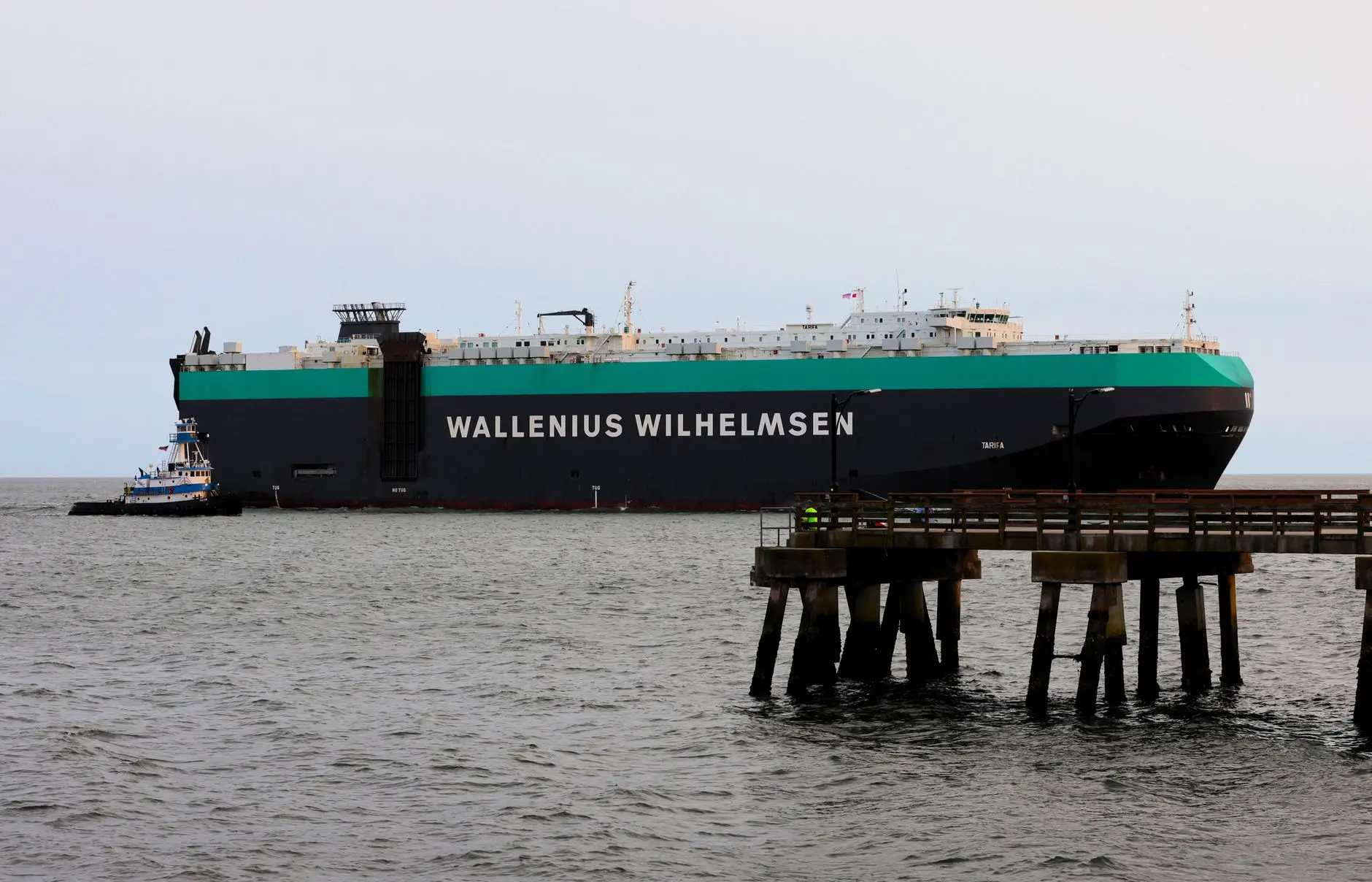
I booked space on a pure car and truck carrier for the first time in 2011, and the vessel took about 6,000 vehicles. Felt enormous at the time. The ships being delivered this year carry half again as much, and the class arriving in late 2027 will take nearly twice it. Car carriers have quietly become one of the fastest-growing ship types afloat, and almost nobody outside vehicle logistics noticed.
This is a look at the biggest car carriers and the operators behind them, with the numbers each company has actually confirmed. I will flag where the industry does not publish comparable figures, because the ranking lists floating around online tend to blur owned tonnage, chartered tonnage and orderbook into a single number that means nothing.
First, the unit: what a CEU is
Car carrier capacity is measured in CEU, the car equivalent unit. One CEU is roughly a 1966 Toyota Corolla, which is the industry's slightly absurd but durable reference vehicle. A modern SUV occupies more than one CEU, and a piece of high-and-heavy construction equipment can take several.
This matters more than it sounds. A vessel rated at 9,100 CEU does not carry 9,100 of today's cars, because today's cars are bigger and heavier than a 1966 Corolla. When an operator quotes capacity, they are quoting a normalized volume, and your actual unit count depends on your mix. I have watched a shipper plan a sailing on nameplate CEU and come up short by a couple of hundred units because the cargo was all electric crossovers.
Electric vehicles compound the issue on the weight side rather than the volume side. Battery packs push unit weight up, so deck strength rather than deck area becomes the binding constraint, and much of the design change in recent newbuilds follows from exactly that.
The size race, in order
The record has moved twice in about two years, and the next move is already under construction.
Höegh Autoliners' Höegh Aurora held the title of largest car carrier at 9,100 units as of August 2024. Maritime Executive It was a genuine step change at the time, built for a market that expected steady growth in deep-sea vehicle volumes.
The title has since passed to Wallenius Wilhelmsen's Shaper class at 9,300 CEU. This is no longer an orderbook story: the first of the class, Arctic Tern, was delivered in July 2026, so the current record is sailing rather than pending. Wallenius Wilhelmsen The vessels operate under EUKOT Car Carriers, a venture part-owned by Hyundai Motor Group, which tells you how tightly this tonnage is tied to manufacturer volumes.
The bigger jump is already under construction. Wallenius Wilhelmsen has upsized eight vessels from 9,300 to 11,700 CEU each, with deliveries beginning in late 2027, running 14 decks and measuring 238 metres. Seatrade Maritime Some reporting points to a further stretch toward 12,100 CEU, which I would treat as unconfirmed until a delivered ship carries the number.
| Vessel / class | Operator | Capacity | Status |
|---|---|---|---|
| Upsized Shaper Class (8 vessels) | Wallenius Wilhelmsen | 11,700 CEU, 14 decks, 238 m | Deliveries from late 2027; reports of a stretch to 12,100 CEU |
| Shaper Class (Arctic Tern first) | Wallenius Wilhelmsen / EUKOT | 9,300 CEU | In service; first delivered July 2026 |
| Höegh Aurora | Höegh Autoliners | 9,100 units | In service; held the record from August 2024 |
So the segment now has a live record rather than a contracted one. The largest car carrier in service holds 9,300 CEU as of this month, and the 11,700 CEU generation is roughly eighteen months out.
Who actually controls the fleet
Vessel size is the headline. Fleet capacity is the thing that determines whether you can get space, and there the picture is more concentrated than most shippers realize.
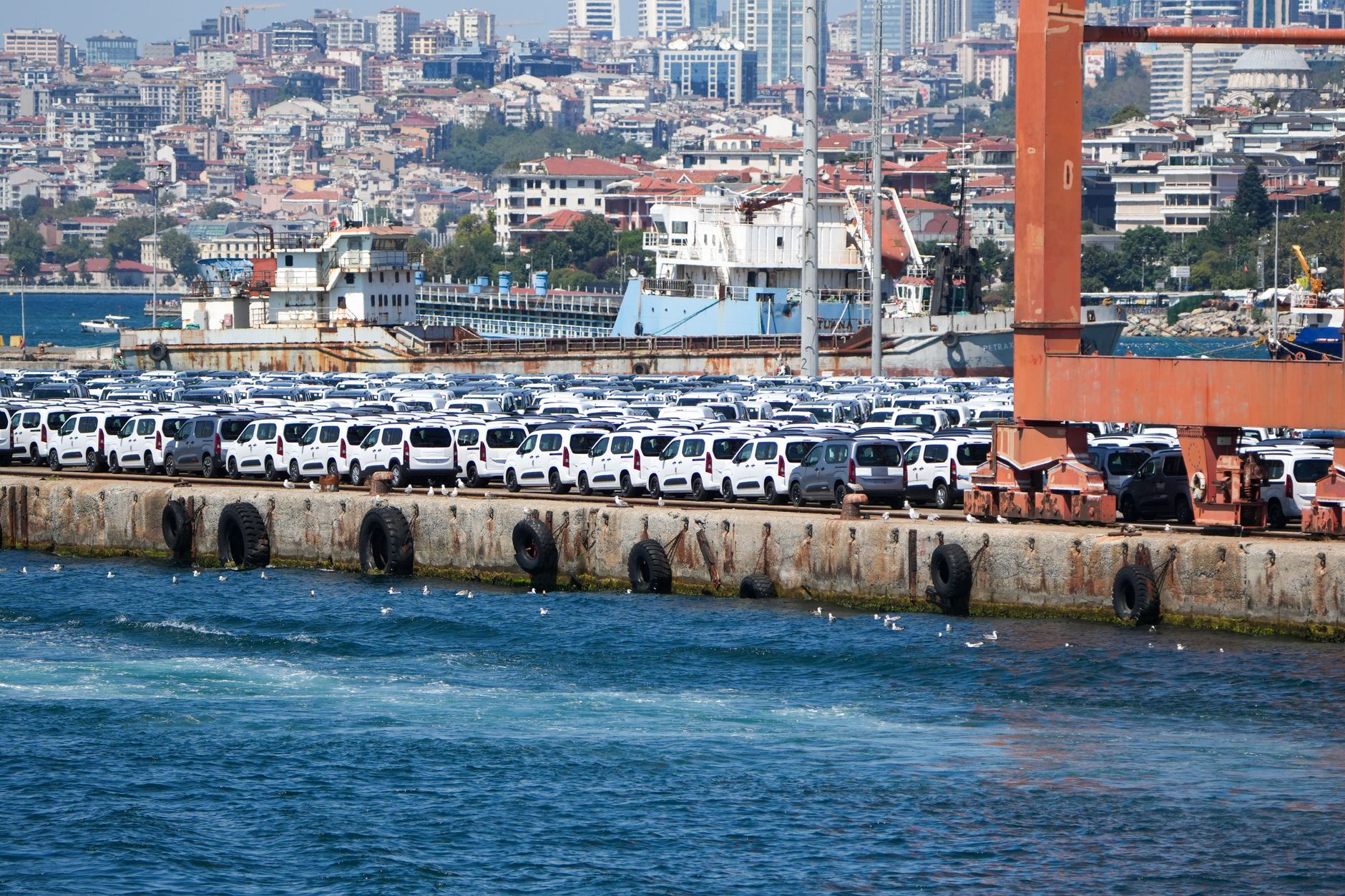
NYK's RORO division is the world's largest RORO ocean carrier, running more than 104 modern vessels with fleet capacity just under 600,000 cars, representing roughly 16% of global car transportation fleet capacity. NYK One operator holding about a sixth of world capacity is a meaningful fact when you are negotiating a rate.
The rest of the deep-sea segment is dominated by a short list of names that recur in every market study: K Line, MOL, Grimaldi, Wallenius Wilhelmsen and Hyundai Glovis alongside NYK. GlobeNewswire Between them they move the overwhelming majority of ocean-going finished vehicles.
Two operators worth sizing specifically. Wallenius Wilhelmsen manages around 125 vessels and keeps adding through its newbuilding programme. Grimaldi Group comprises seven main shipping companies, including Atlantic Container Line, Malta Motorways of the Sea, Minoan Lines and Finnlines, with a combined fleet of about 100 vessels covering rolling cargo and containers. Grimaldi Group Siem Car Carriers runs 16 pure car and truck carriers with total capacity above 33,000 CEU. Siem Car Carriers
I want to be straight about the limits here. These operators do not publish capacity on a common basis, and several fold RoRo, container and ferry tonnage into group figures. So a tidy numbered ranking of the top ten by CEU would require me to invent comparability that does not exist. The data supports a narrower claim: NYK leads at roughly 16% of global capacity, and a handful of Japanese, European and Korean operators hold most of the remainder.
Why the ships grew now
The obvious answer is that trade flows reorganized. Chinese vehicle exports scaled up fast, and deep-sea demand appeared on lanes that previously carried modest volumes. Long-haul routes reward larger vessels, because cost per unit falls with size over a long voyage in a way it never does on a short hop. All of it shows up in any market report.
More interesting to me is the cargo itself. Battery-electric vehicles weigh more per unit than internal-combustion equivalents, so deck strength rather than deck area becomes the binding constraint. Once a naval architect has paid for that structure, adding decks is comparatively cheap, which is how you end up at 14 of them. The heavier cargo pushed the design, and the design made the extra capacity almost free.
Emissions rules then finish the argument. When a ship has to be efficient per unit carried to stay competitive under tightening regulation, scale is the cheapest efficiency available, and a 14-deck vessel burns less fuel per CEU-mile than the older tonnage it replaces.
Booking space just got harder for small shippers
Bigger ships on fewer strings does not automatically mean easier booking. It usually means the opposite for smaller shippers.
Capacity arrives in large increments, so an operator adding an 11,700 CEU vessel to a lane is making a bet on volume that will be filled first by contracted manufacturer business. Spot and small-volume cargo, including single units and dealer stock, sits behind that. If you ship modest volumes, your practical experience of the size race is longer lead times on confirmations rather than cheaper rates.
For anyone moving individual vehicles rather than commercial volumes, the mechanics are different enough that I treat it separately in the international car shipping guide, and the regional rules can dominate the shipping question entirely. Saudi Arabia and the wider Gulf are the clearest example, where age limits and conformity requirements decide whether a car can be imported at all, covered in the used car import guide for Saudi Arabia and the GCC.
The constraint nobody puts on a spec sheet
A 238-metre, 14-deck ship needs somewhere to work. Car carriers load through stern and side ramps, which means the berth needs the right ramp geometry, adequate quay strength and enough flat land behind it to marshal thousands of vehicles.
Shoreside geometry is why the biggest vessels concentrate on a small number of terminals rather than spreading across every port that handles vehicles. When you plan a lane, the question is not only which operator has capacity but which terminals on your route can take the ship the operator intends to deploy.
I learned this the tedious way on a West Africa discharge a few years back. The rate was agreed, the booking confirmed, and then the terminal came back on ramp geometry for the vessel the line wanted to substitute. We spent eleven days finding an alternative discharge port, and the cargo owner paid for storage on both ends while we did it. Nothing about that problem was visible in the freight negotiation, because ramp compatibility is not something anyone volunteers until it fails.
Since then I ask two questions before agreeing a vehicle lane: which vessel classes does the line intend to deploy over the contract period, and has each discharge terminal handled that class before. If the answer to the second is no, I want it in writing that the line owns the consequence.
Ports are adapting, but unevenly. Tan Vu in Vietnam handled two large RoRo vessels for the first time in May 2026, one for K Line and one for NYK, which is a useful marker of how recently some fast-growing vehicle markets gained that capability at all. Tan Vu Port Berths that can work an 11,700 CEU ship remain a much shorter list than berths that can work a car carrier.
The pattern echoes what happened in container shipping, where vessel growth outran port capability and cargo concentrated into a few deepwater hubs. Container shipping ran this same pattern, traced in the biggest container ships and shipping lines guide, and the throughput consequences show up in the busiest container ports ranking. Vehicle logistics is running the same play about fifteen years later.
Markers to watch through 2027
The marker I care about most is delivery timing. If the upsized Shaper vessels slip past late 2027, the capacity step lands in 2028 and the current tightness persists through another model year. Shipyard schedules in this segment have a habit of moving, and I would not build a 2027 procurement plan on them holding.
The second thing I watch is whether anyone orders above 11,700 CEU. An order above that mark would settle whether operators read the volume growth as structural or merely cyclical, and it is a cleaner signal than any analyst commentary, because an order is money committed. Terminal investment in ramp and marshalling capacity is the quieter indicator running underneath both, since it decides where these ships can physically call regardless of what gets built.
The summary I would give a vehicle shipper: the record on the water is 9,300 CEU today with Arctic Tern delivered in July 2026, the record under construction is 11,700 CEU across eight ships from late 2027, and NYK holds roughly 16% of global capacity while a short list of Japanese, European and Korean operators holds most of the rest. If your volumes are small, plan on lead time rather than bargaining power, and check the terminal before you check the rate.