




Ras Tanura is the largest crude oil loading facility in the world, and for almost four months in 2026 it loaded nothing. Saudi Aramco halted the terminal on 2 March 2026 and resumed crude liftings in the last week of June. That single outage explains most of what happened to tanker rates this year, so any 2026 ranking has to show availability next to capacity.
I have listed the terminals by loading capability, then flagged which ones actually performed. Capacity tables age badly in a year when three of the top ten stopped loading for reasons that had nothing to do with oil demand.
The largest crude oil export terminals in 2026
| # | Terminal | Country | Capacity, million barrels a day, plus 2026 status |
|---|---|---|---|
| 1 | Ras Tanura | Saudi Arabia | Cited at 6.5, and at 9 on other counts. Loadings suspended from 2 March 2026, resumed late June |
| 2 | Basra terminals | Iraq | About 3.5 combined: 1.25 through Al Basrah Oil Terminal plus 2.25 across the single point moorings |
| 3 | Corpus Christi | United States | Around 2.4 to 2.5 at the record pace set near March 2026, roughly half of national crude departures |
| 4 | Yanbu | Saudi Arabia | Red Sea outlet rated at 3 to 4, yet shipping above 5 in June 2026 once Hormuz closed |
| 5 | Primorsk plus Ust-Luga | Russia | About 1 at Primorsk plus about 0.7 at Ust-Luga, quoted jointly as 2, both struck repeatedly during March 2026 |
| 6 | Nederland | United States | Largest singly owned above-ground crude facility nationally, fed by pipeline delivery of up to 2 |
| 7 | Houston | United States | Averaging 1.3 through early 2026, narrowing the gap behind its Texas neighbour |
| 8 | Novorossiysk, Sheskharis | Russia | Normally near 0.7, running under that after the March 2026 strikes, then halted in late July |
| 9 | LOOP | United States | 1.2 of throughput capability plus 67 million barrels of storage, the only berth able to fully load a VLCC |
| 10 | Enbridge Ingleside | United States | Handled above 415 million barrels during 2025, about 25 percent of Gulf Coast departures |
Two of those entries are groups rather than single berths, and that is deliberate. Iraqi and Russian export capacity is only meaningful as a system, because pipelines feed several moorings that substitute for each other when one goes down.
The Ras Tanura outage reset the tanker market
Ras Tanura sits on the Gulf coast and has been the pivot of seaborne crude for decades. Sources disagree on its rating: 6.5 million barrels a day appears in most references, while some describe it as capable of 9 million. Before the 2026 conflict it was moving more than 5 million barrels a day of actual liftings, which is the number that matters for chartering.
The suspension from 2 March 2026 followed a drone strike on the associated refinery, and it was described as precautionary rather than damage-driven. Shipping data puts the first resumed cargo on 26 June 2026, after a gap of almost four months. During that window buyers in Asia had to source barrels from the Atlantic basin, and the freight consequences were immediate: longer voyages, tighter VLCC availability plus higher war risk premiums on Gulf calls. We traced the routing arithmetic of that period in our Strait of Hormuz shipping guide.
United States exports hit records while the Gulf was shut
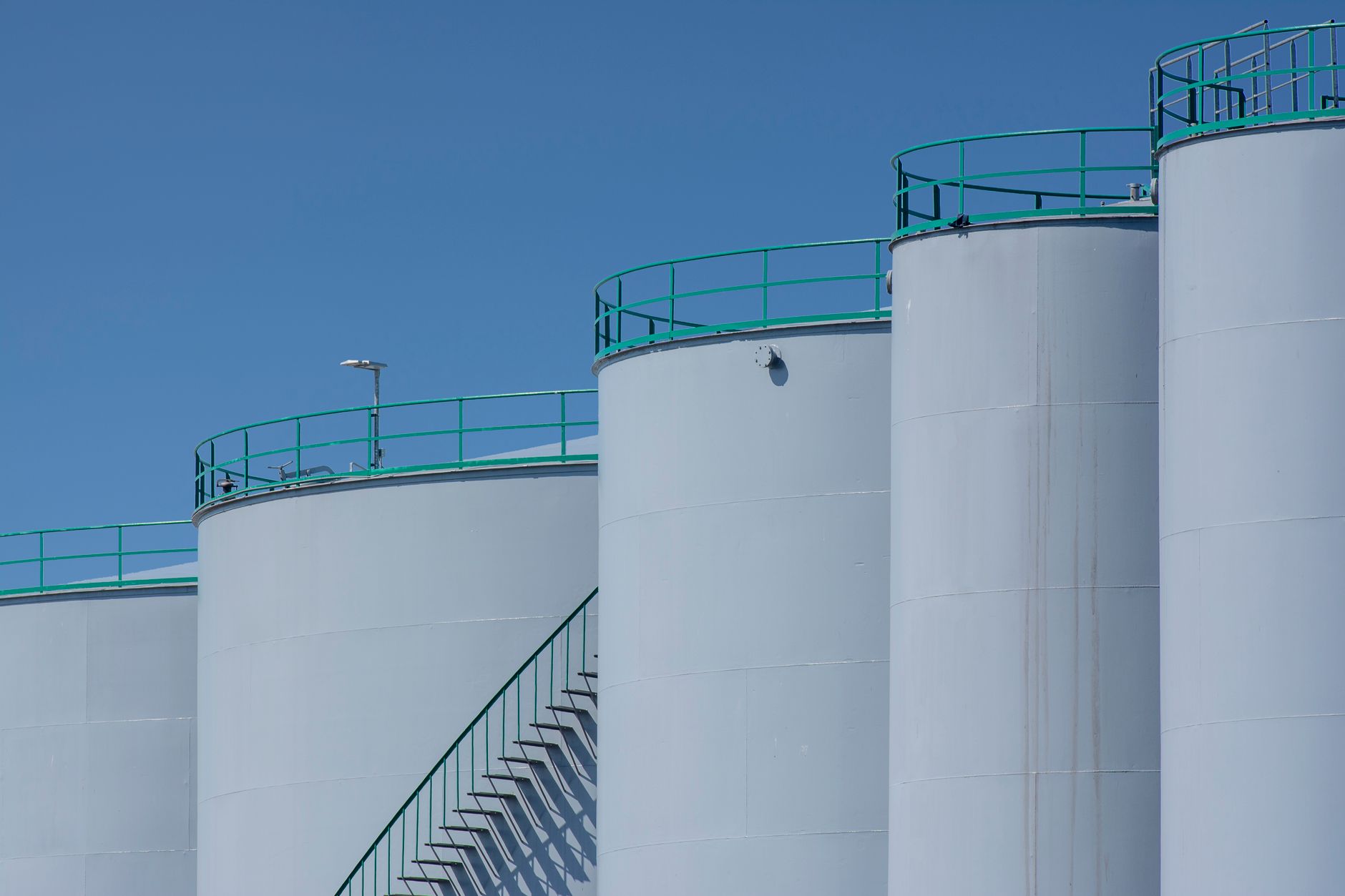
The substitution shows up cleanly in American figures. United States crude exports averaged 5.3 million barrels per day, commonly written bpd, during April 2026 on the monthly series, against 3.9 million recorded in February before the conflict, and weekly data briefly touched 6.44 million bpd late in the month. Gulf Coast departures held above 5 million bpd for four consecutive weeks.
Corpus Christi carried most of that. The port was moving roughly 2.4 to 2.5 million bpd at its March 2026 peak, close to half of all national crude exports, which places it third in the world behind the Saudi and Iraqi systems. Houston averaged 1.3 million bpd over the same period, and the gap between the two Texas ports has been narrowing steadily.
Not every American terminal benefited. LOOP, the offshore Louisiana port with 1.2 million bpd of throughput capability and 67 million barrels of storage, recorded export loadings of just 65 thousand bpd in the first quarter, its weakest quarter since it began exporting in 2018. Its niche is full VLCC loading rather than volume, so it wins on specific cargoes rather than on aggregate flow.
Russian terminals are the availability story of 2026
Primorsk and Ust-Luga are jointly credited with 2 million bpd of Russian crude exports, and both were hit three times in five days in late March 2026. Terminal by terminal the arithmetic comes out lower: roughly 1 million bpd at Primorsk plus about 700,000 at Ust-Luga, so 1.7 million together, leaving some 300,000 bpd in the headline pair that the individual ratings do not account for. The effect on flows was measurable rather than theoretical: Russian oil exports fell 43 percent in the week of 22 to 29 March, to 2.318 million bpd from 4.072 million the week before. Primorsk loaded four tankers instead of ten, Ust-Luga two.
The Black Sea followed, in two stages rather than one. Sheskharis, the Novorossiysk crude terminal and the largest Russian outlet on that coast, normally lifts around 700,000 bpd. It was already working below that rate after the March 2026 strikes, then stopped loading tankers altogether in late July following a further wave of attacks. Facilities at the Caspian Pipeline Consortium marine complex were also struck, damaging a single mooring point pipeline plus a loading terminal, with four product storage tanks catching fire. Kazakhstan, whose crude moves through that terminal, publicly asked for the attacks to stop, which is a reminder that an export terminal is rarely a single country's asset.
What a capacity number does not tell you
Every figure in the table above is a nameplate or a peak, and 2026 has been an unusually poor year for treating either as a forecast.
The physical detail behind a loading rate is worth knowing. A quay rating combines pumping capacity at the manifold, vapour recovery throughput plus the draught available alongside, and the grade matters too: sour heavy barrels move slower than light sweet crude or condensate, and an Aframax parcel occupies a berth almost as long as a Suezmax one. Where draught is insufficient for a laden supertanker, cargo reaches the ship by lightering from smaller hulls offshore, which adds days of laytime and generates demurrage that never appears in a capacity table.
Iraqi capacity illustrates the problem. The southern system is generally cited at about 3.5 million bpd, split between Al Basrah Oil Terminal at 1.25 million plus 2.25 million across the offshore moorings. Yet other assessments describe the Basrah terminal alone as able to move up to 3 million bpd when every one of its four supertanker berths runs flat out. Both statements can be defended, because one measures sustained system flow and the other measures simultaneous berth throughput.
Saudi Red Sea capacity is where the published figures failed hardest this year. Yanbu South Terminal added 3 million bpd of west coast capability when commissioned, standing assessments put the two Yanbu berths at 3 to 4 million bpd, and the East-West pipeline was widely treated as the binding constraint. June 2026 contradicted that reading: with Hormuz closed, Saudi shipments through Yanbu ran above 5 million bpd. Pipeline and berths both delivered more than the reference numbers allowed, which is a lesson in how an estimate calcifies while a route goes untested.
- Check the loading month, not the nameplate. Ras Tanura was rated above 6 million bpd while loading nothing for most of the second quarter.
- Distrust untested capacity figures. Yanbu was rated at 3 to 4 million bpd until June 2026, when it shipped above 5 million.
- Reconcile joint figures against terminal ratings. The Baltic pair is quoted at 2 million bpd while its components sum to about 1.7 million.
- Watch war risk premiums alongside freight. In 2026 insurance moved faster than rates on Gulf plus Black Sea calls.
- Confirm whether a terminal exports or re-exports. Storage hubs report throughput that includes imports and transfers.
Crude terminals share their berth economics with gas, where the concentration is even sharper, as our ranking of the largest LNG export terminals shows. The fleets that lift these cargoes are ranked separately among the largest tanker shipping companies.
Common questions
What is the largest crude oil export terminal in the world? Ras Tanura in Saudi Arabia. Published ratings range from 6.5 to 9 million bpd, and actual liftings exceeded 5 million bpd before 2026. It was suspended from 2 March 2026 and loaded its first resumed cargo on 26 June.
Which is the largest crude export terminal in the United States? By volume, the port complex at Corpus Christi, which reached about 2.4 to 2.5 million bpd in March 2026 and handles close to half of national crude exports. The Enbridge Ingleside facility inside that complex handled more than 415 million barrels in 2025.
How much did the 2026 attacks cut Russian crude exports? In the week of 22 to 29 March 2026, total Russian oil exports fell 43 percent to 2.318 million bpd from 4.072 million a week earlier, with Primorsk down to four tanker loadings from ten.
Why do published terminal capacities differ so widely? Because some numbers measure sustained system flow while others measure what every berth could load simultaneously. Al Basrah appears as both 1.25 million and up to 3 million bpd for that reason, so I always check which basis a source used.
Sources: Saudi Aramco terminal statements plus contemporary reporting on the March to June 2026 Ras Tanura suspension, Iraqi Gulf terminal capacity assessments, Energy Information Administration weekly and monthly crude export series for 2026, RBN Energy Gulf Coast export analysis, LOOP quarterly export volumes, Enbridge Ingleside Energy Center 2025 disclosures, Energy Transfer Nederland terminal data, plus reporting on the March and July 2026 attacks on Primorsk, Ust-Luga, Novorossiysk and the Caspian Pipeline Consortium terminal. Loading availability changes weekly in the current security environment.