


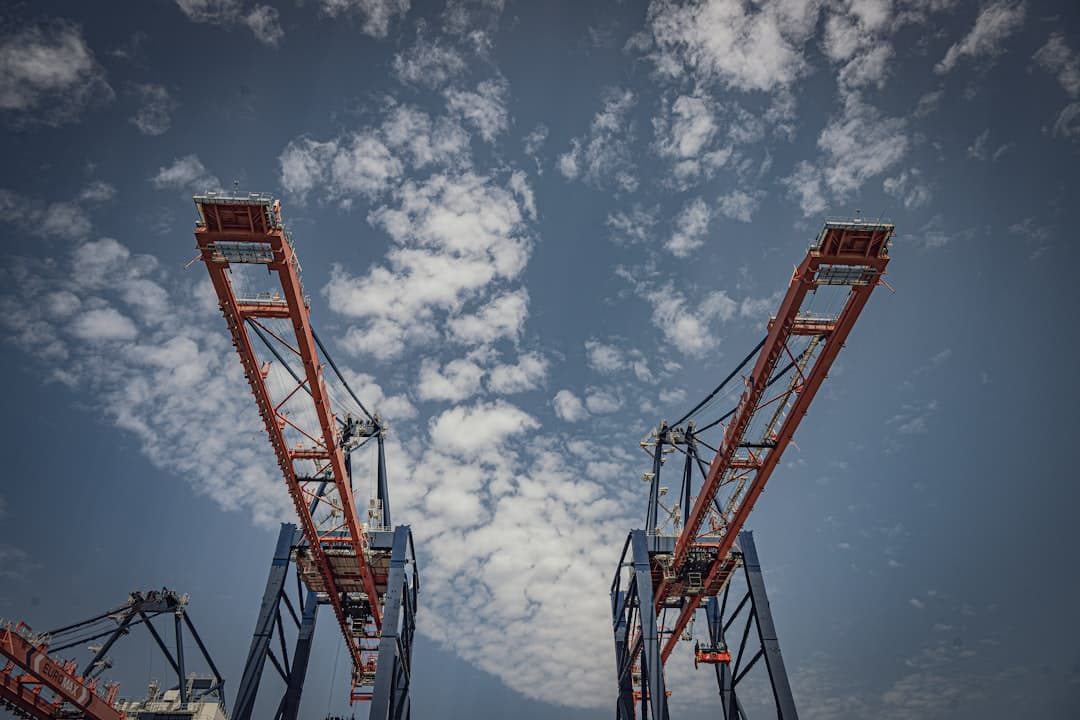
The heaviest lift ever made by a crane was 20,133 tonnes, set by the Taisun gantry crane at Yantai on 18 April 2008 when it raised a water-ballasted barge. That record has stood for eighteen years. The largest crane afloat, Heerema's semi-submersible vessel Sleipnir, can lift 20,000 tonnes with its two revolving cranes working in tandem, and it has been in service since May 2019.
None of those machines will ever touch a container. The crane that decides whether your box makes its connection is rated at somewhere around 65 tonnes under the spreader, and I have watched a terminal miss a berth window with eight of them standing over the ship. Capacity is the number that gets published. Reach and cycle time are the numbers that get billed.
The biggest cranes in the world, ranked by lifting capacity
| # | Crane | Type | Capacity | Where it works |
|---|---|---|---|---|
| 1 | Honghai Crane | Gantry | 22,000 t | Chinese offshore yard, completed 2014 |
| 2 | Taisun | Gantry | 20,000 t, record lift 20,133 t | Yantai yard, 133 m tall with a 120 m span |
| 3 | SSCV Sleipnir | Crane vessel | 20,000 t in tandem | Offshore platforms and decommissioning |
| 4 | SSCV Thialf | Crane vessel | 14,200 t in tandem | North Sea and worldwide offshore |
| 5 | Sarens SGC-250 | Land-based ring crane | 5,000 t | Hinkley Point C nuclear site, UK |
| 6 | SANY SCC45000A | Crawler | 4,500 t | Wind and petrochemical construction |
| 7 | XCMG XGC88000 | Crawler | 3,600 t | Offshore wind and refinery modules |
| 8 | Megamax ship-to-shore | Container gantry | Typically about 65 t under spreader | Deep-sea container terminals |
The order of that table tells you what heavy lifting is actually for. Everything above the container crane exists to assemble things that cannot be assembled where they are used: platform topsides, reactor containment rings, monopile foundations. Sarens built the SGC-250, nicknamed Big Carl, with a nominal moment of 250,000 tonne-metres, and at Hinkley Point C it is placing more than 700 prefabricated components including three steel rings of 47 metres diameter, the heaviest of them over 1,000 tonnes.
Why the record holders float or sit on rails
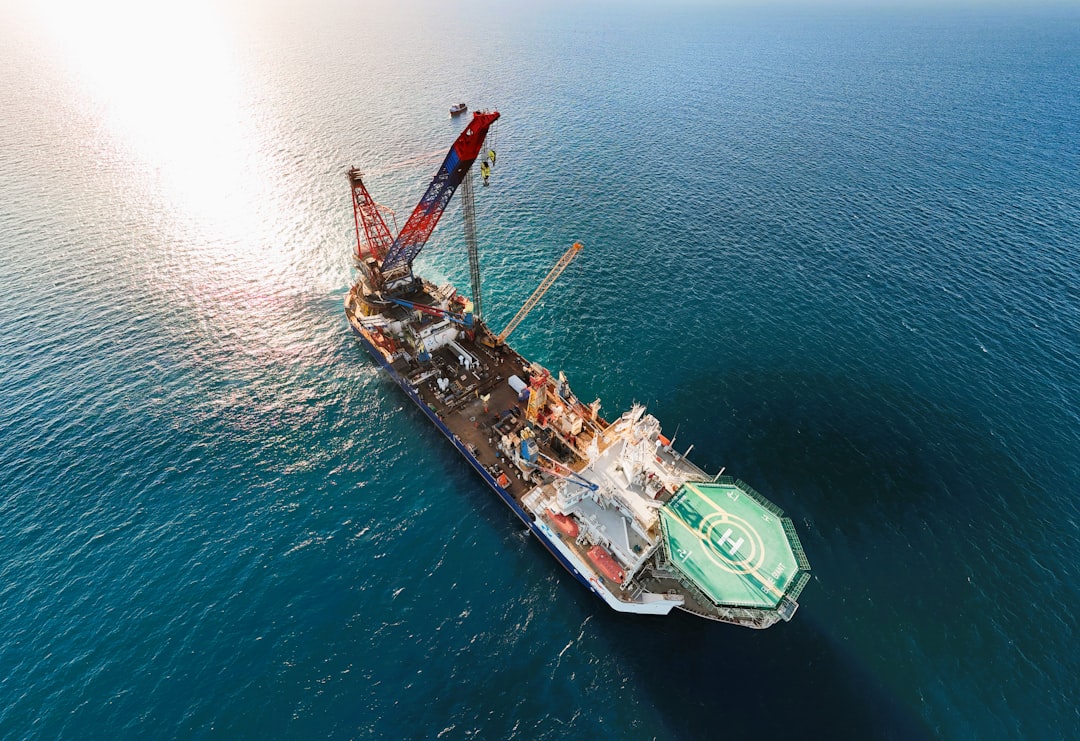
A crawler crane has to carry its own counterweight over ground that will bear it. That is the ceiling the SANY SCC45000A runs into at 4,500 tonnes with its twin-boom arrangement, a 126.5 metre main boom and an optional luffing jib taking system length to 216.5 metres. Every tonne above that becomes a ground-bearing problem before it becomes a structural one.
Put the same crane on a semi-submersible hull and the water carries the counterweight for you. That is why Sleipnir doubles the best land-based figure without being a more advanced machine in any interesting sense. The gantry solution is the third answer: fix two legs into a yard, span 120 metres between them as Taisun does, and lift what you like as long as it stays inside the box.
The crane that moves your cargo is a geometry problem
Ship-to-shore cranes are sized by reach rather than by tonnage. The megamax class, built for the largest container ships in service, runs to an outreach of 69.5 metres over the water with a back-reach near 23 metres and a lift height over the rail of 53 metres, which is what it takes to work across 24 rows of containers on deck. Simulator specifications for operator training put the class in a band of 50 to 72 metres of outreach and 38 to 50 metres of spreader height.
Those dimensions are why crane replacement is a berth-level decision rather than an equipment purchase. GCT Deltaport in British Columbia brought its newest megamax units online in December 2025 as part of a 170 million dollar project, adding the first remote-operated ship-to-shore technology in North America along with regenerative drives that recover roughly 70 percent of the energy generated in lowering. DP World Southampton now runs ten Liebherr megamax cranes. In both cases the quay had to be strengthened and the rail gauge checked before anything was ordered.
Moves an hour beat tonnes every time
Here is the metric that never makes a superlative list. A terminal plans around a crane rate expressed in container moves an hour, and the difference between a good berth and a poor one is a handful of moves per crane multiplied by the number of cranes assigned. A 24,000 TEU vessel with a large exchange gets six to eight cranes working simultaneously, so a shortfall of five moves an hour per crane costs the operator a shift.
When someone asks me why their vessel is waiting, the answer almost never involves lifting capacity. It involves how many cranes the terminal could assign that night, whether the yard cycle kept up with the quay, and whether the ship's stowage forced the gangs to work the same bay twice. The tonnes printed on the datasheet are irrelevant once a loaded 40-foot box weighs under 30 tonnes.
Who is allowed to sell you one
The supply side has become a policy question. Shanghai Zhenhua Heavy Industries, ZPMC, holds over 70 percent of the global ship-to-shore market and accounts for close to 80 percent of the STS cranes standing in United States ports. In 2024 the company delivered more than 150 STS cranes to 32 countries.
Washington moved against that position under a Section 301 action covering maritime and shipbuilding. The measures set 100 percent tariffs on China-linked ship-to-shore cranes and intermodal chassis, with a proposal to go up to 150 percent on rubber-tyred gantries, rail-mounted gantries, automatic stacking cranes and terminal tractors. Stacked on existing duties, buyers were quoting exposure between 125 and 270 percent. Then the whole package was paused. Docking fees on Chinese-built ships and the crane tariffs were both suspended for one year, running from 10 November 2025 to 9 November 2026.
Nobody in the industry is treating that pause as a reprieve. As of July 2026 United States port operators expect the duties to arrive when the suspension lapses, and the American Association of Port Authorities has put the cost to ports at 6.7 billion dollars over ten years if they do. If the measures return they return with their scheduled escalation intact rather than starting from zero, which is why order books have been pulled forward rather than cancelled.
- If you are a terminal operator ordering now: the window closes on 9 November 2026, and a crane ordered in the second half of 2026 will be delivered well after that date.
- If you are a shipper: this shows up as terminal handling charges two or three years out, not as a line on your current invoice.
- If you are modelling terminal capacity: the global STS market was around 3.3 billion dollars in 2025 and is forecast near 4.7 billion by 2034, a growth rate under 4 percent a year, so nobody is building their way out of a crane shortage quickly.
Where this fits with our other rankings
Crane geometry is downstream of ship size, so read this with our ranking of the busiest container ports and the largest port operators, who are the actual buyers in the tariff story above. If your cargo needs the machines at the top of the table rather than the bottom, our guide to project, out-of-gauge and breakbulk cargo covers how those lifts are contracted and surveyed. Berth depth sets the ship, and the ship sets the crane, which is the argument in our ranking of the deepest ports.
Frequently asked questions
What is the biggest crane in the world?
By lifting capacity, the Honghai gantry crane at 22,000 tonnes, completed in 2014. The verified record for the heaviest weight ever lifted belongs to Taisun at 20,133 tonnes on 18 April 2008. Among mobile machines, Heerema's Sleipnir lifts 20,000 tonnes with both cranes in tandem.
What is the biggest land-based crane?
The Sarens SGC-250, known as Big Carl, rated at 5,000 tonnes and 250,000 tonne-metres. It has spent recent years on the Hinkley Point C nuclear project placing containment rings of 47 metres diameter, with individual lifts above 1,000 tonnes.
How big is a ship-to-shore container crane?
A megamax unit reaches about 69.5 metres over the water and lifts to roughly 53 metres above the rail, enough to work 24 rows across on the largest container ships. Its rated load under the spreader is usually near 65 tonnes, far below what a laden box needs, because the constraint is reach rather than weight.
Are Chinese port cranes still being tariffed in the United States?
Not at the moment. The 100 percent tariff on China-linked ship-to-shore cranes was announced under a Section 301 action and then suspended for one year alongside the port fees on Chinese-built vessels, from 10 November 2025 to 9 November 2026. Port operators expect reinstatement rather than extension, and the American Association of Port Authorities estimates a 6.7 billion dollar cost to United States ports over a decade if the duties take effect.
Why does crane capacity matter so little for container terminals?
Because no container comes close to the rating. Terminal productivity is governed by moves an hour per crane and by how many cranes can be assigned to a vessel at once, so berth performance improves through yard cycle and gang allocation rather than through a stronger machine.
Capacities are the manufacturers' and owners' published ratings, and gantry-crane figures for Chinese yards are difficult to verify independently, which is why the record lift rather than the nameplate is cited for Taisun. Ship-to-shore dimensions describe the megamax class in general and vary by order. Market share figures for ZPMC come from United States government and industry assessments and differ by a few points depending on whether the base is cranes in operation or cranes delivered. Tariff status changes: the suspension described here runs to a stated review date, so confirm the current position with your customs broker before pricing equipment.