


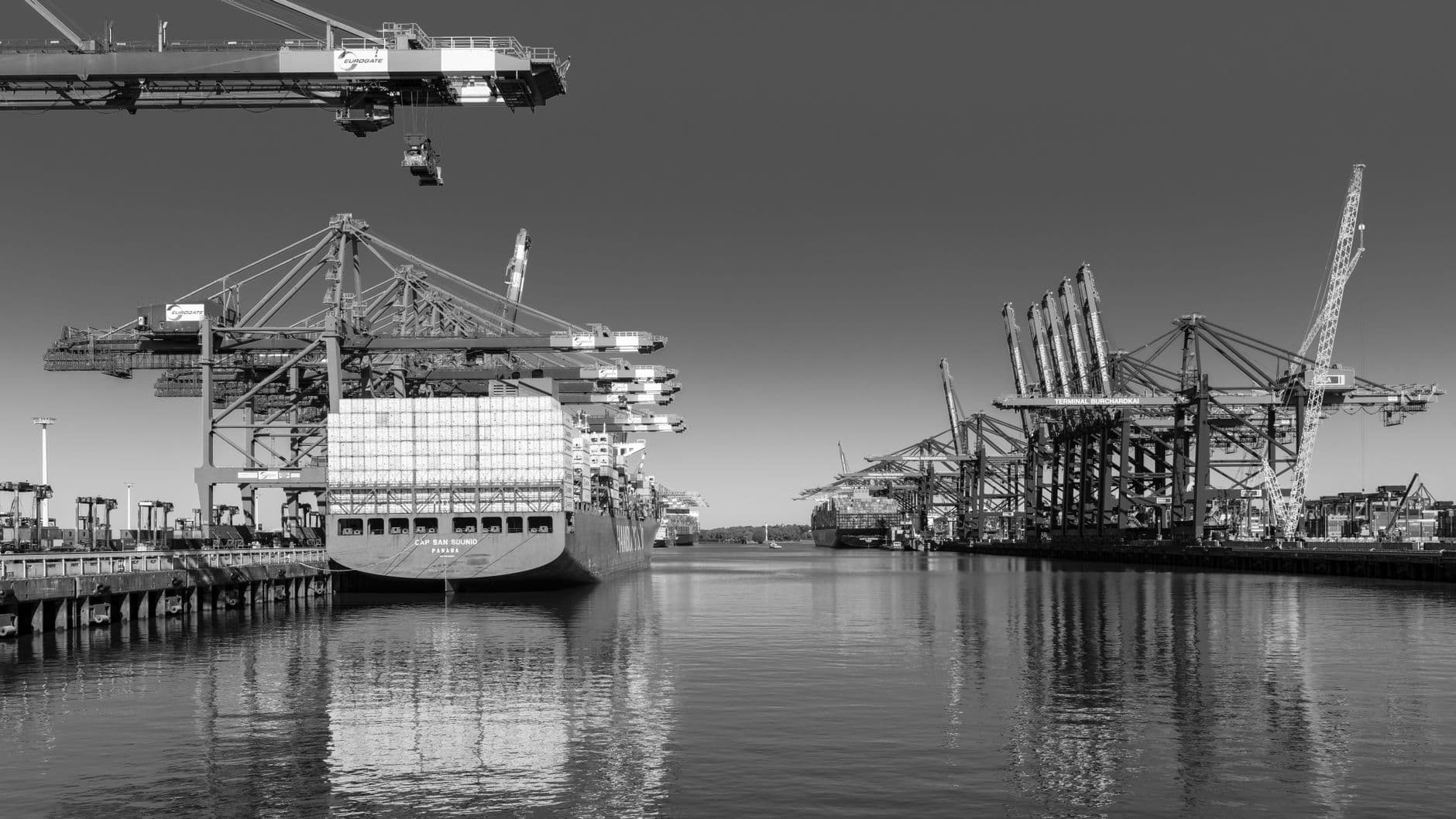

The Port of Sines in Portugal is the deepest seaport in the world at 28 m, ahead of Yangshan at 27 m and Rotterdam at 24 m. No merchant ship afloat loads to anything close to 28 m, and from 15 August 2026 the Panama Canal restricts transits to 14.78 m. Port depth is a ceiling, not a permission, and the binding number usually sits somewhere else on the route.
This distinction cost a client of mine two weeks once. The load port could take the draft, the discharge port could take the draft, and the vessel still had to part-load because the canal on the way through was in a drought restriction. Nobody had checked the shallowest point of the voyage, which is the only depth figure that actually governs how much cargo moves.
The deepest seaports, ranked
| # | Port | Country | Depth | Natural or engineered |
|---|---|---|---|---|
| 1 | Sines | Portugal | 28 m | Natural basin behind breakwaters |
| 2 | Yangshan | China | 27 m | Engineered offshore island port |
| 3 | Rotterdam | Netherlands | 24 m | Dredged, Maasvlakte 2 to −24 m |
| 4 | Tanger Med | Morocco | 22 m | Deepwater Strait location |
| 5 | Port Hedland | Australia | 20 m | Dredged bulk export channel |
| 6 | Colombo (ICT) | Sri Lanka | 18 m | Deepwater terminal |
| 7 | Santos | Brazil | 17 m | Dredged estuary channel |
| 8 | Busan | South Korea | 17 m | Deepwater terminals |
| 9 | Hamburg | Germany | 16 m | Dredged river approach |
| 10 | Visakhapatnam | India | 16 m | Natural depth |
Notice how quickly the table falls away. First place is 28 m and tenth is 16 m, and the ships that fill the world's container services need roughly 16 m when fully loaded. Most of the depth in the top half of this list is headroom rather than requirement.
Sines: 28 m without a dredger
Sines sits south of Lisbon and holds the deepest natural water of any European port. Its breakwaters shelter a basin deep enough for any ship afloat or on a drawing board, which means it reaches 28 m without dredging.
One qualification matters before anyone books on the strength of that figure: depth at Sines varies by terminal. The 28 m applies to the deepwater berths that can take very large tankers of up to about 350,000 dwt, while the multipurpose terminal reaches 18 m. A port's headline depth is almost always its deepest berth, not the one your cargo is going to.
That last clause about dredging is the commercially interesting one. Dredged depth is not a one-time achievement, it is a maintenance programme. Sediment returns, surveys repeat, and the dredger comes back on a cycle measured in months for river ports. A port with natural depth carries none of that cost, and over the life of a terminal the difference in operating expense is substantial.
Yangshan and Rotterdam: depth as an engineering decision
Yangshan at 27 m is the other kind of answer. China built an offshore island terminal connected by a bridge because the natural approach to Shanghai could not take the ships, and the result is both the world's largest automated container facility and its second-deepest port.
Rotterdam's Maasvlakte 2 deepened channels and basins to −24 m, which is why northern Europe's largest gateway can take the biggest boxships fully laden while Hamburg, 100 km up a river at 16 m, plans its calls around tide windows. The two ports are in the same trade with a depth difference that shapes which vessels call where.
Depth is also why the port operator league table and the throughput table do not match: capacity to handle the largest ships is a different asset from volume handled. We ranked throughput separately in the busiest container ports, and several ports high on that list sit nowhere near this one.
The number that actually binds: route draft
Here is where port depth stops being the constraint. The Panama Canal has been stepping its Neopanamax authorised draft down through 2026 as Gatun Lake levels dictate: 15.09 m from 3 July, 14.94 m from 24 July, and 14.78 m from 15 August. The design draft for a Neopanamax vessel is 15.2 m, so a ship built to the canal's own specification cannot currently load to it.
The cost of that is quantifiable. Industry estimates put every 10 cm of lost draft at over USD 400,000 in forgone freight revenue on a single voyage, or roughly 100 containers of cargo left behind. Between the 15.2 m design draft and the 14.78 m in force from 15 August, a Neopanamax ship gives up more than 40 cm.
The Suez Canal allows a maximum draft of 20.1 m, though that figure applies only in the absence of a north-bound convoy, which is why the Cape and Suez routings carry different cargo economics for tankers even before you count distance and war-risk premiums.
So the operative depth on any voyage is the minimum across load port, every transit, and discharge port. A 28 m berth at one end does not buy a single extra tonne if a canal in the middle is at 14.78 m. We looked at how those chokepoints price and ration transits in our ranking of the world's biggest and busiest canals.
Who genuinely needs 20 m or more
Container ships are not the reason deep ports exist. Even the largest boxships sit in the 16 to 17 m range fully loaded, and the record calls make the point precisely: MSC Mina berthed at 16.40 m and MSC San Francisco at 16.80 m at Zeebrugge, while ONE Inspiration came into Hamburg at 16.5 m. That is why Colombo at 18 m and Busan at 17 m serve this fleet without difficulty, and why the 11 m of headroom at Sines is not aimed at containers.
The vessels that need real depth are bulk and crude carriers. A fully laden very large ore carrier or VLCC draws well beyond container-ship depths, and those are the trades where a 20 m channel changes the parcel size. Port Hedland at 20 m exists for iron ore, not for containers, and its ranking here is a function of what Australia exports.
This is also why several famous deepwater harbours matter less commercially than their depth suggests. A deep natural harbour with no hinterland connection is a nice anchorage. Depth pays only when it is paired with rail, road and a market.
Natural depth versus dredged depth, and why shippers should care
Two ports quoting 17 m are not equivalent if one is natural and the other is a maintained river channel:
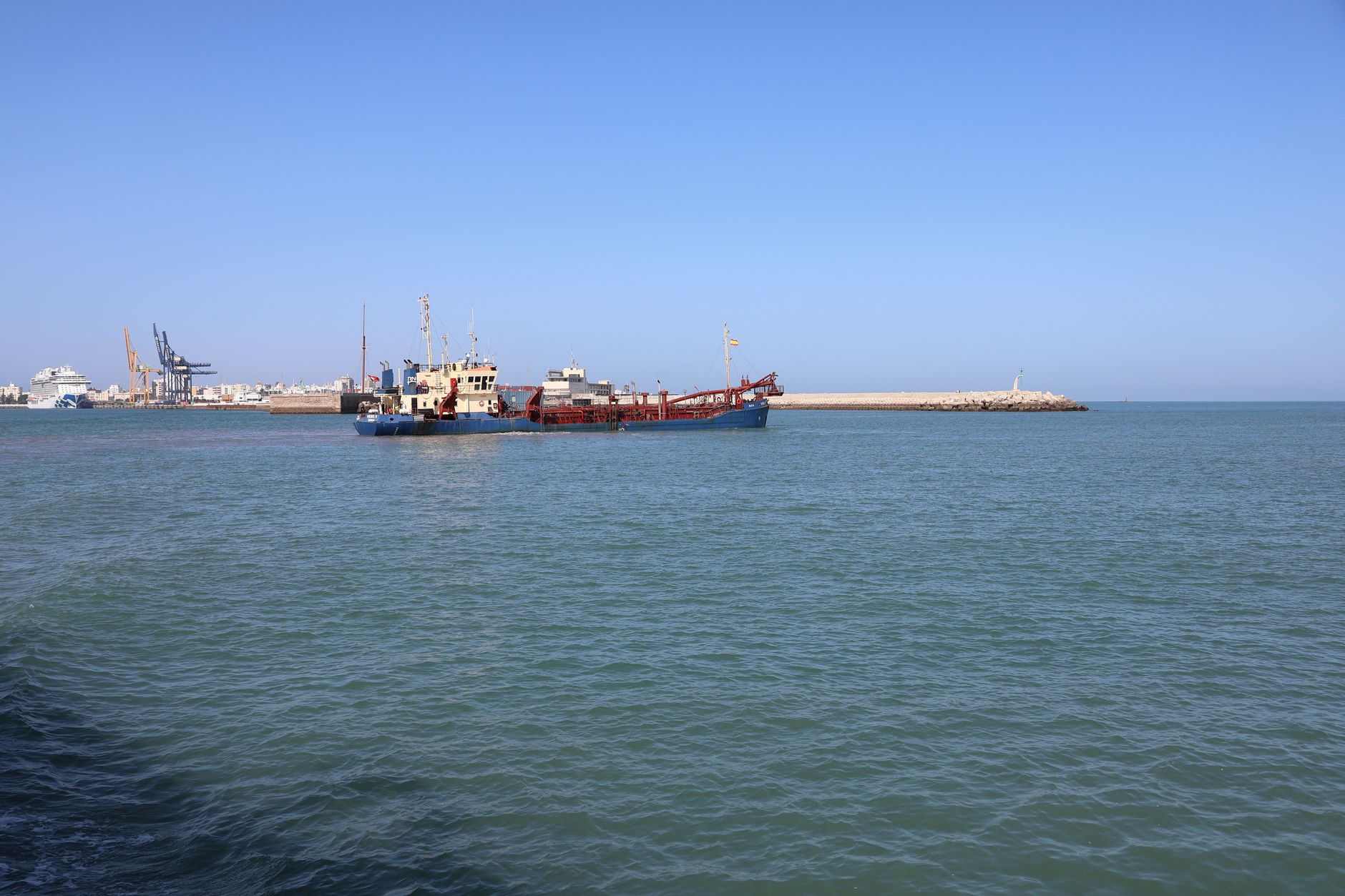
- Reliability. A dredged channel's depth varies with survey cycles and weather. Natural depth does not move.
- Tide dependence. River and estuary ports often admit deep vessels only in tidal windows, which turns depth into a scheduling constraint rather than a fixed capability.
- Cost pass-through. Maintenance dredging is funded through port dues, so the depth on the brochure is partly on your invoice.
- Sediment risk. Flood events can shoal a channel quickly, and the recovery timeline is a dredger's schedule rather than a port announcement.
- Air draft. Depth below is not the only limit. Bridges upstream cap vessel height, and some deep river ports are bridge-limited before they are depth-limited.
Deepwater ports being built for the next fleet
New deepwater capacity is being added where the hinterland justifies it rather than where the water is deepest. India's Vizhinjam is the clearest current case: natural depth reported between 18 and 24 m depending on the source, minimal littoral drift, and a recent national record for the deepest-drafted container ship to berth in the country. Peru's Chancay was built as a deepwater Pacific gateway for the same reason, and we covered what it does to routing in our piece on the port of Chancay.
The pattern in both cases is that depth is the entry ticket, not the product. What is being sold is a berth that never needs a tide window plus a corridor inland.
Frequently asked questions
What is the deepest port in the world?
The Port of Sines in Portugal, at 28 m, and it reaches that depth naturally rather than through dredging. Yangshan in China is second at 27 m and Rotterdam third at 24 m.
How much draft does the largest container ship need?
Between 16 and 17 m fully loaded. Record calls include MSC San Francisco at 16.80 m and MSC Mina at 16.40 m in Zeebrugge, and ONE Inspiration at 16.5 m in Hamburg, which is why ports in the 17 to 18 m range such as Busan and Colombo handle the largest boxships routinely. Depths beyond 20 m are driven by bulk carriers and crude tankers.
Does a deep port mean my ship can load to that depth?
No. The governing figure is the shallowest point on the whole voyage. The Panama Canal's authorised Neopanamax draft is 14.78 m from 15 August 2026, below the 15.2 m the ship class was designed for, so a canal routing can cap loading regardless of how deep the ports are. Each 10 cm of lost draft costs a carrier roughly 100 containers of capacity.
Why do ports dredge instead of relying on natural depth?
Because most large ports grew where trade was, not where the water was deep, and river and estuary sites need maintained channels. Dredging is a recurring cost recovered through port dues, and dredged depth varies with survey cycles in a way natural depth does not.
Port depths are as published by port authorities and maritime references and can refer to channel, berth or basin depth, which is why figures for the same port sometimes differ. Canal draft restrictions change with water levels: the Panama figures cited apply to specific 2026 effective dates and should be checked against the current advisory before fixing a voyage.