


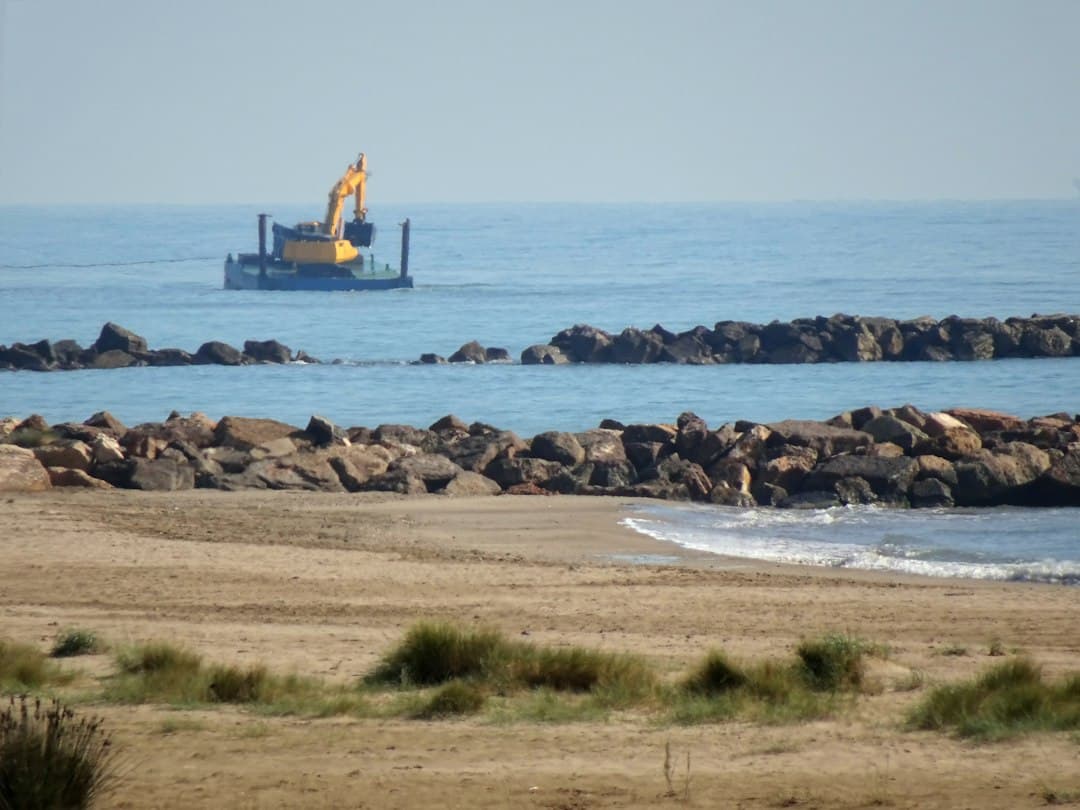
Two Jan De Nul dredgers, the Tristao da Cunha and the Al-Idrisi, have cut a 17.5 metre channel into Georgia's Black Sea coast since early August 2026, and the project's director says seabed work finishes in December. That single fact carries more information than any Anaklia rendering published since 2016: dredging is real and dated, while the breakwater, rail link and first container ship remain targets, not facts.
This is a status check, not a launch announcement. As of 30 September 2026, Anaklia Deep Sea Port has no berths, no cranes and no throughput. It has a construction schedule, a rewritten ownership structure, and officials who keep repeating 2029 as the year the port takes its first vessel. What follows is what is documented, what is still a promise, and what a forwarder should track.
Two dredgers, one deadline
Jan De Nul confirmed on 31 August 2026 that both vessels were working the site, deepening the channel and turning basin to 17.5 metres so the port can eventually take large Panamax and post-Panamax ships. Tristao da Cunha entered the water around 1 August; Al-Idrisi followed roughly four weeks later, around 31 August. Project director Eric Beyts told Georgian broadcaster 1TV on 14 September that the two dredgers pump about 70,000 cubic metres of sand a day, can keep working in waves up to three metres, and are due to finish seabed deepening by December 2026.
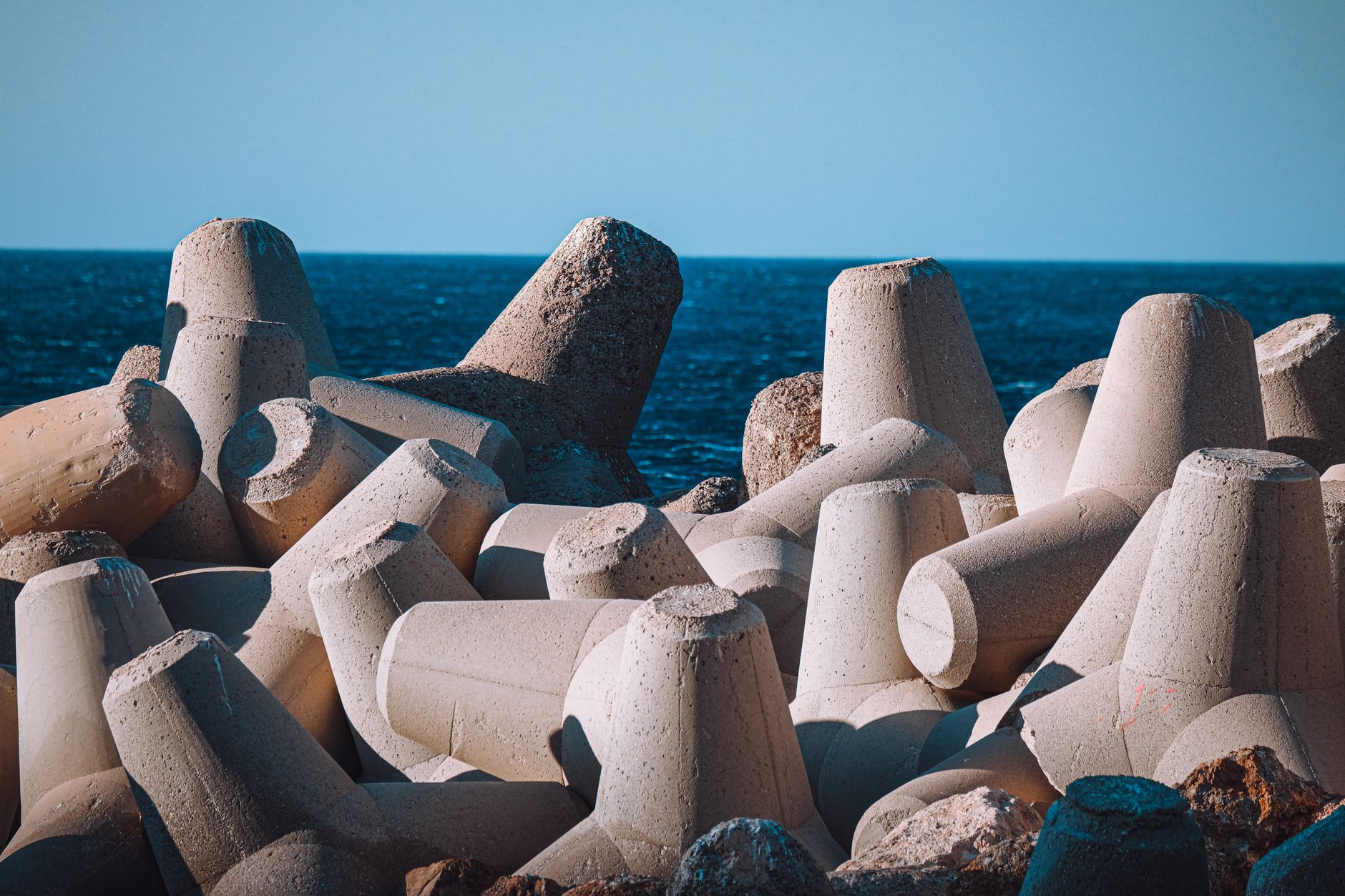
The breakwater is a separate contract. Jan De Nul, in joint venture with Georgian firm Prime Concrete, is building a 1,380 metre breakwater to shelter the berths, targeted for completion by the end of 2027, two years before the port is meant to take cargo. Beyts also told 1TV that "from an engineering perspective, Anaklia will even surpass the Black Sea's largest port, Constanta," a claim from the contractor itself. We found no independent study that verifies it.
Who owns Anaklia now, and how that changed
Ownership history explains why nothing got built for a decade. Georgia awarded a $2.5 billion contract in February 2016 to the Anaklia Development Consortium, a joint venture of Georgian TBC Holding and US-based Conti International, then terminated it in January 2020 after repeated delays. A second attempt, a Chinese-Singaporean consortium named single strategic investor in 2024, also collapsed: Georgia confirmed on 6 July 2026 that it never signed a binding investment agreement and had withdrawn.
Rather than search for a third single investor, Georgia switched models. Under the "landlord" structure adopted in July 2026, the state builds and owns the marine infrastructure, meaning the breakwater, channel, turning basin, road and rail links, while private operators build and run the container and bulk terminals under separate concessions. Economy Minister Mariam Kvrivishvili says Tbilisi is courting several Middle Corridor partner countries at once, naming China, Central Asian states and Azerbaijan, per a 6 July 2026 interview reported by AzerNews. Our read: Georgia gave up on finding one investor for the whole port and is instead assembling smaller commitments around a state-built core, with the marine works now a sovereign project under a named contractor while the terminal operators remain unselected.
Phase 1 and the full build
| Specification | Phase 1, target 2029 | Full build, target 2035 |
|---|---|---|
| Channel and turning basin depth | 17.5 metres | unchanged |
| Breakwater length | 1,380 metres, one structure | same structure |
| Annual container capacity | at least 600,000 TEU | at least 1,000,000 TEU |
| Vessel classes served | Panamax, post-Panamax | same |
| Dedicated rail link | 18 km line to Georgian Railway network, tender due by end October 2026 | same line |
Two things are missing from every source reviewed: a published berth count and a total construction budget for the current build. The $2.5 billion figure still circulating online belongs to the cancelled 2016 contract. We could not confirm a current capital cost for phase 1 and have left it out rather than reuse a number tied to a dead deal.
How the port gets paid for
Financing is being assembled in pieces, not closed as one package. Economy Minister Kvrivishvili said on 11 September that talks with international financial institutions on funding the railway access route were complete, with a construction tender due by the end of October. Deputy Minister Ioseliani told the Georgia International Maritime Forum on 8 September that the ten-year transport plan envisages about $7 billion by 2032 to rehabilitate the network and double its capacity, naming Anaklia and railway modernisation as the flagship projects.
That figure sits awkwardly next to an earlier one. In May 2026 Prime Minister Irakli Kobakhidze put the ten-year railway programme, covering 50 locomotives, 1,500 wagons, 10 passenger trains and the Anaklia access line, at an indicative $1.7 billion. We checked whether the two figures describe the same commitment; the more plausible reading is that the later number is a broader transport-sector total folding the railway plan into port and road spending, not a fourfold rise in the railway budget alone. No source names a lead lender or a World Bank or EBRD package for the marine works, and no private terminal investor has been confirmed.
Where Anaklia fits the Middle Corridor
Every official statement ties Anaklia to the Middle Corridor, the route moving containers from China through Central Asia, across the Caspian and South Caucasus, to Black Sea ports and on to Europe. Beyts argued in September that disruption of the Suez and Russian northern routes has made Georgia's corridor role more durable regardless of how those conflicts end. A World Bank report published in late September estimates that fuller Trans-Caspian corridor development could triple trade volumes by 2040 and lift Georgia's economy by 3.61 percent long term, a figure officials cite often to defend the port's cost.
None of that reaches Anaklia's gate without rail behind it. Georgian Railway carries about 13.7 million tonnes a year across roughly 1,400 kilometres, comparatively well used next to Kazakhstan's or Uzbekistan's networks, per the same study. The corridor's Caucasus chokepoint sits further east, on the Baku-Tbilisi-Kars line, which reached full commercial operation in mid-2026. Anaklia's own 18 kilometre spur has not gone to tender, so the 600,000 TEU phase 1 target has no confirmed dedicated rail connection yet. The Caspian leg is covered in our review of the Aktau-Baku ferry route, and further along the chain the China-Kyrgyzstan-Uzbekistan railway that is meant to shorten the route from Chinese factories is also still under construction. Almost every corridor link is being built or upgraded at once; the digital transit push exists to stop that overlap adding paperwork delay on top of construction delay.
Anaklia against Poti and Batumi
| Port | Status, September 2026 | Reported container figures |
|---|---|---|
| Poti (APM Terminals) | Operating, expanding incrementally | 185,537 TEU in Q2 2026, up from 167,056 TEU in Q2 2025; over 480,000 TEU across the first nine months of 2025, up 16 percent; a new $7.1 million harbor crane, announced in July 2026, is planned to lift annual capacity to 650,000 TEU by adding 50,000 TEU |
| Batumi | Operating, mixed cargo focus | over 6 million tonnes of total cargo turnover as of November 2025, driven by containers, ferries, dry cargo and Kazakh oil products; no comparable annual TEU figure published |
| Anaklia | Under construction, dredging phase only | zero throughput today; target of at least 600,000 TEU by 2029 and at least 1,000,000 TEU by 2035 |
Anaklia's first-phase target of 600,000 TEU is roughly where Poti's capacity is headed once its 2026 crane upgrade is complete. Georgia is building the new port because it expects Middle Corridor volumes to outgrow the existing ports' water depth within the decade, not because Poti and Batumi are full today. Poti's own administration calls a deep-water expansion its long-term priority, but talks with government on funding it have not progressed, leaving Anaklia as the only Georgian port project with an active contract and a stated completion window.
What could still go wrong
Three risk categories are documented rather than speculative. Schedule risk sits inside the marine works: Anaklia has already slipped once, in the 2016 to 2020 attempt, and the December deadline depends on both vessels holding pace through winter storms. Financing risk sits outside the marine works: the terminal concessions meant to fund handling have no confirmed investor, and the access railway has not gone to tender. Corridor-level risk sits above Anaklia entirely, since Georgian Railway's utilisation still depends on Baku-Tbilisi-Kars and Kazakh rail capacity Georgia does not control.
Geopolitical risk is real but currently indirect. Anaklia sits near Georgia's border with Russian-controlled Abkhazia, and Jan De Nul frames the port as an answer to routes disrupted by conflicts elsewhere rather than instability inside Georgia. We found no report of a security incident affecting the current dredging works.
What forwarders should plan around, and what to ignore
- Track the railway access tender due by end October 2026, not the 2029 headline, as the next real schedule test.
- Do not plan cargo around a 2029 Anaklia call until a terminal operator is named. A finished breakwater without a handling concession is a construction milestone, not a booking option.
- Keep using Poti and Batumi for Georgian Black Sea calls through at least 2029; both have documented current capacity, Anaklia has none yet.
- Watch the December 2026 dredging deadline. A miss there is the clearest early sign that 2029 is slipping.
- Treat Anaklia's marine construction, funded and underway, as separate from its terminal financing, which is not yet closed.
Common questions
Is Anaklia Deep Sea Port open? No. As of 30 September 2026 the site is in the dredging phase, with breakwater completion due by the end of 2027 and the first vessel targeted for 2029.
Who is building Anaklia now? Jan De Nul is building the marine infrastructure, including the breakwater in joint venture with Georgian firm Prime Concrete. The Georgian state owns the core infrastructure under a landlord model adopted in July 2026, after a 2024 Chinese-Singaporean investor consortium failed to sign a binding agreement.
What happened to the original project? A US-Georgian consortium won a $2.5 billion contract in 2016; the government terminated it in January 2020 after repeated delays, and the site was largely idle until dredging resumed in August 2026 under a differently structured project.
How big will Anaklia be? Phase 1 targets at least 600,000 TEU of annual container capacity by 2029, dredged to 17.5 metres for Panamax and post-Panamax vessels. Phase 2 targets at least 1,000,000 TEU by 2035.
What rail link will serve the port? A planned 18 kilometre line to the Georgian Railway network. Georgian Railway had finished the engineering design by September 2026, with a construction tender expected by the end of October, but the line had not gone to build.
Sources: Jan De Nul, 31 August 2026; Ports Europe, 31 August 2026 and 8 August 2026; Ocean News and Technology (ecomagazine.com), 1 September 2026; DredgeWire, citing a 1TV Georgia interview with project director Eric Beyts, 14 September 2026; Business Insider Georgia, 1 September, 8 and 11 September, and 5 May 2026; AzerNews, 6 July 2026; Jamestown, 16 July 2026 (citing Georgian Ministry of Economy and Sustainable Development, 6 July 2026); Commersant.ge, 7 July 2026; Georgia Today, 11 December 2025; Reuters, 8 February 2016. Status reflects the position on 30 September 2026; milestones can move.